





















...





















































Filipa Ramos. What is space?
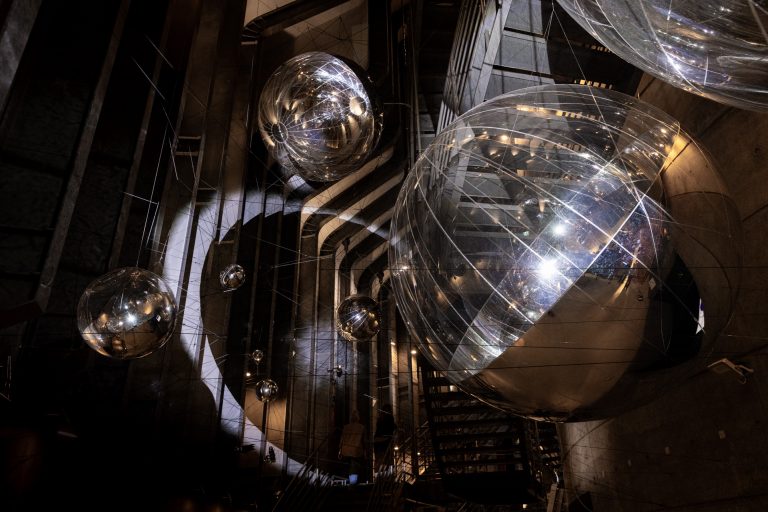
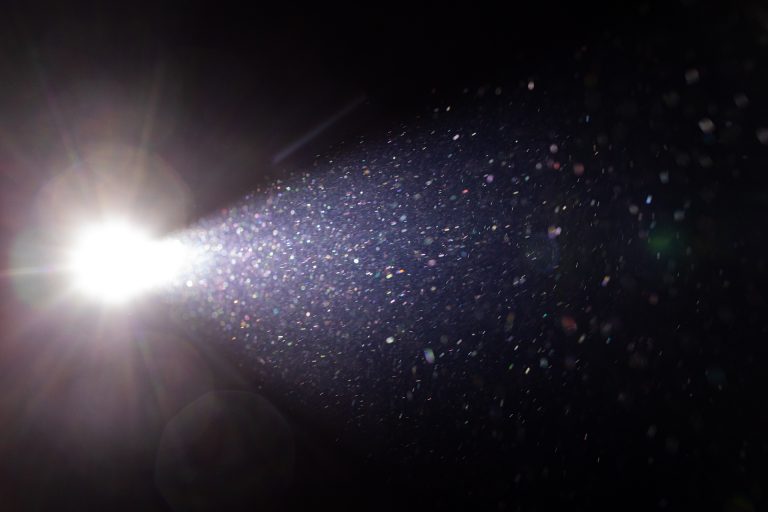
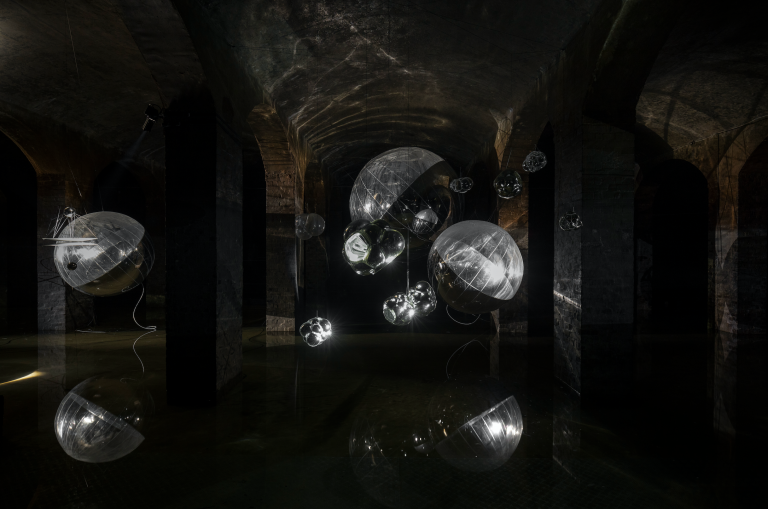
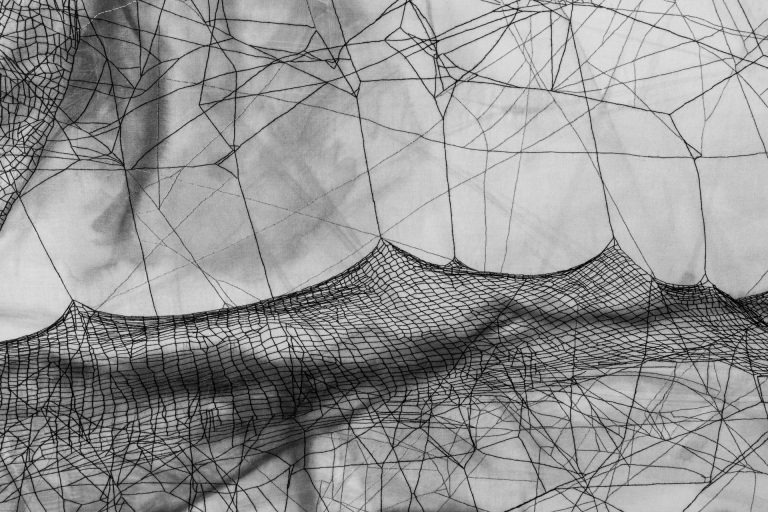
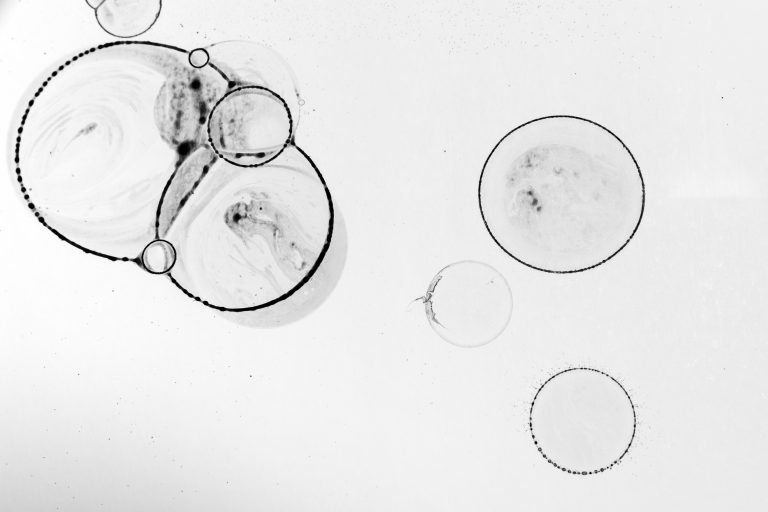
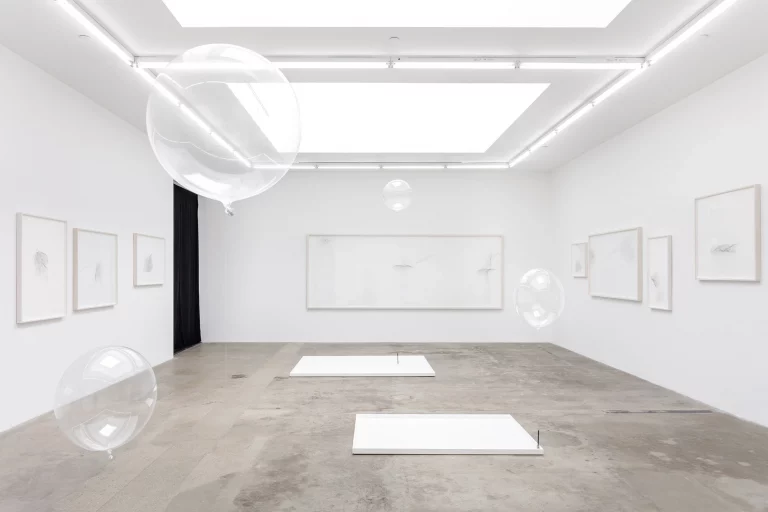
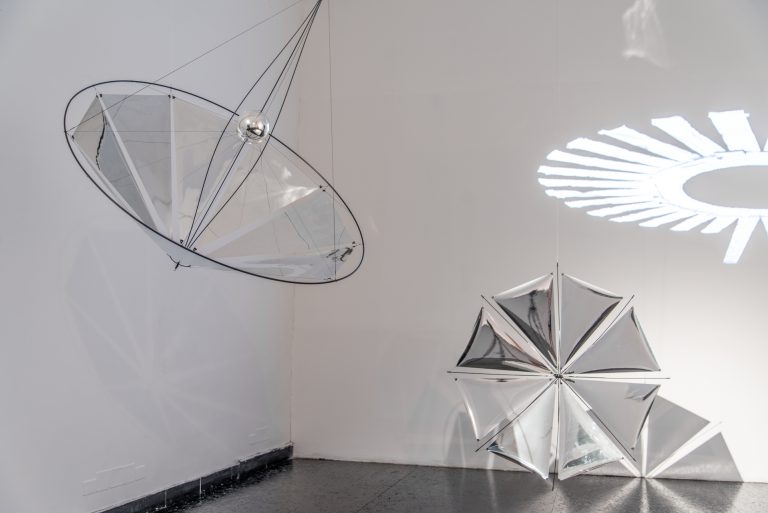
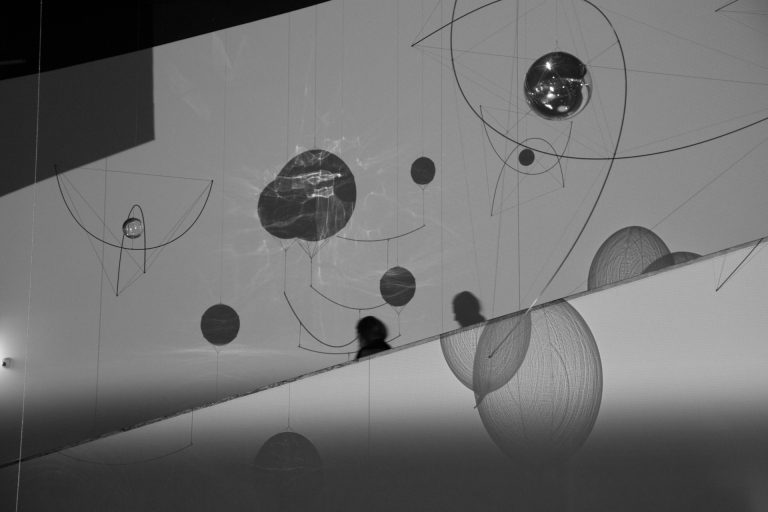
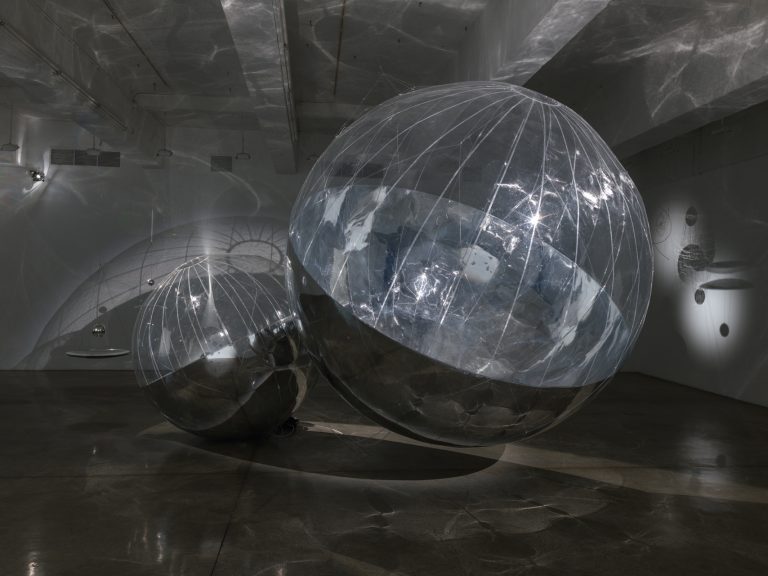
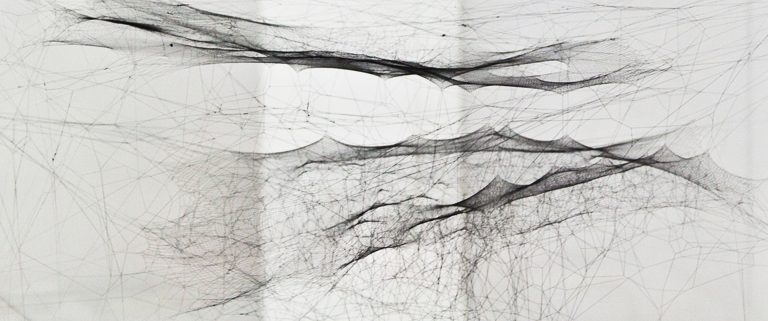
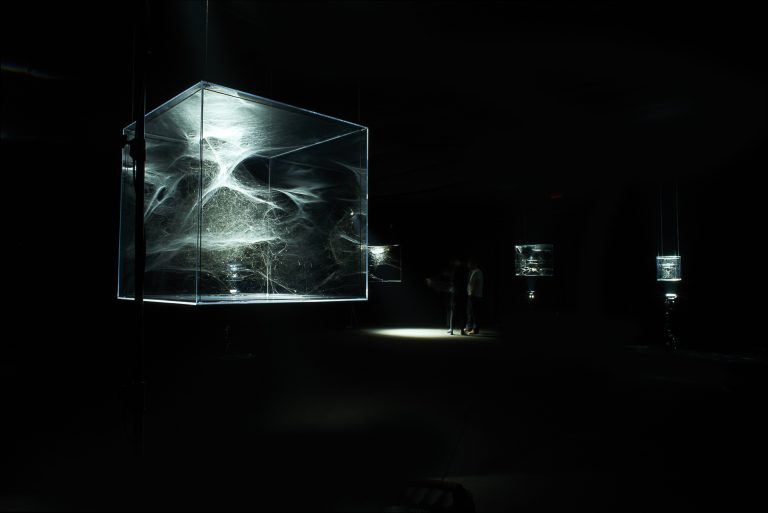
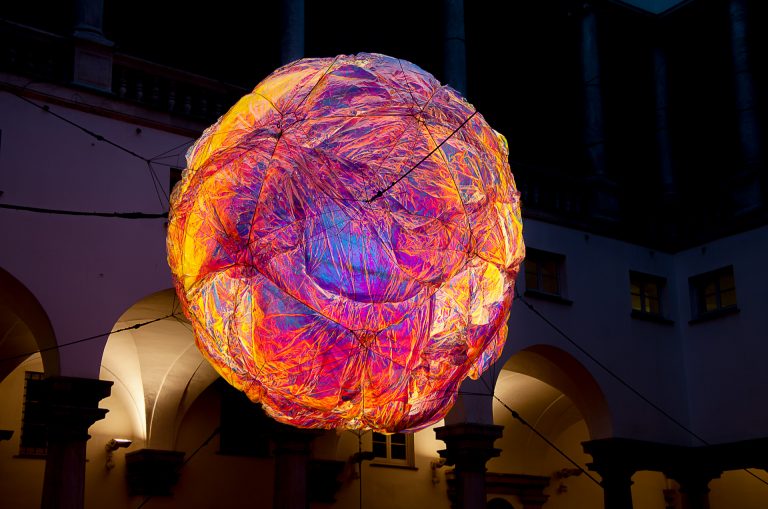
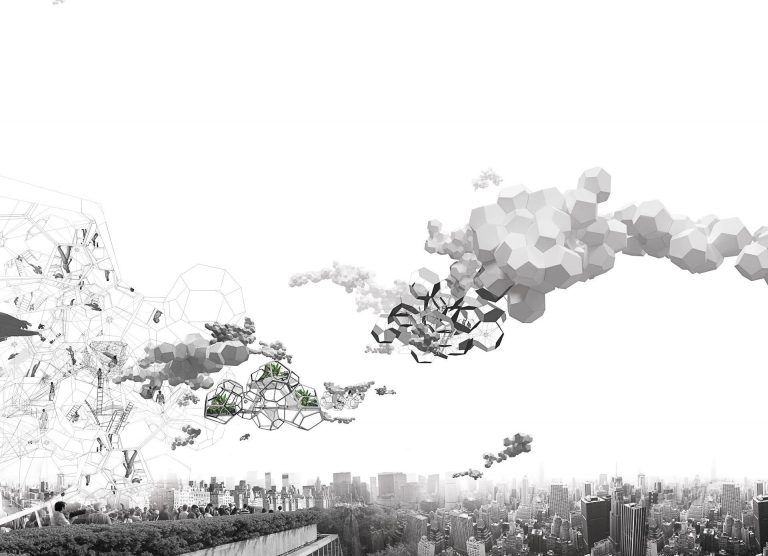
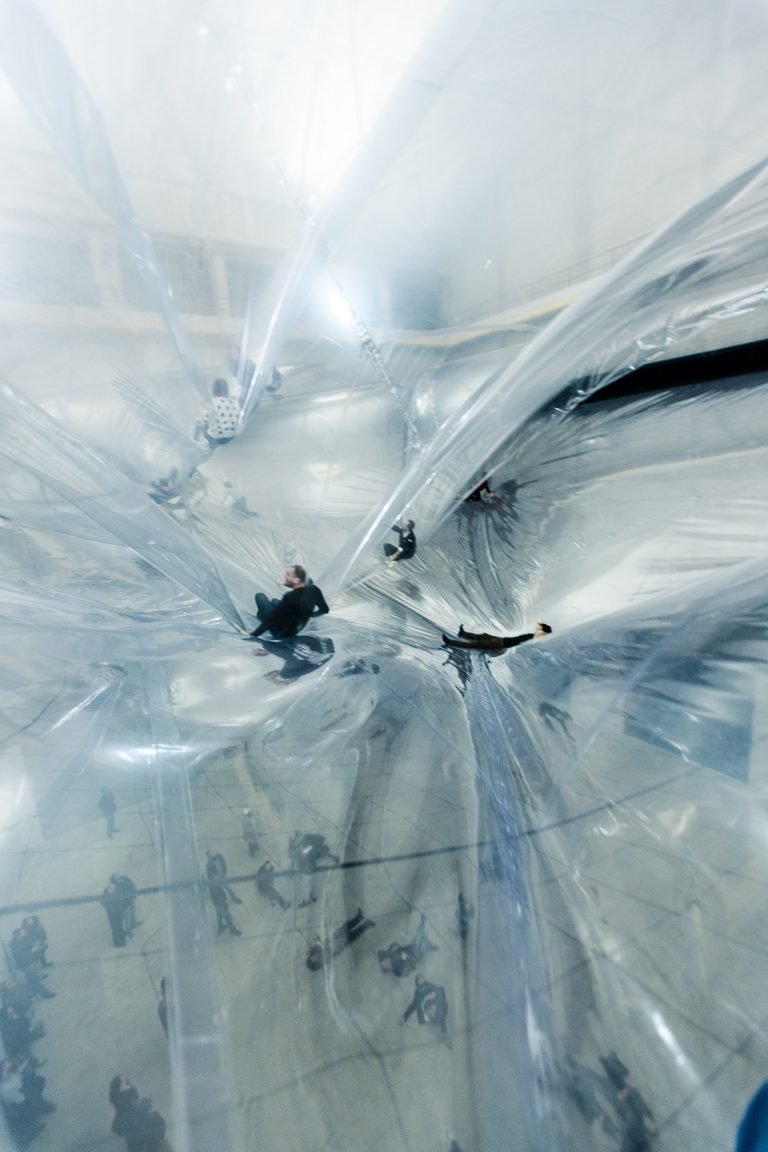
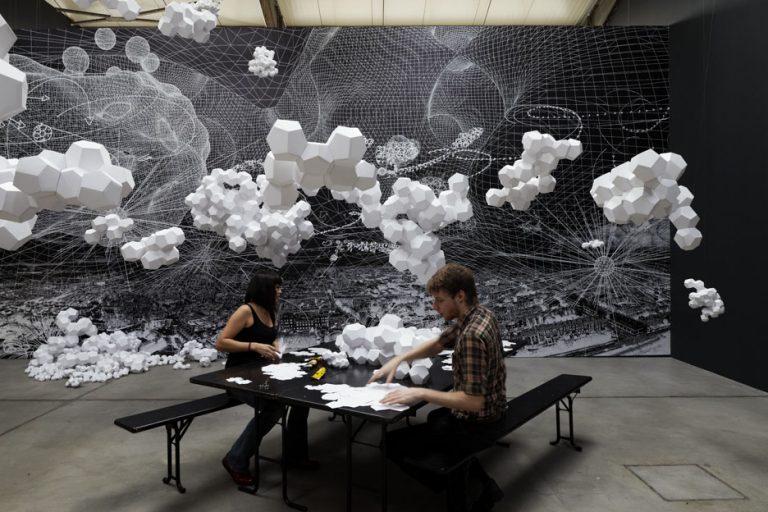
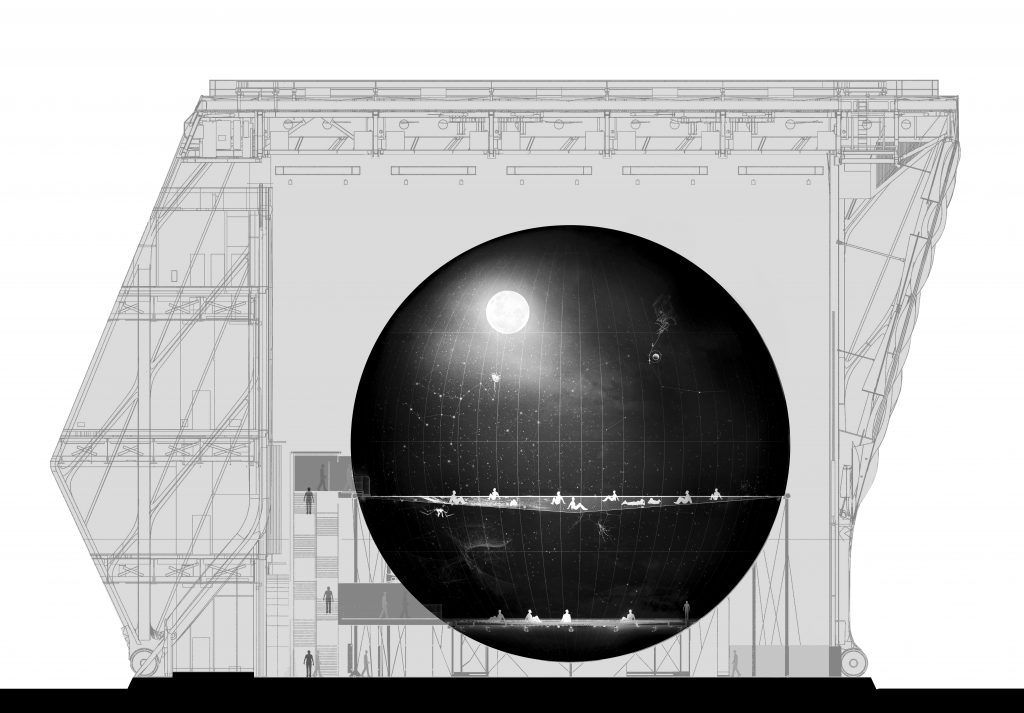
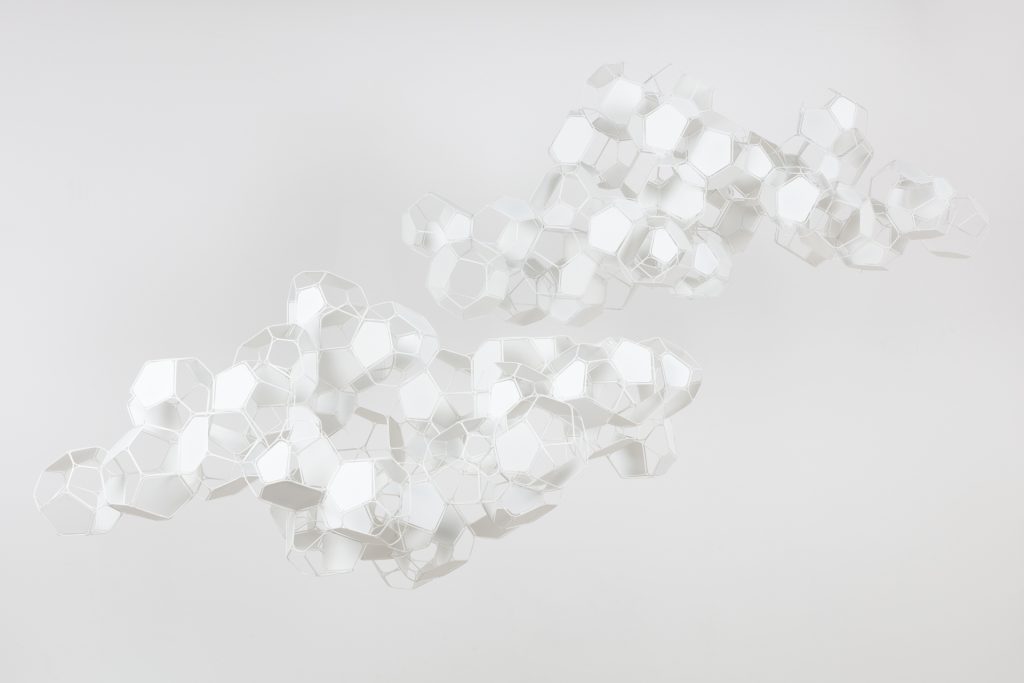
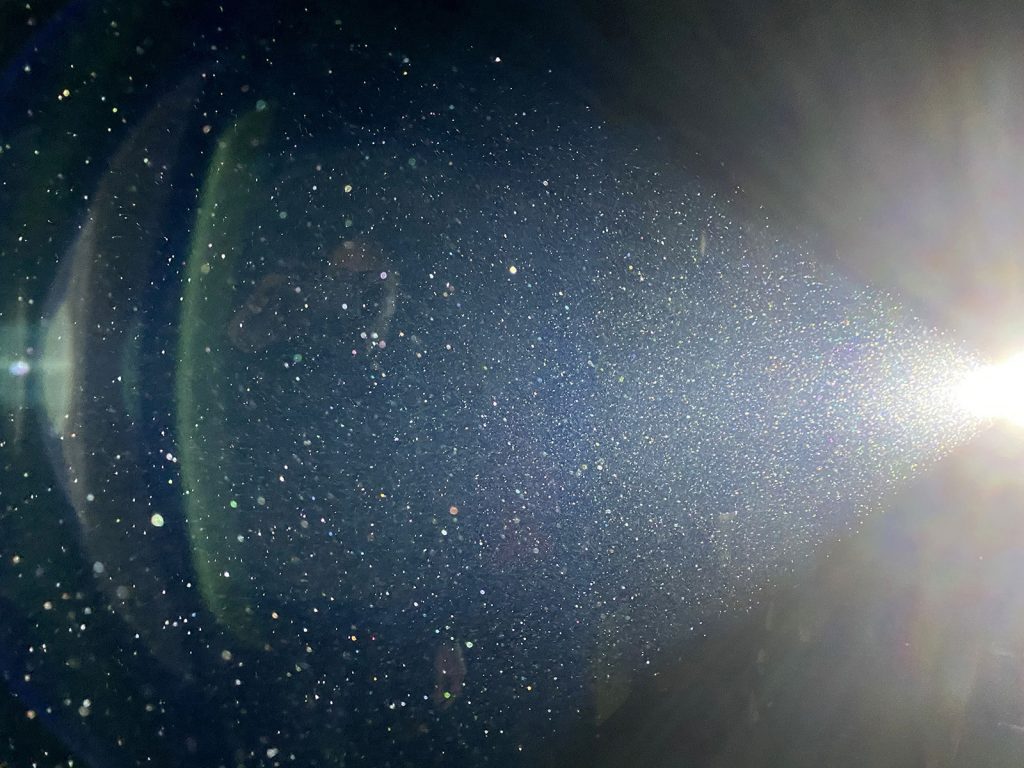
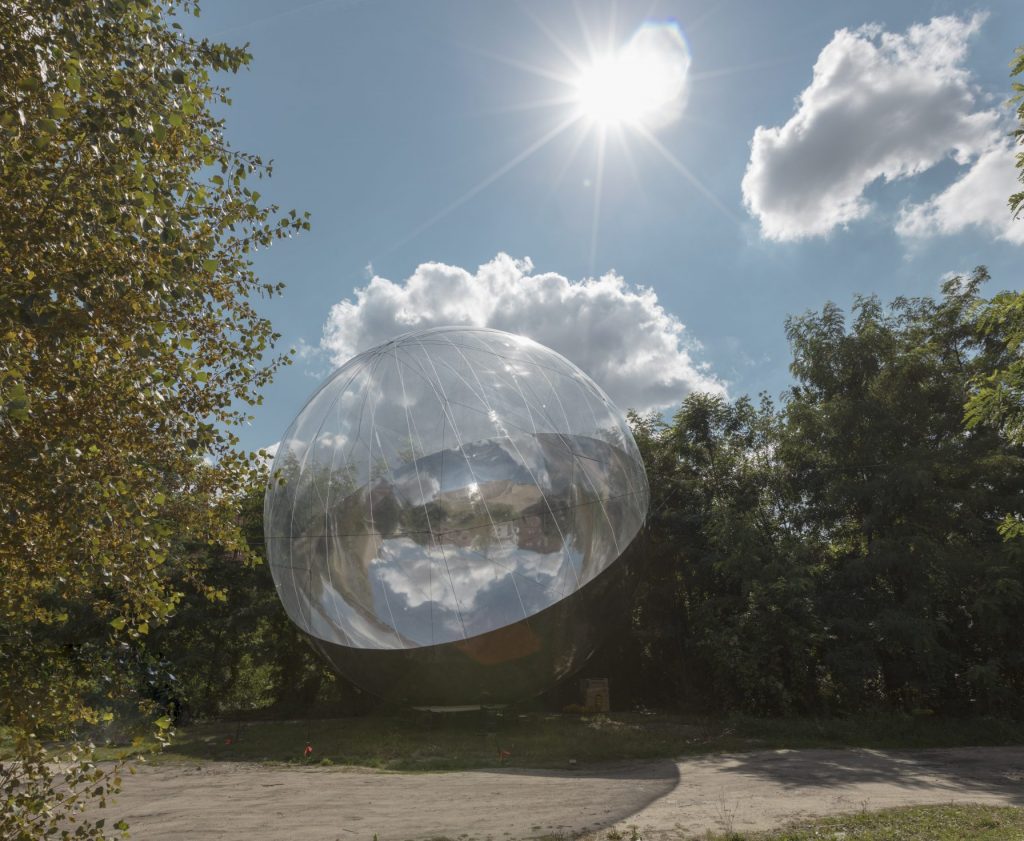
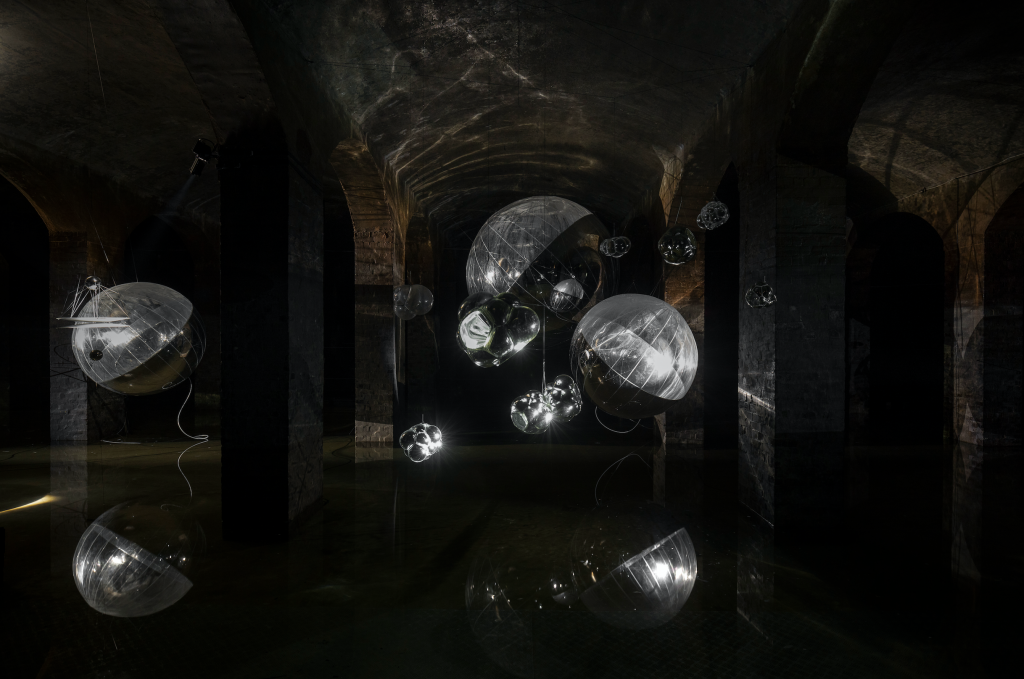
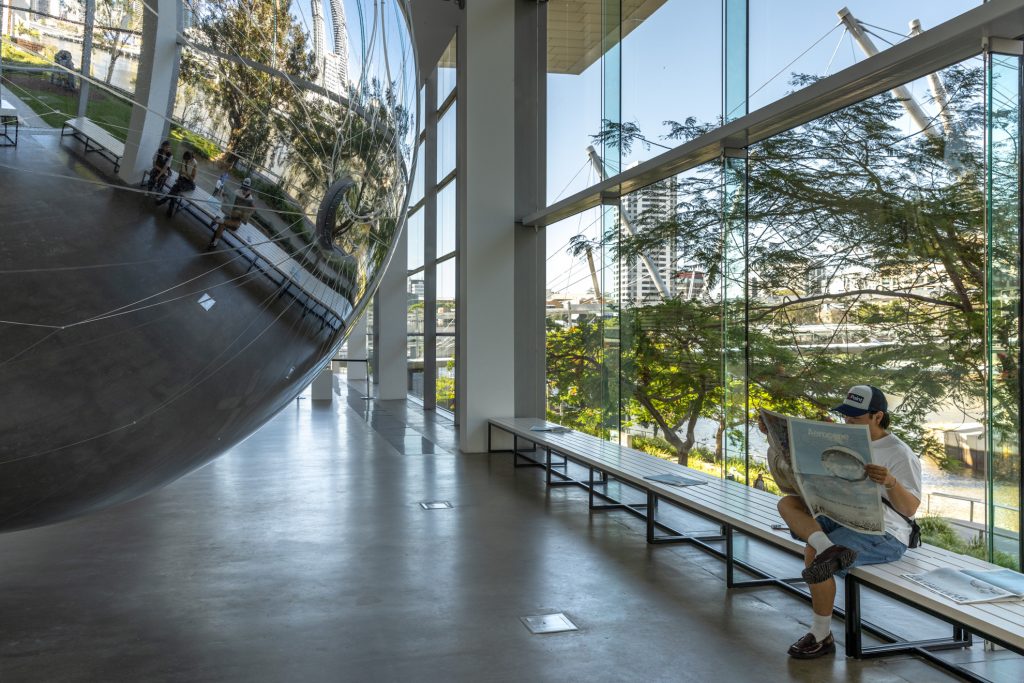
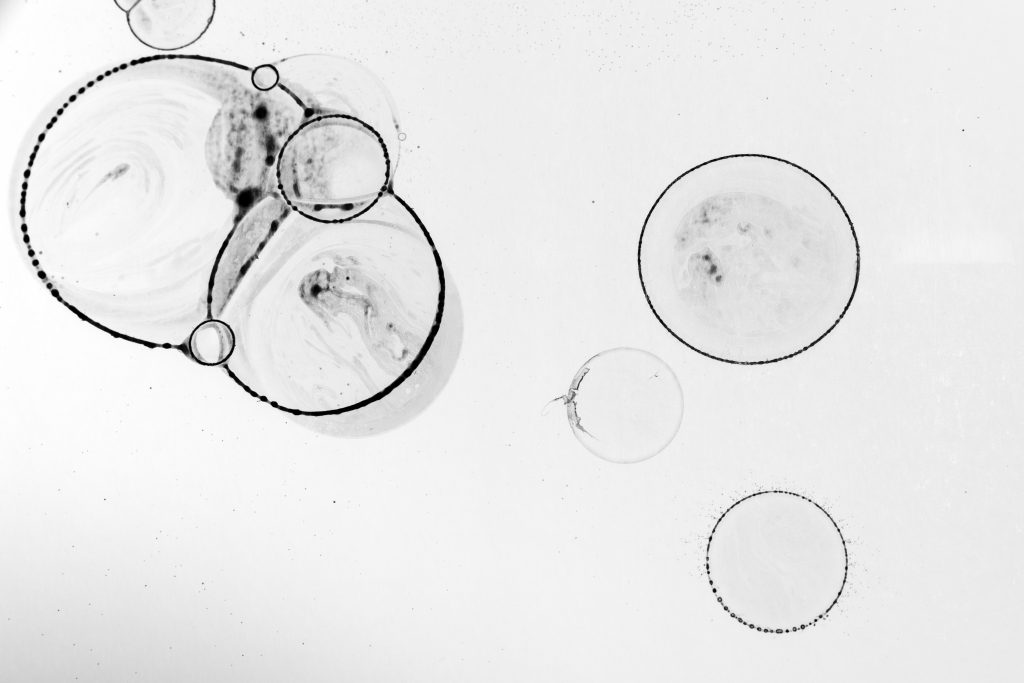
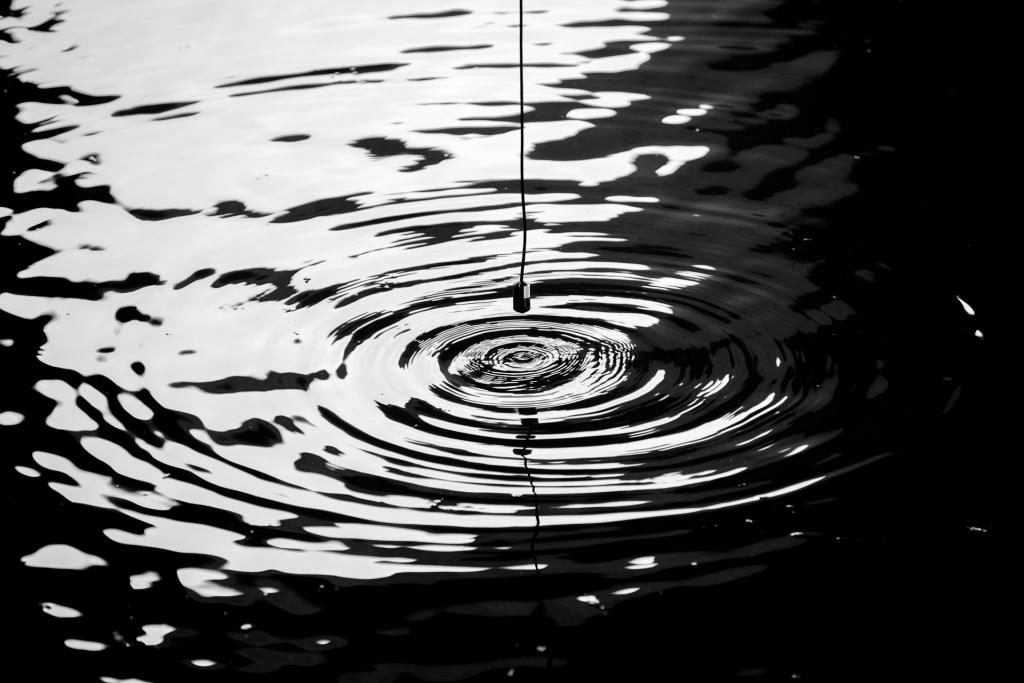
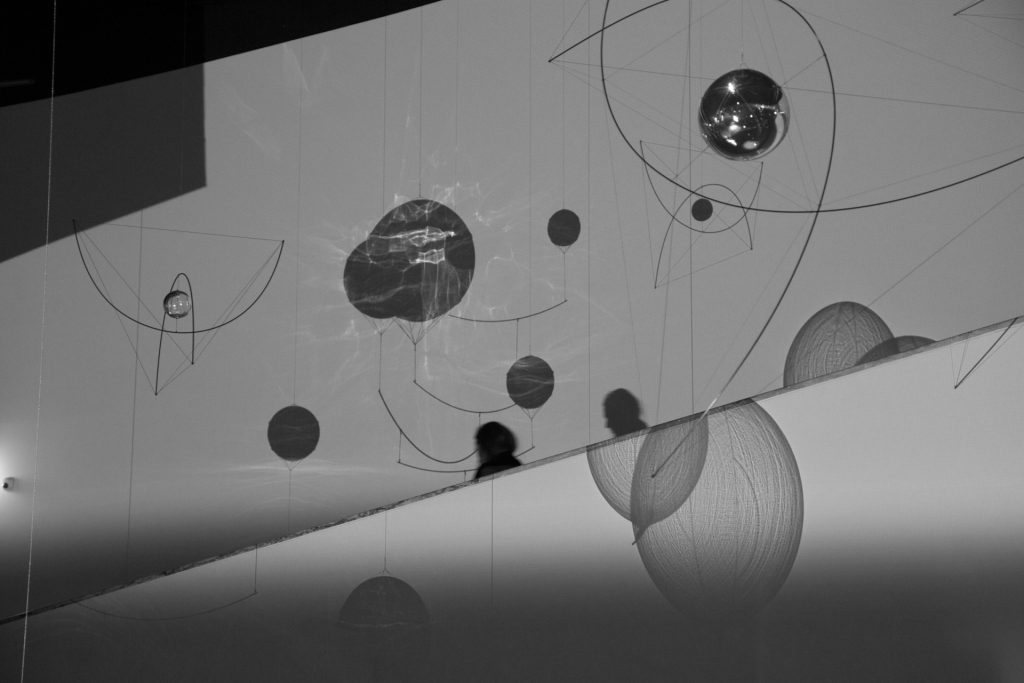
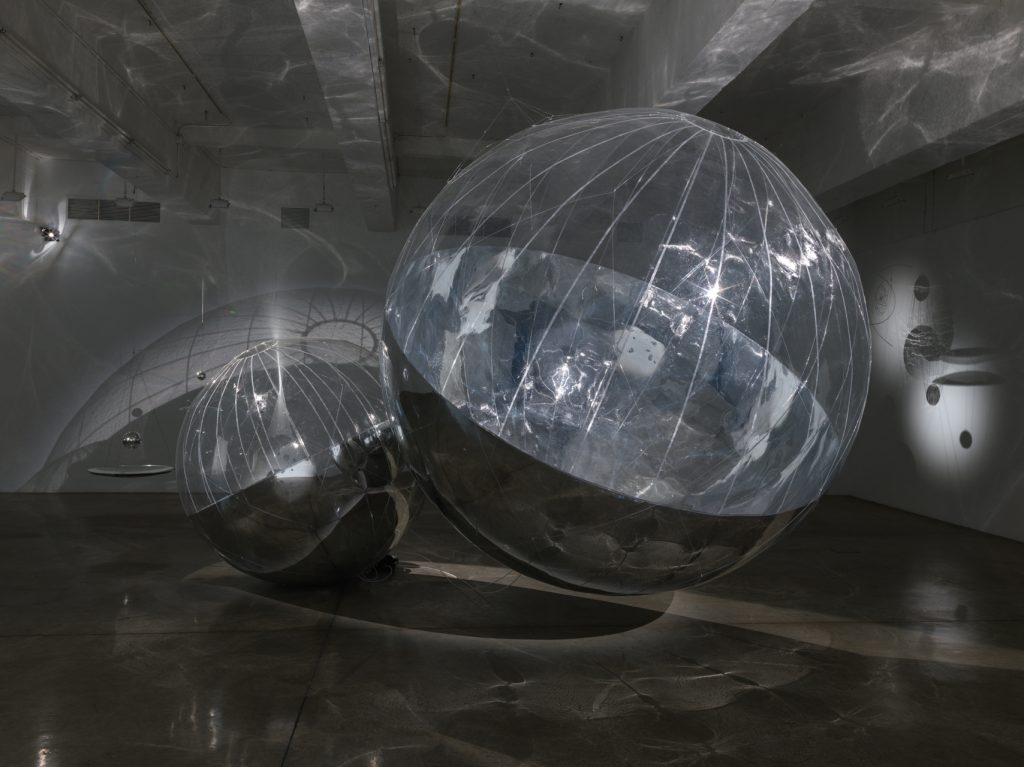
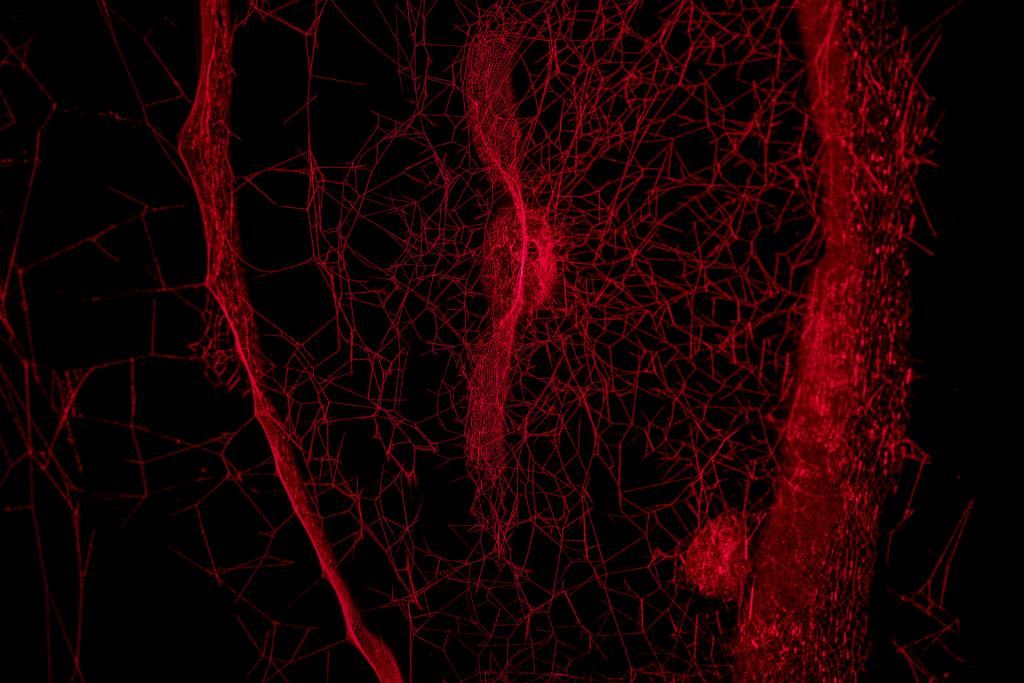
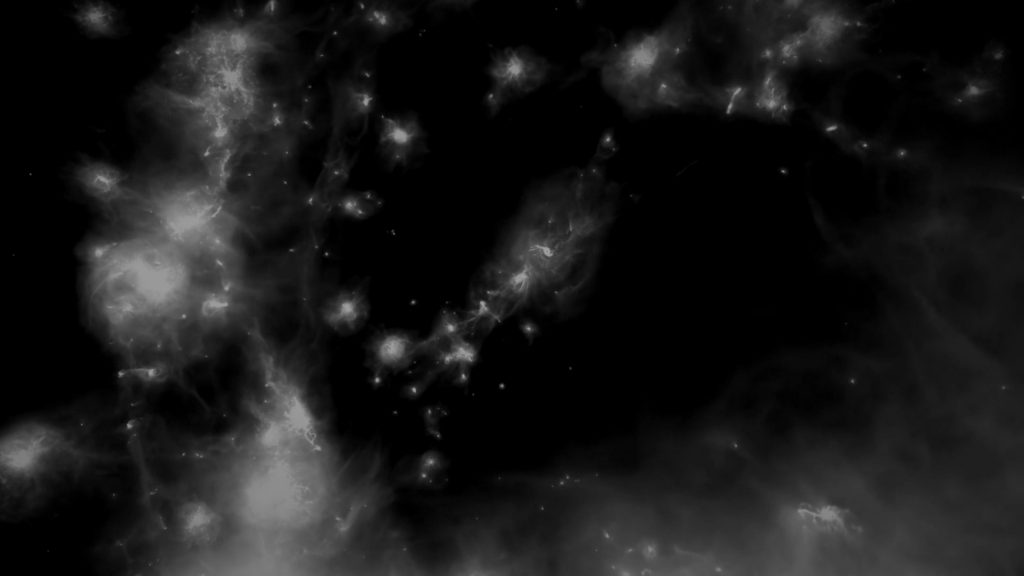
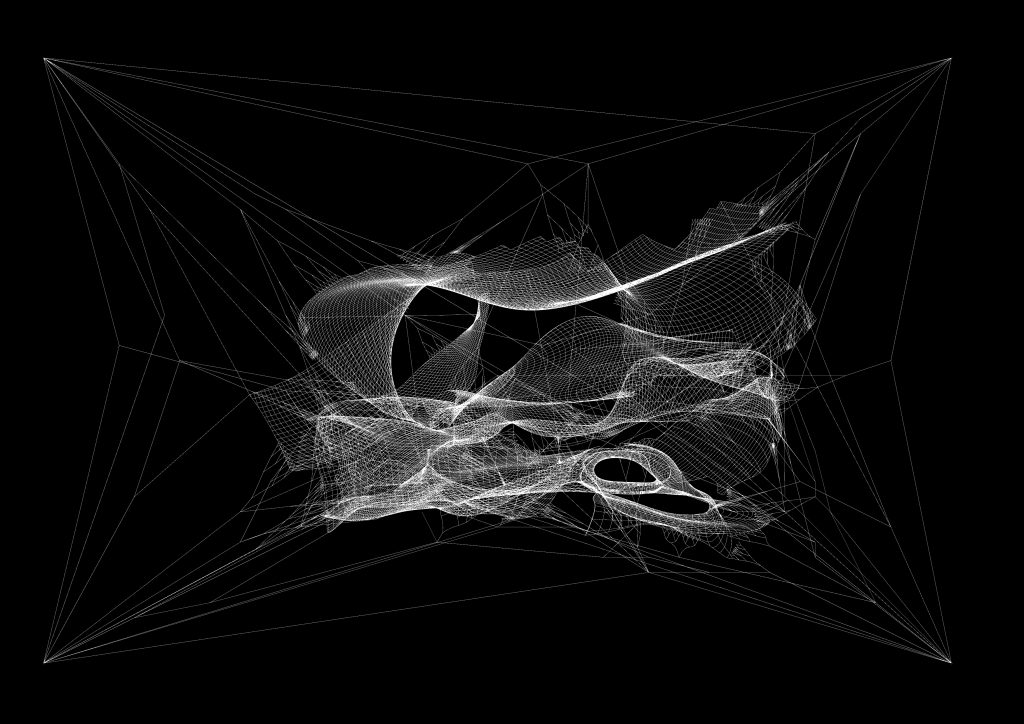
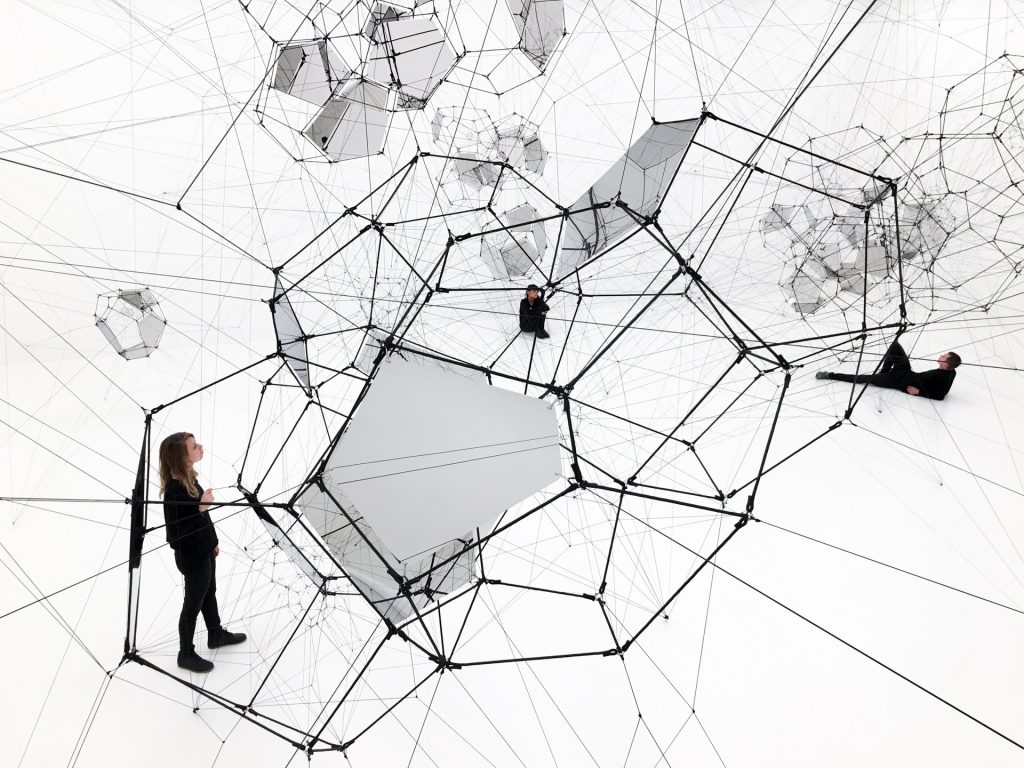
Tomás Saraceno. What I ask myself is what is there before space, and time, and what is that moment of singularity when everything came into being, that quantum foam which is a bubbling and sparkling space. On YouTube there are some videos that show what happens when you put corn flour on a speaker; it is incredible, the flour assumes strange forms with the vibration of sound — similar to Paul Davie’s drawing that I used for the project at HangarBicocca — it creates spheres that seethe and break like membranes. I conceive space as a tympanum, a membrane that allows you to listen because it vibrates. The universe could be a membrane, somehow close to what we have at the show: multiple layers of membranes vibrating, like one-dimensional, flat universes. If one layer touches another they make space and time collapse and form a black hole. String theoreticians have speculated that the Big Bang — the origin of our known cosmos — emerged from two gigantic membranes that crashed into one another, sparking the expansion of space and matter.
FR. What is weight?
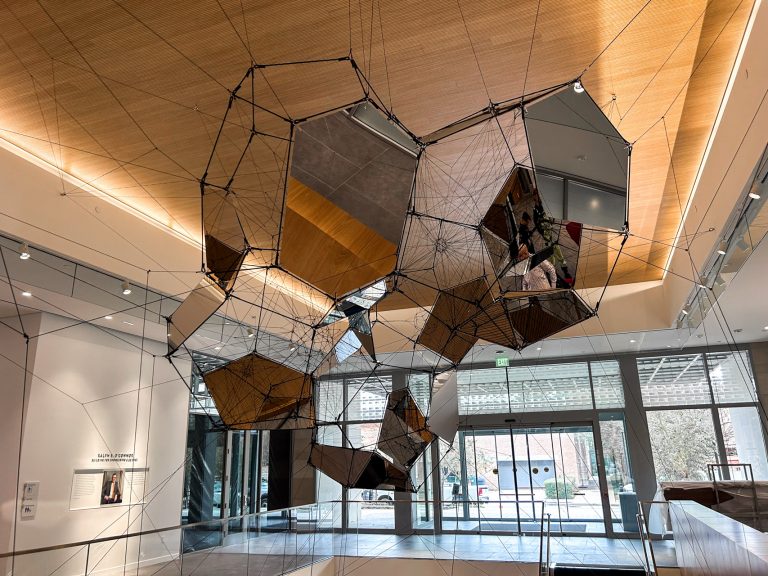
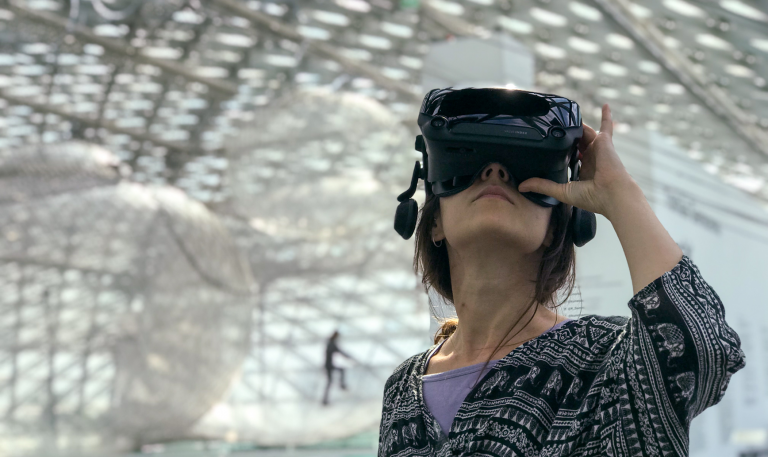
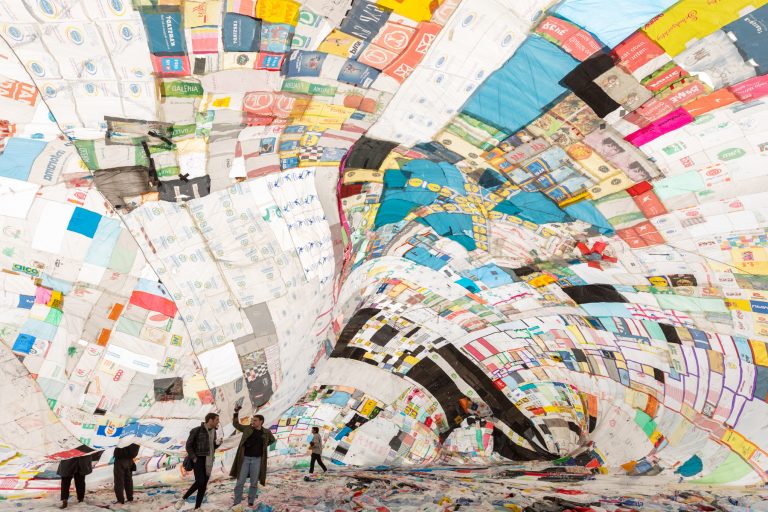
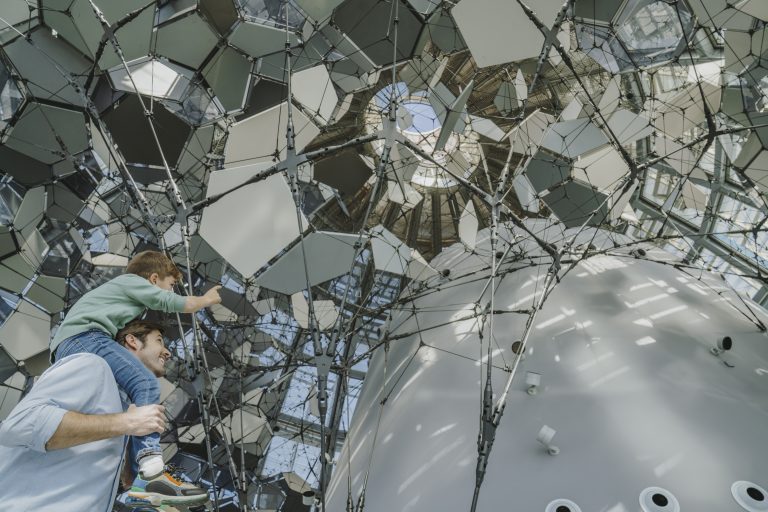
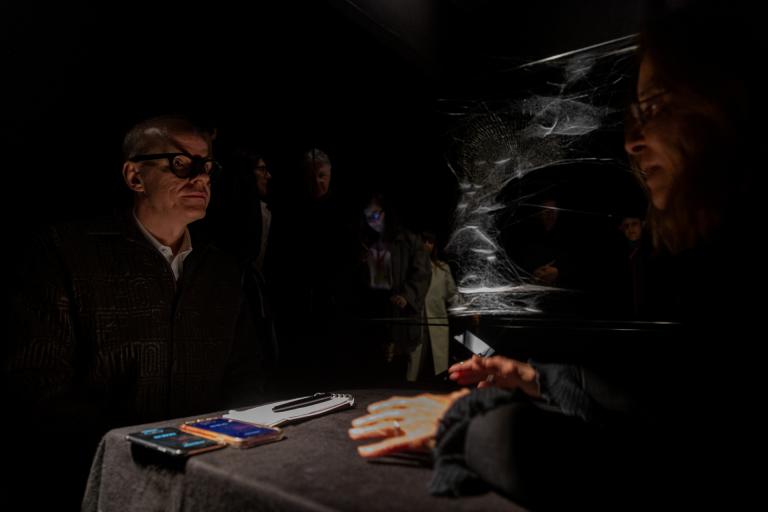
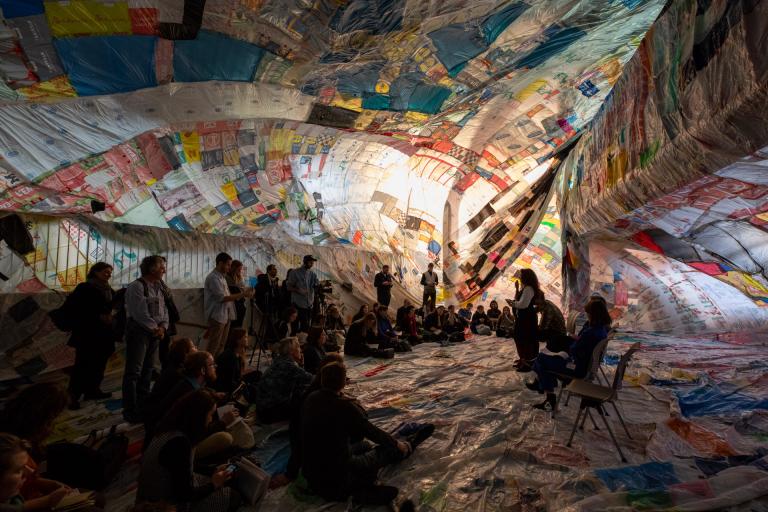
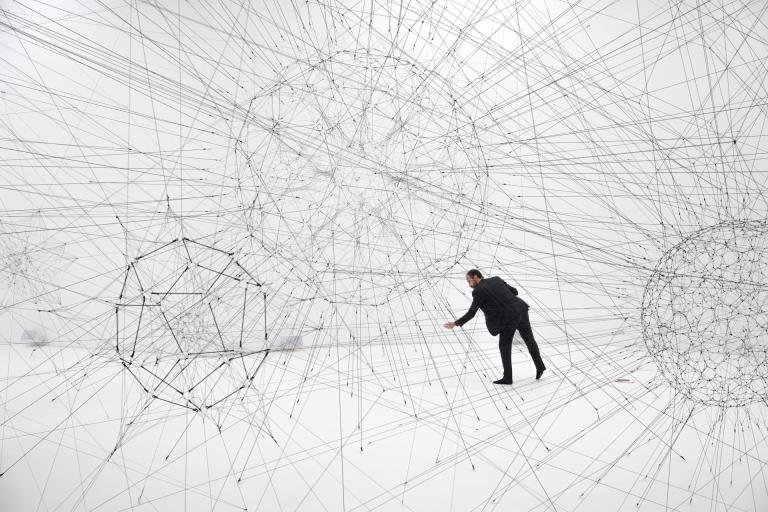
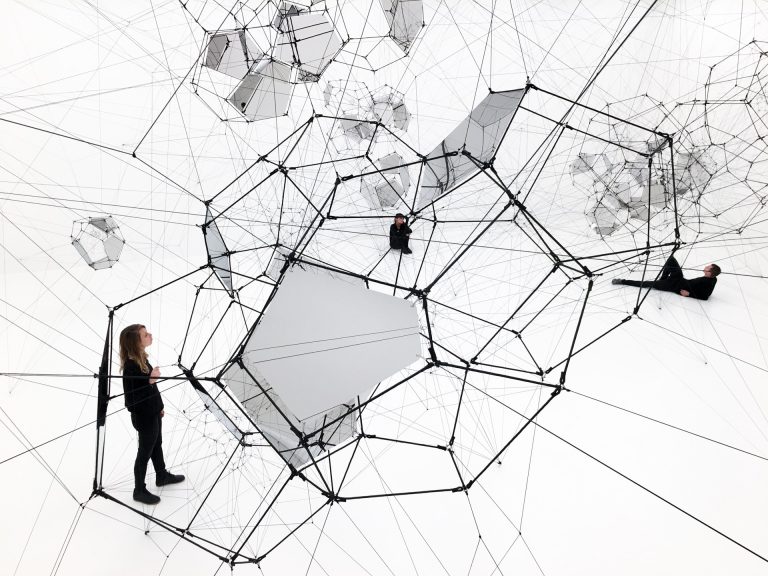
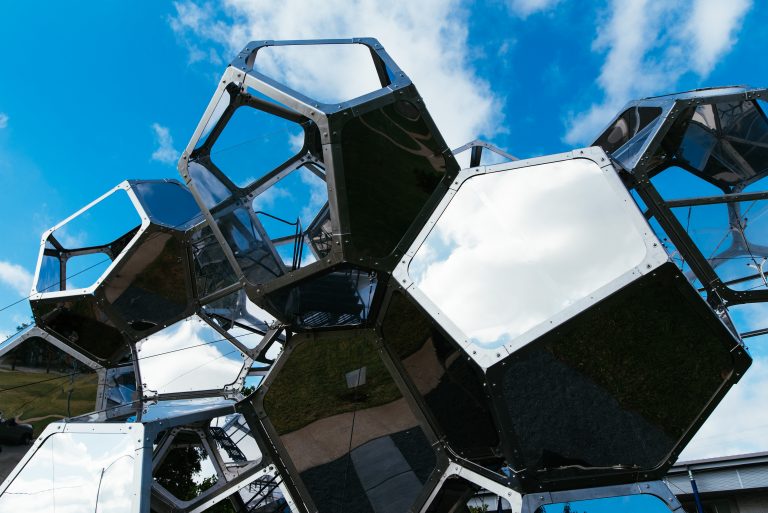
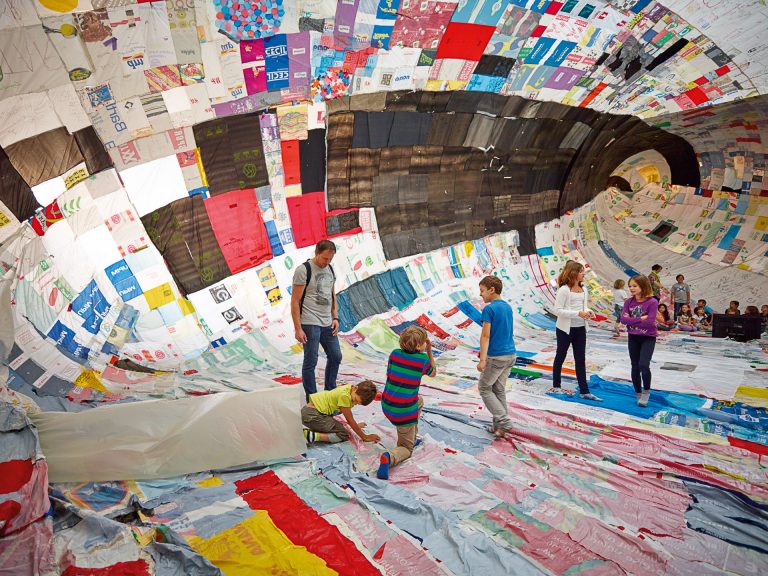
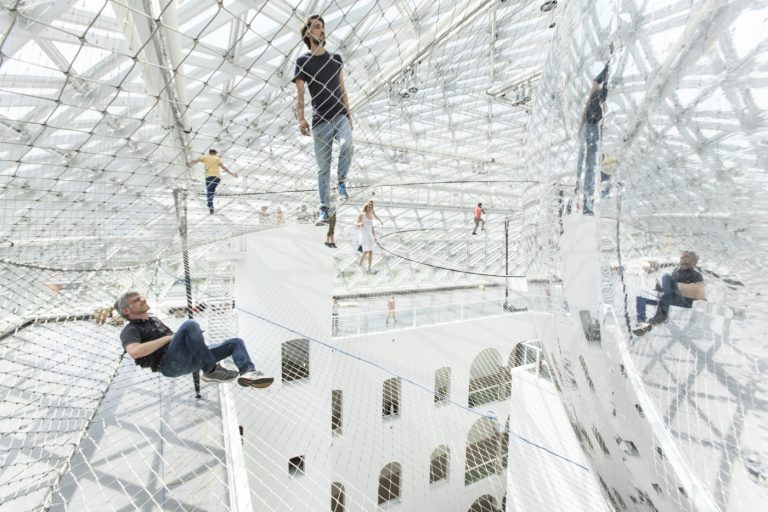
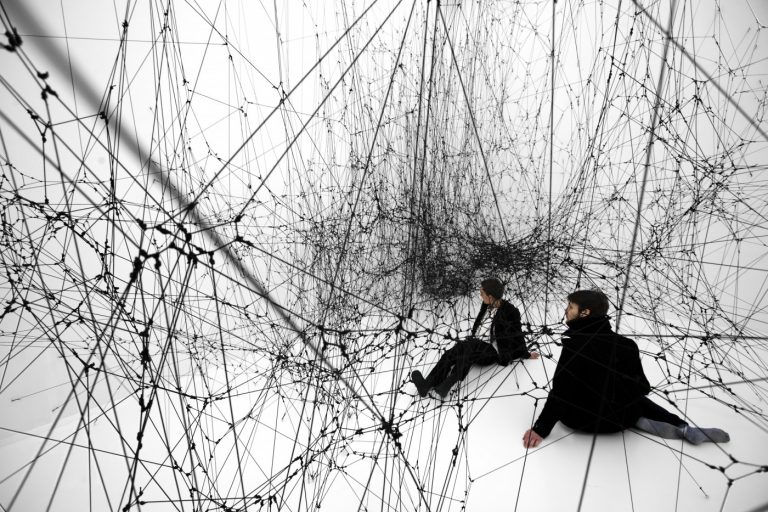
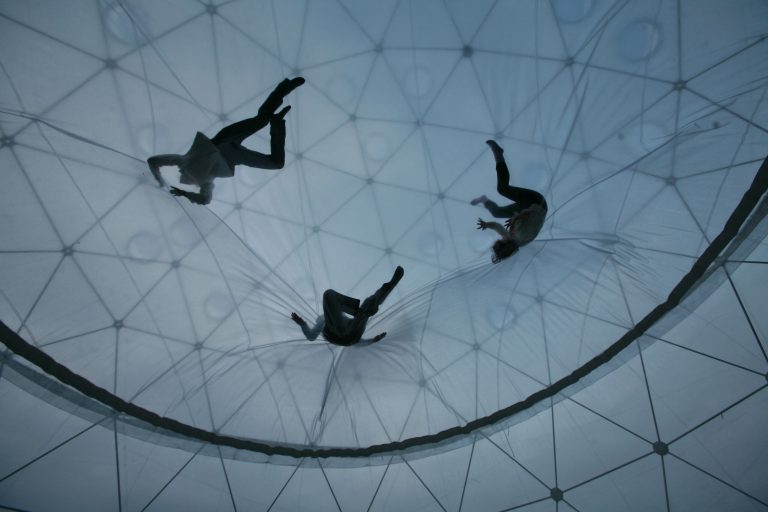
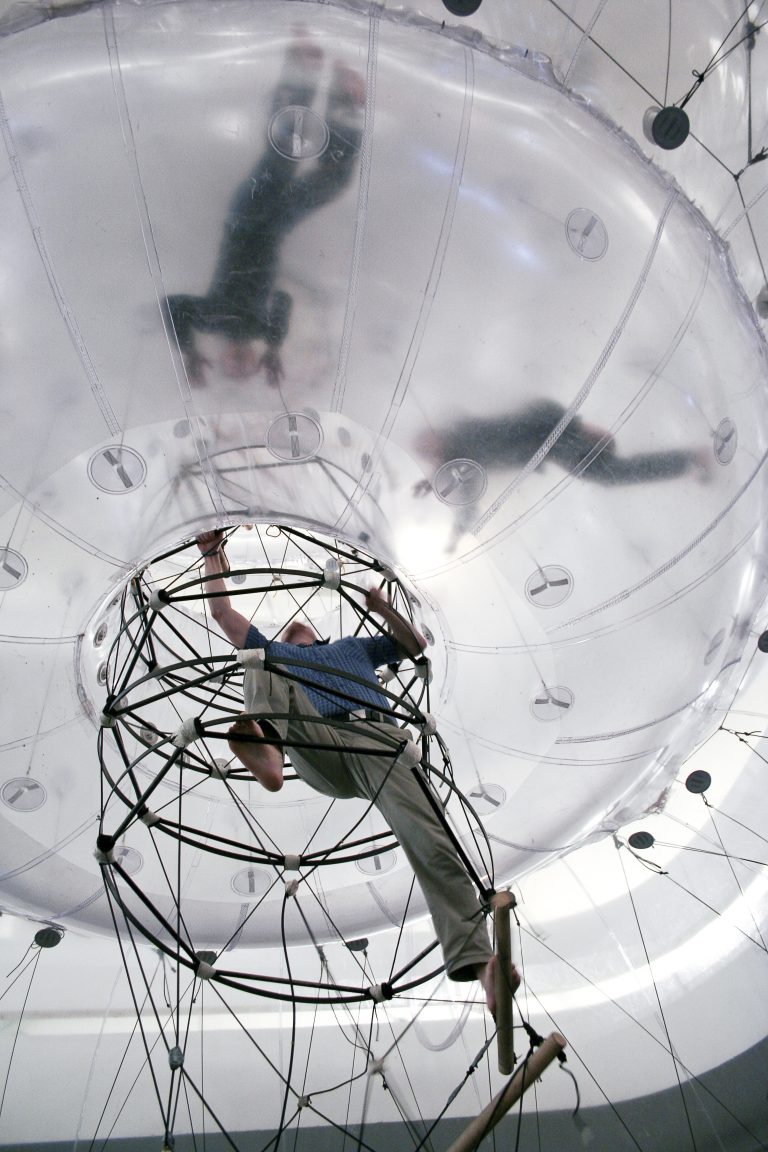
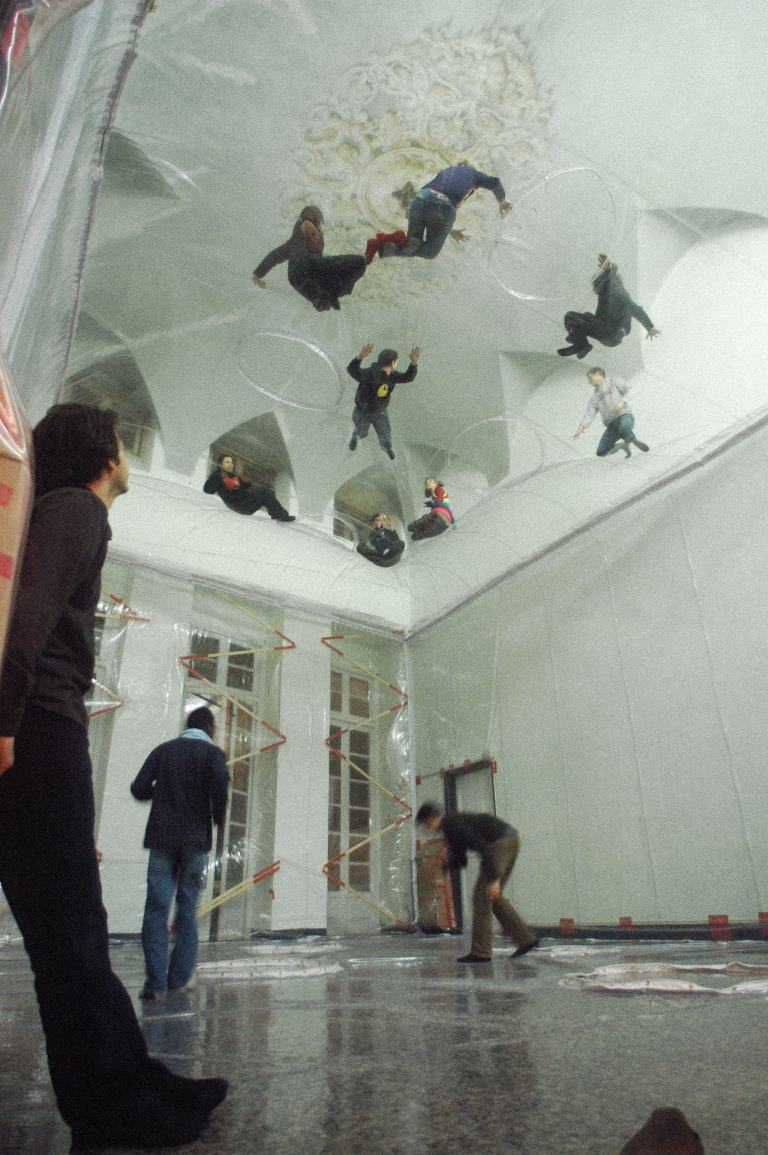
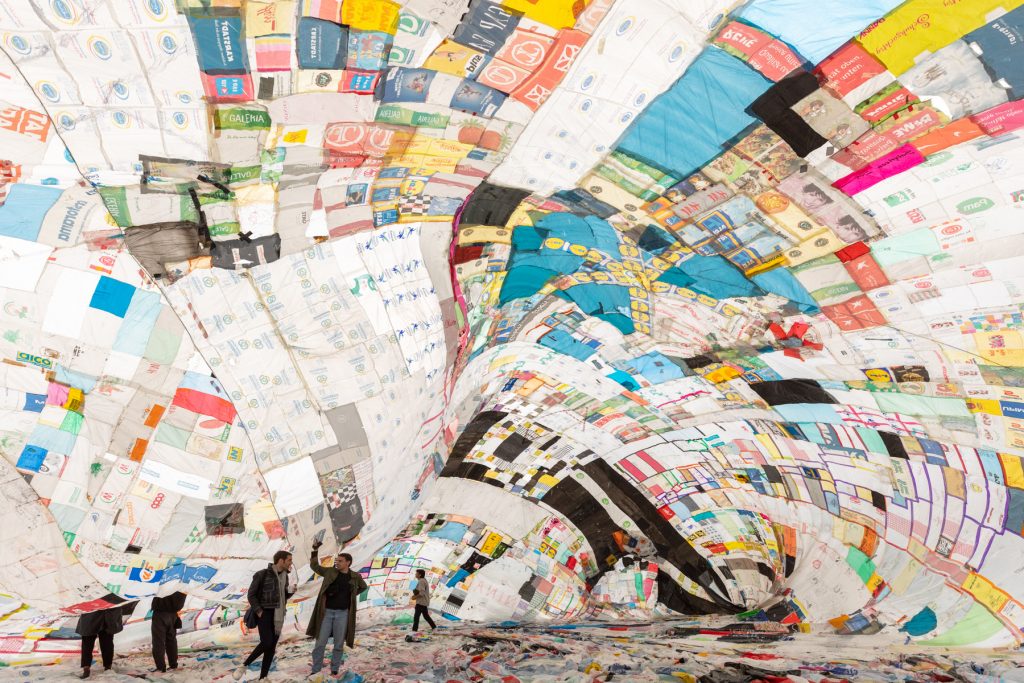
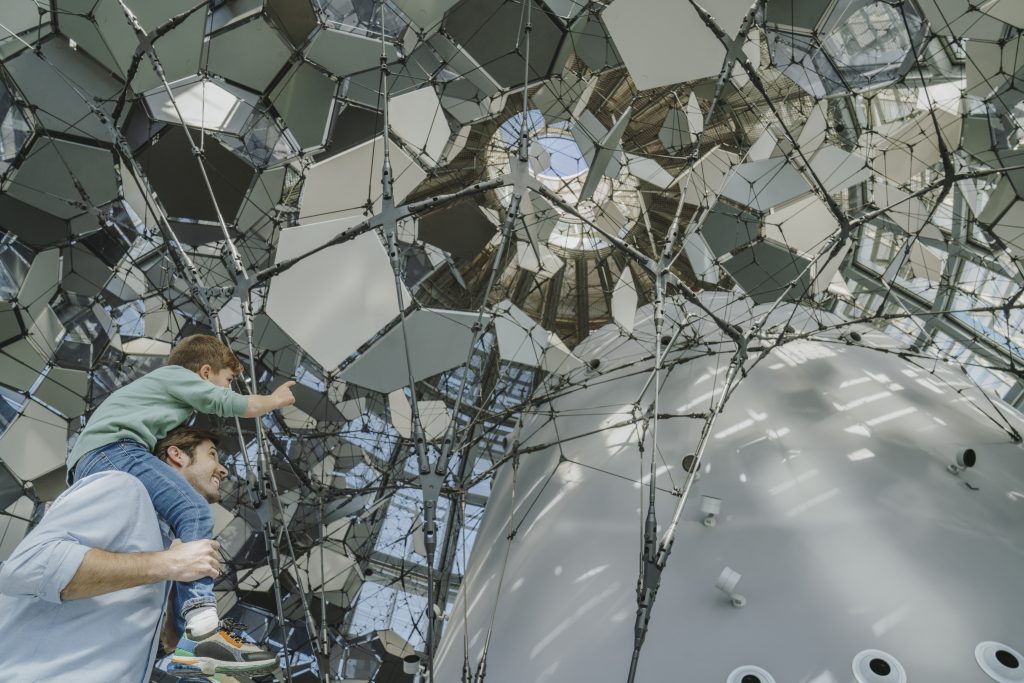
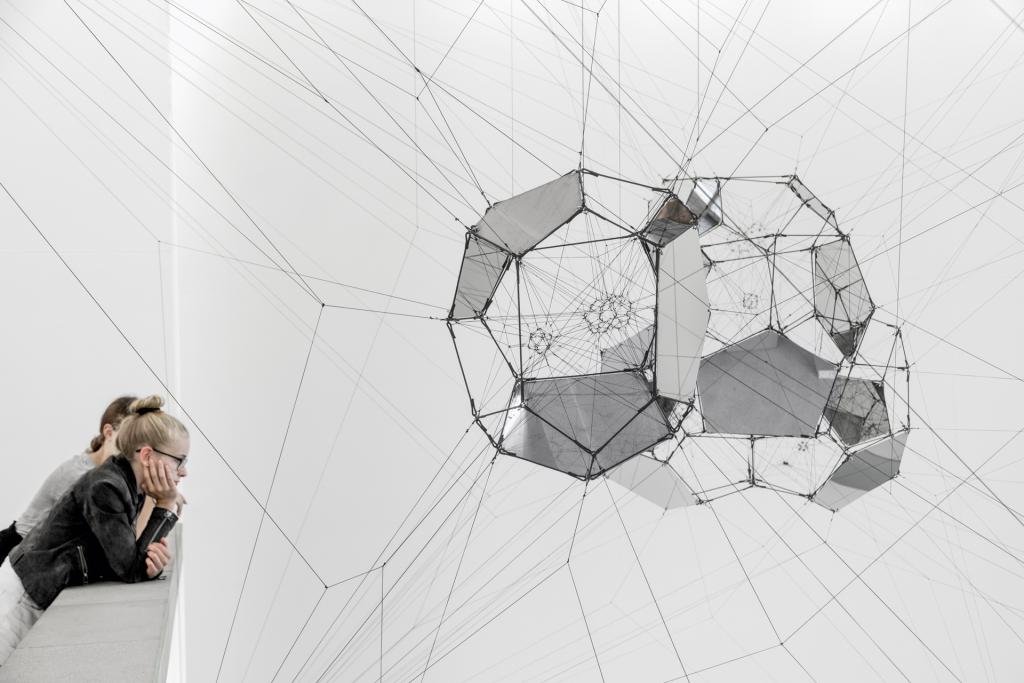
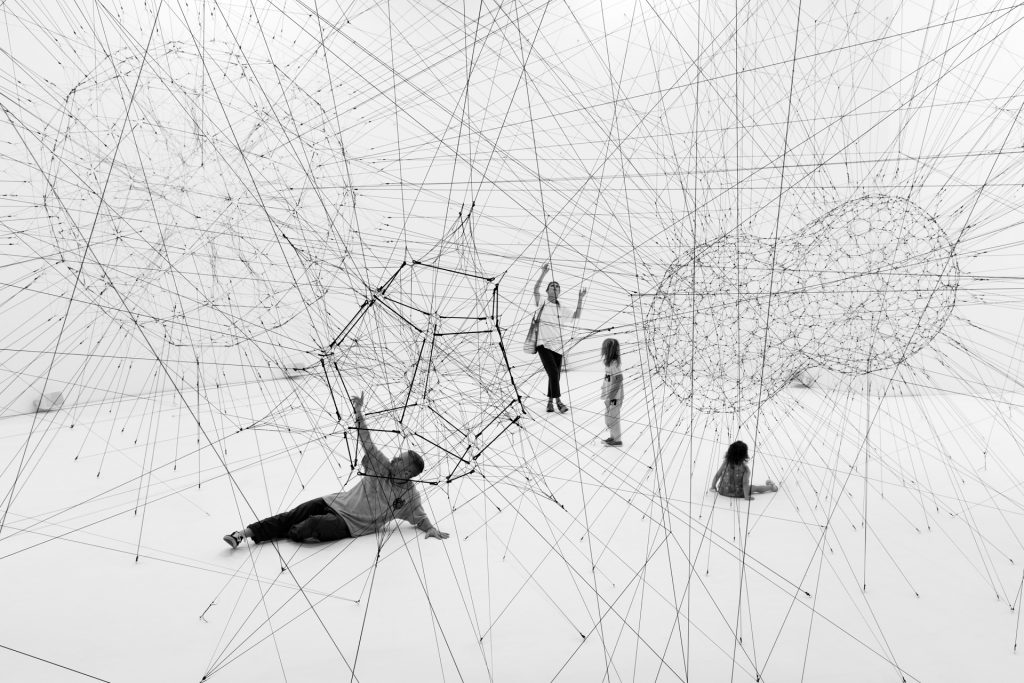
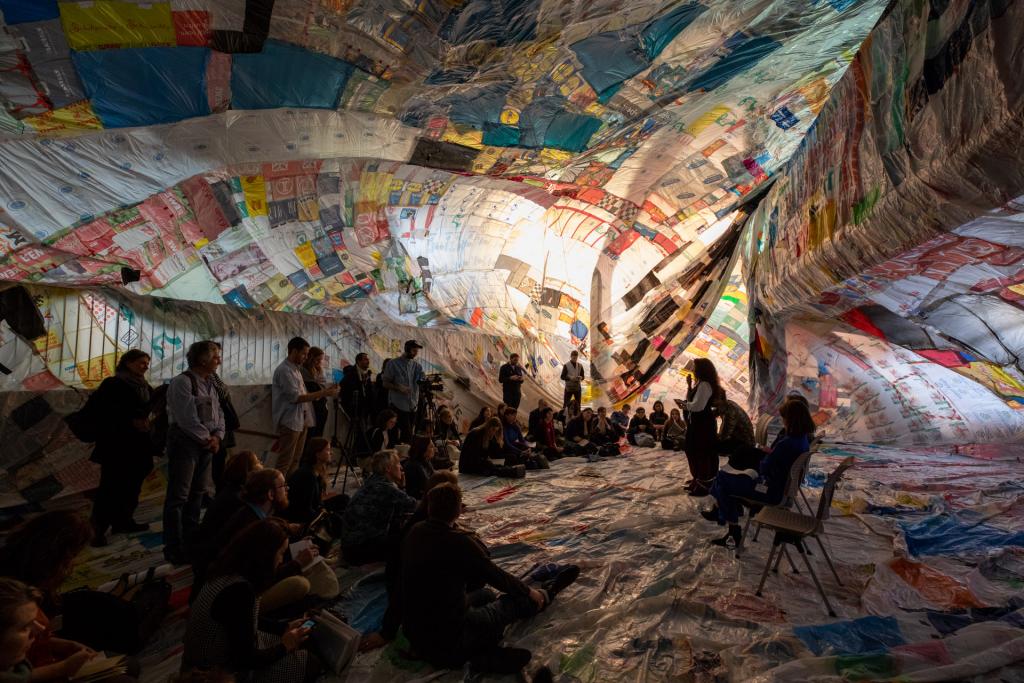
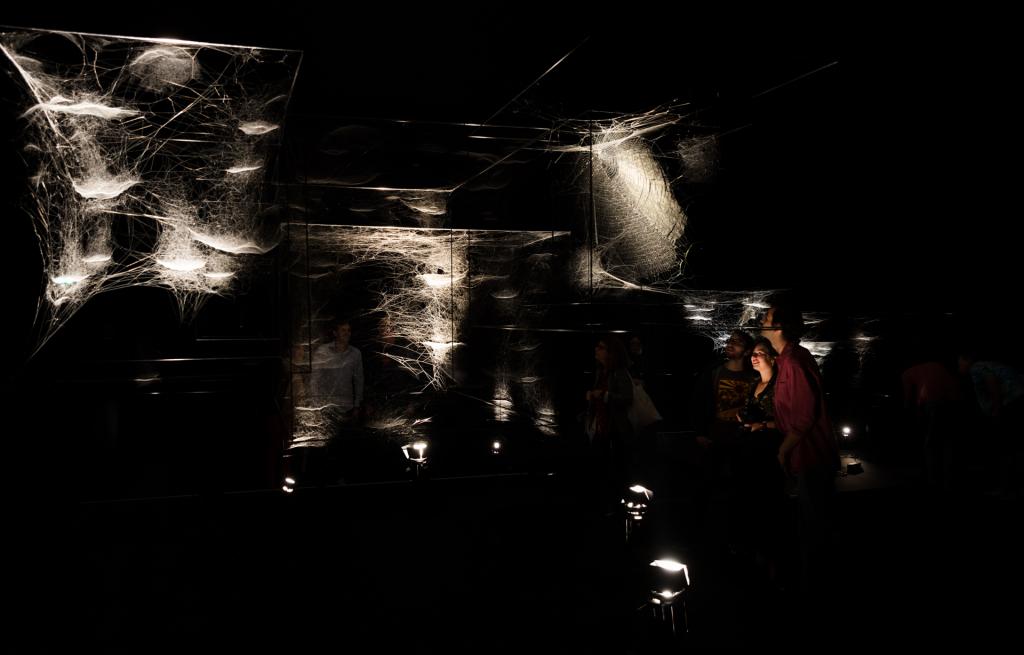
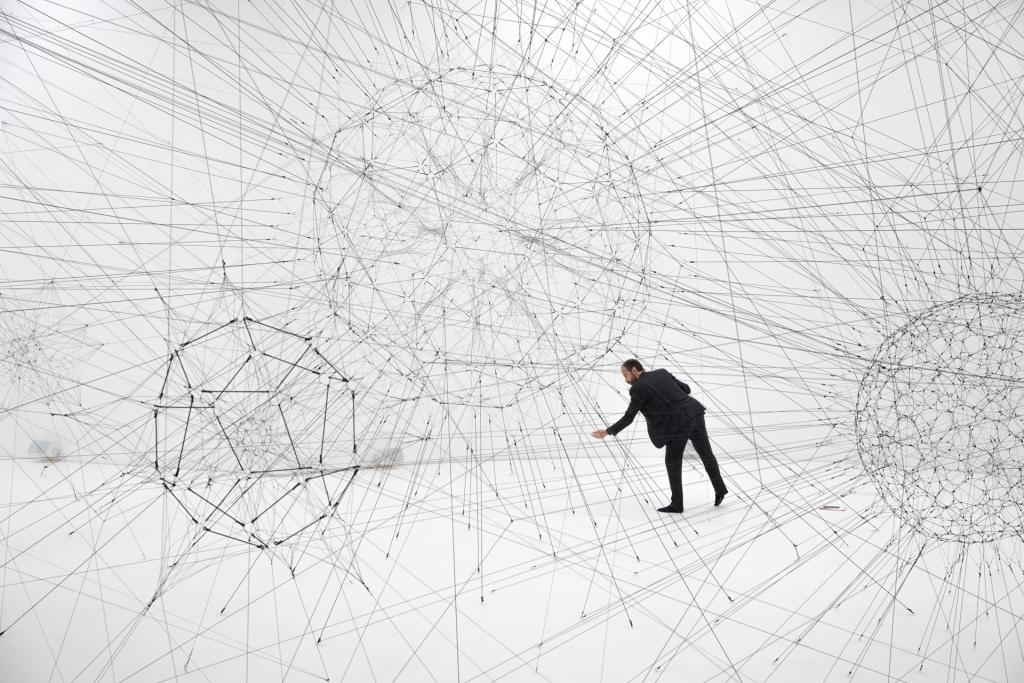
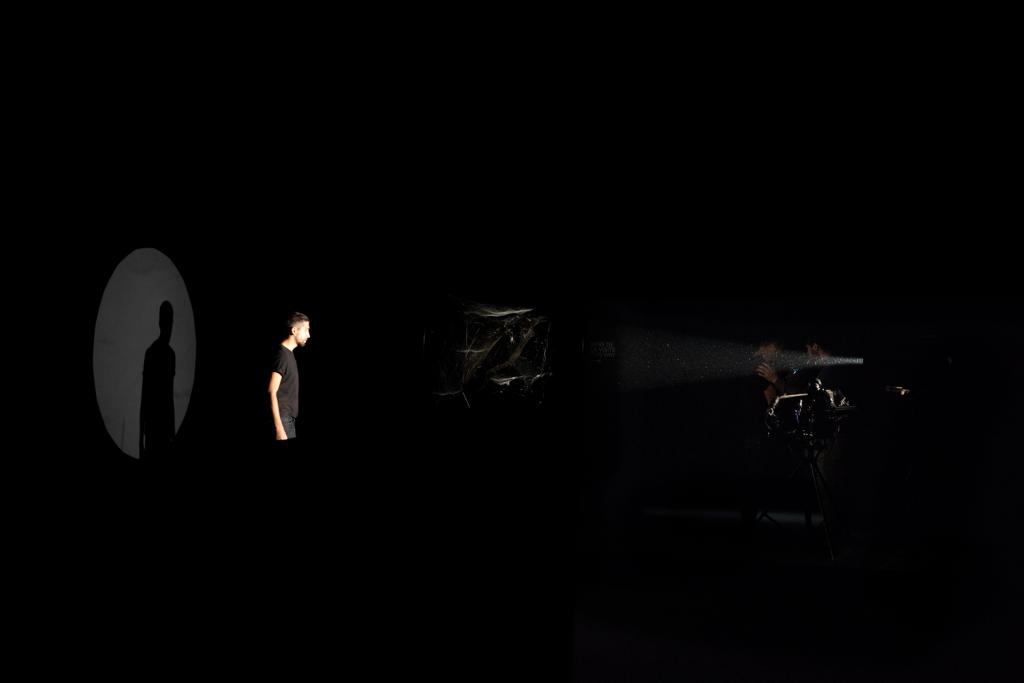
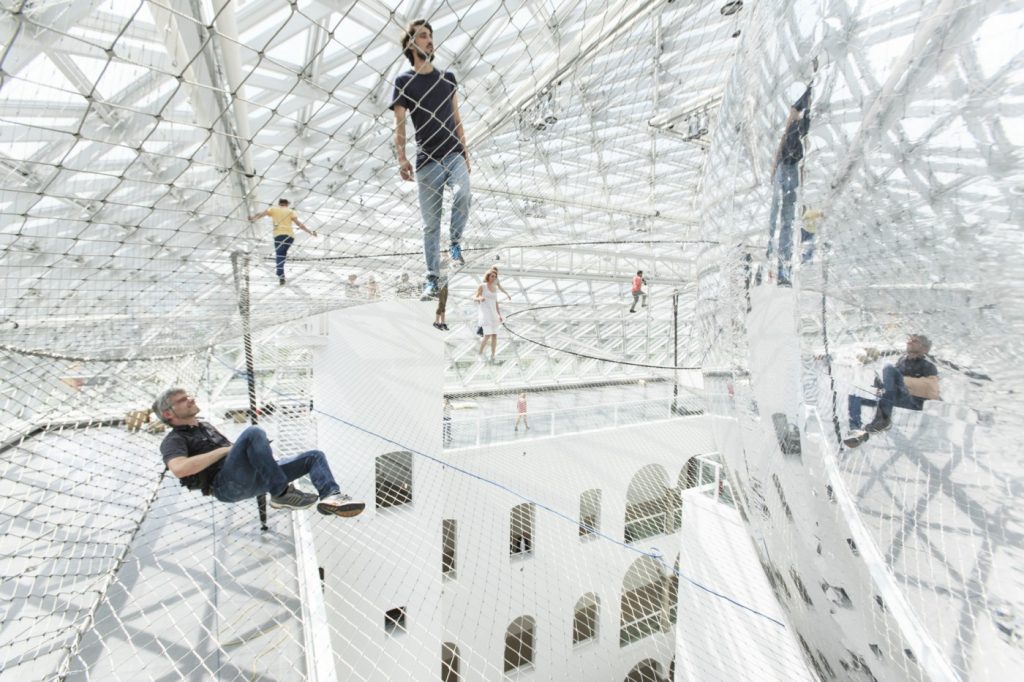
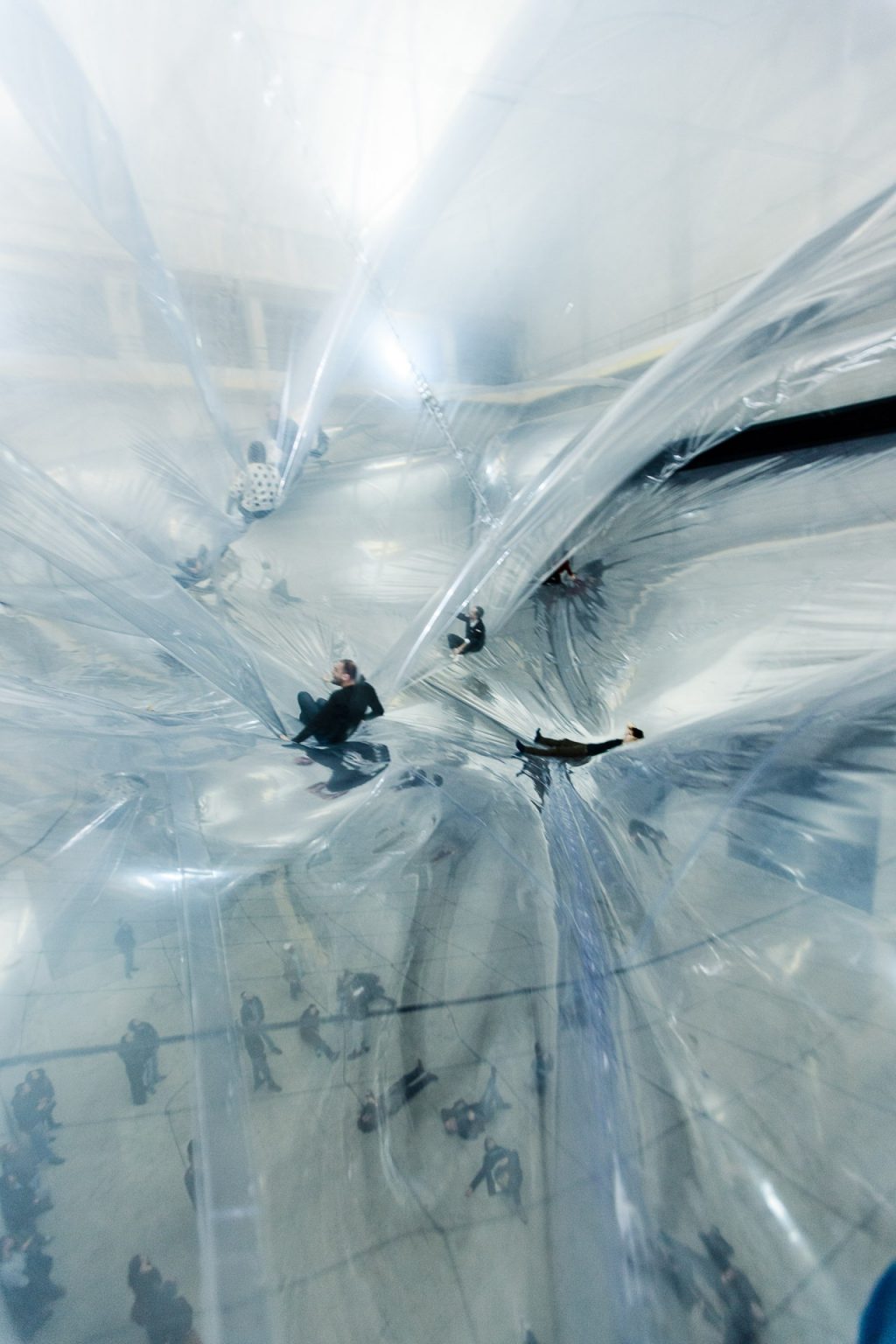
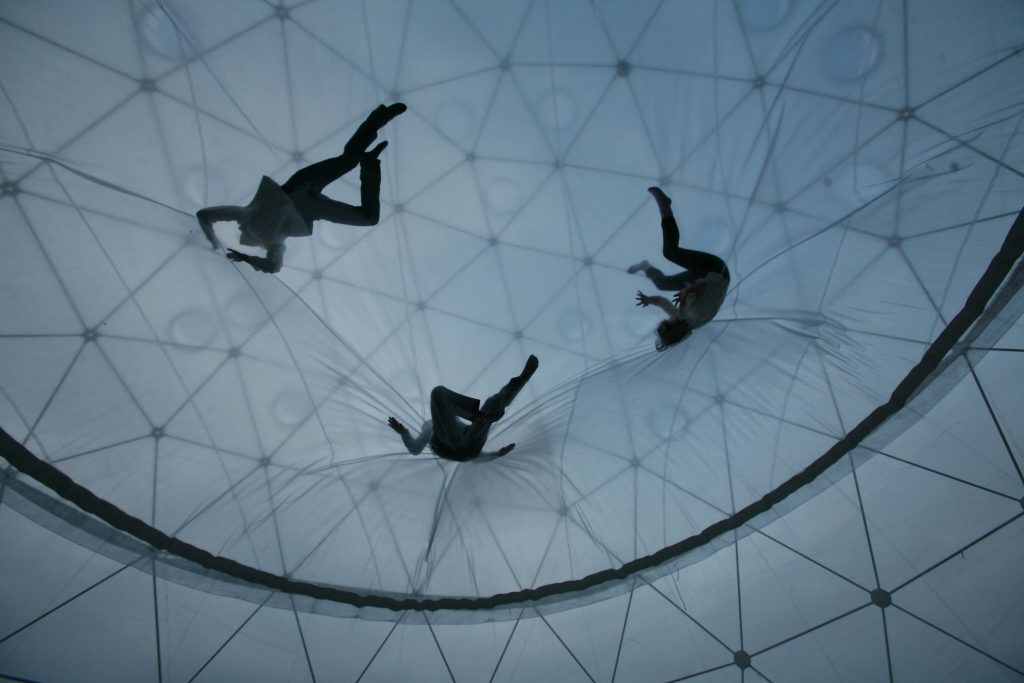
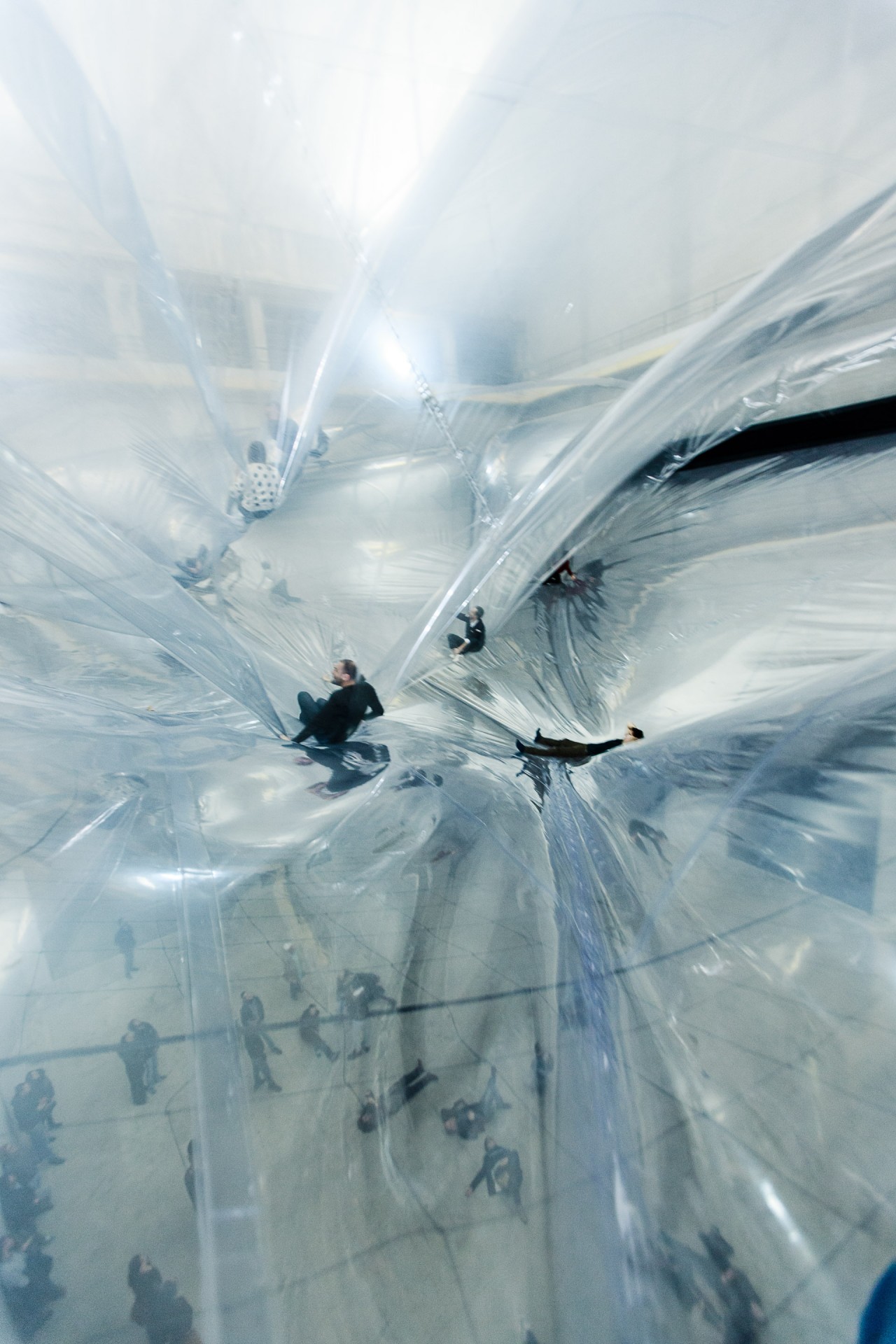
TS. In an astrophysical context I would call it mass, which is what wraps and shapes space and time. Mass is always relative. When you do a parabolic flight, the plane remains in free fall and you weigh nothing! According to Einstein, in the same way that a large ball placed on a elasticated cloth stretches the fabric and causes it to sag, so planets and stars warp space-time. A marble moving along a cloth will be drawn towards the ball, as the Earth is to the Sun, but not fall into it as long as it keeps moving. That is what is happening in the exhibition: if a very big person enters there, the membrane sinks. If there are five persons very close together, it will not be easy for them to get out of there because their weight pushes them down, which is a sort of sociological black hole. So I am trying to weave cosmic and sociological waves with the help of the concept of proxemics as developed by the anthropologist Edward T. Hall.
FR. What is gravity?
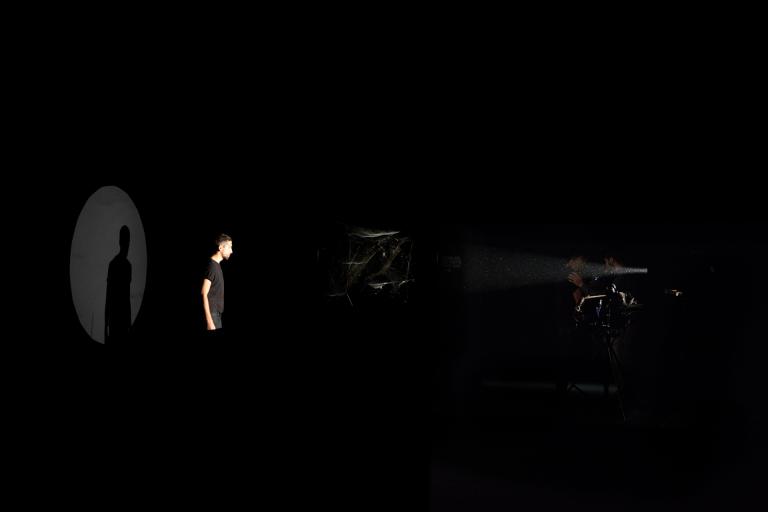
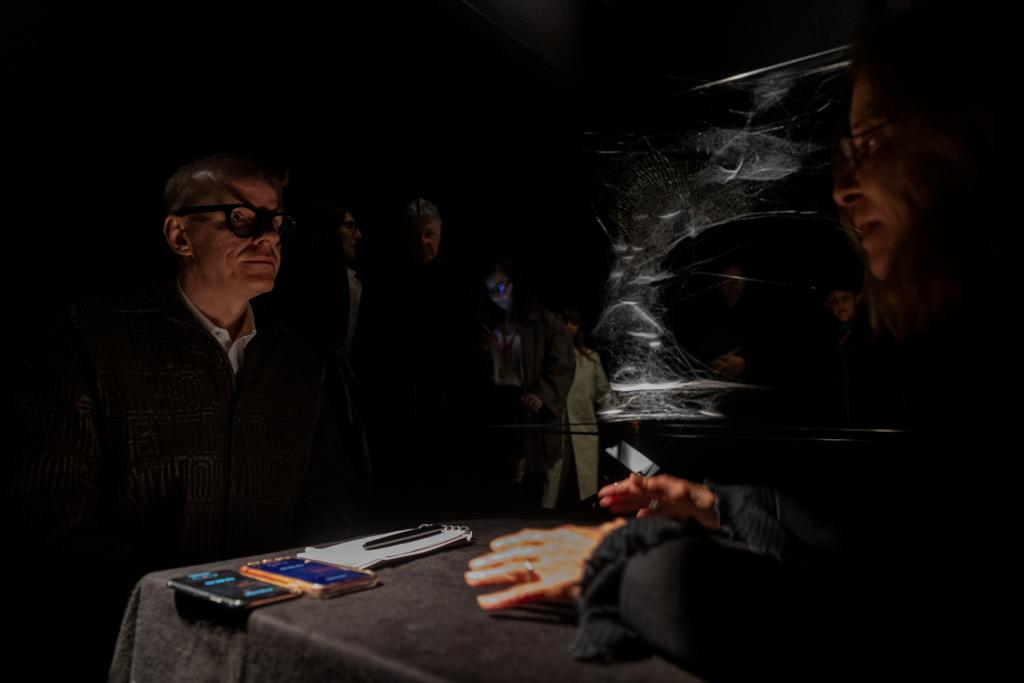
TS. To continue with proxemics, imagine a room full of people where suddenly one of them receives a very important nomination. From that moment onwards, the distance that you had talking with him grows and space is formed between you and him. That is what proxemics does: it analyses how space is conditioned and measured according to our knowledge and cultural background. This project will include a physical demonstration of how individuals form space by relating to each other. Remember this is a lasagne-like structure, with no space between its sheets. When you go in, the weight of your body forms space by stretching and opening the material as you transit. It is difficult to picture a more co-related and co-dependent space than that one! Up there, any of my movements will condition yours and those of everybody else.
FR. What is rhythm?
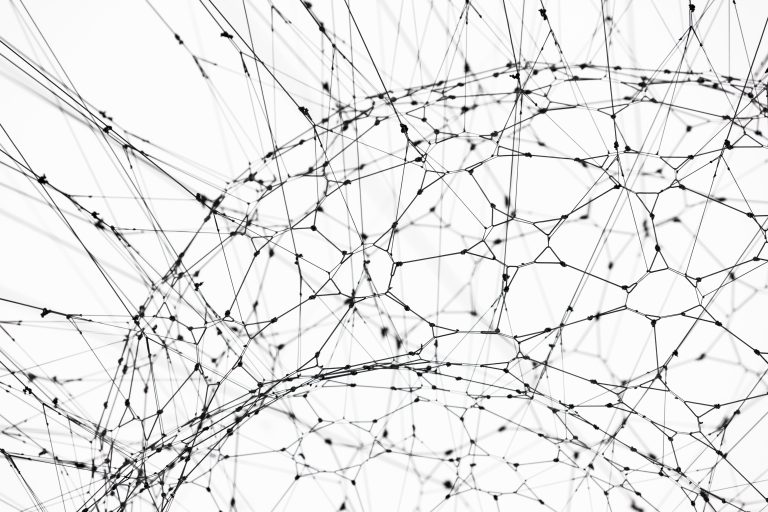
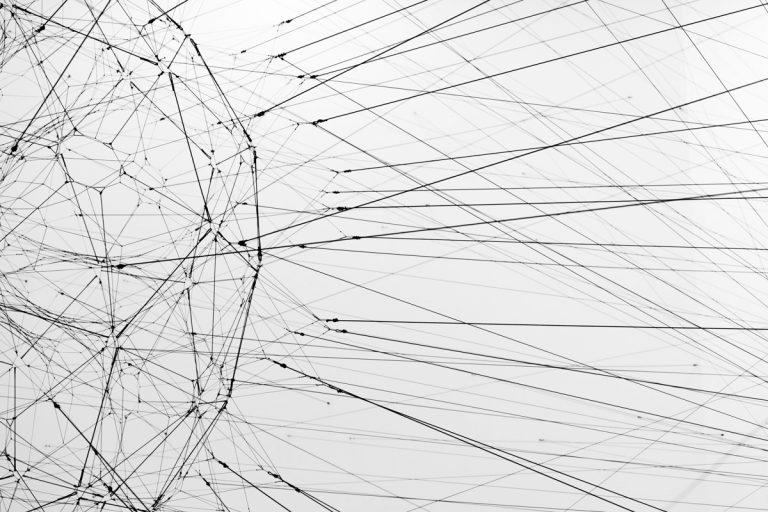
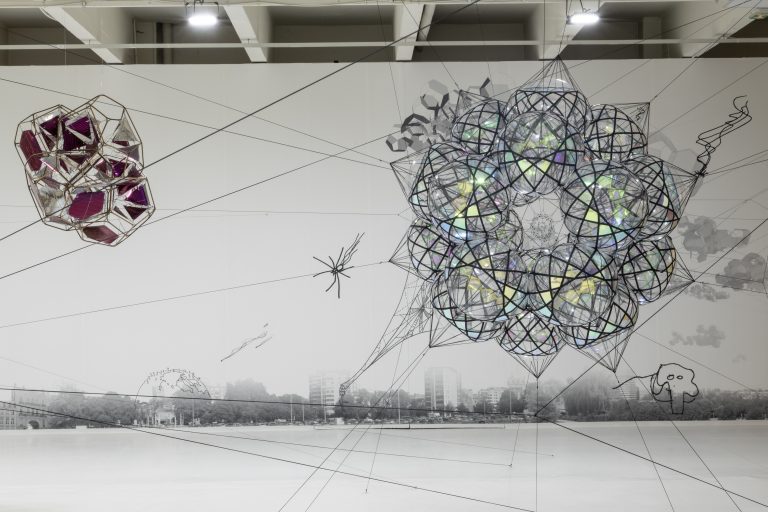
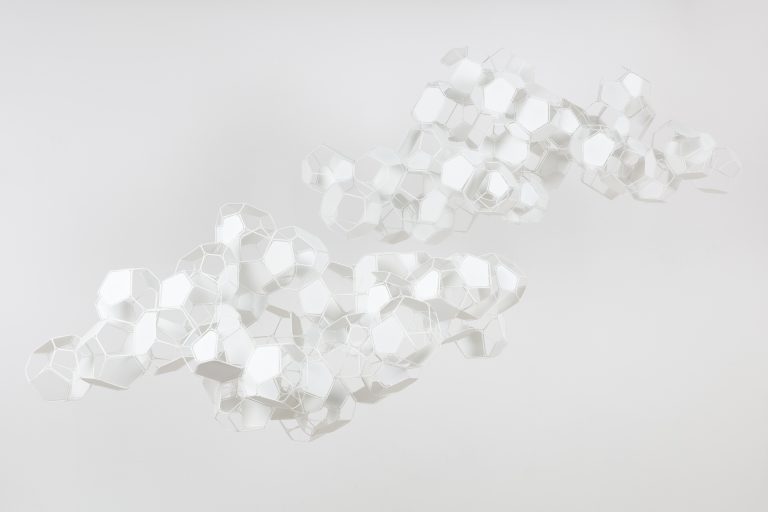
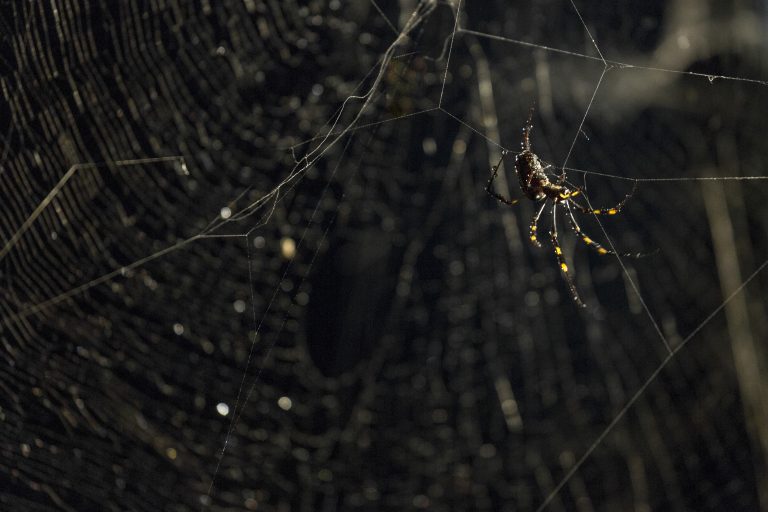
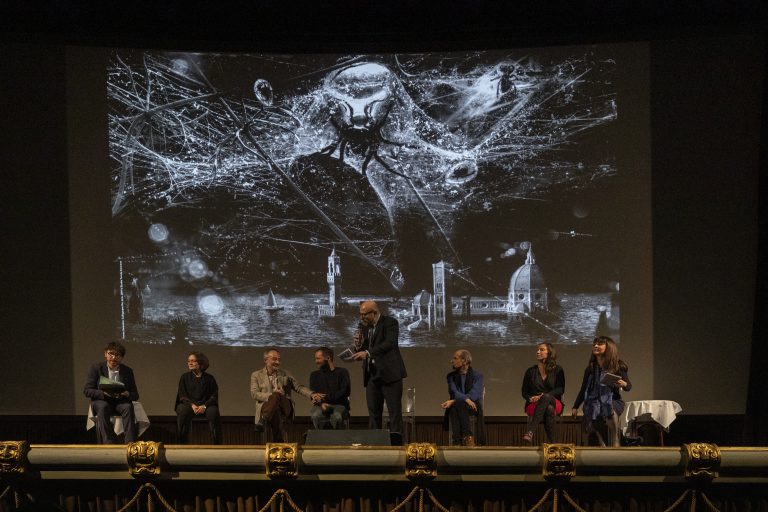
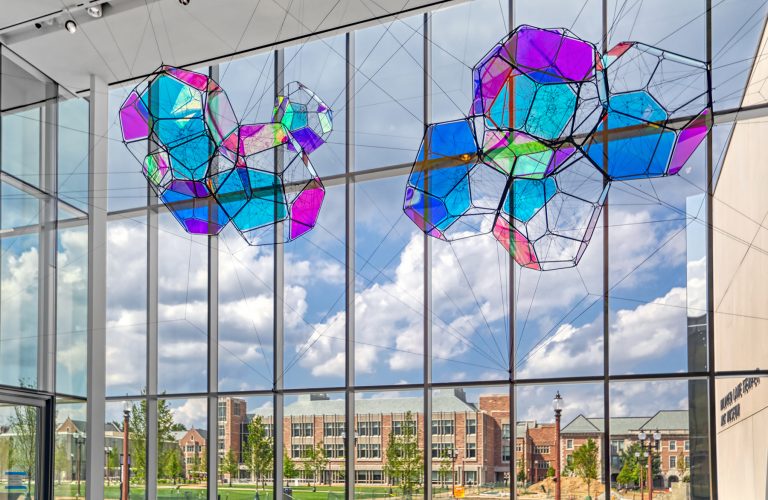
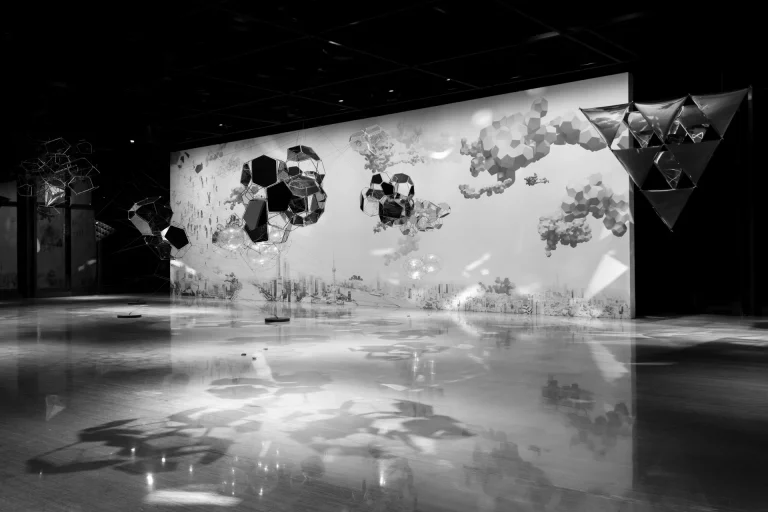
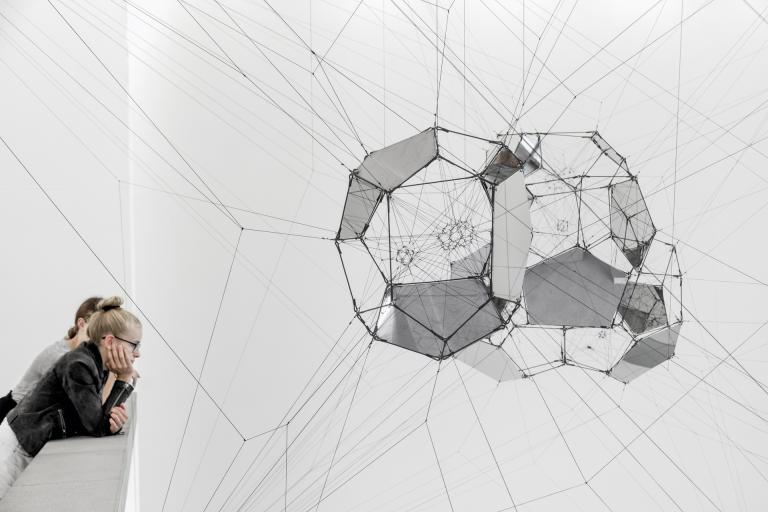
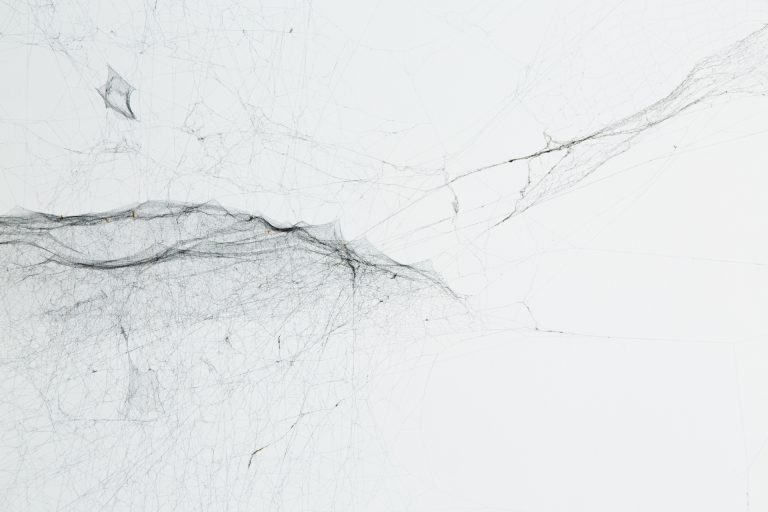
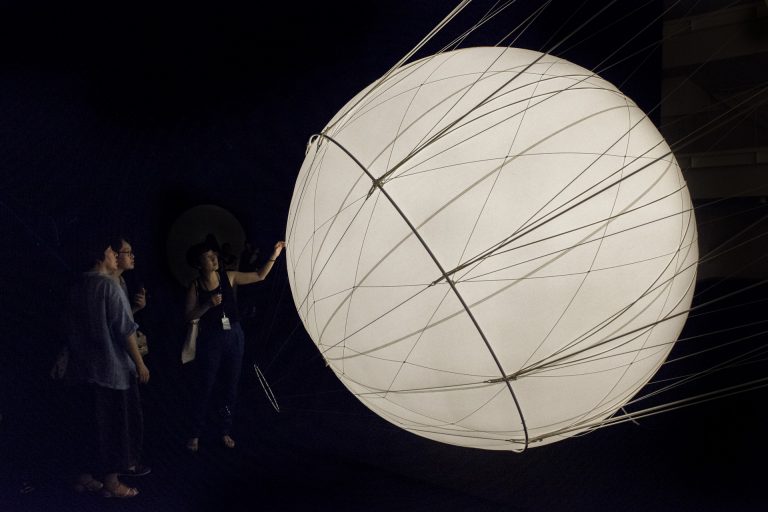
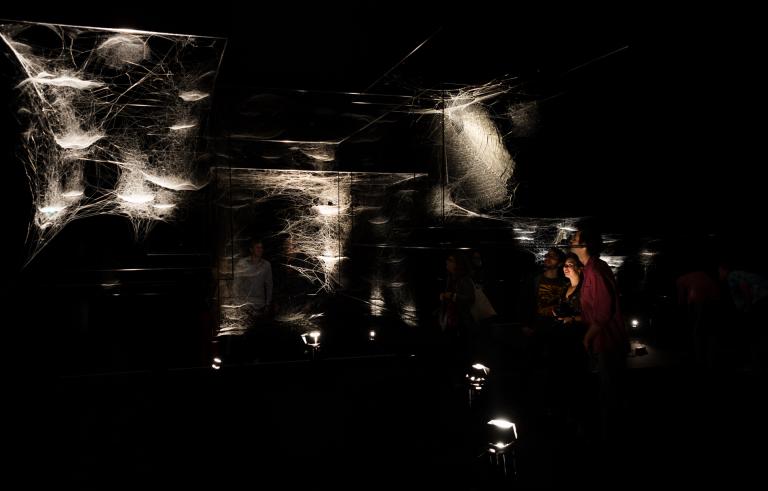
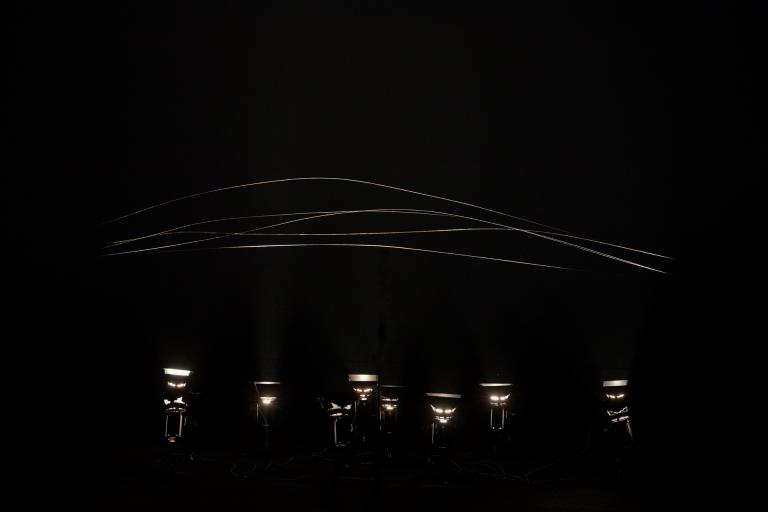
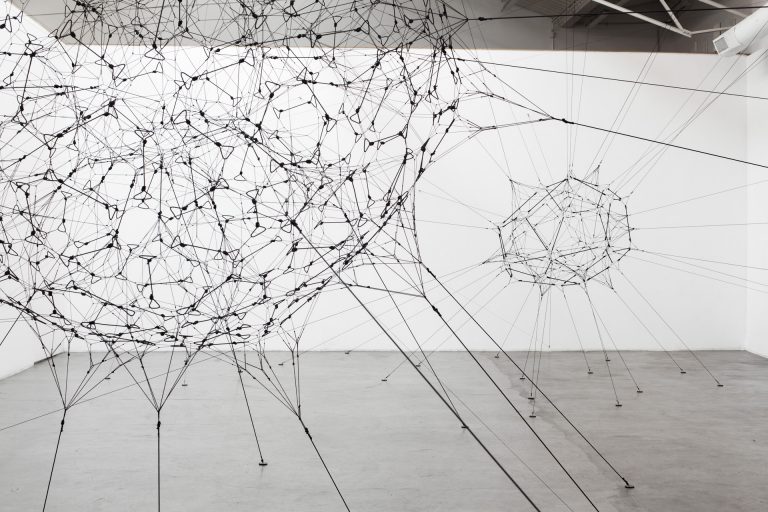
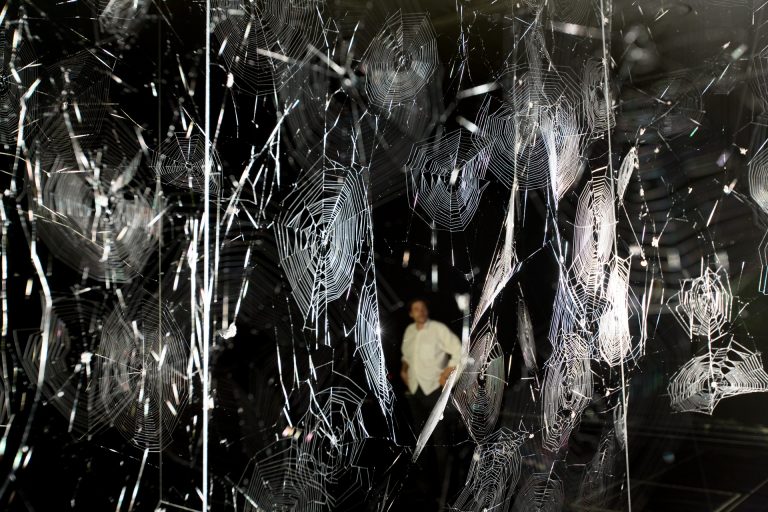
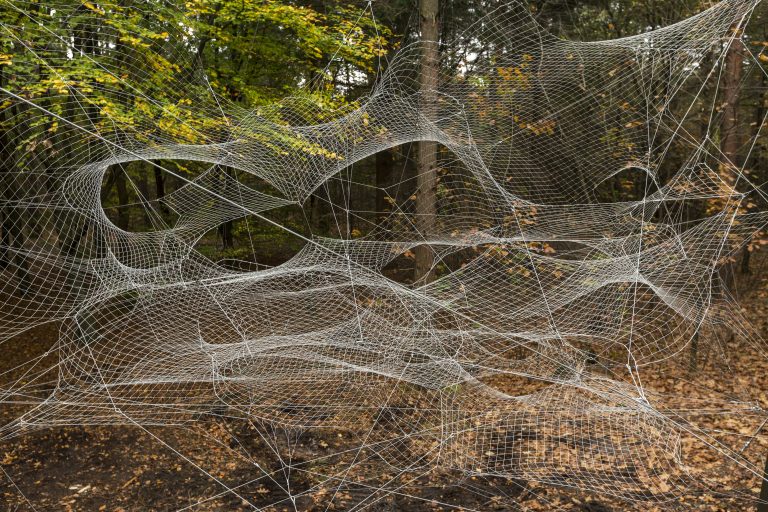
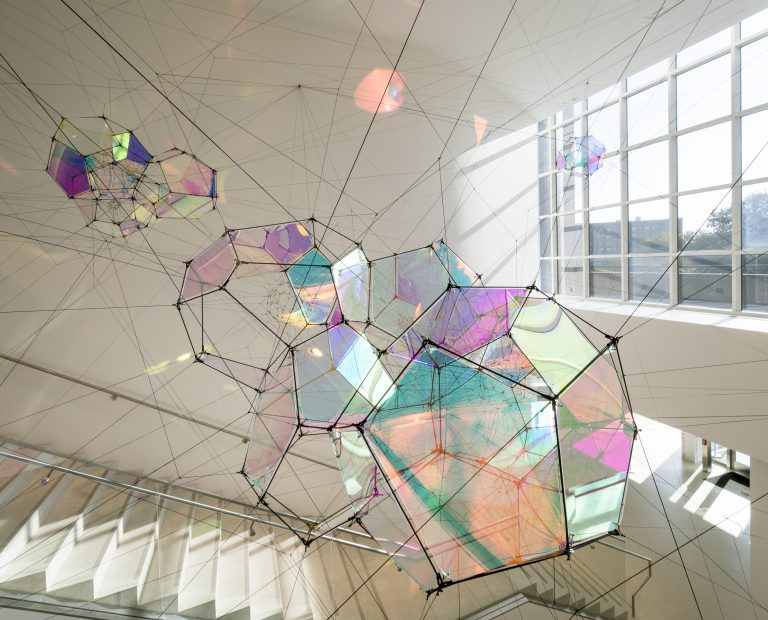
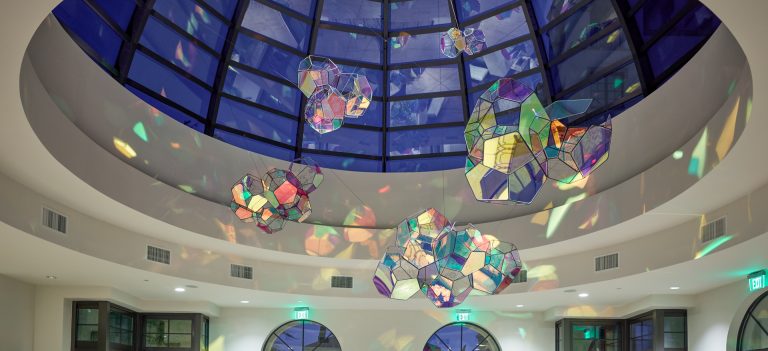
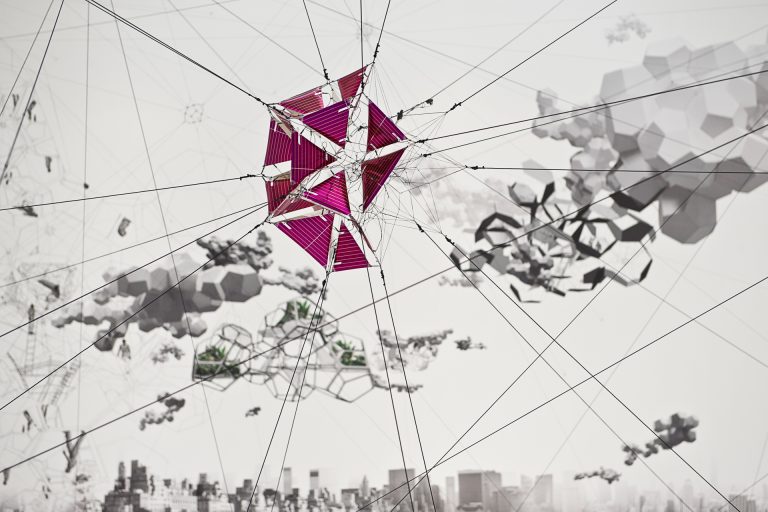
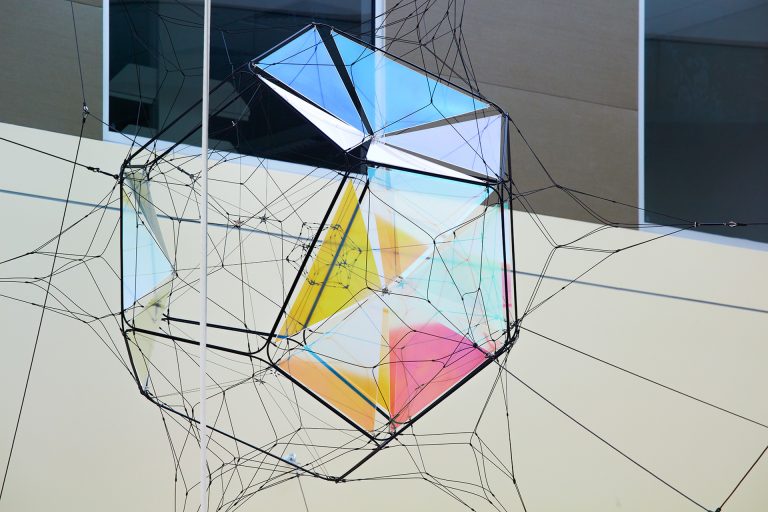
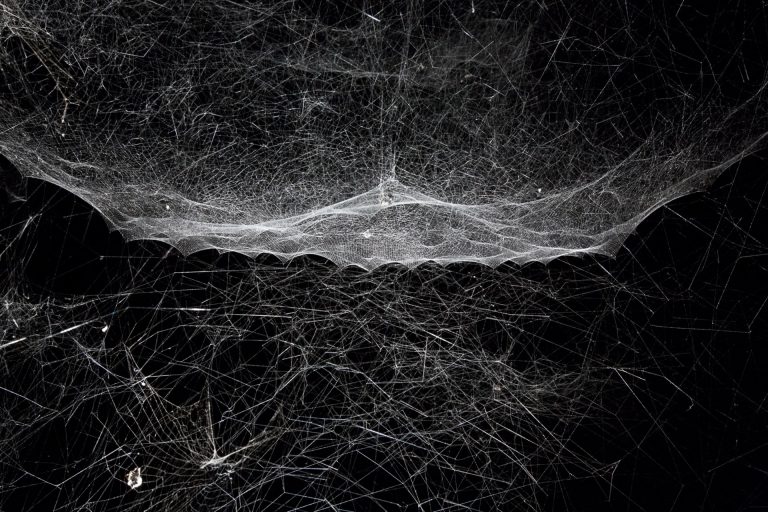
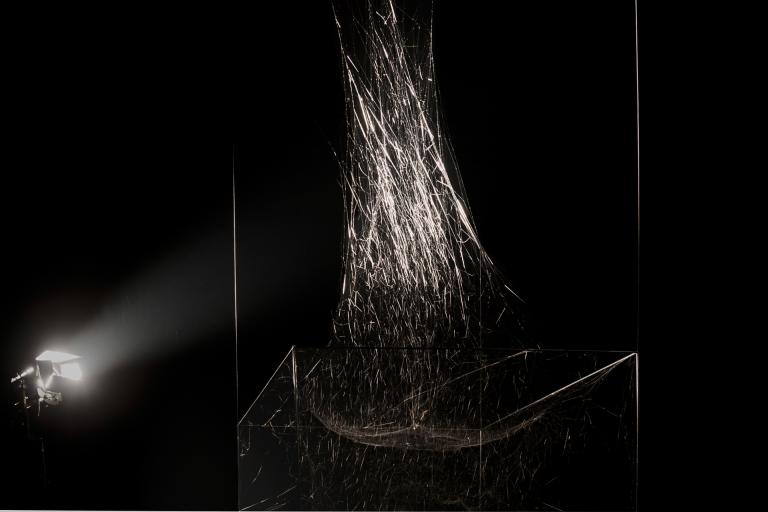
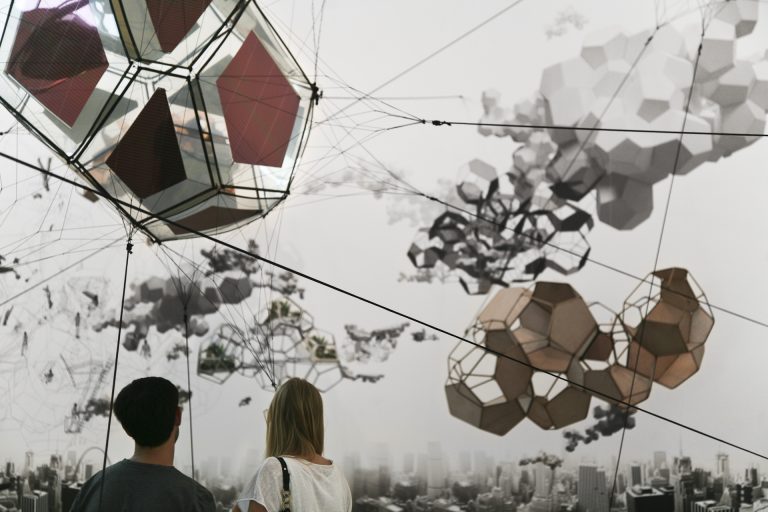
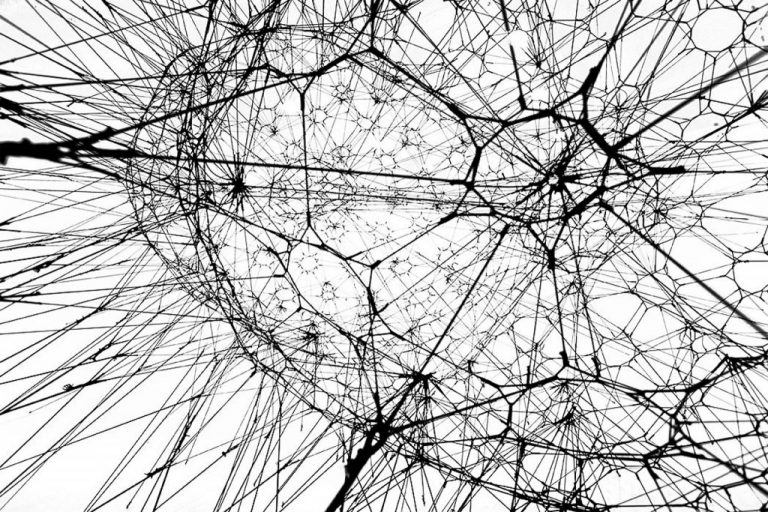
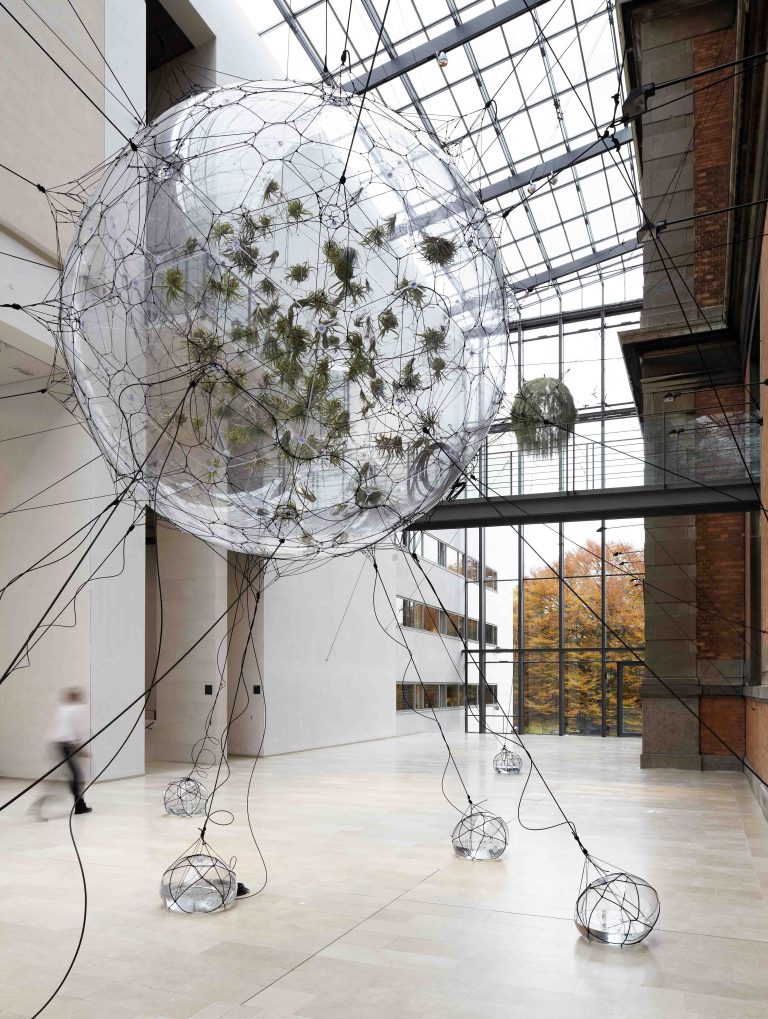
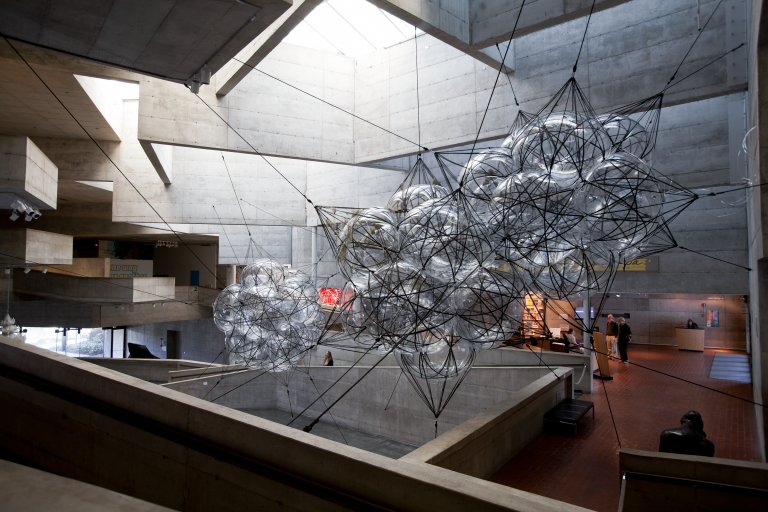
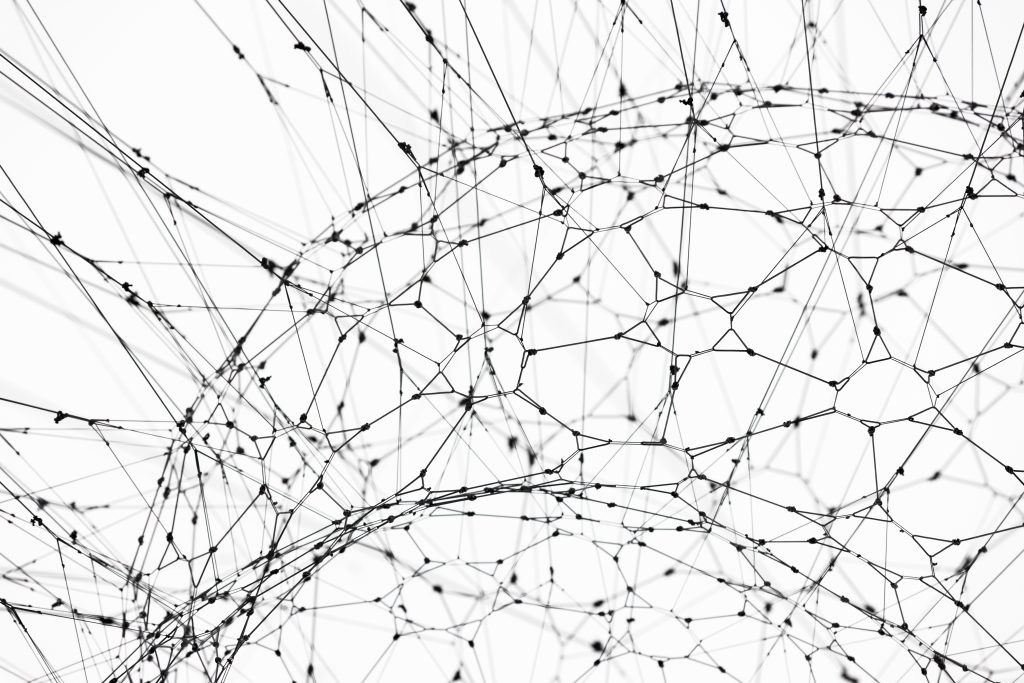
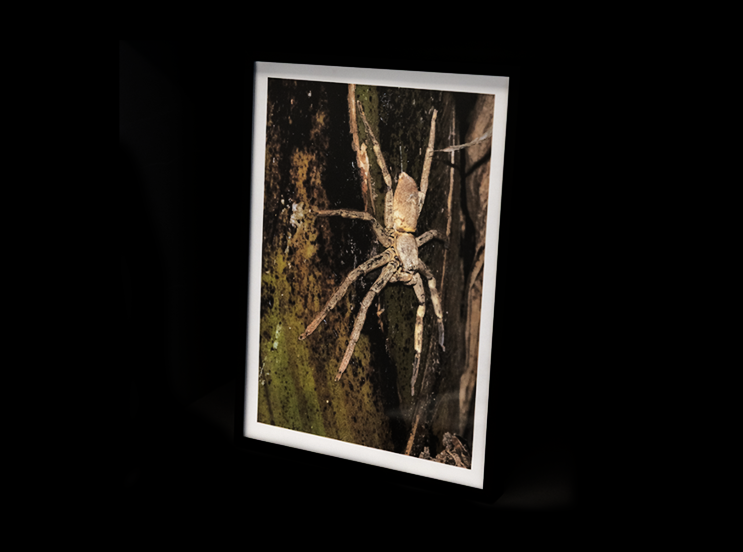
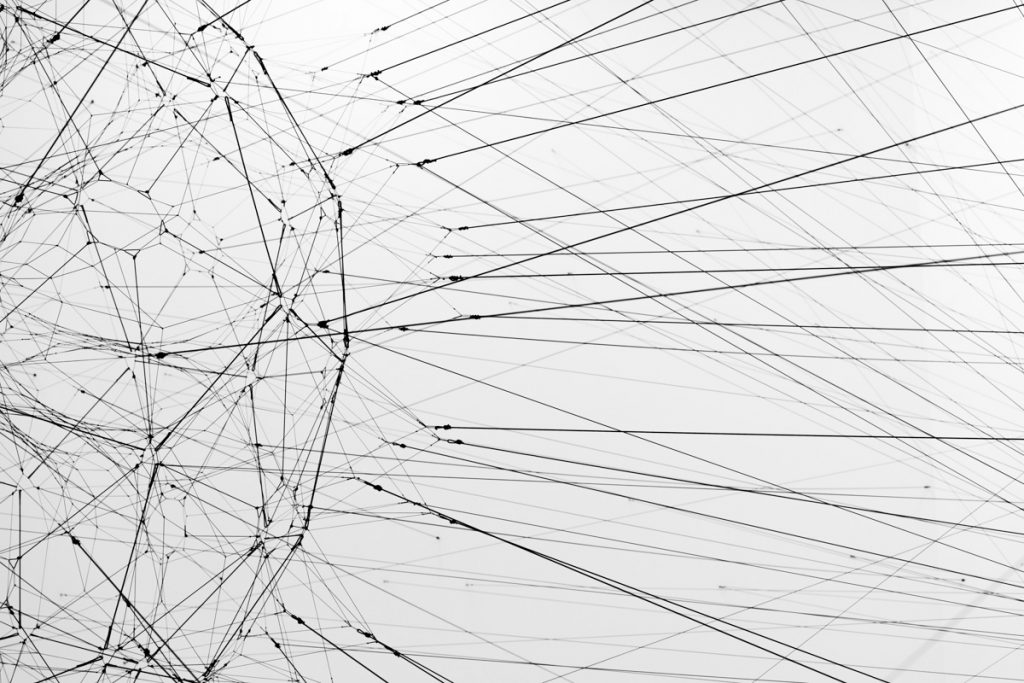
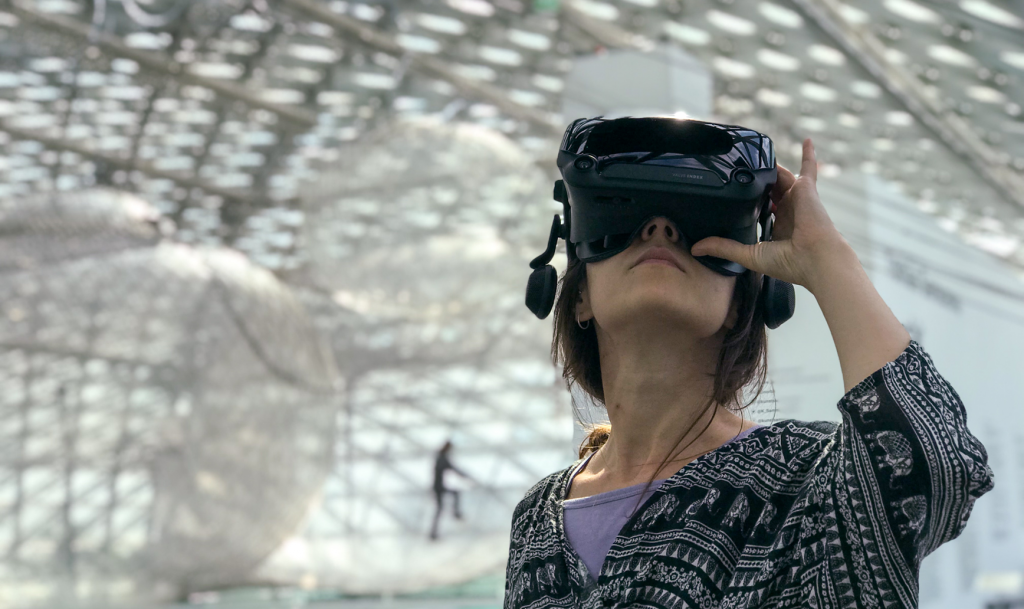
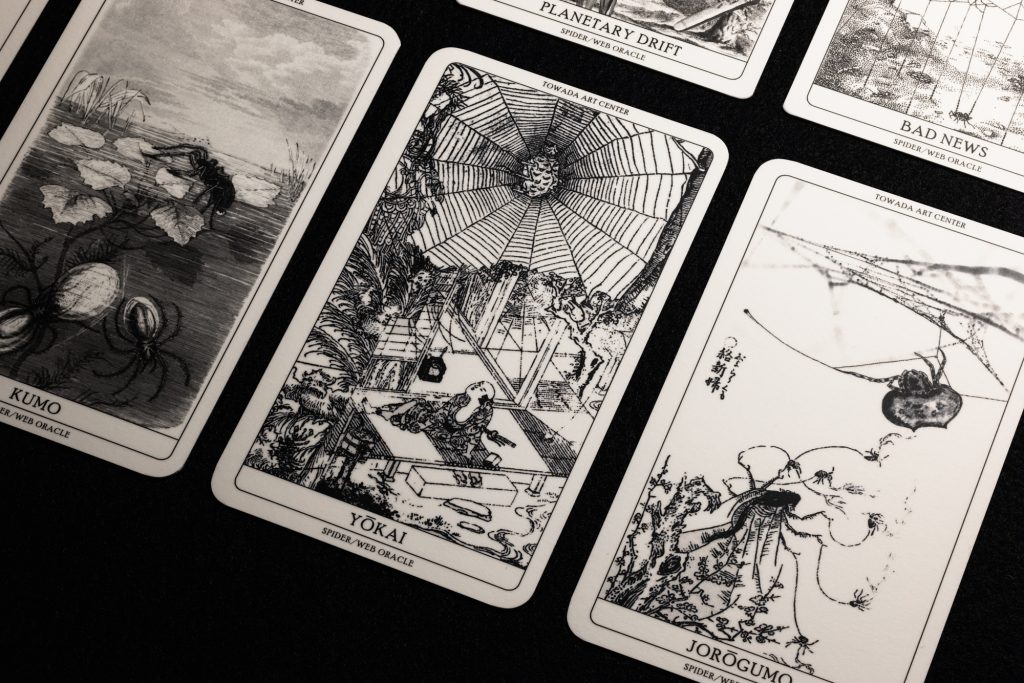
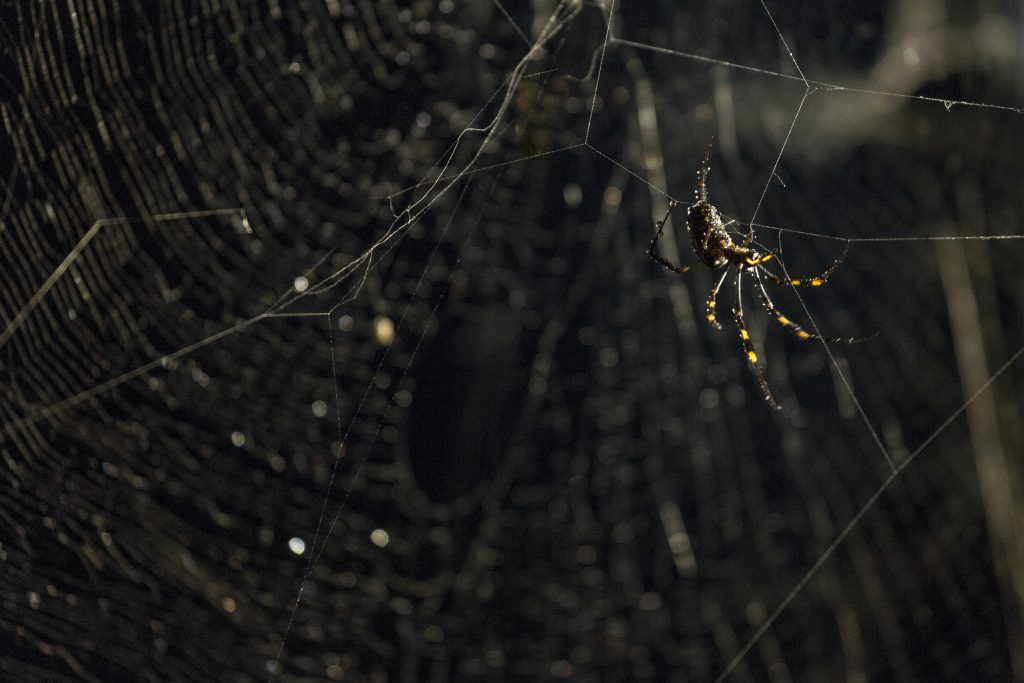
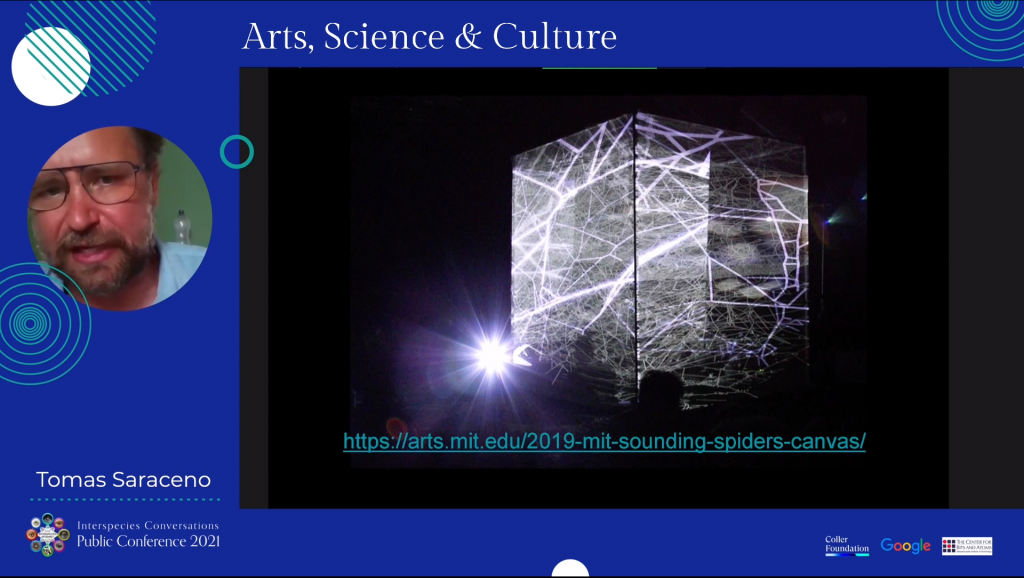
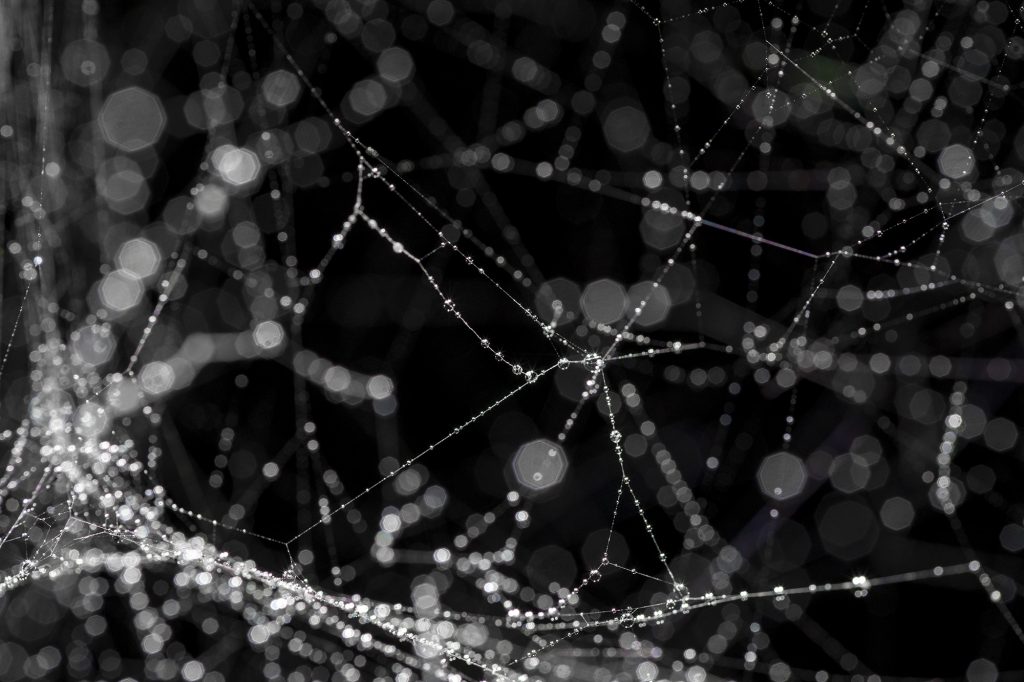
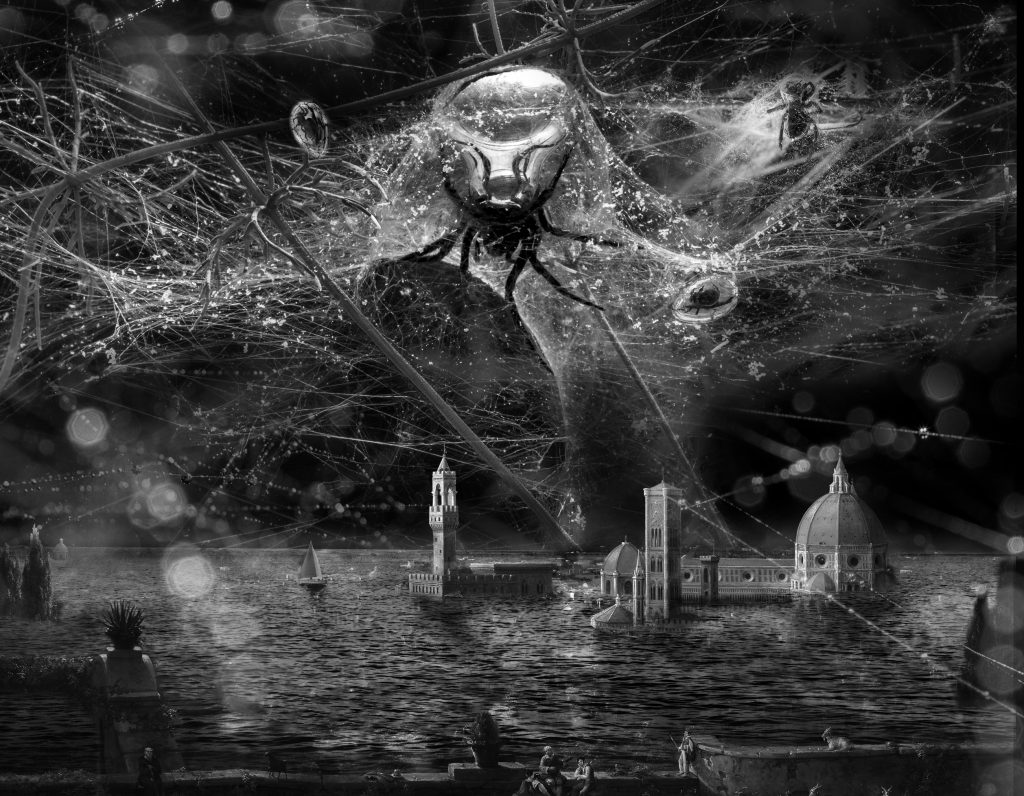
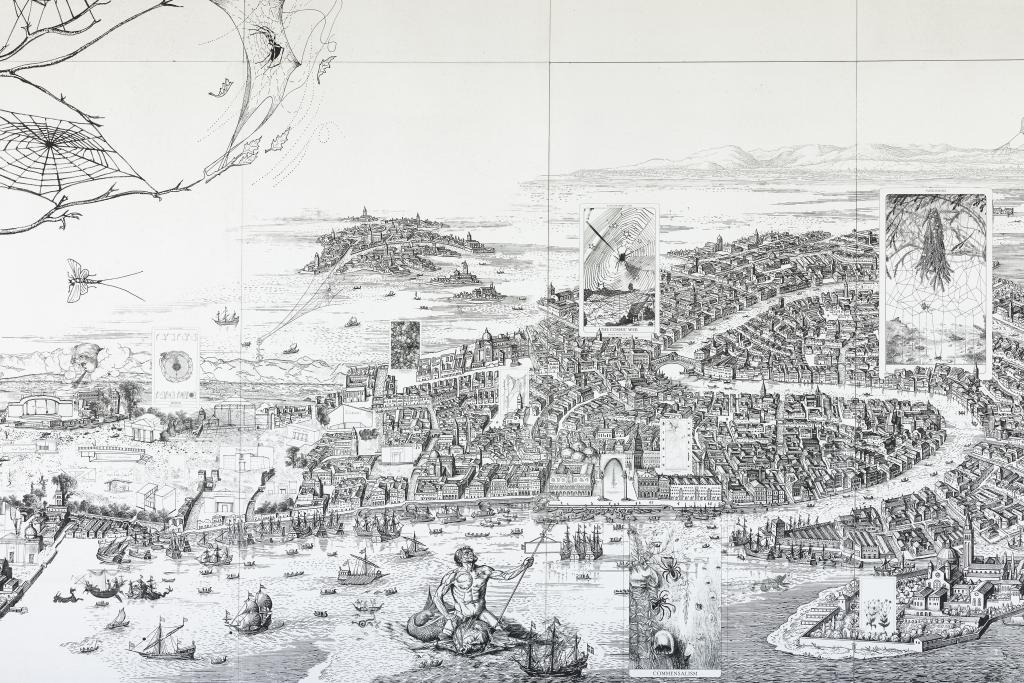
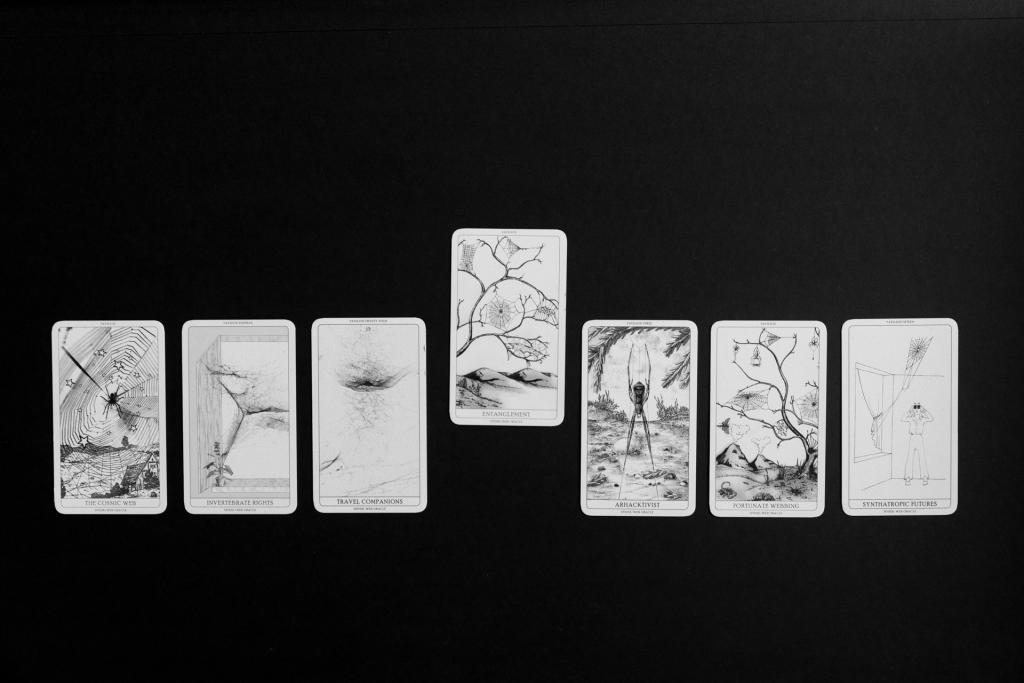
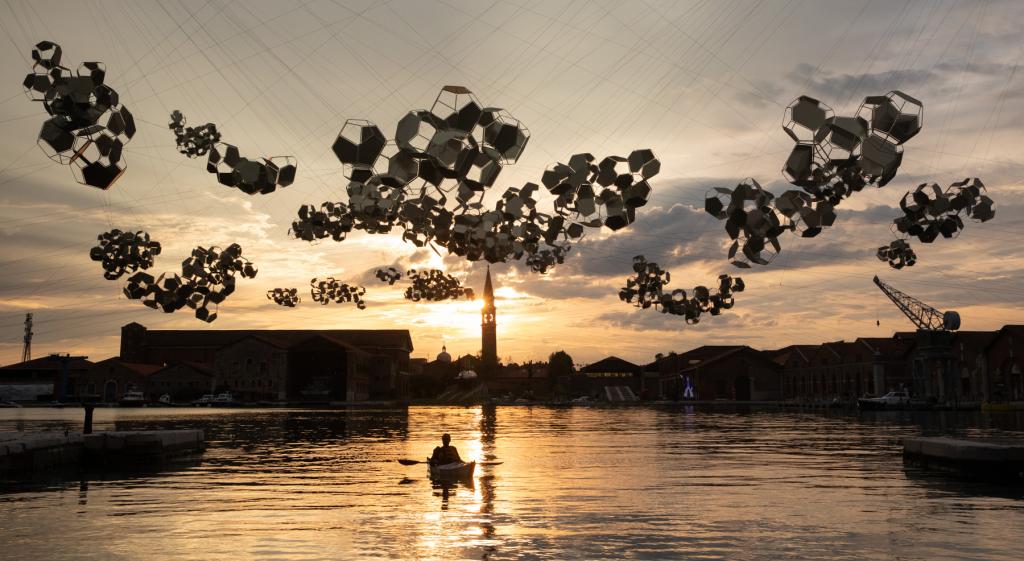
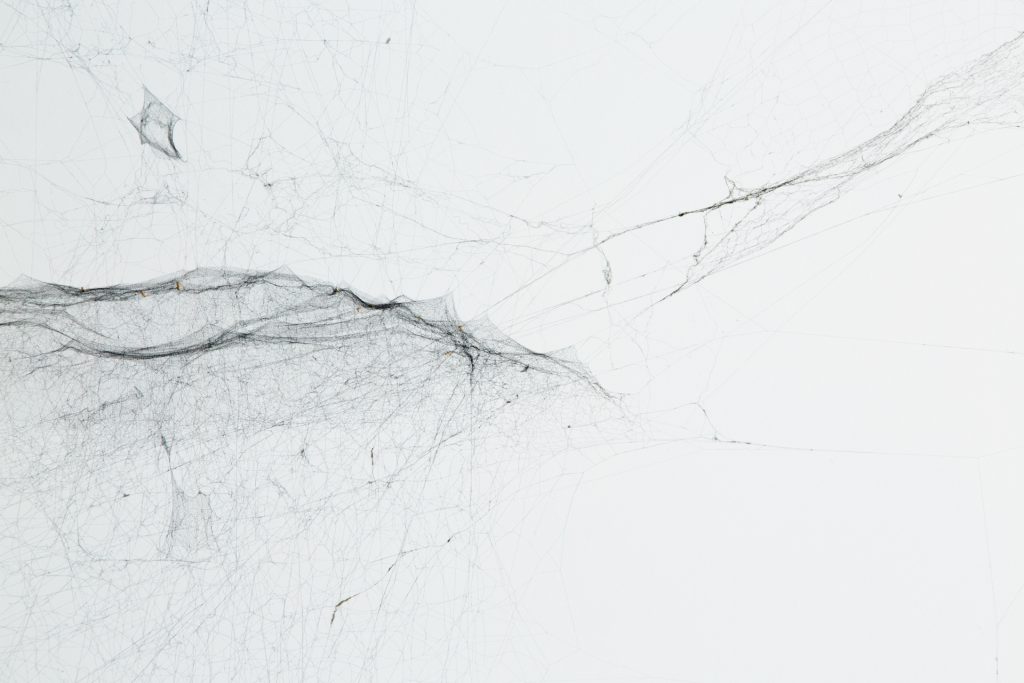
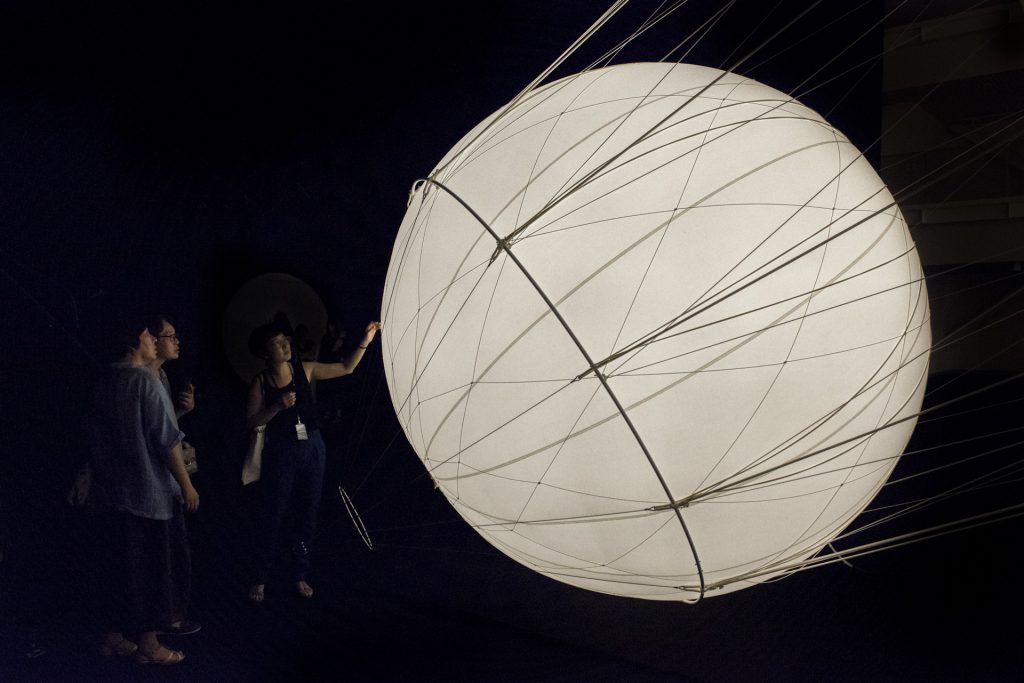
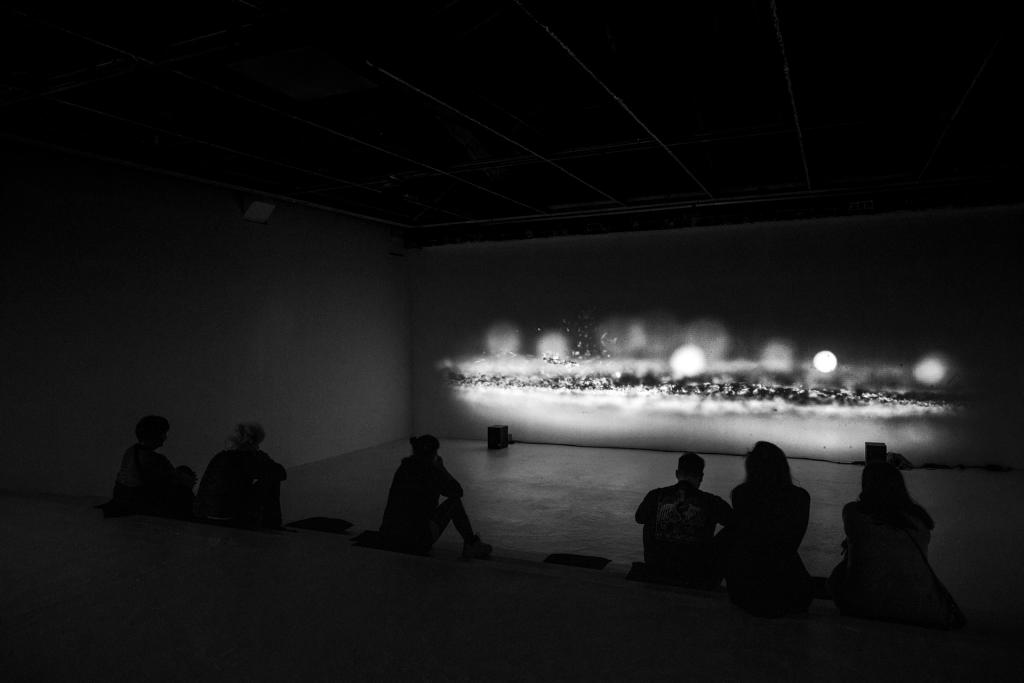
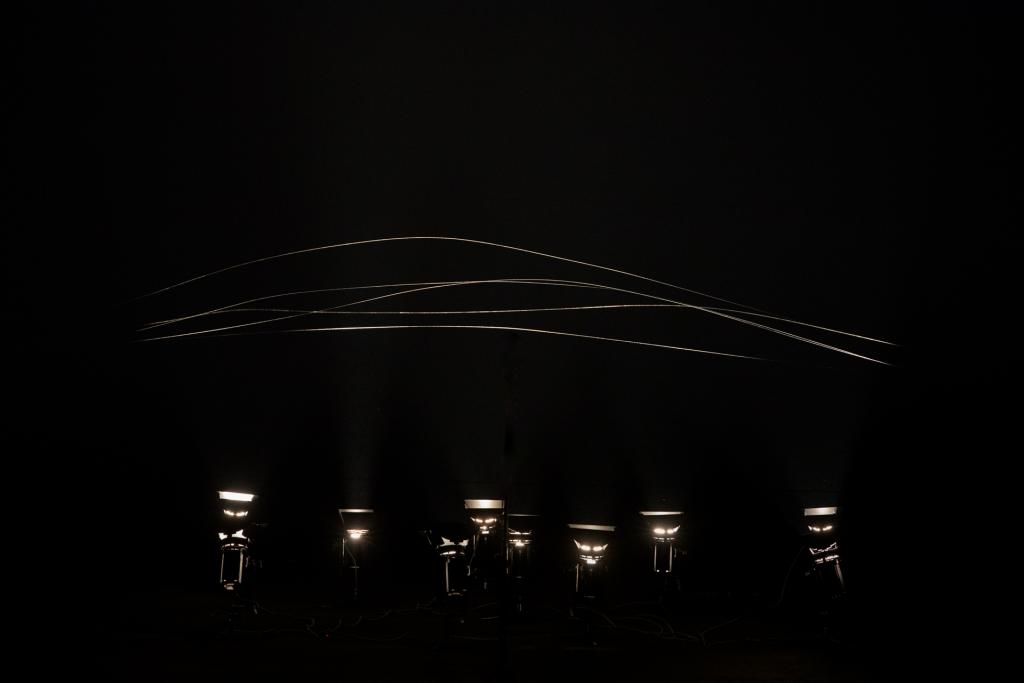
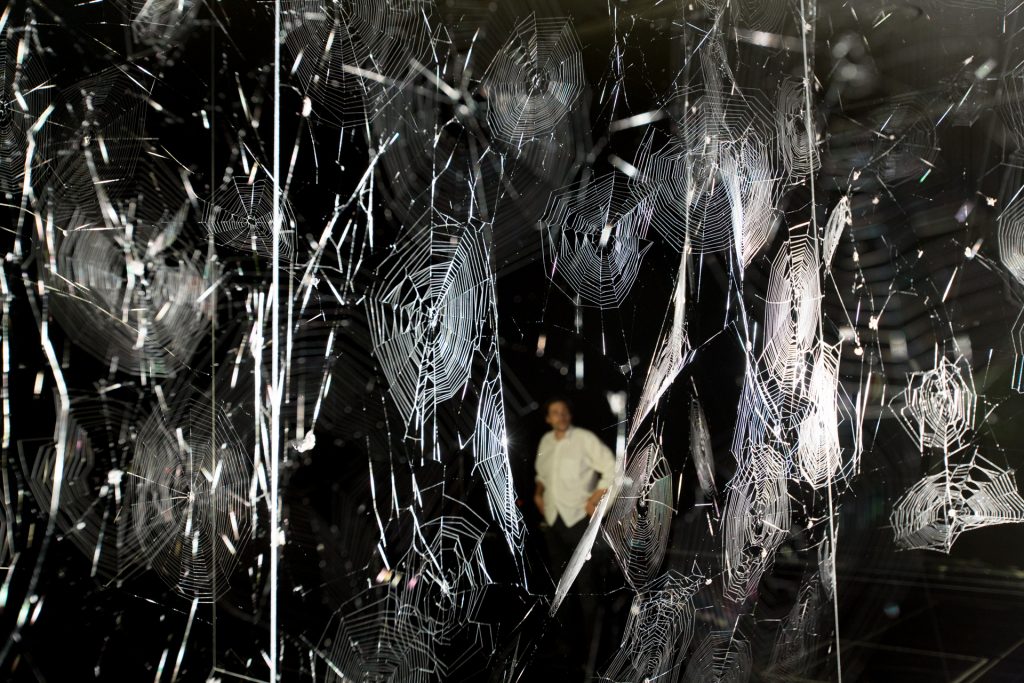
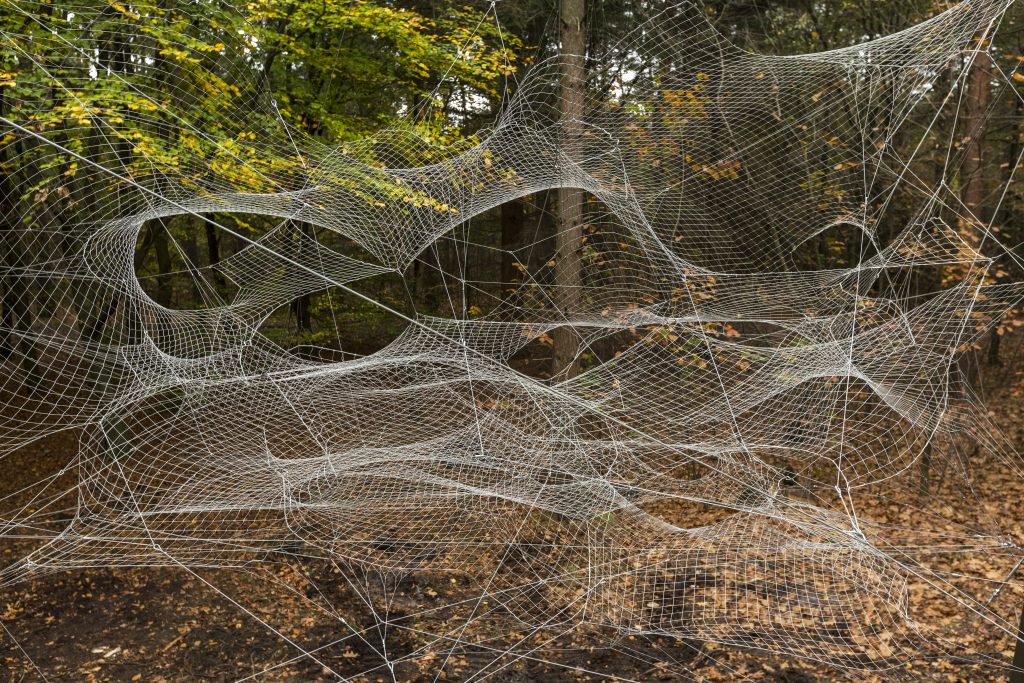
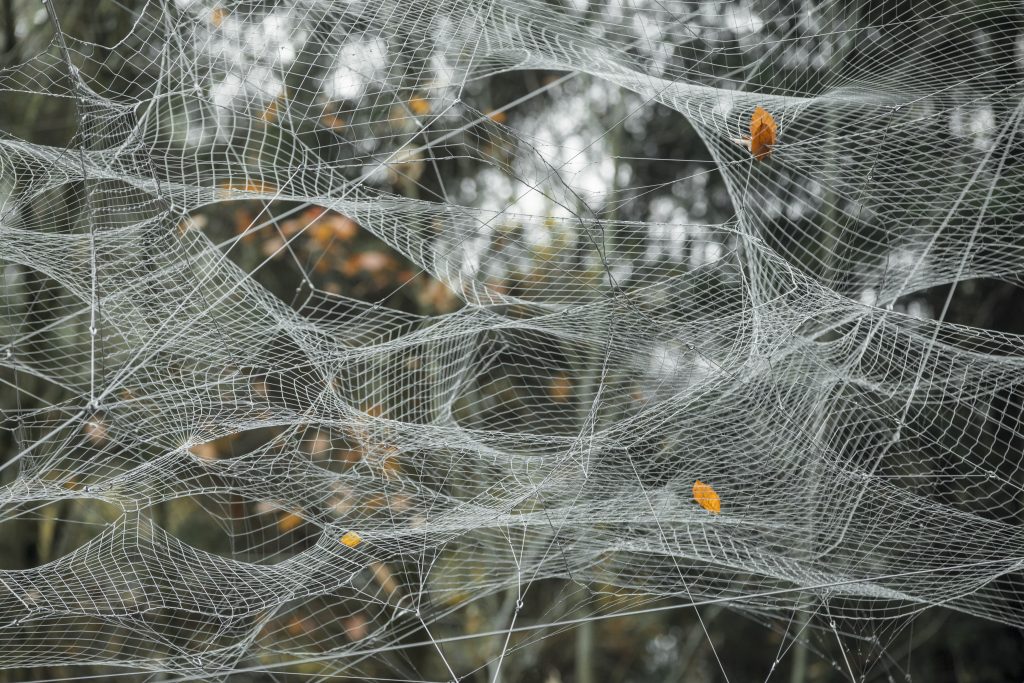
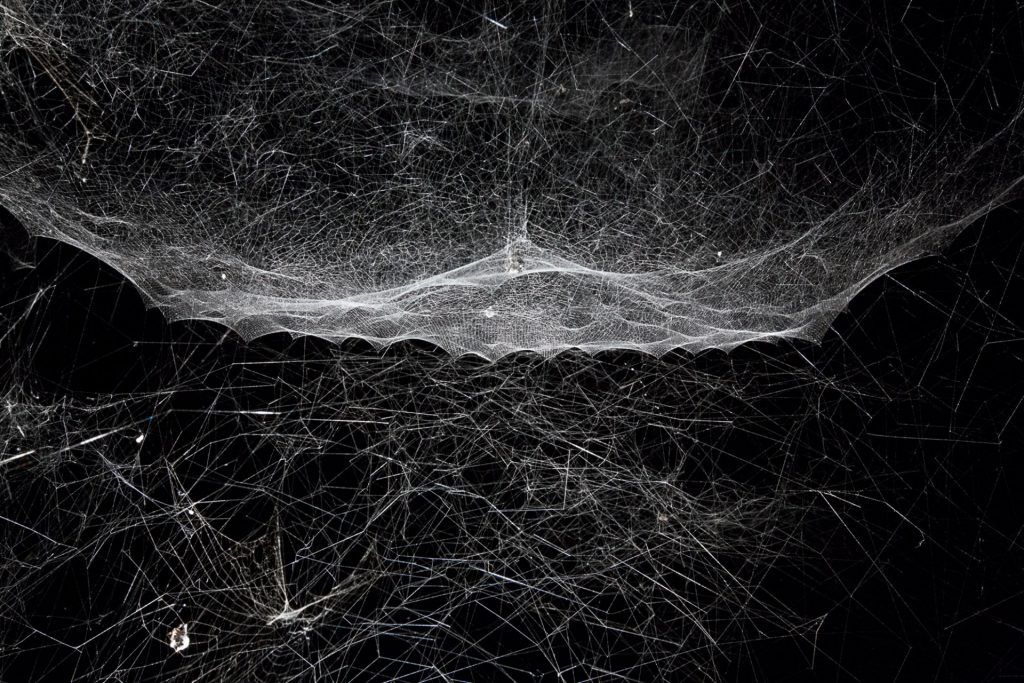
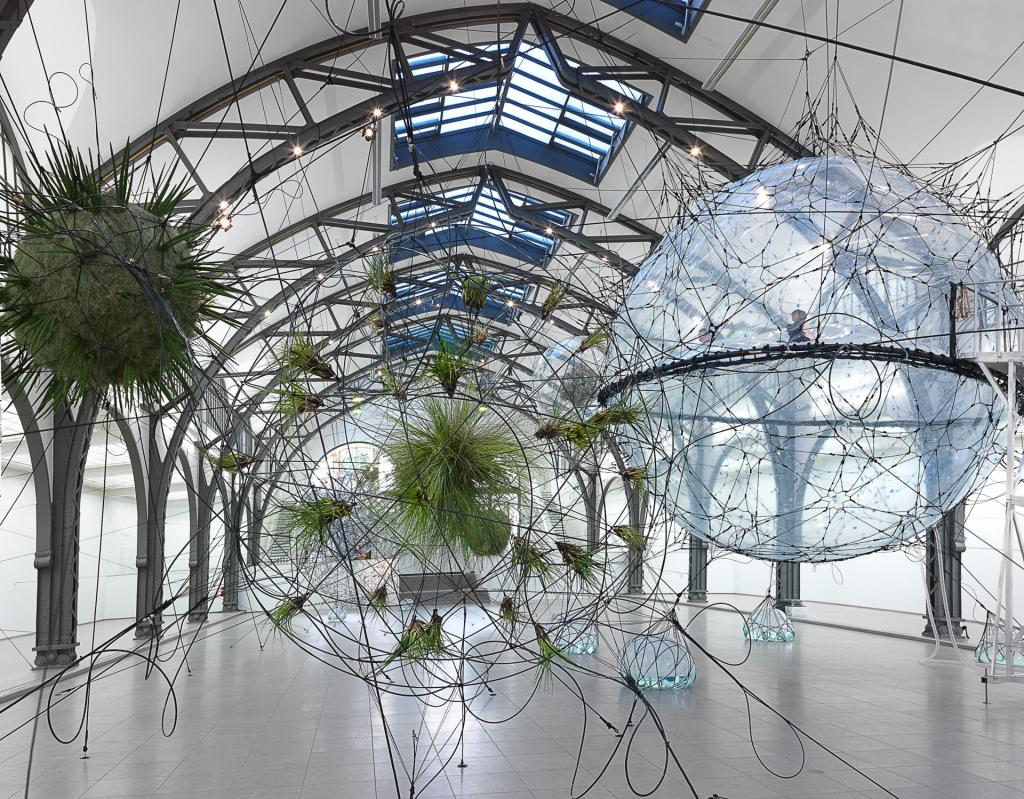
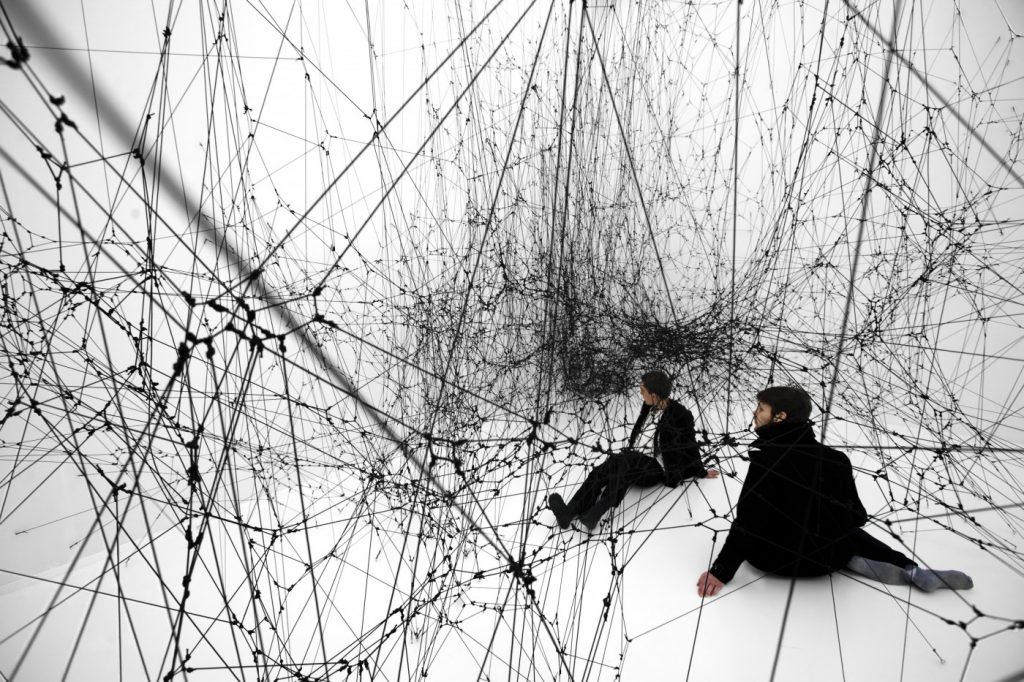
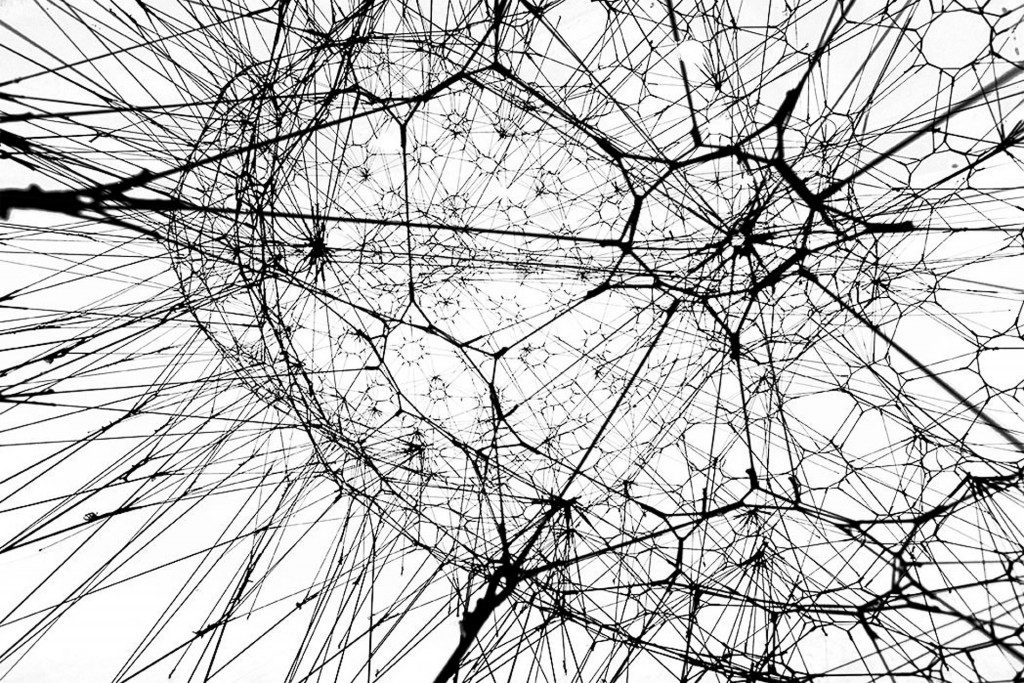
TS. It’s when something sounds good, even when you don’t know what it is. It’s what happens in poetry, when you read something and it has a good cadence. It is about alternation and repetition, marked by the regulated succession of opposite elements, the dynamics of the strong and weak beat, the played sound and the inaudible but implied pause, the long and short note. The Fermi paradox illustrates the contradiction between the high probability of the existence of live in outer space and our lack of contact with it. Enrico Fermi is famous for exclaiming: “Where is everybody?” inquiring about the whereabouts of everyone in the universe. Perhaps we have never managed to have any contact with anyone because we ever managed to play a unison musical piece. I have been talking with Bruno Latour about collaborating in a project for a theatre play he is doing in Toulon. I thought of transforming all the nets and spheres of the Venice Biennale work , Galaxy forming along filaments, like droplets along the strands of a spider´s web , in strings, in a huge collective instrument ready to be played. Let us invent an instrument that all the humans in the planet can play at the same time, so that when you play one string it reverberates in all the other strings. That will tune us all. When we are able of producing a harmony as a species then maybe somebody else will hear us. It is like what is happening at the HangarBicocca, I am trying to make people engage and tune with each other.


“Let us invent an instrument that all the humans in the planet can play at the same time, so that when you play one string it reverberates in all the other strings. That will tune us all. When we are able of producing a harmony as a species then maybe somebody else will hear us”

...
