




















...








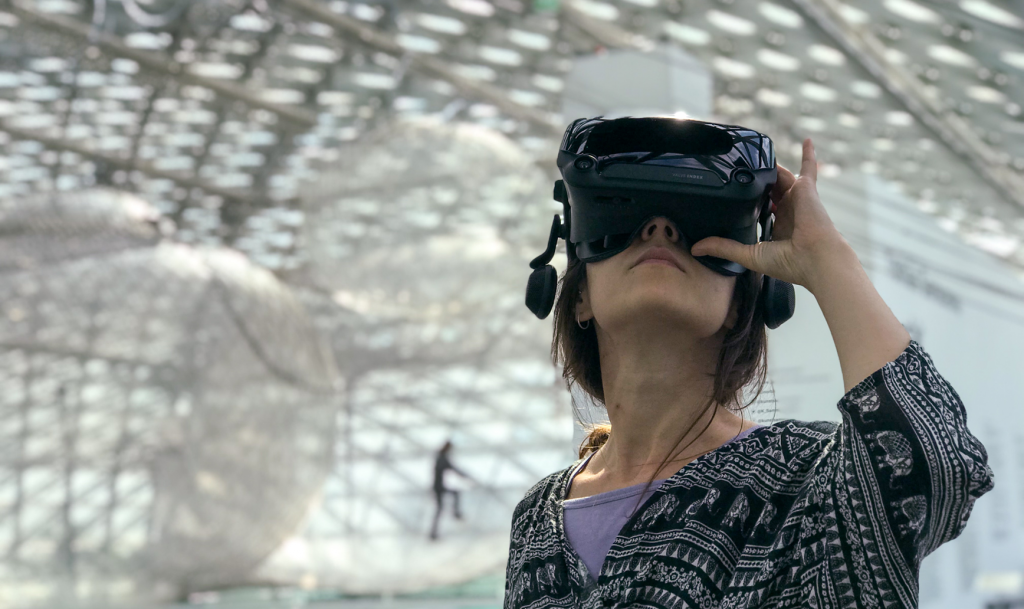
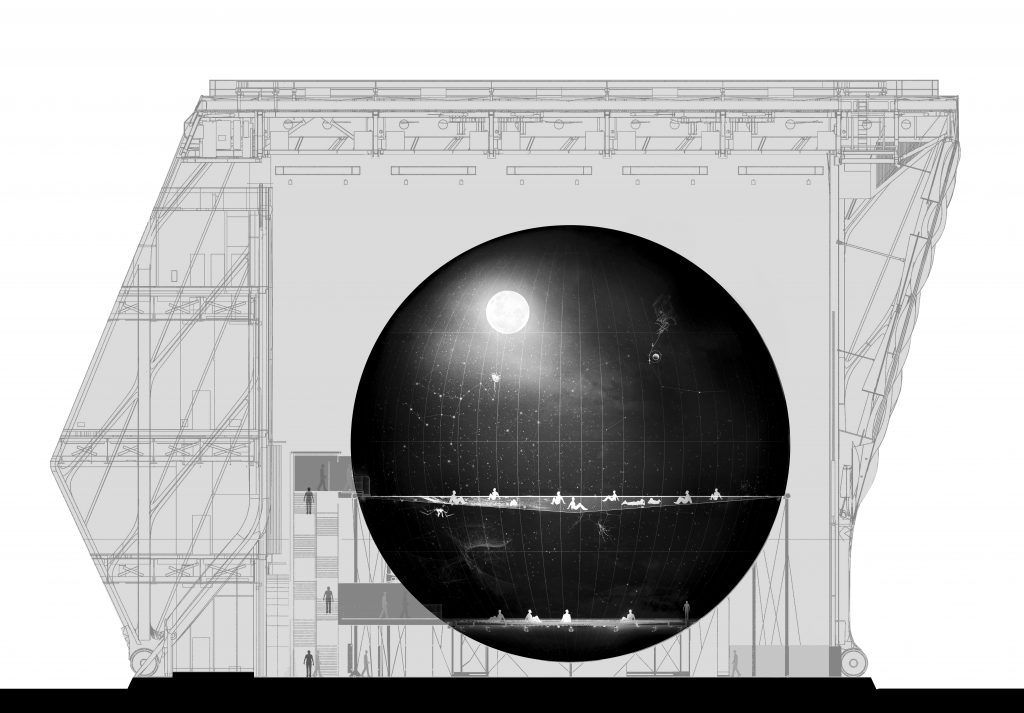









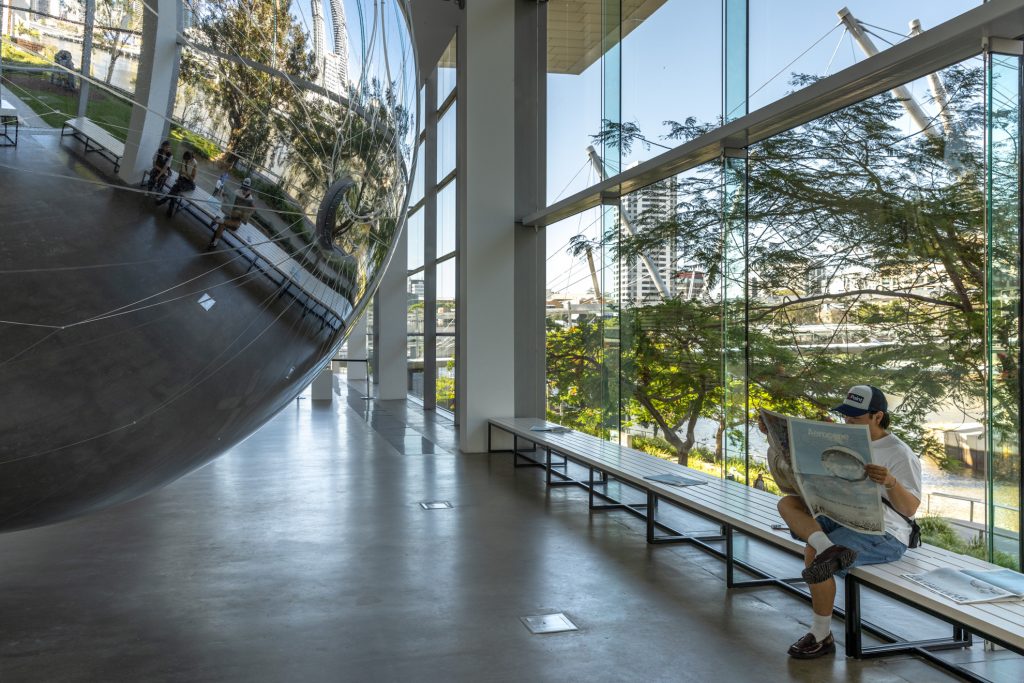

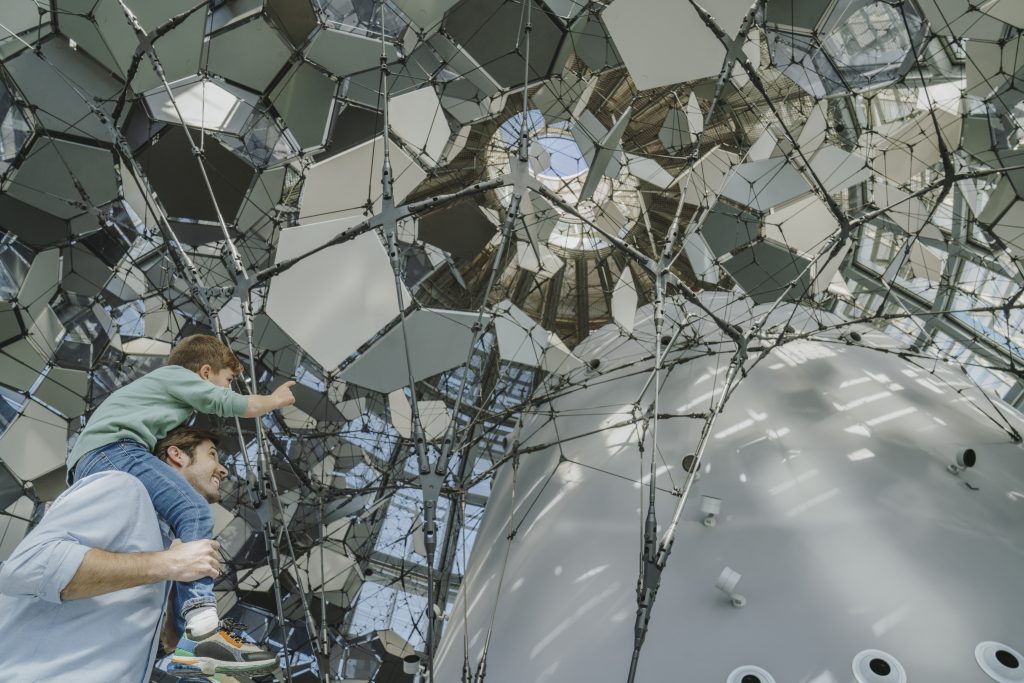







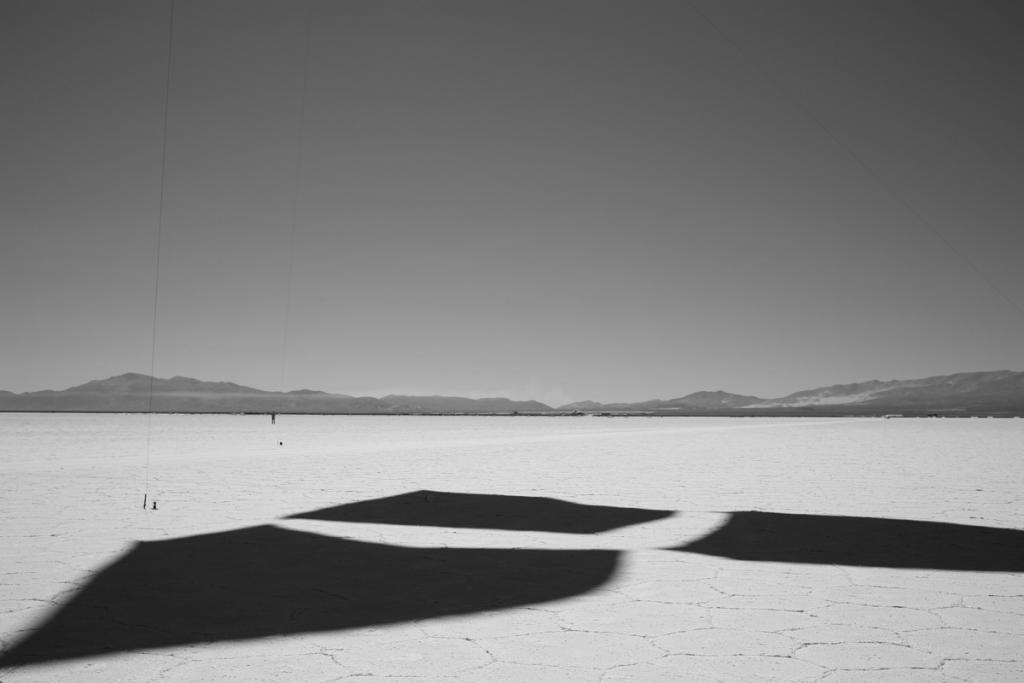


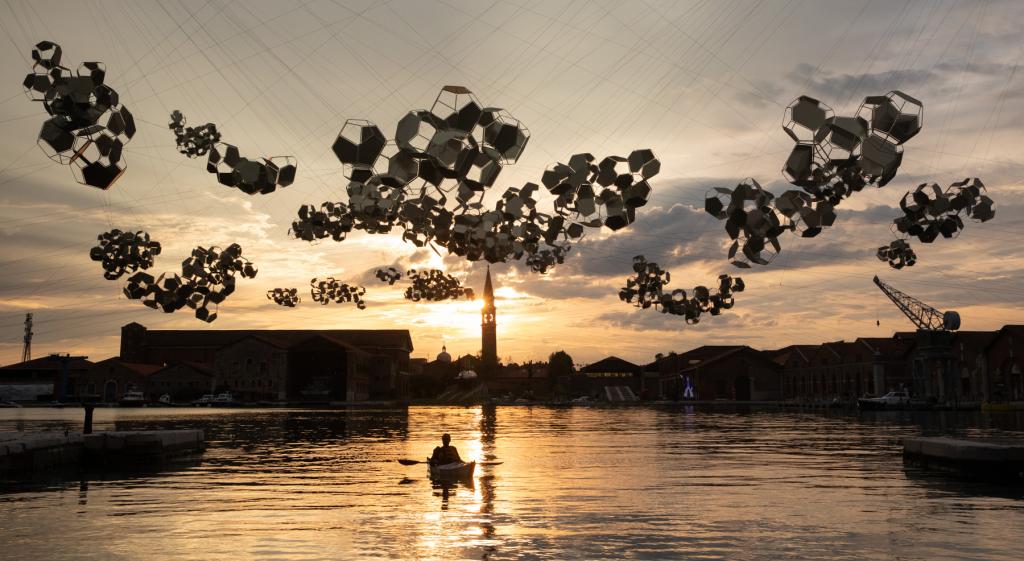

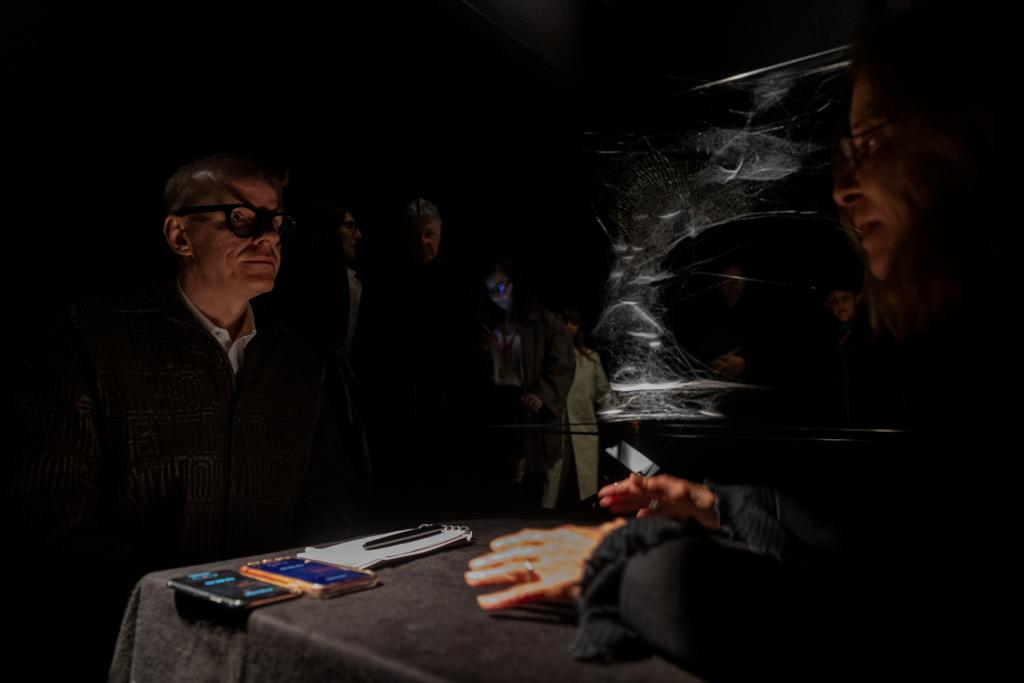
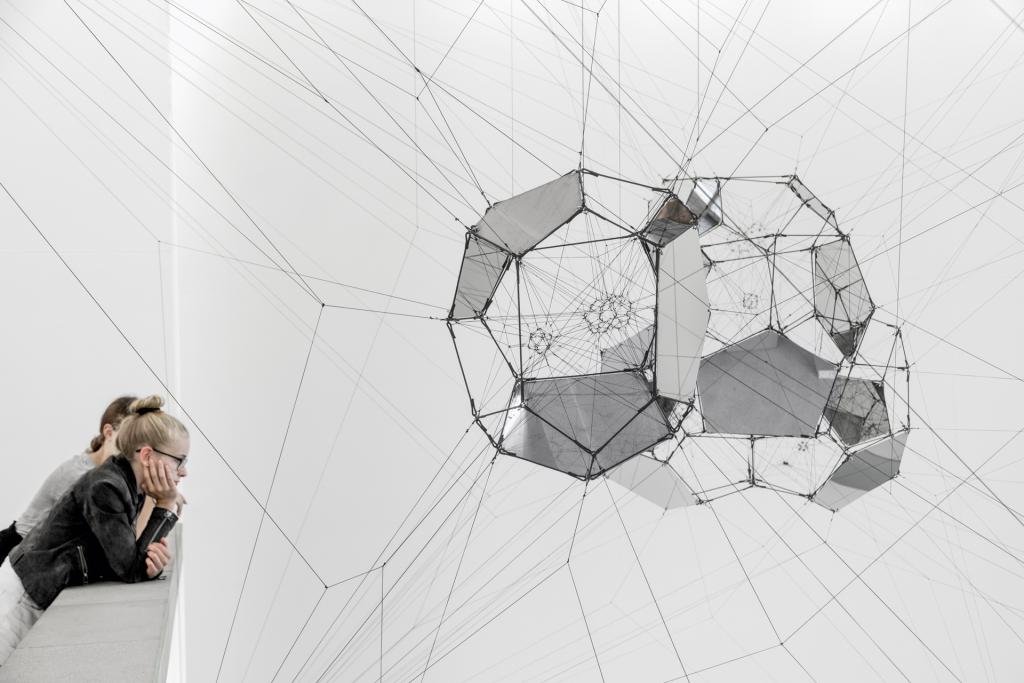
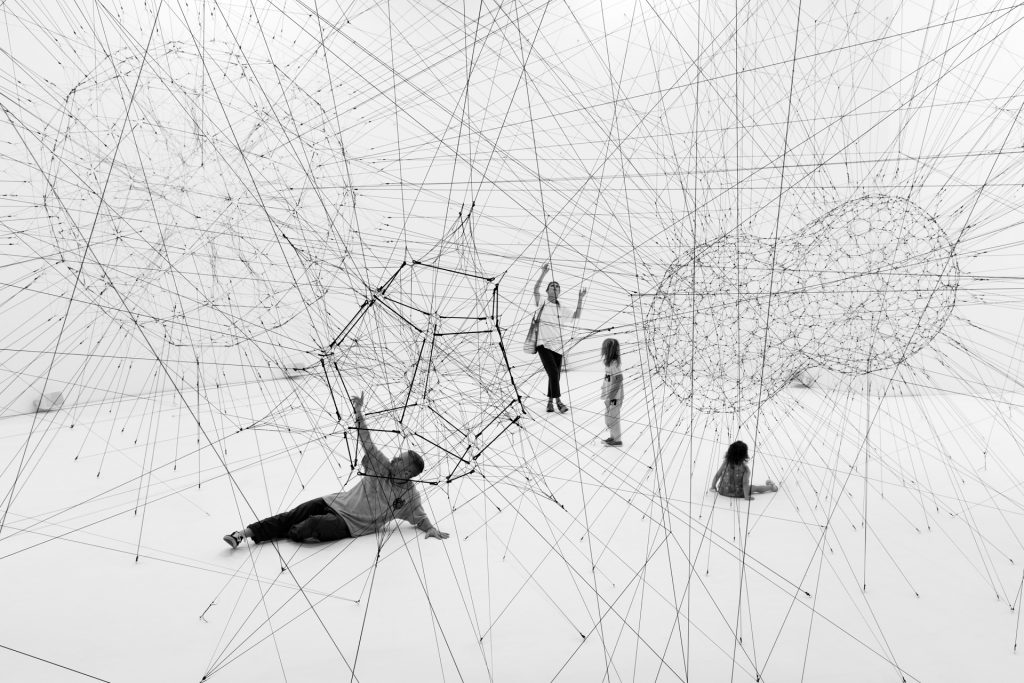

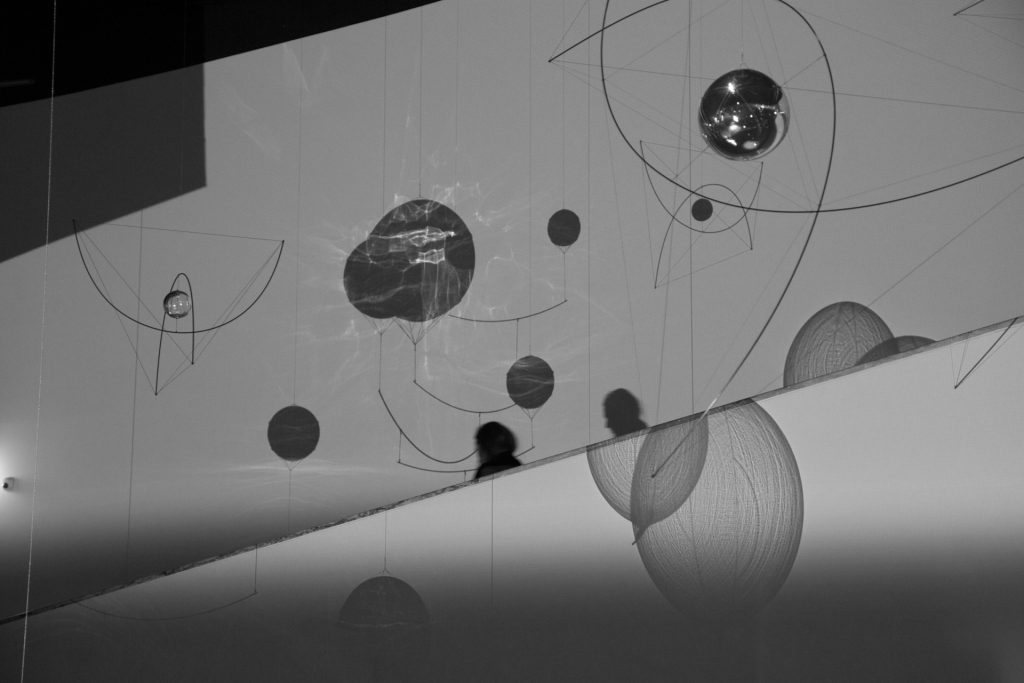
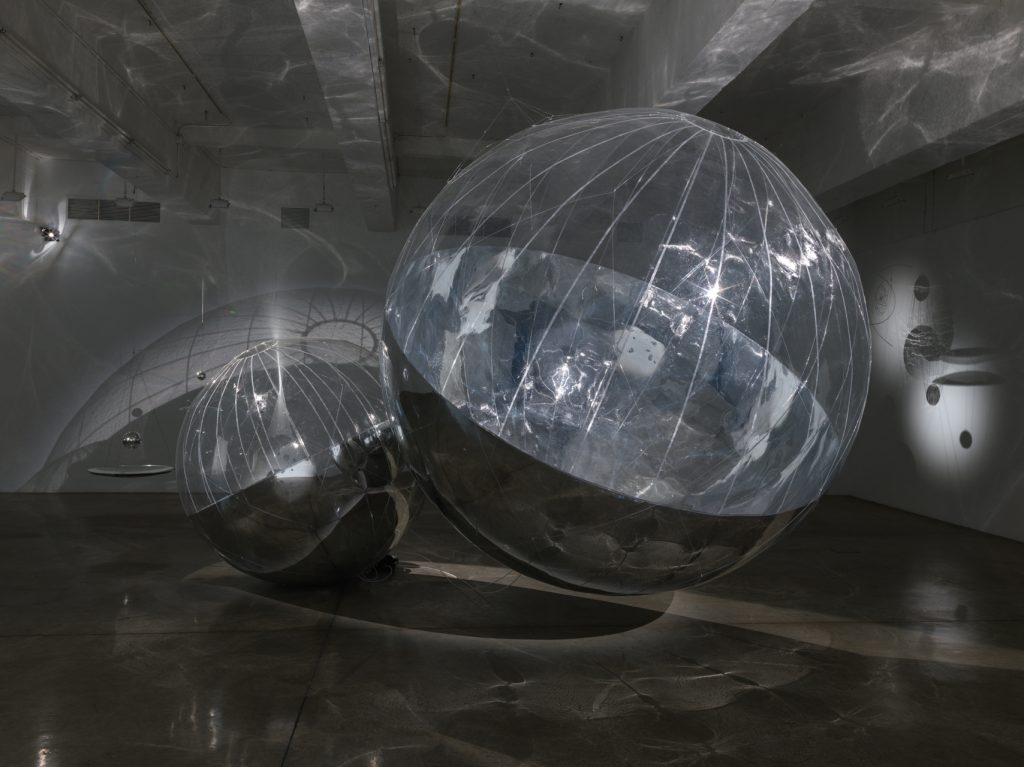

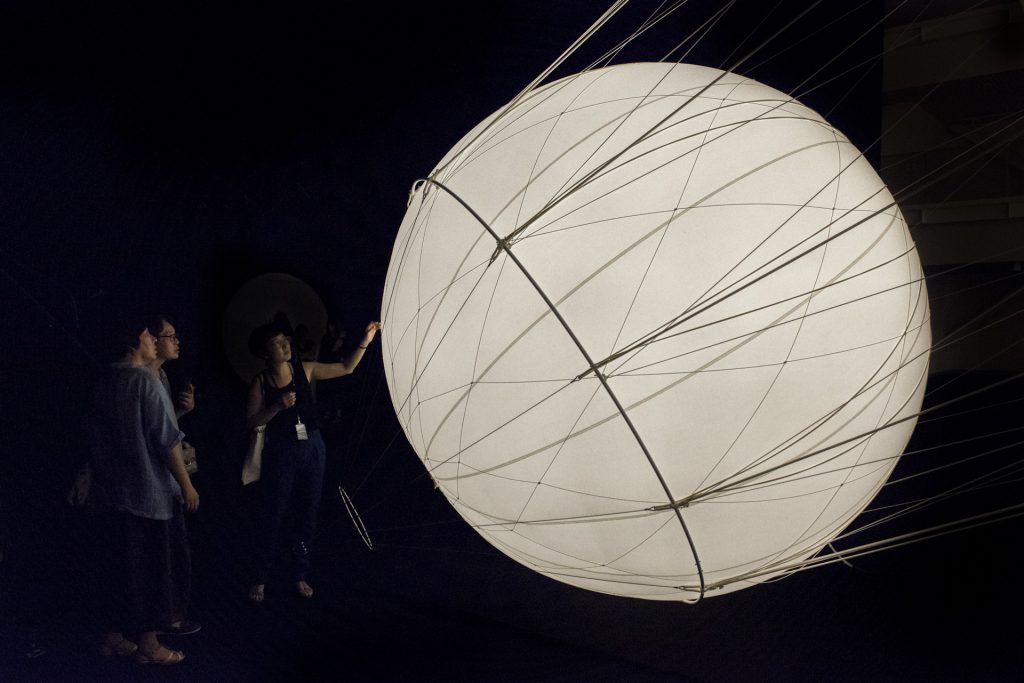
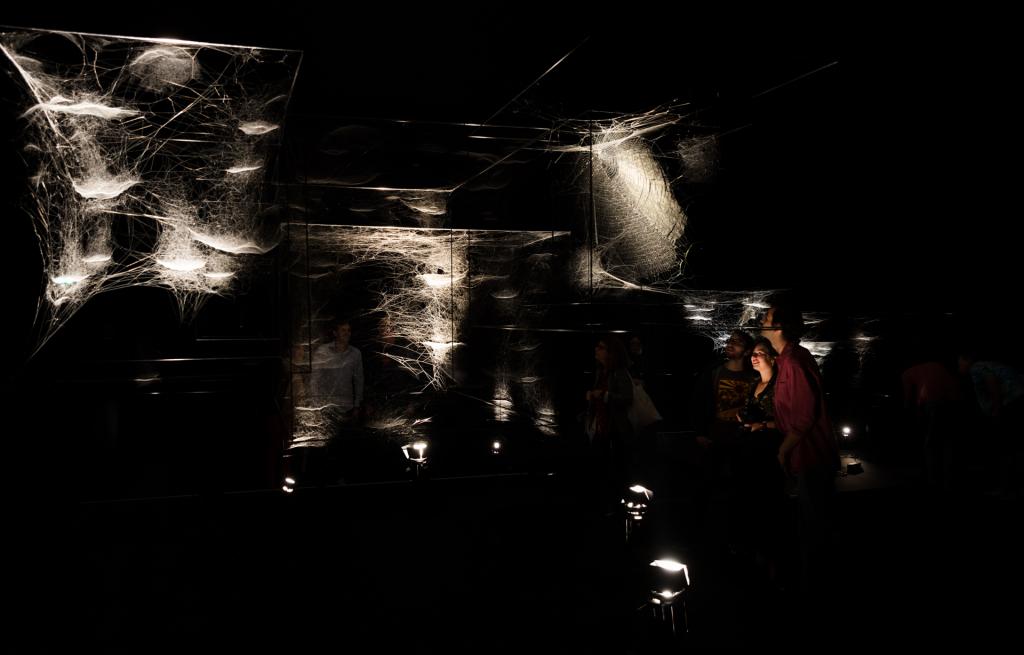
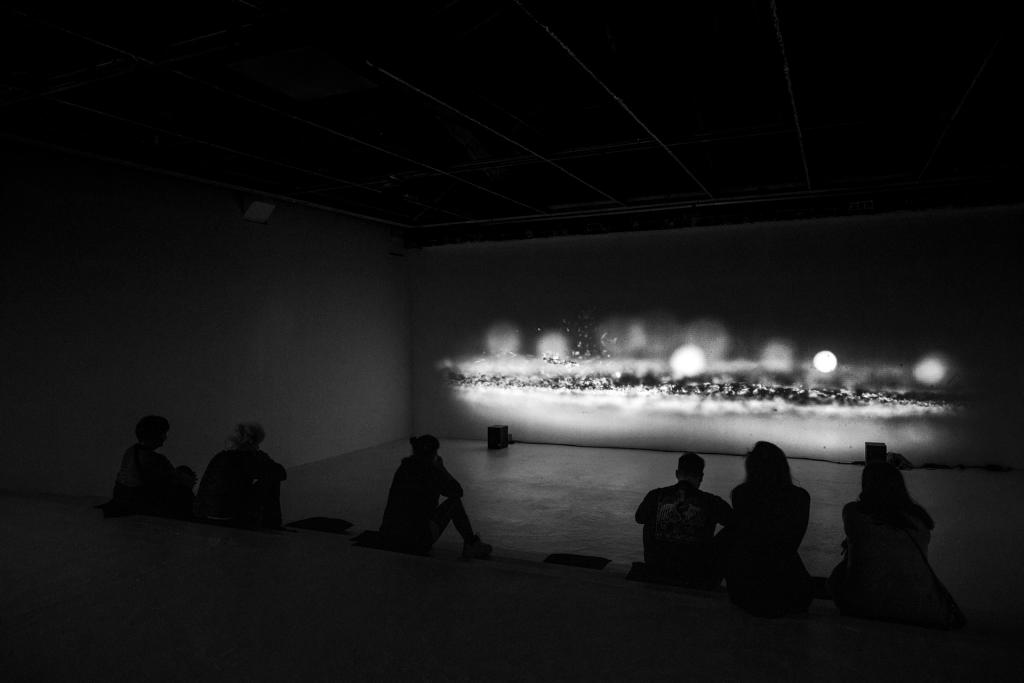
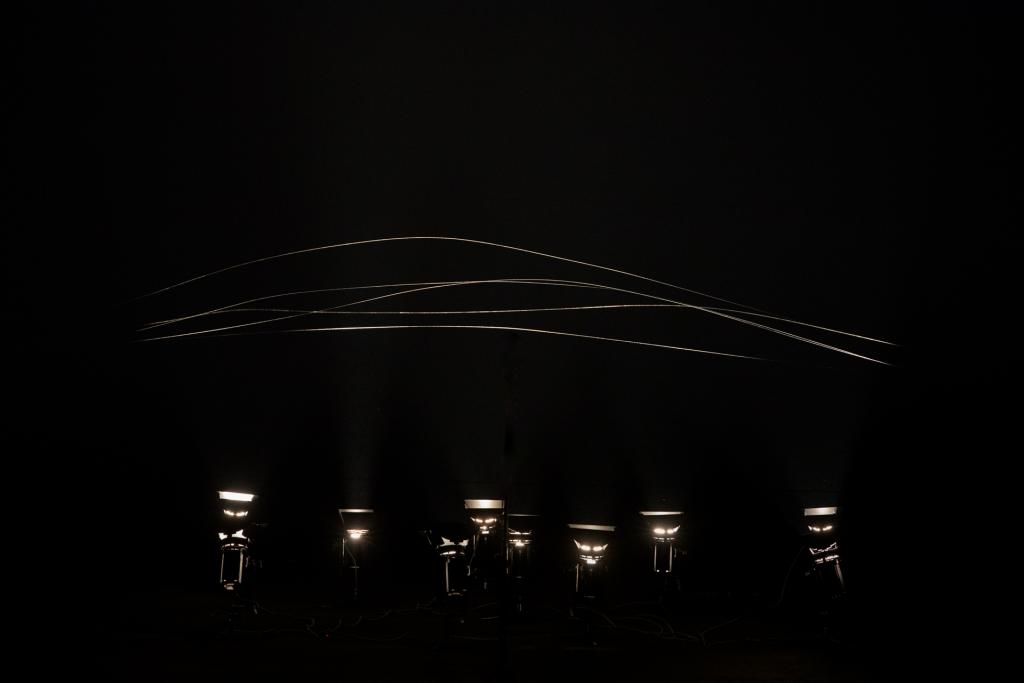
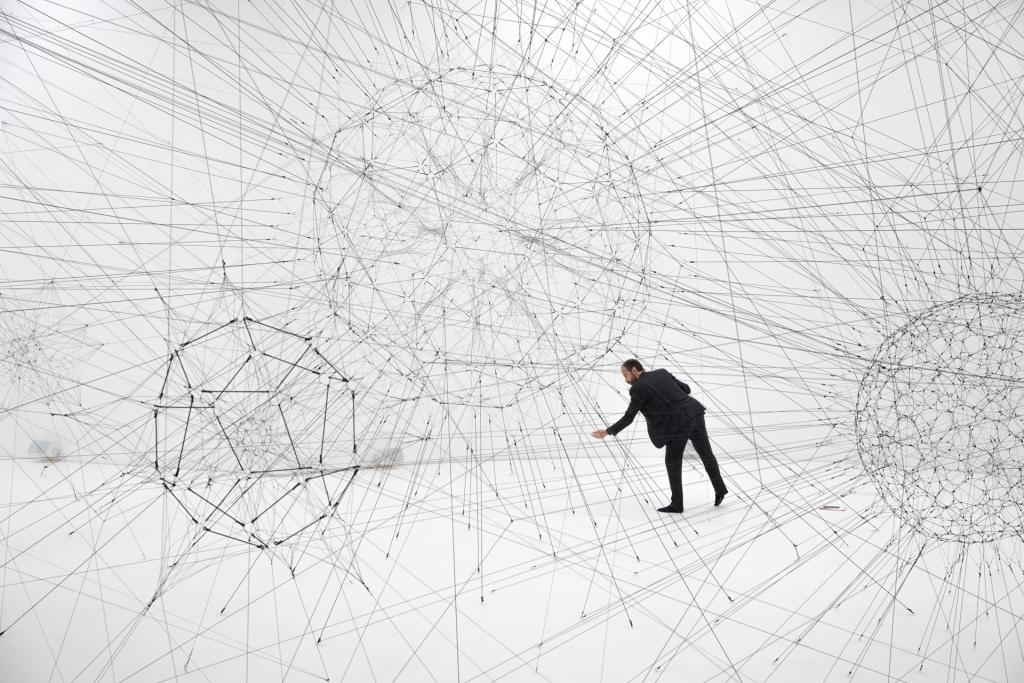
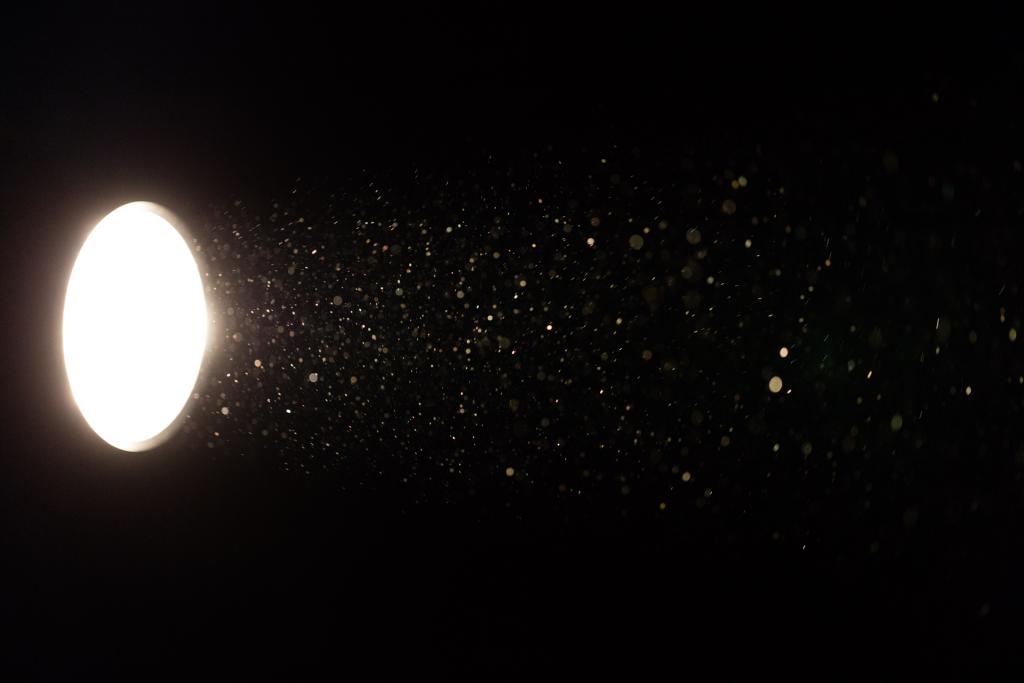
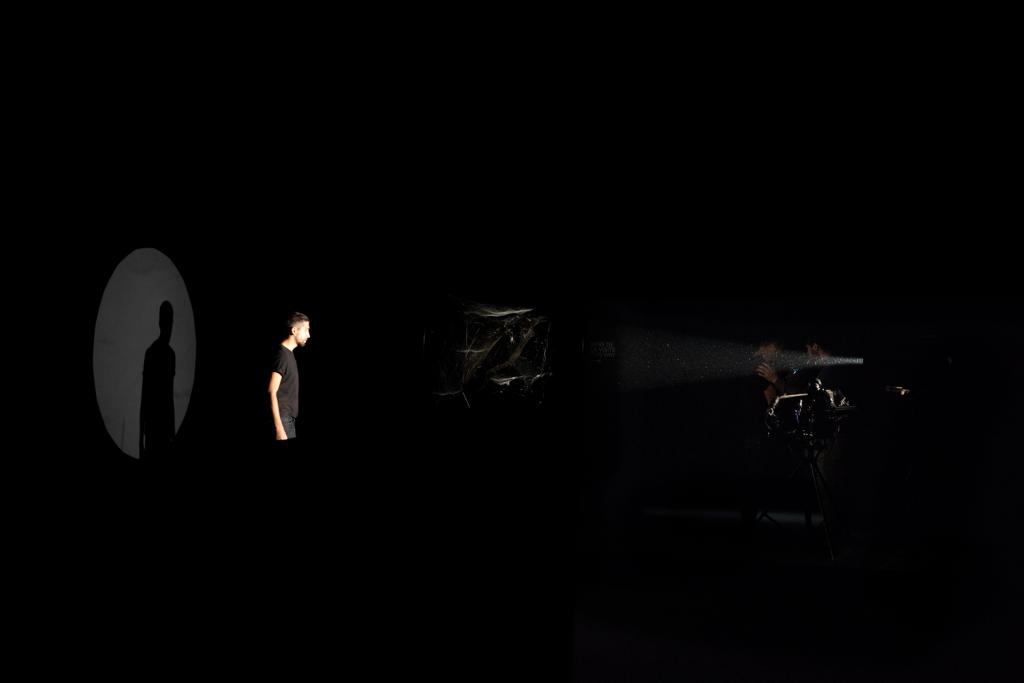


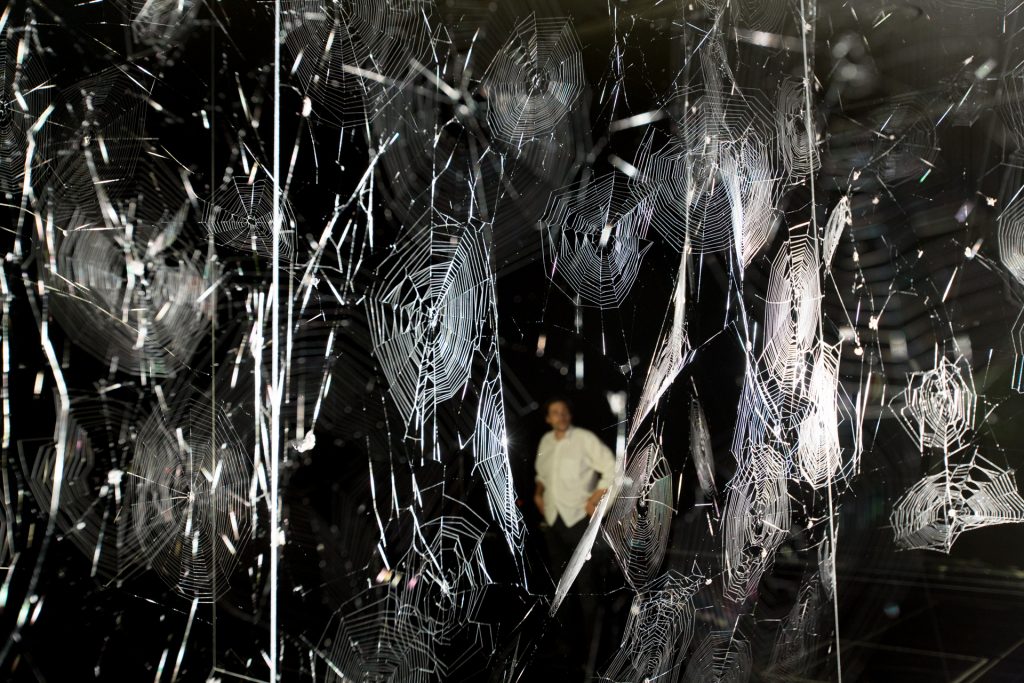
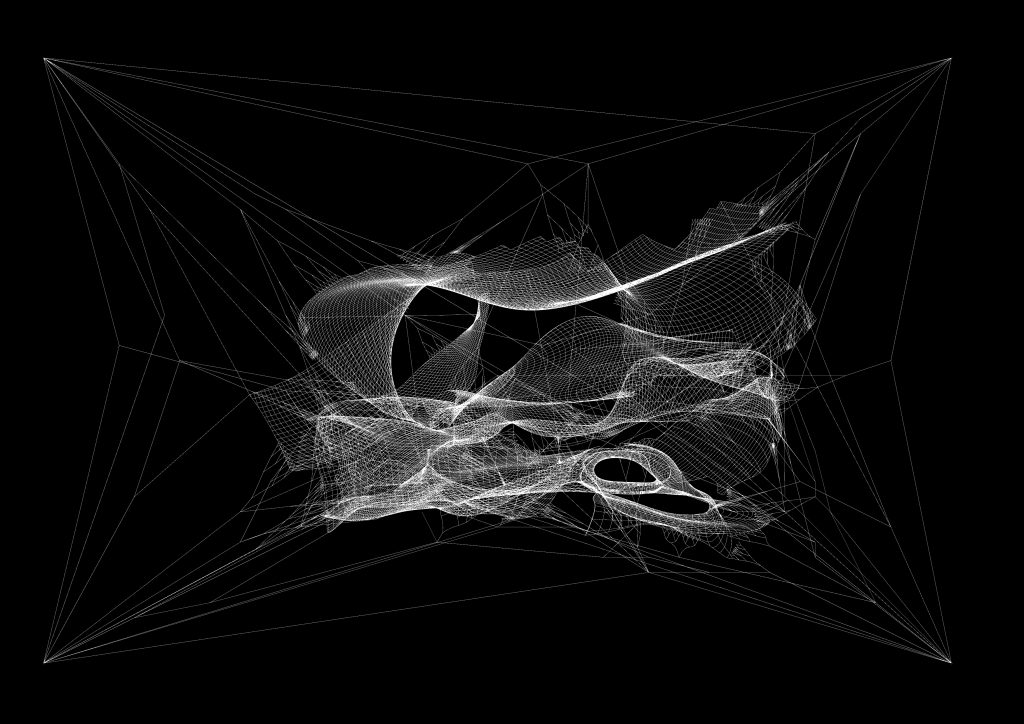
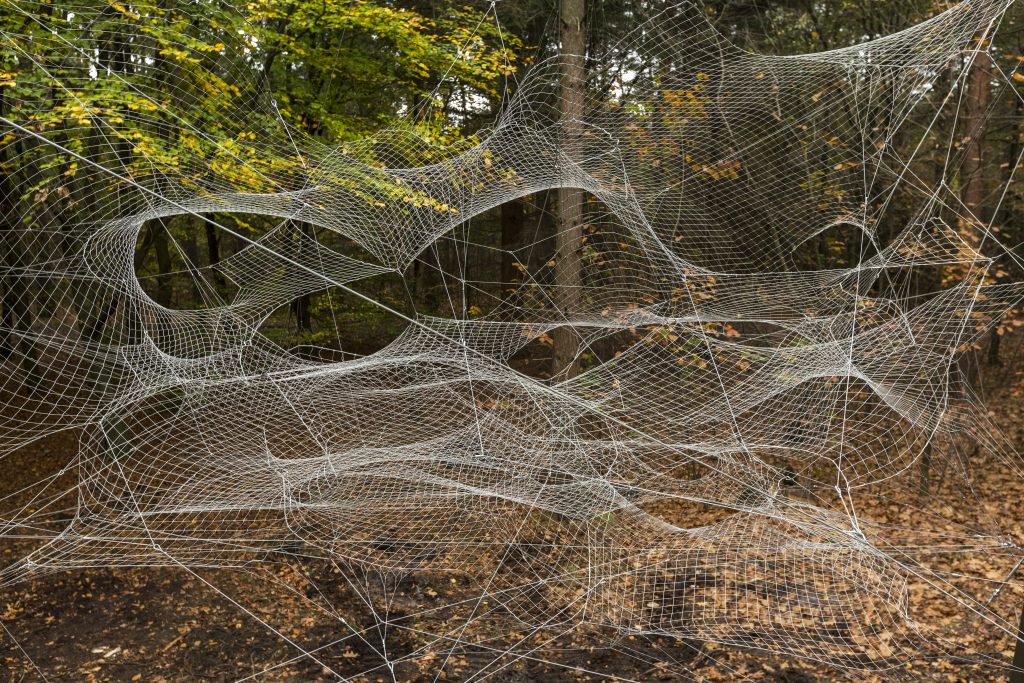


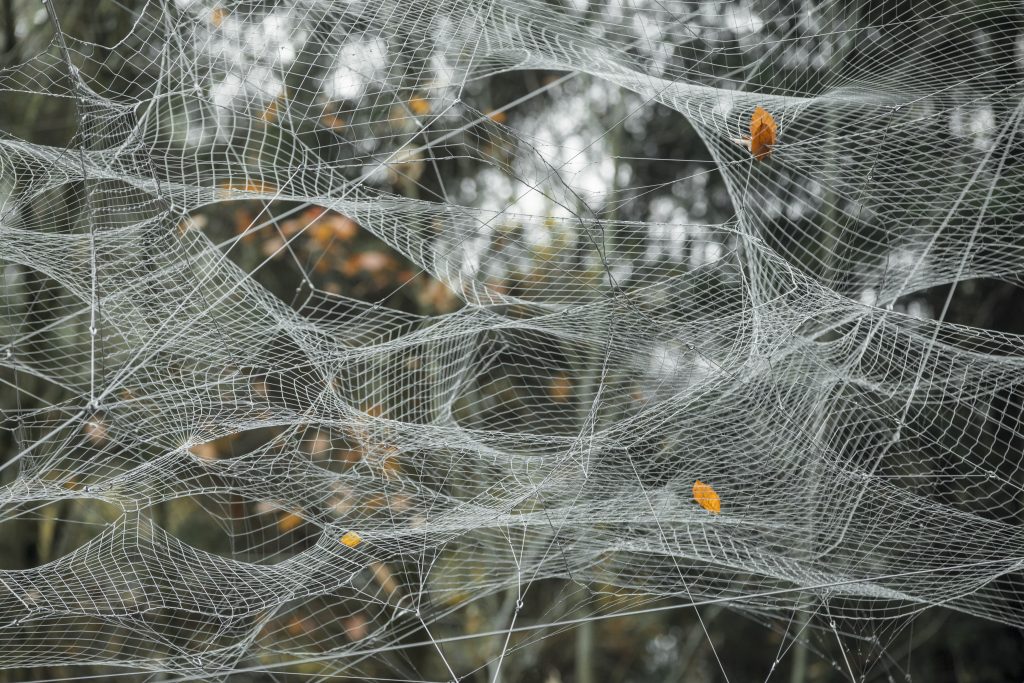

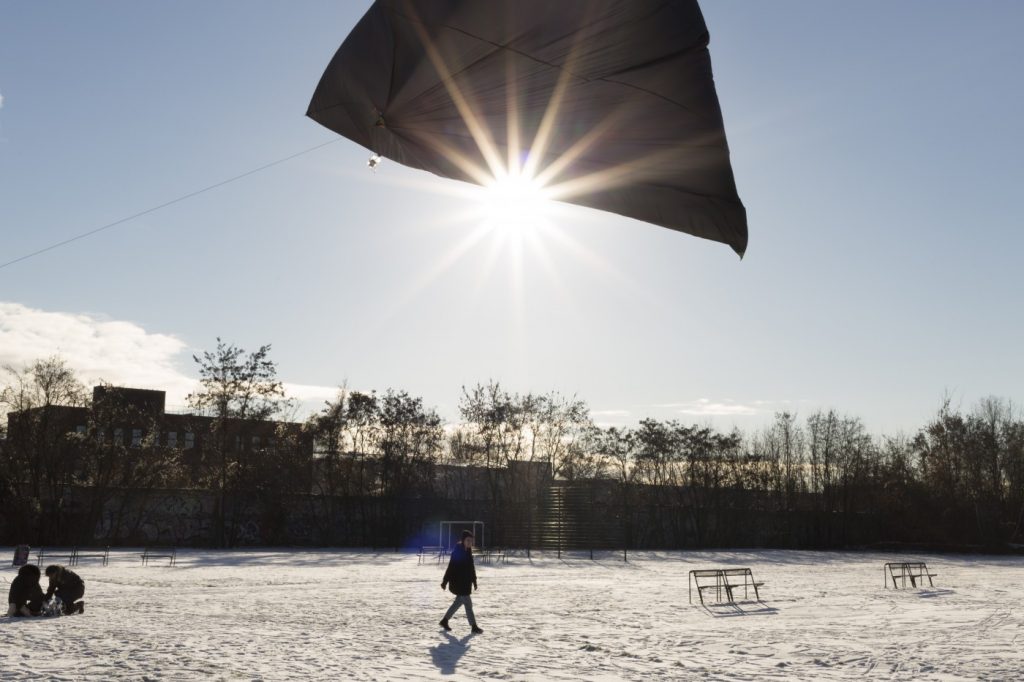


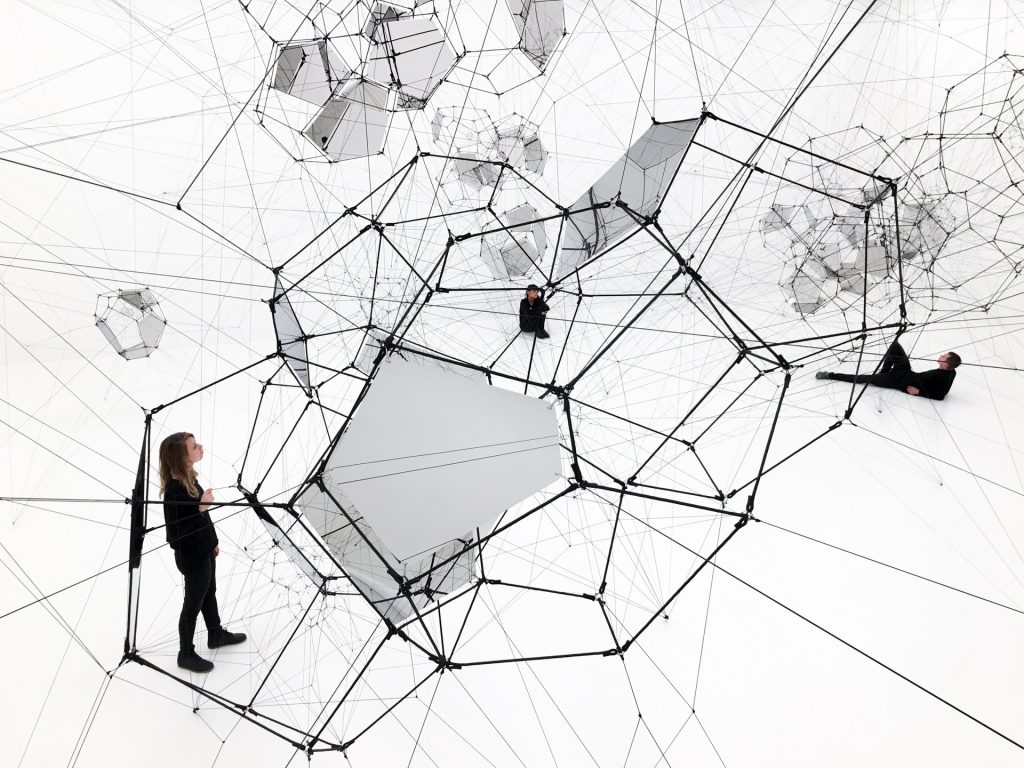



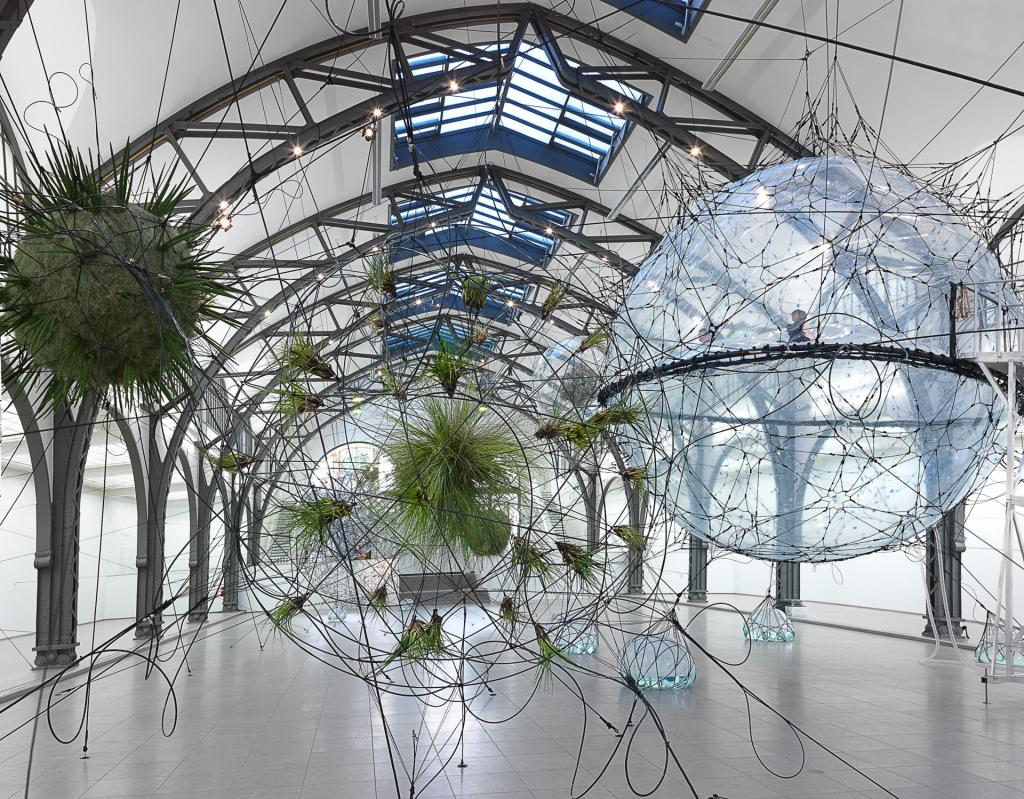
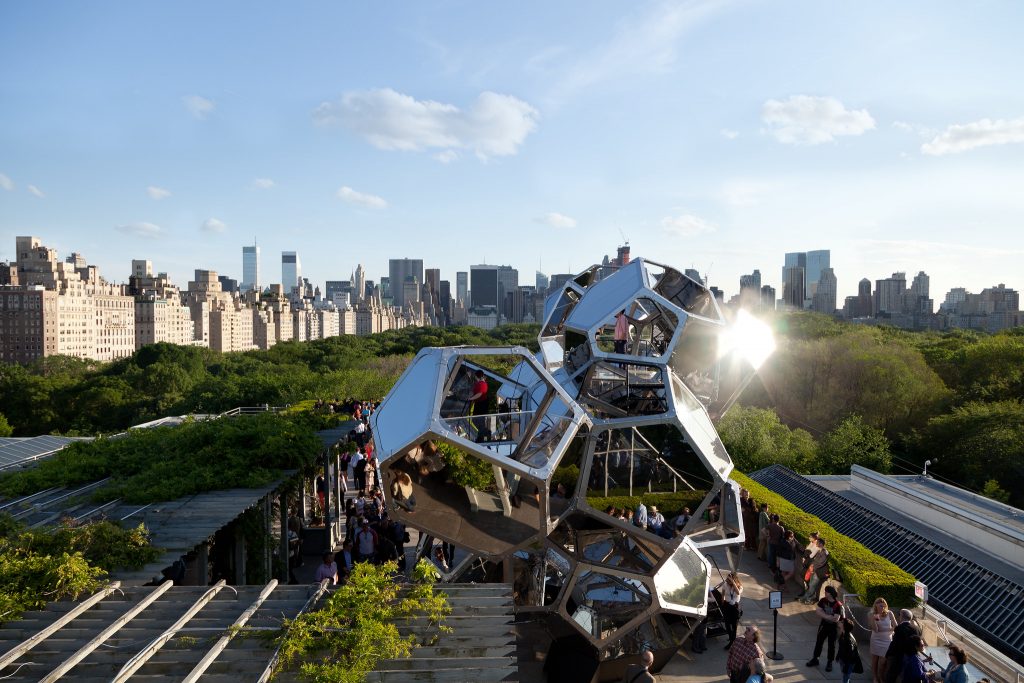
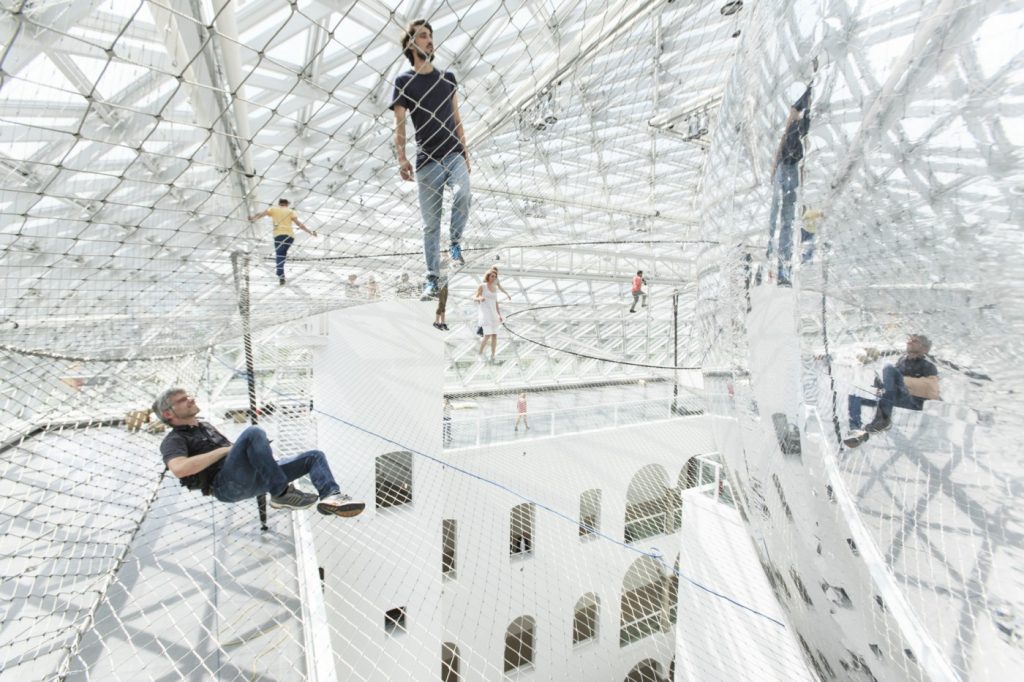

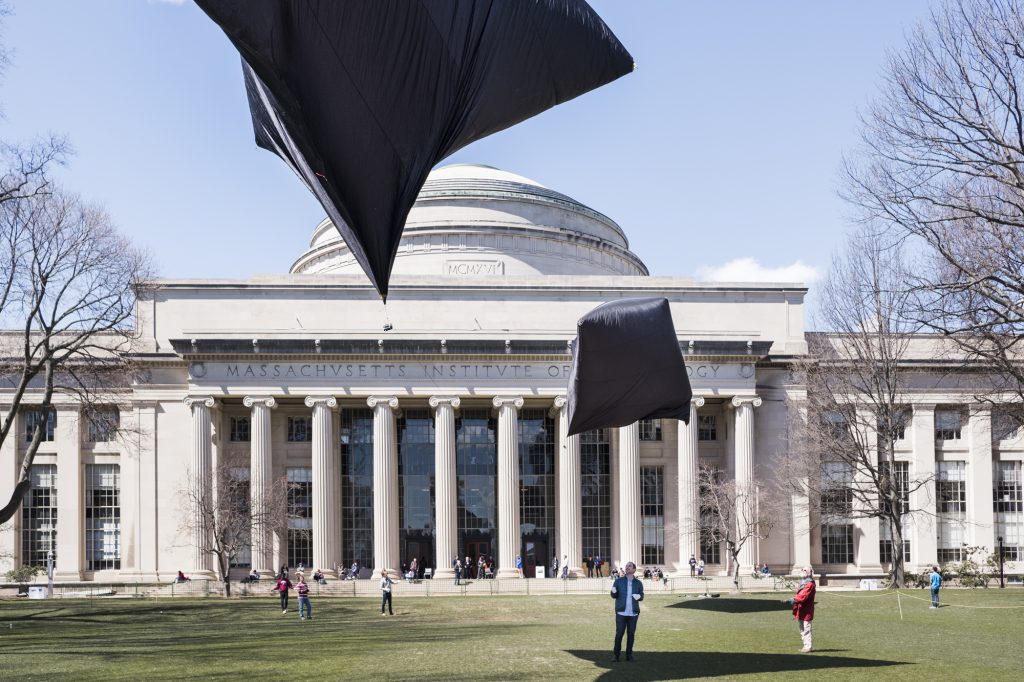


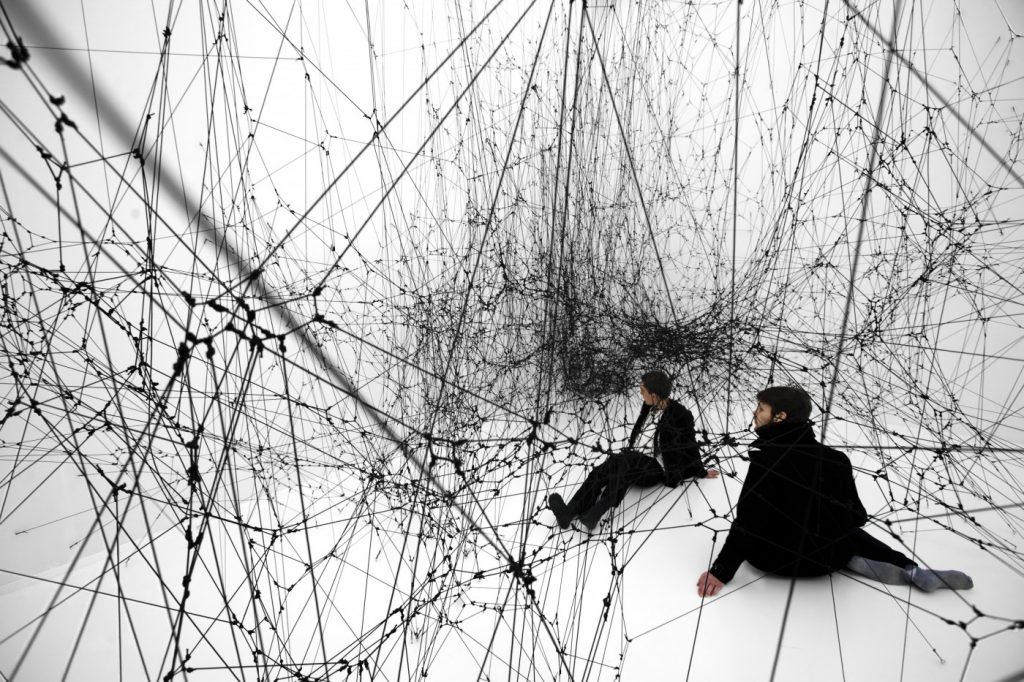





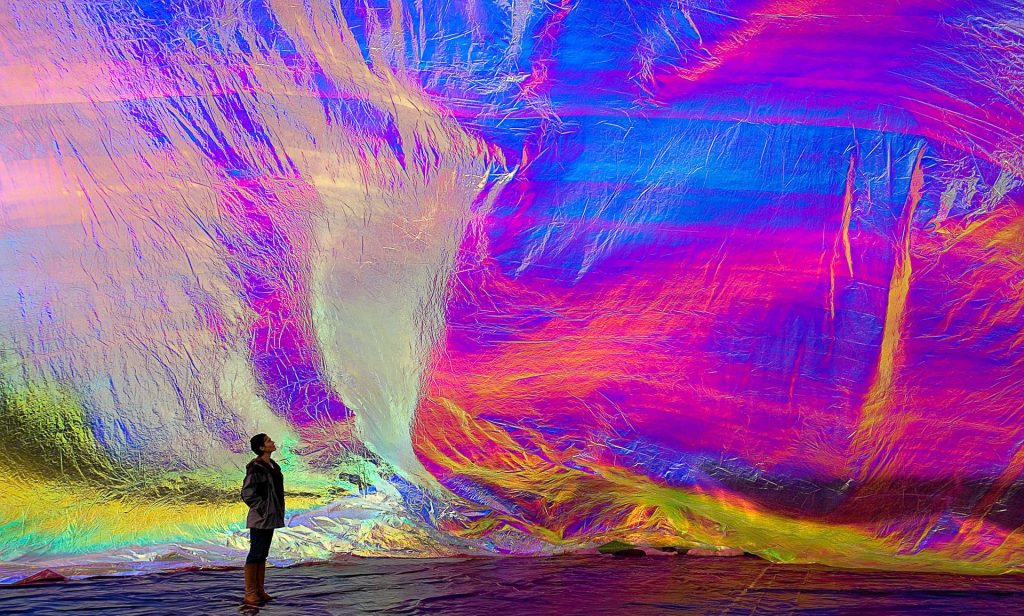


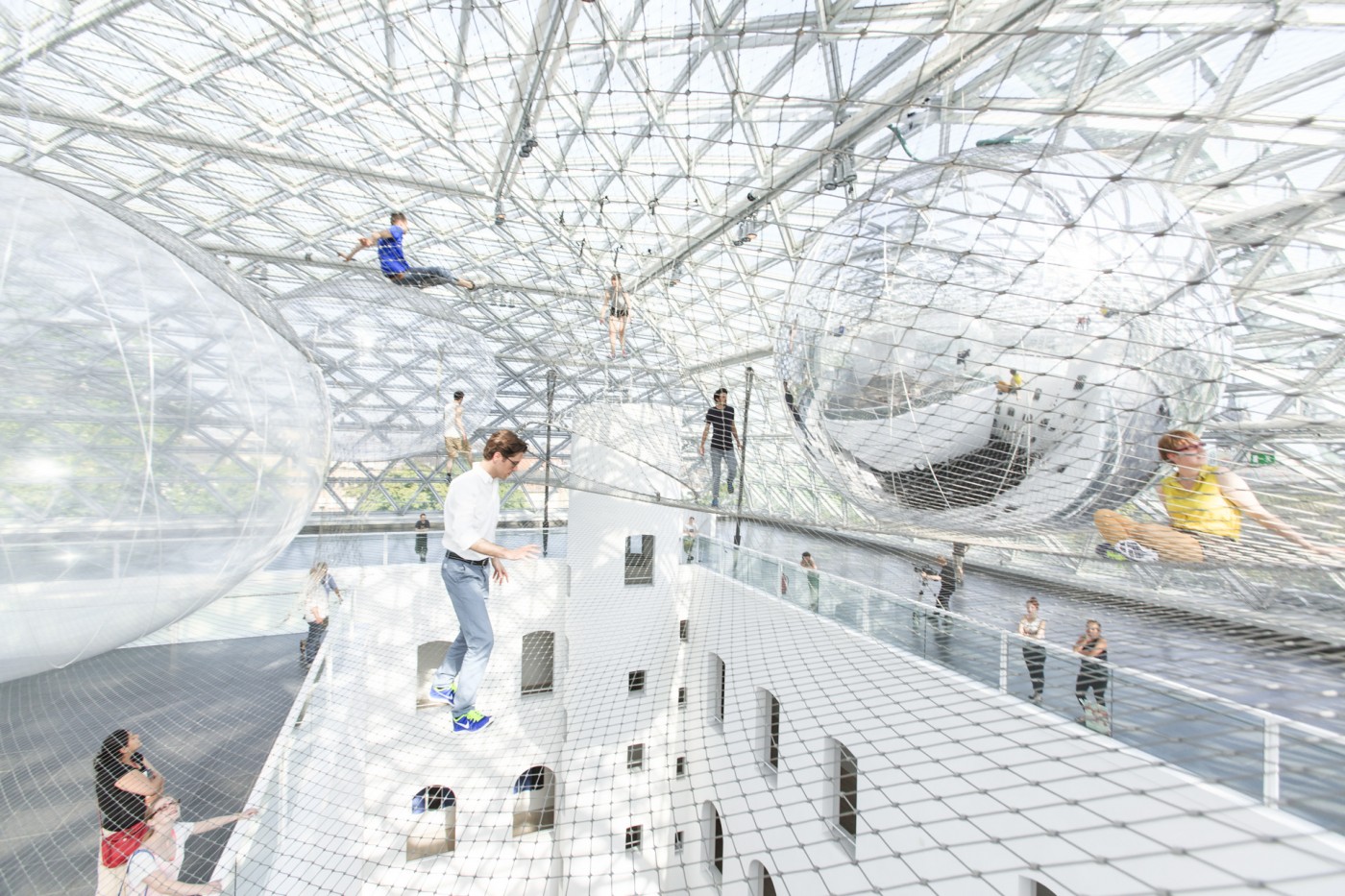


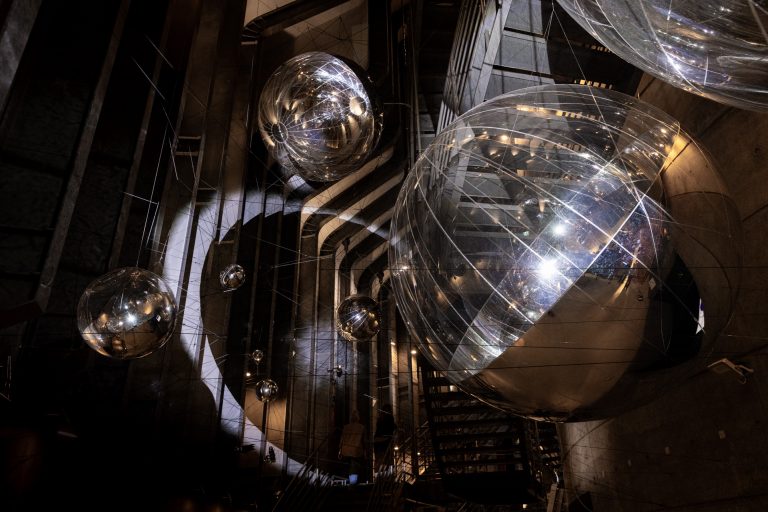
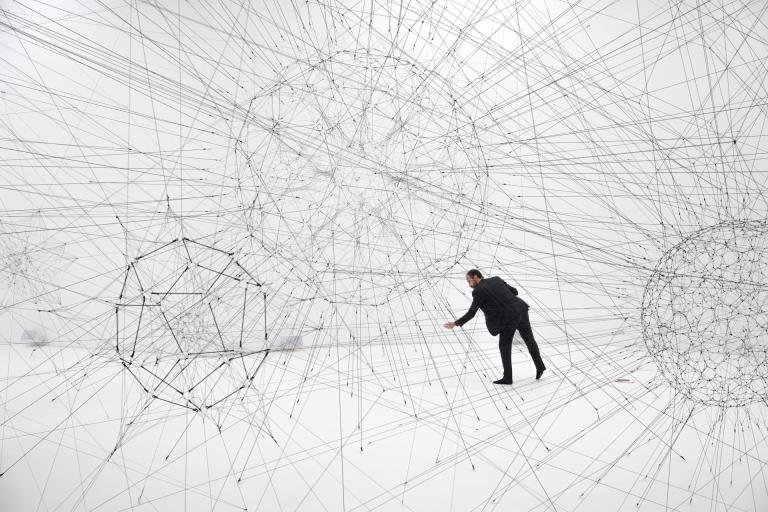
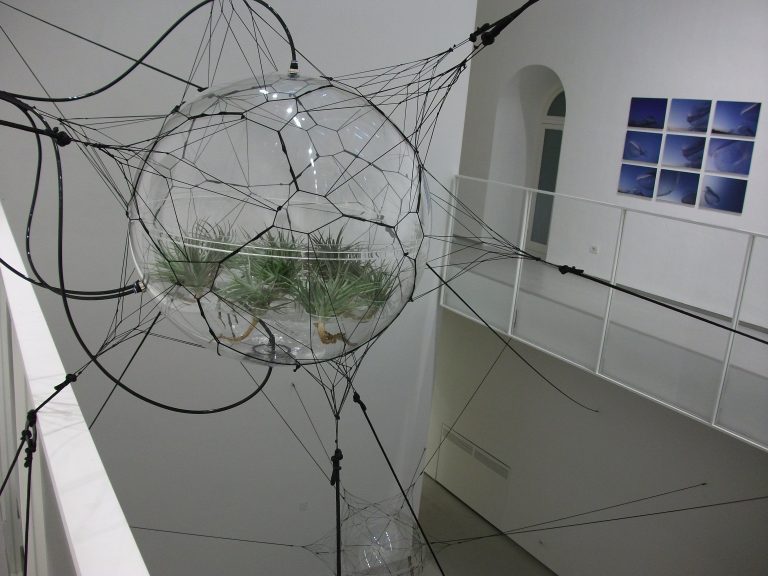
In 2013, after two years of elaborate planning and conversations between spiders/webs, engineers, architects and biologists, Tomás Saraceno’s In Orbit was opened 25 metres above the K21 Ständehaus in Düsseldorf. This site-specific installation remains one of the artist’s most complex installations to date.
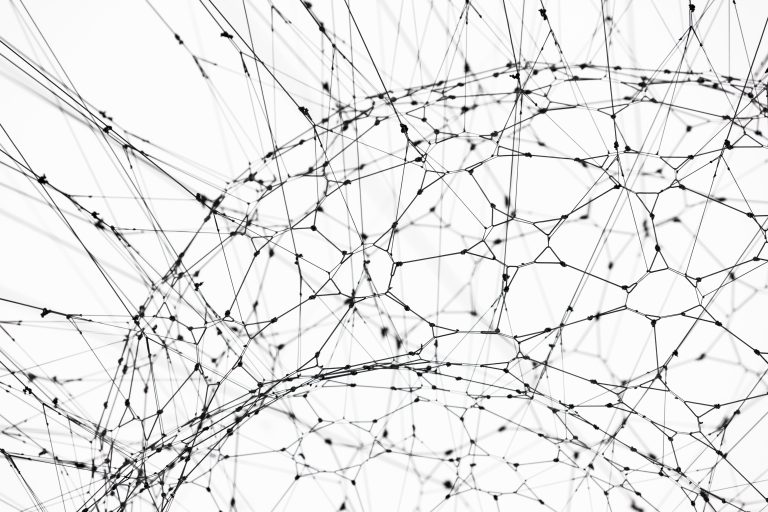
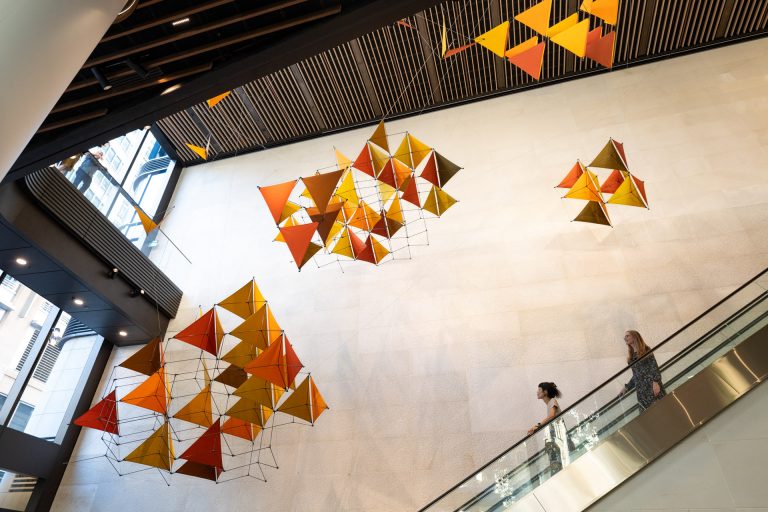
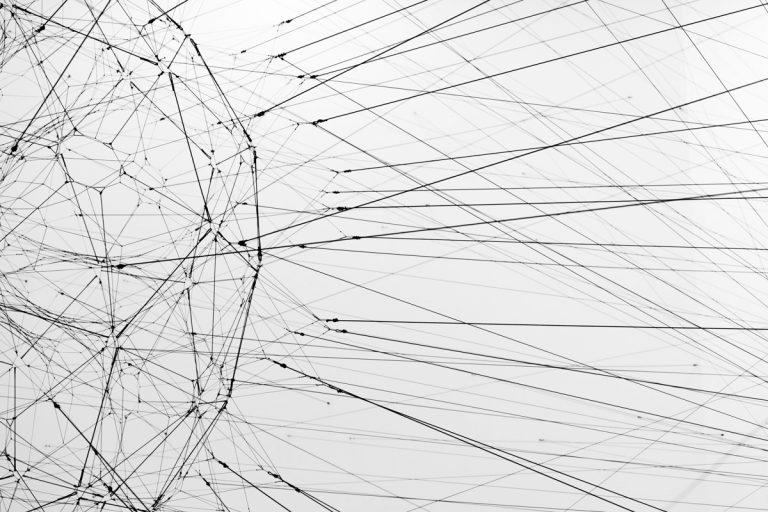
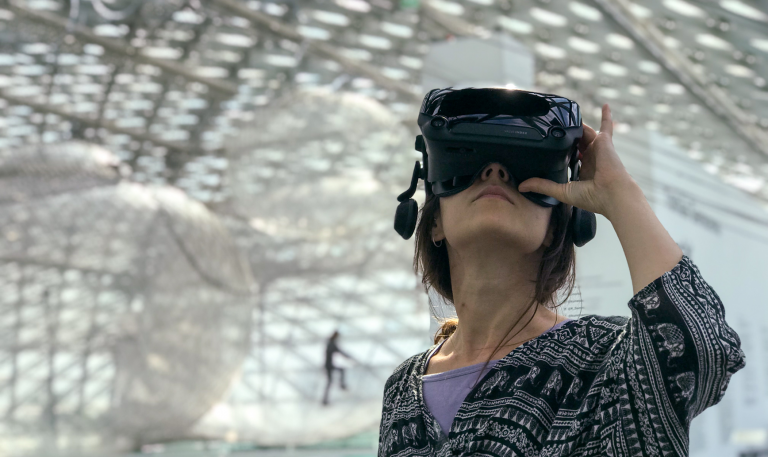
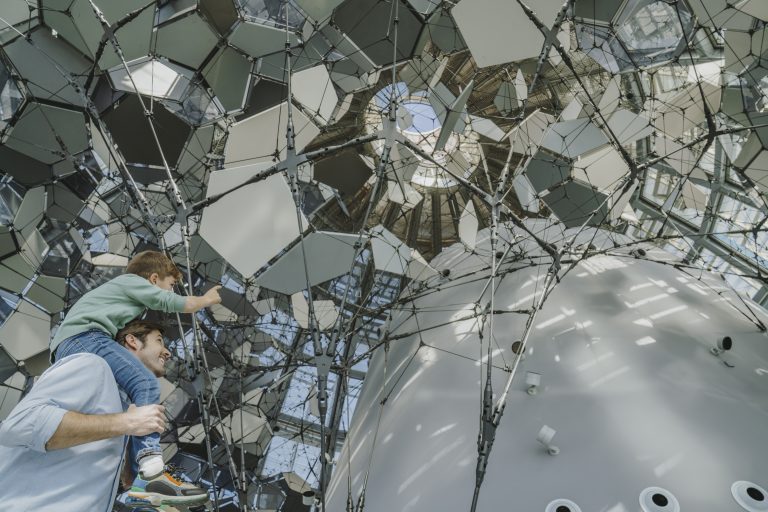
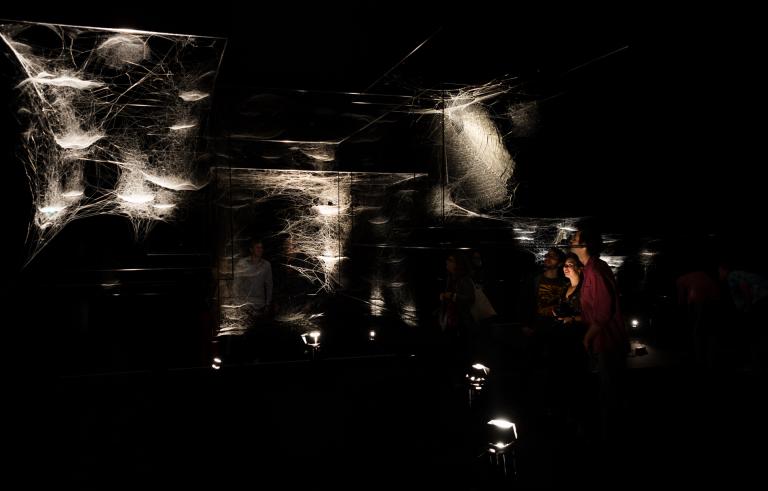
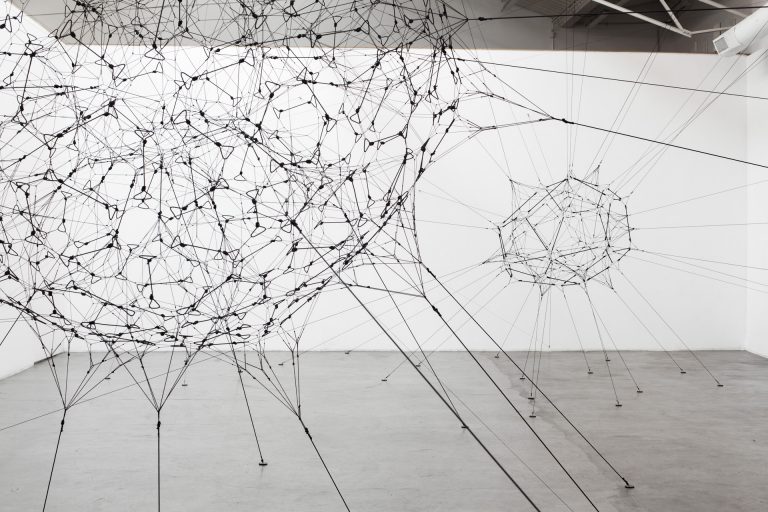
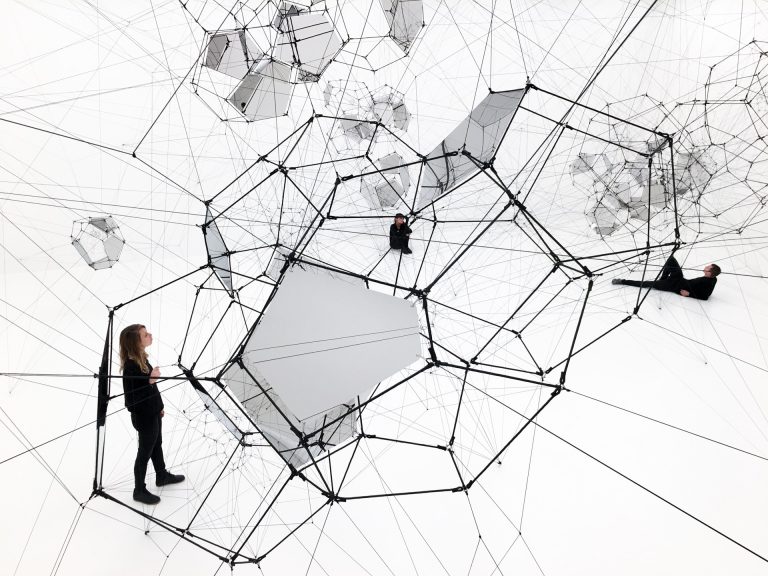
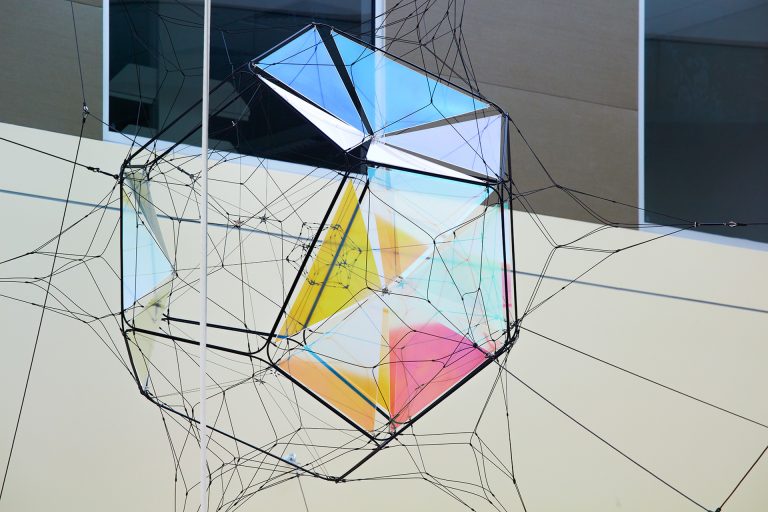
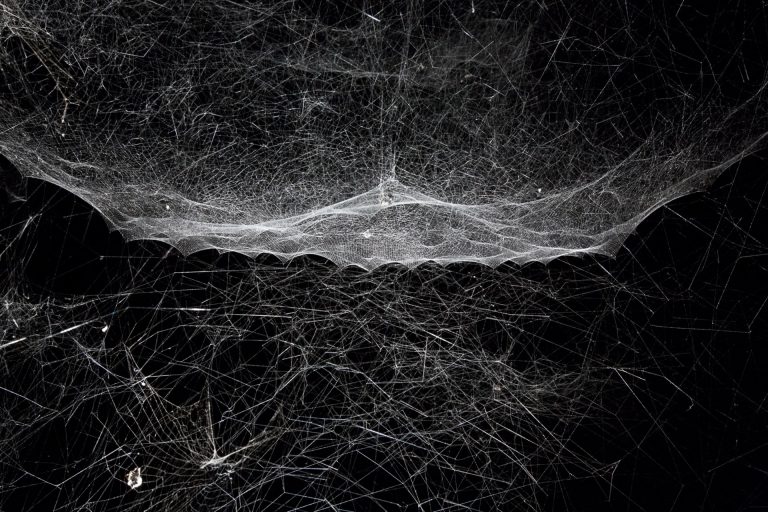
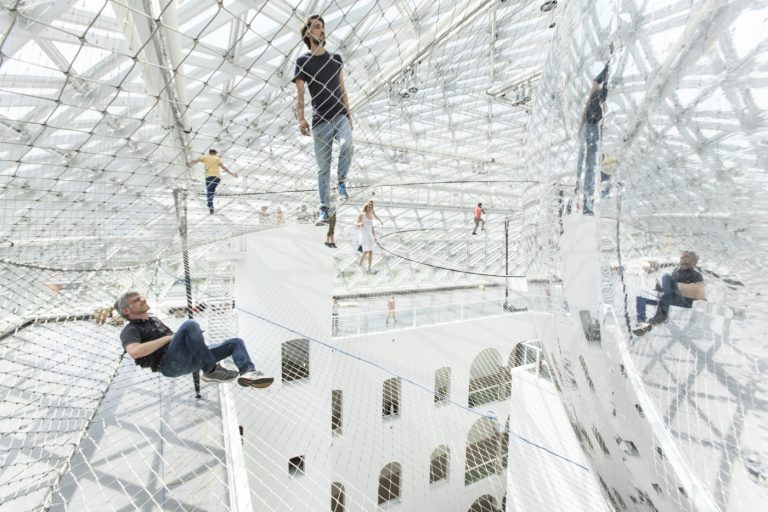
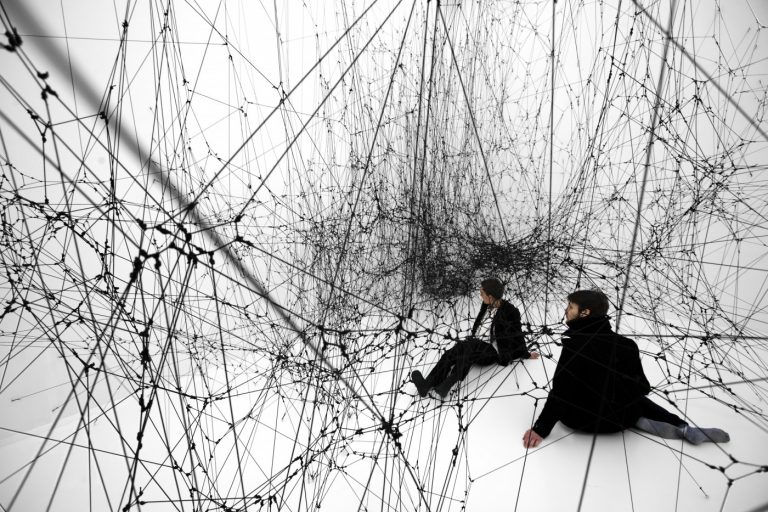
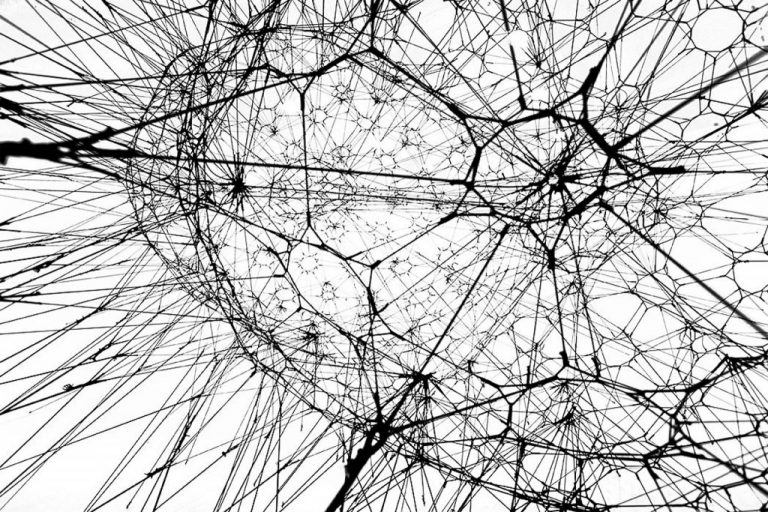
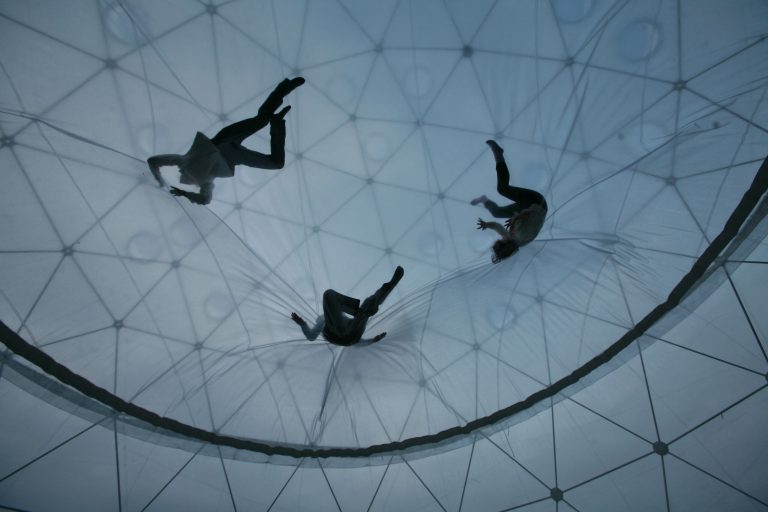
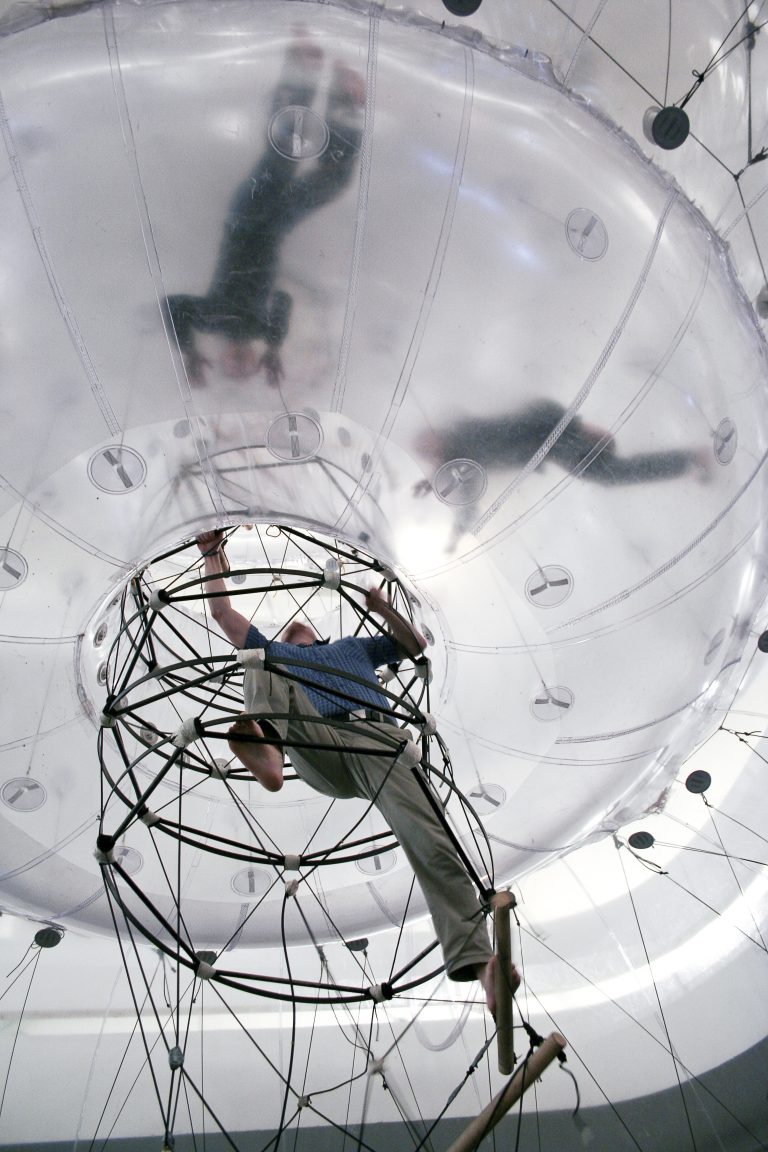
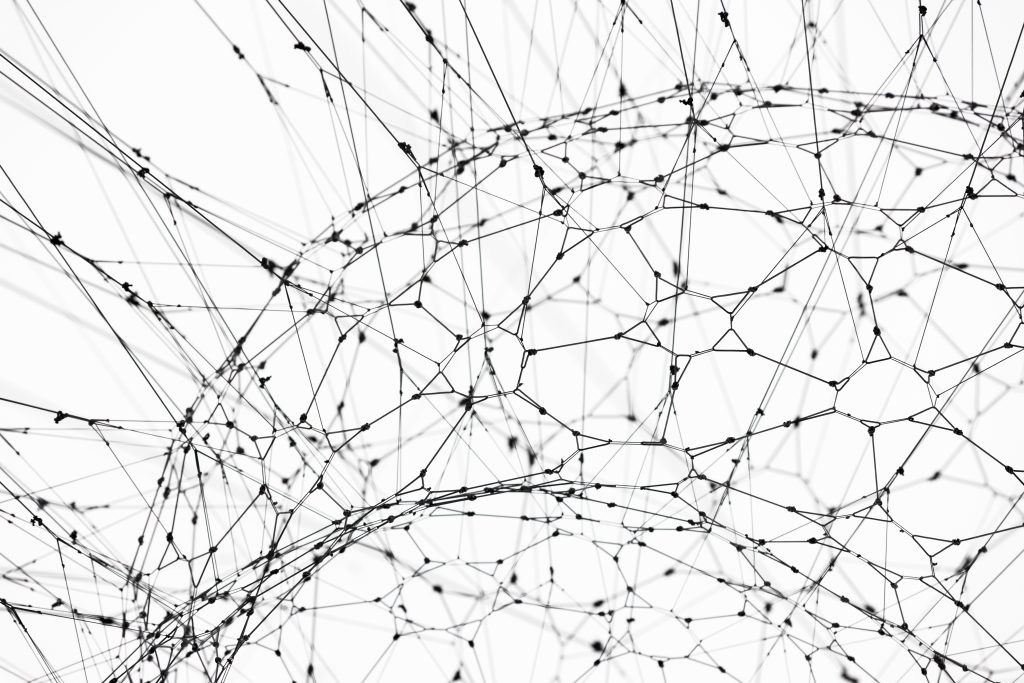
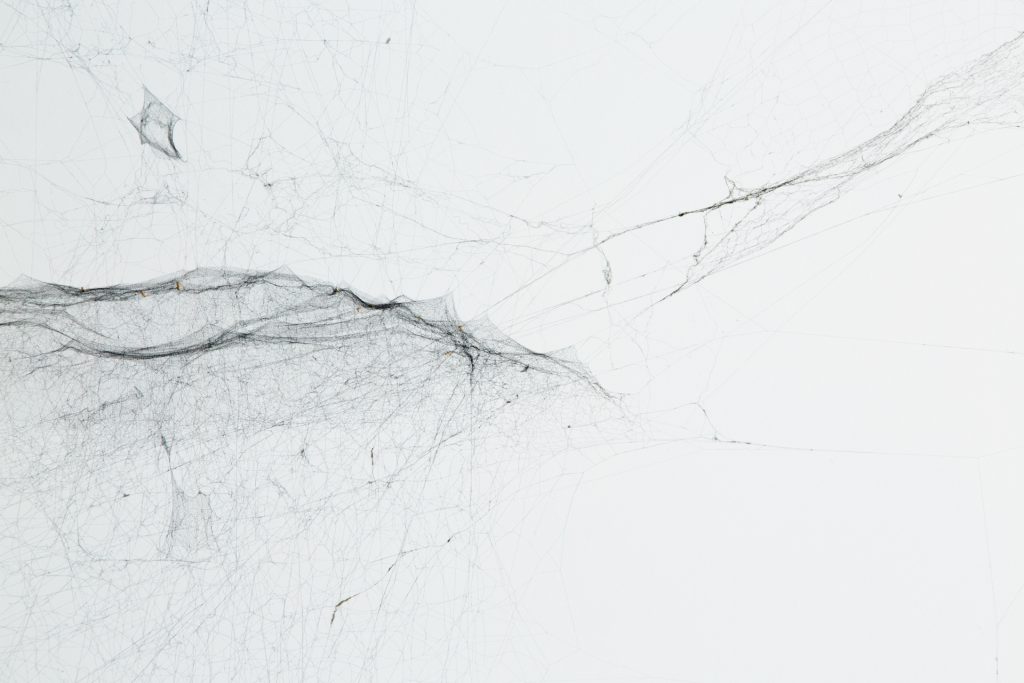
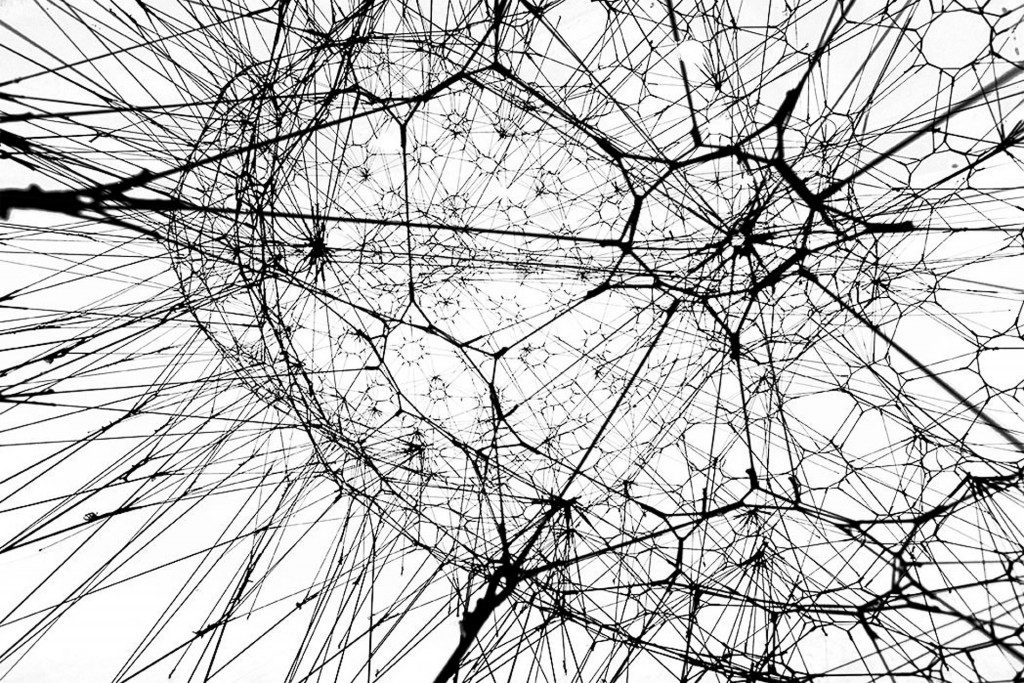
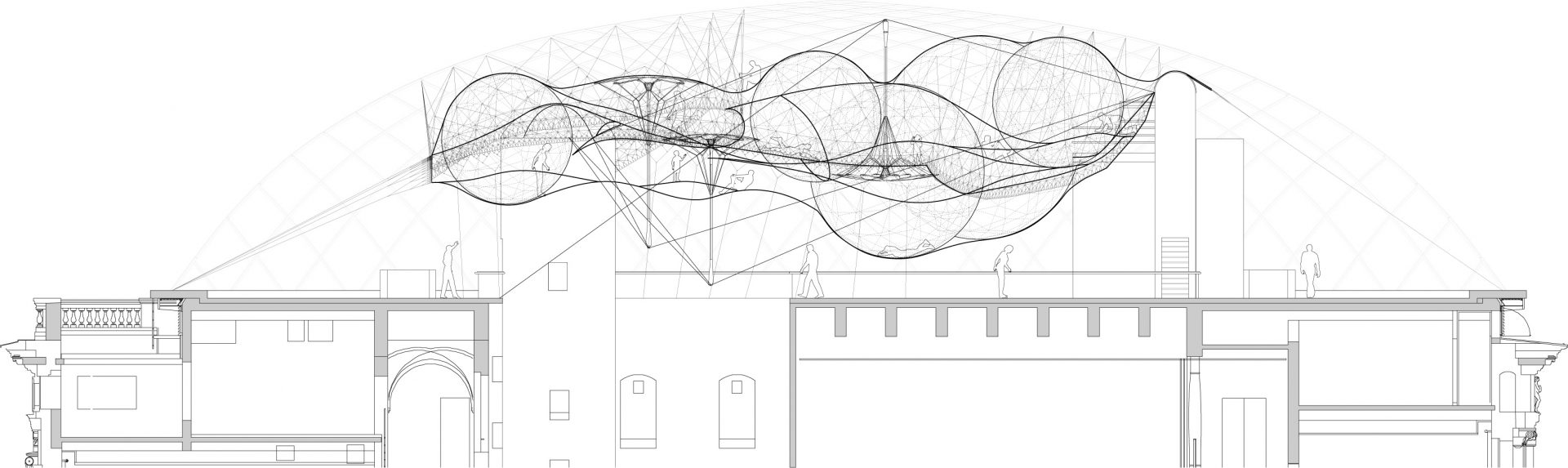
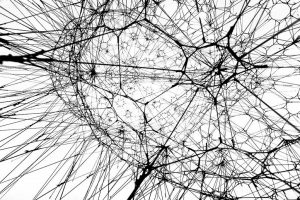
Remarkably light, the installation’s fineness and stability unfold into a participatory work of art composed with webbed mesh like the windsail formed by threads of clustering, ballooning social spiders. When several people enter In Orbit simultaneously, it is set in motion, altering the tension of the steel cables and distances between the three levels of the interlaced net.
While its original intention was to be installed for only a matter of months, In Orbit’s outstanding reception from participants of all ages and backgrounds enabled it an extended life—at its close in January 2024, spending 10 years in orbit. A floating space and vibrating web of relationships, the presences and resonances of bodies made sensitive by the installation have rendered it a symbol of the museum as well as the city of Düsseldorf.

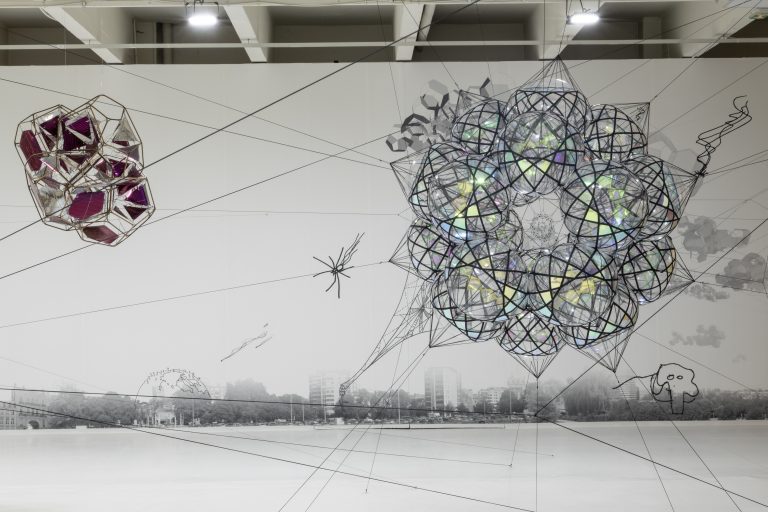
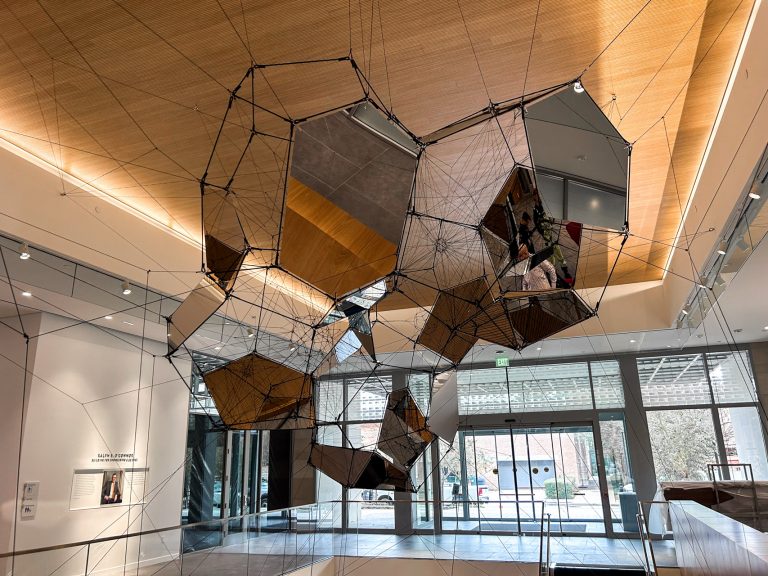
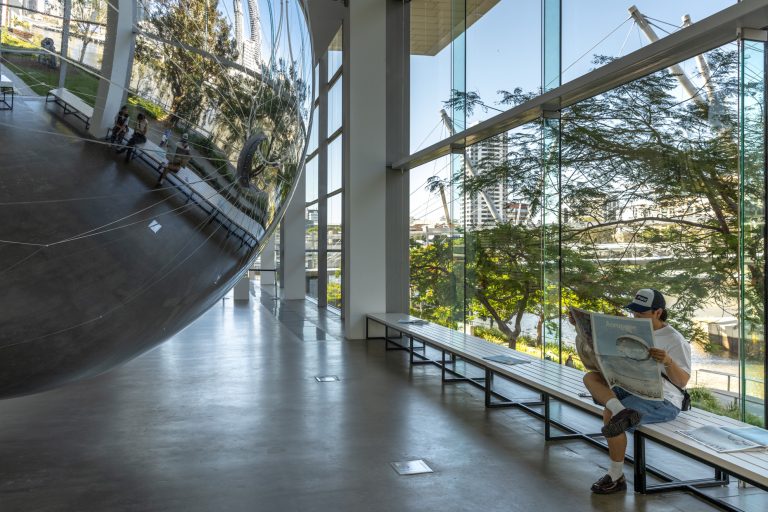
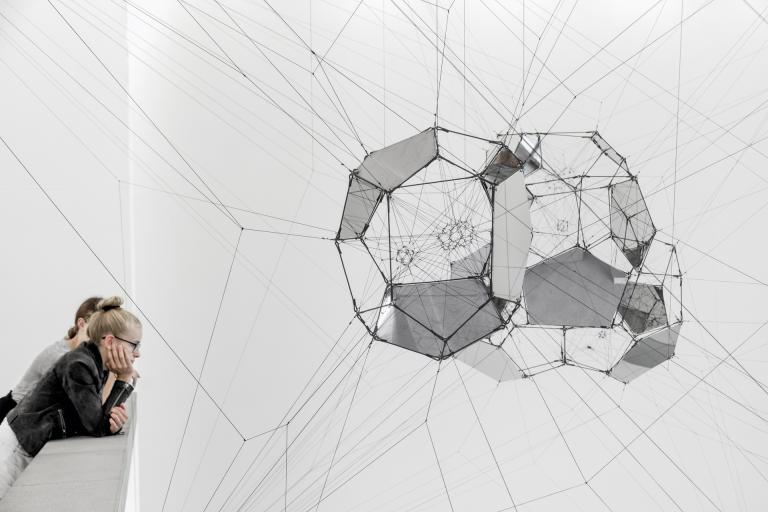
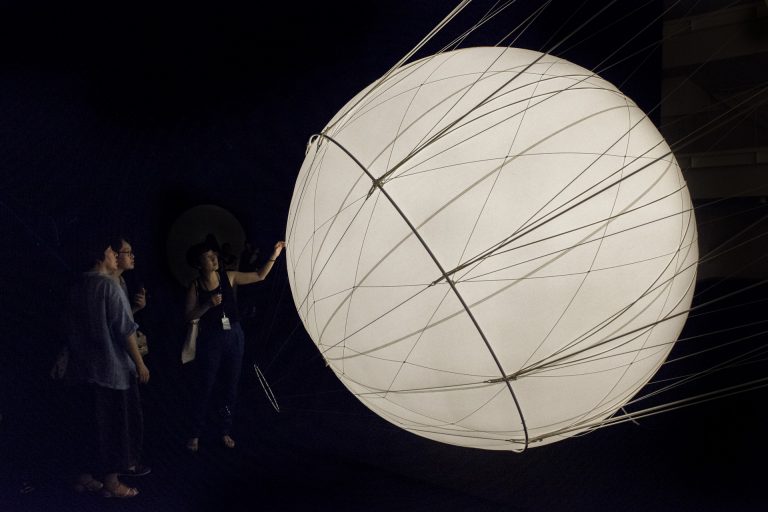
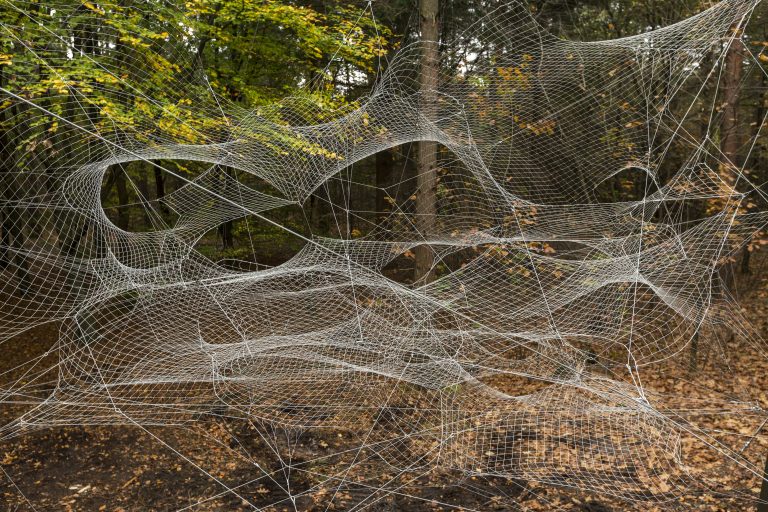
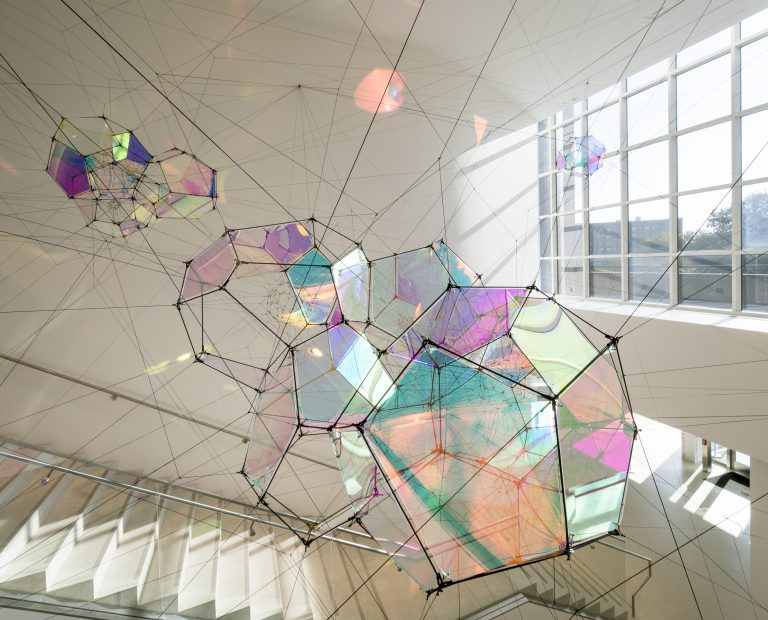
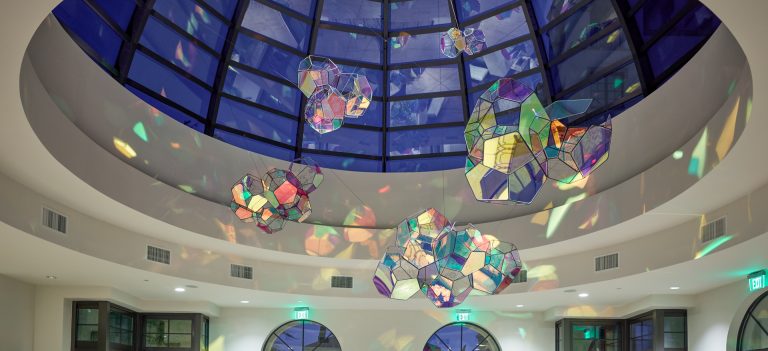
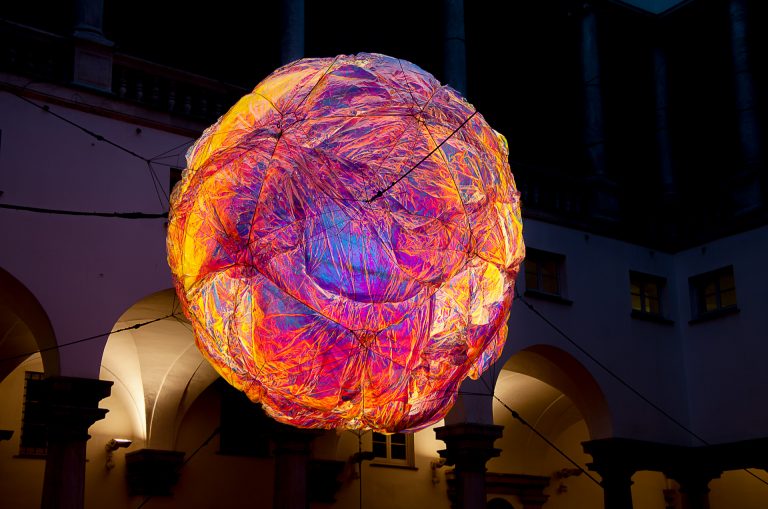
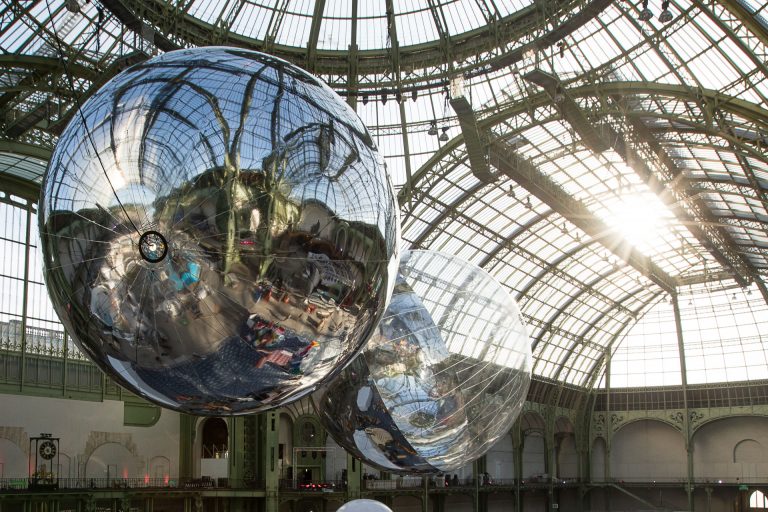
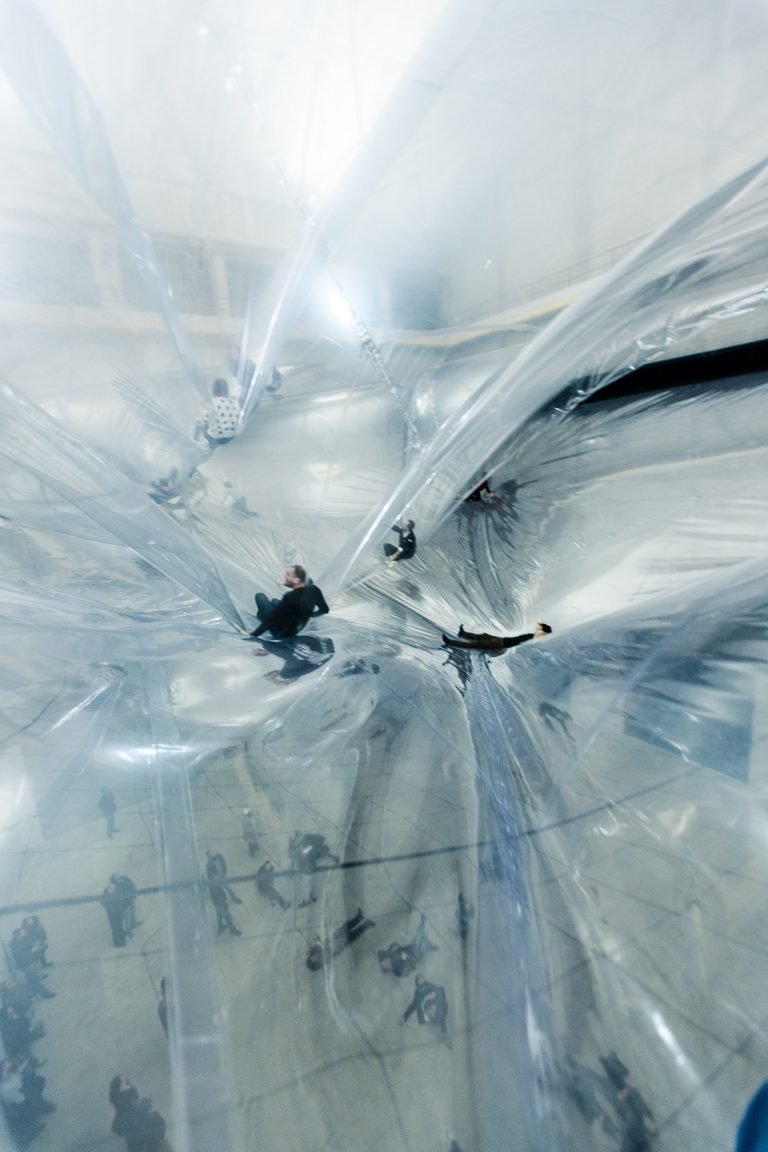
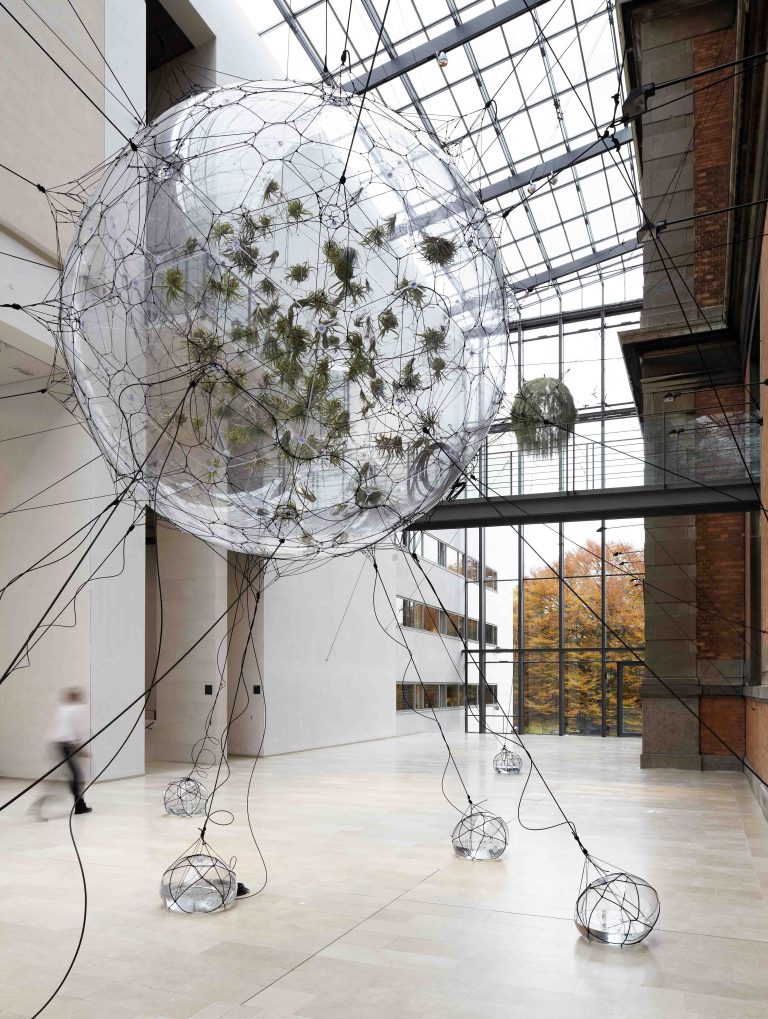
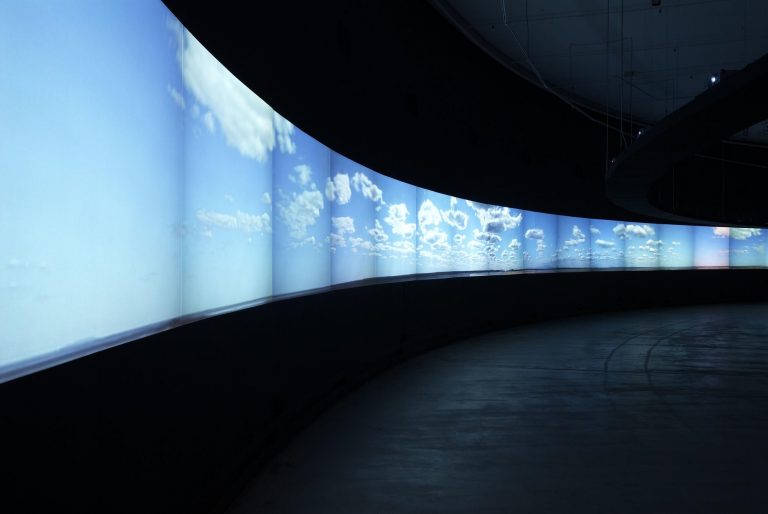
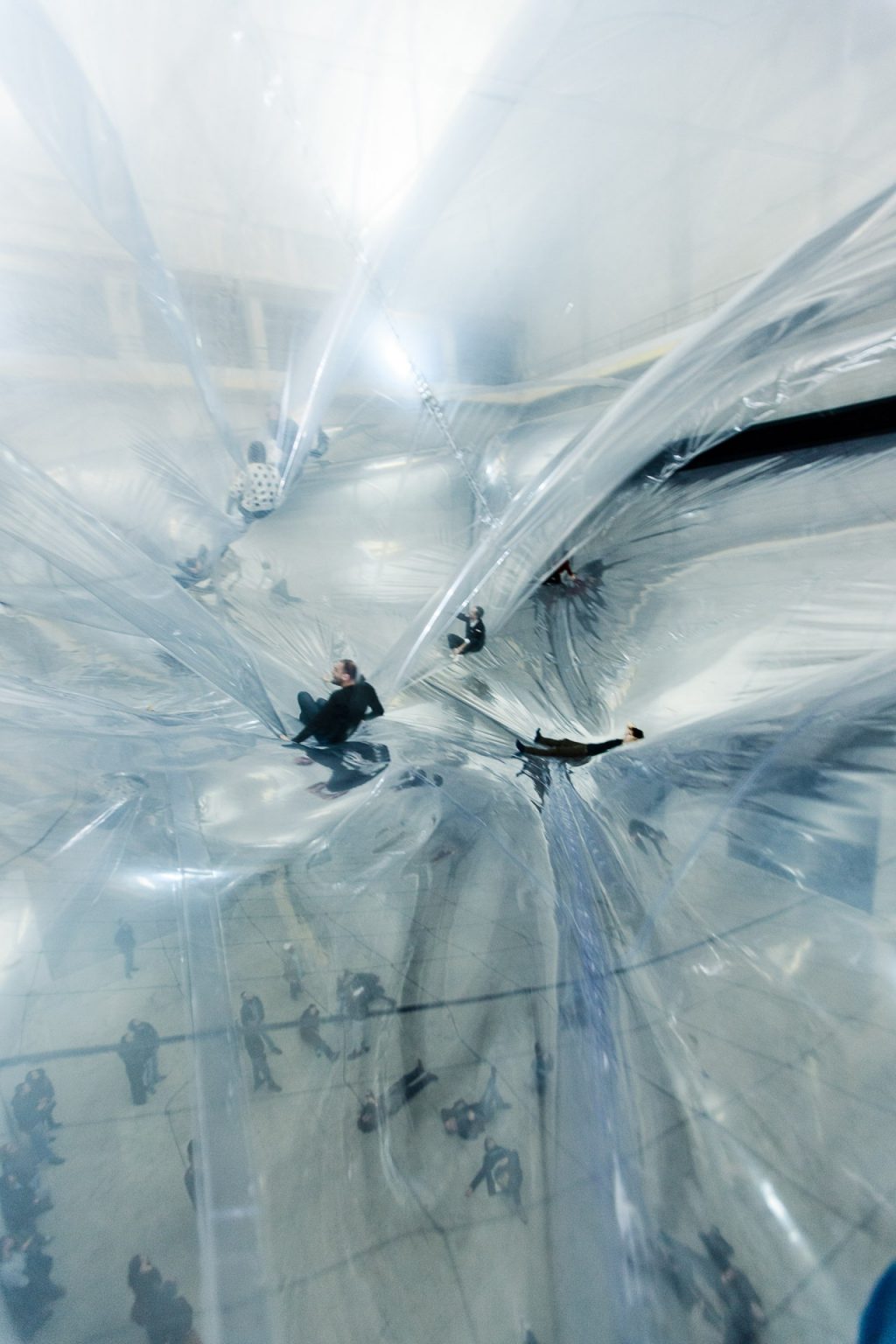
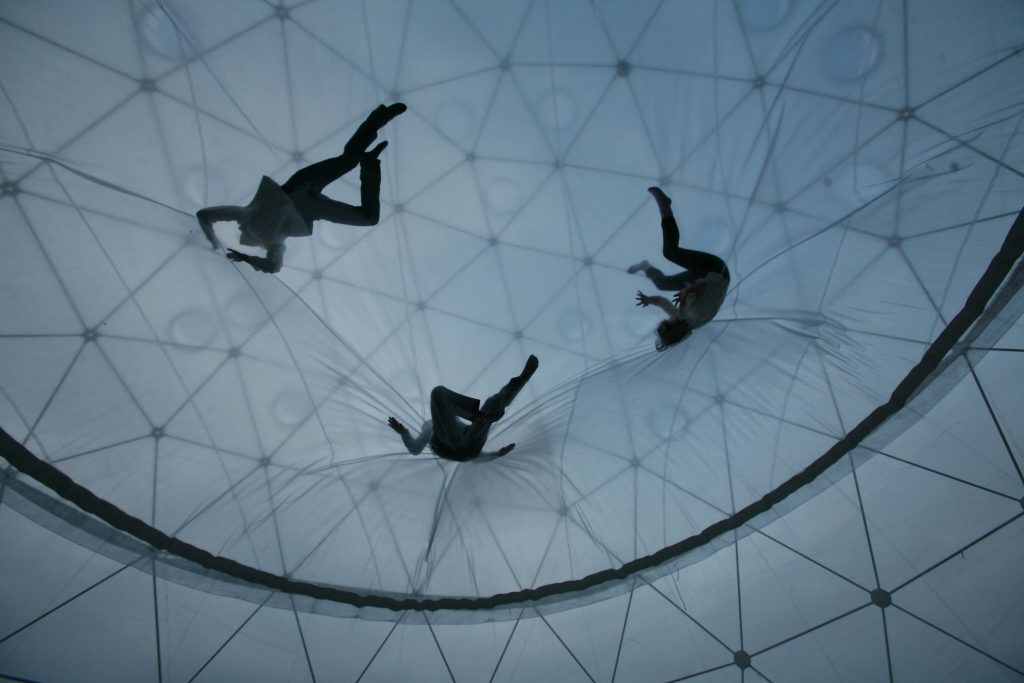
The installation appears as a surreal landscape: an ocean of clouds and floating planetary bodies. The physically accessible work is constructed of near-transparent steel mesh that interlaces three levels spanning the glass dome’s immensity. Five air-filled spheres open the layers of the net structure that encompasses an area of 2500 square metres.
At the entrance level visitors are invited to crawl over, climb through and otherwise negotiate its space. Once inside, they are incorporated into an expansive ecosystem wherein every participant is equally influential—for each physical presence reverberates throughout the space. Codependent sociability is enacted by the milieu itself, simultaneously shaping and being shaped by the encounters happening within it. “To describe the work means to describe the people that use it—and their emotions,” notes Saraceno.
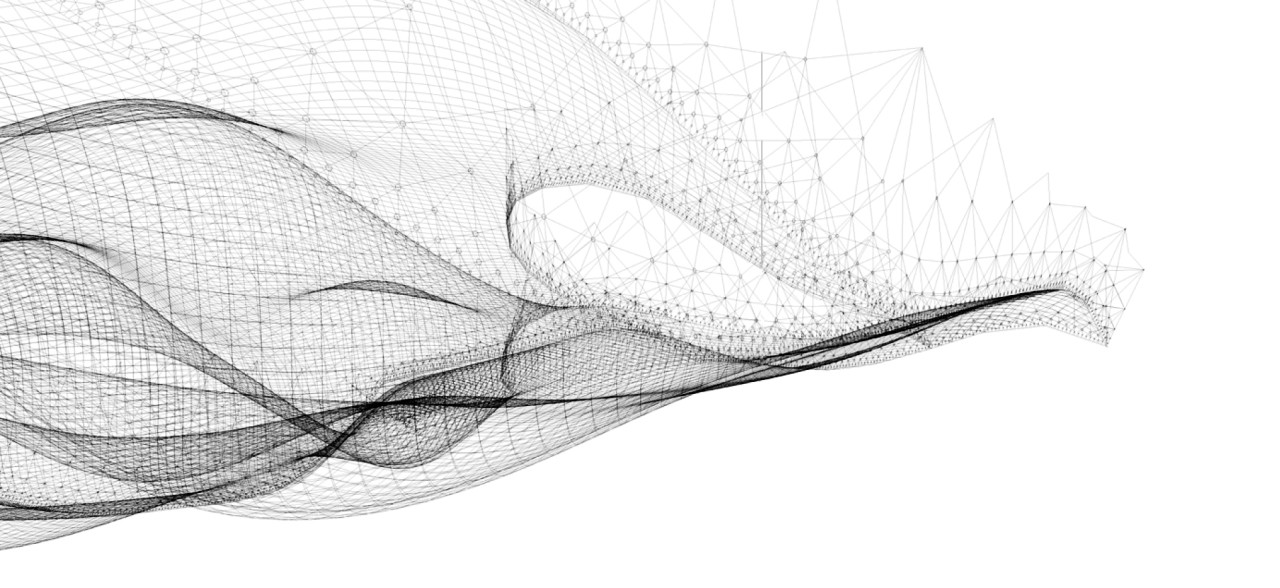
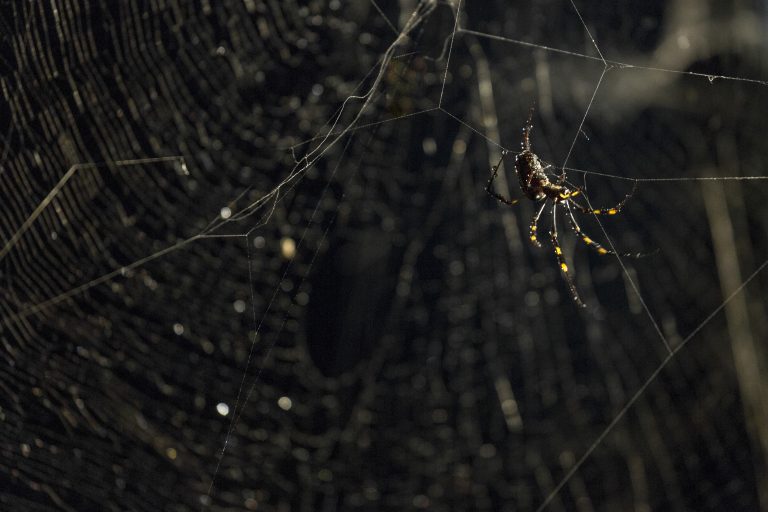
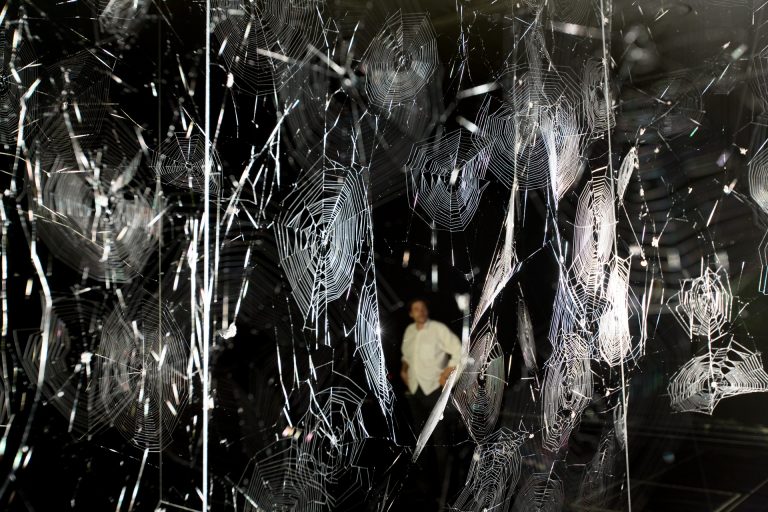
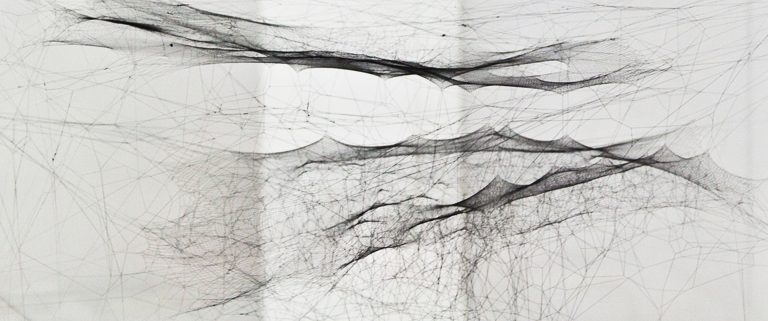
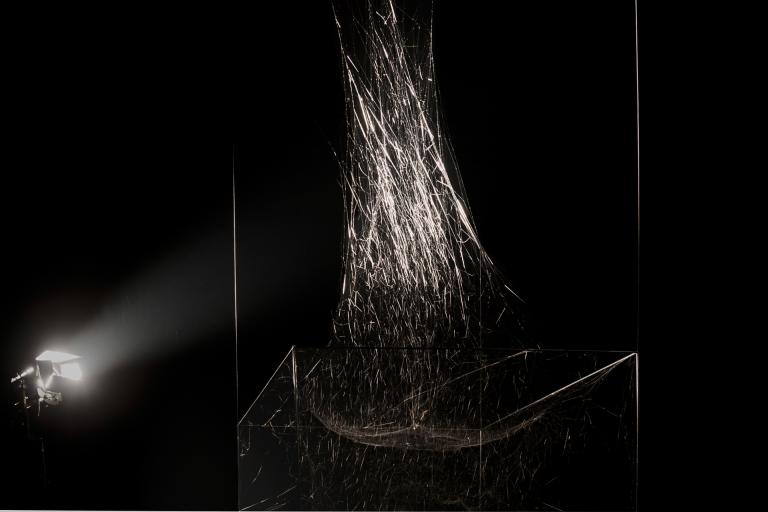
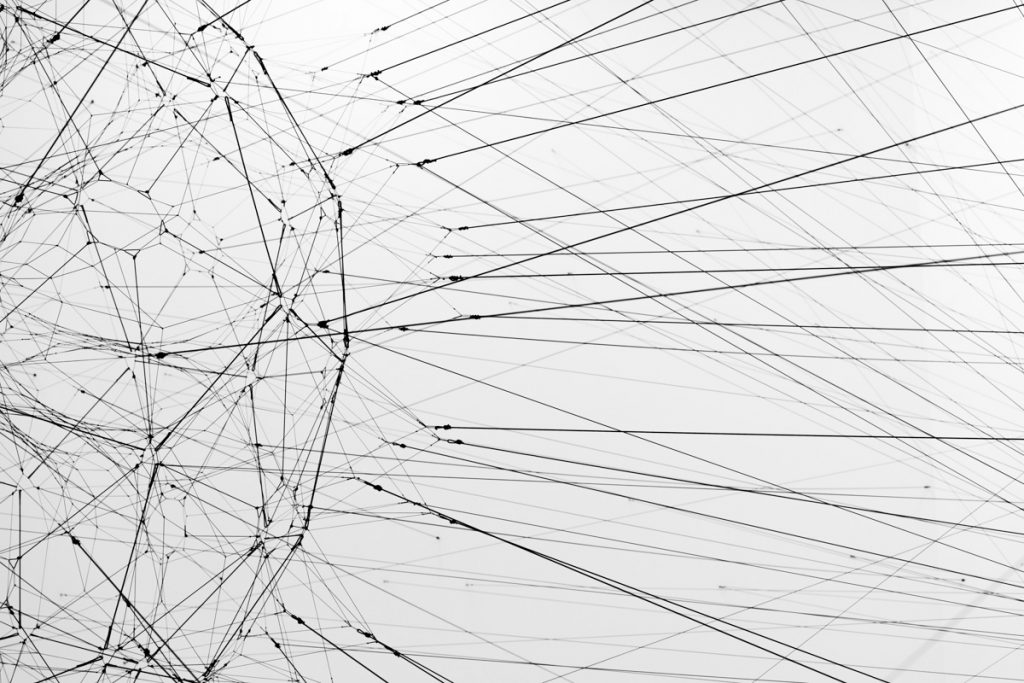
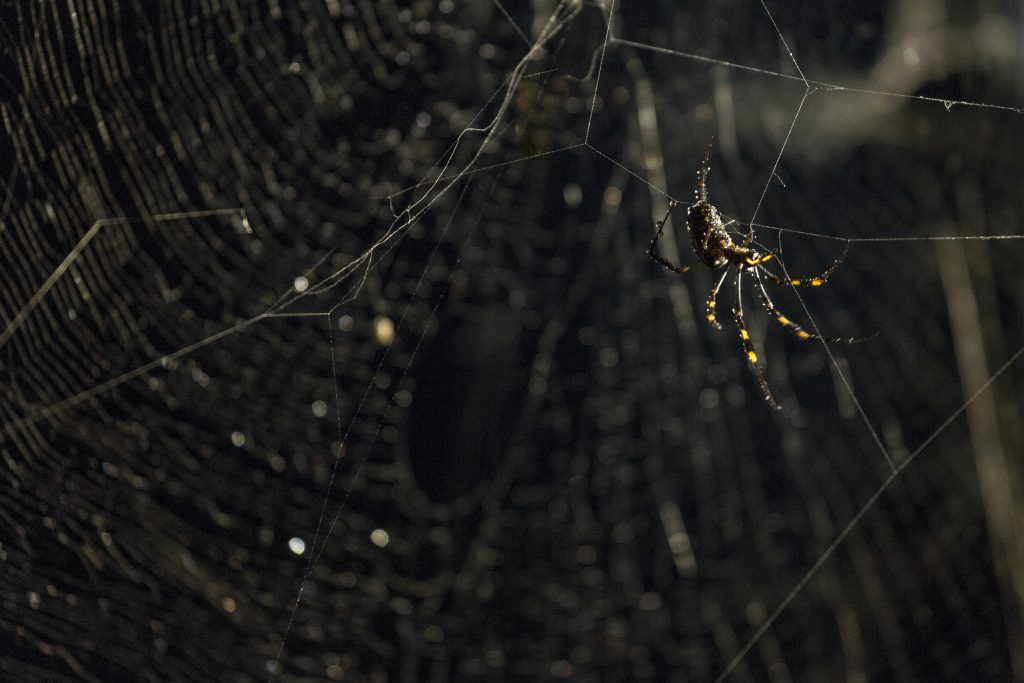
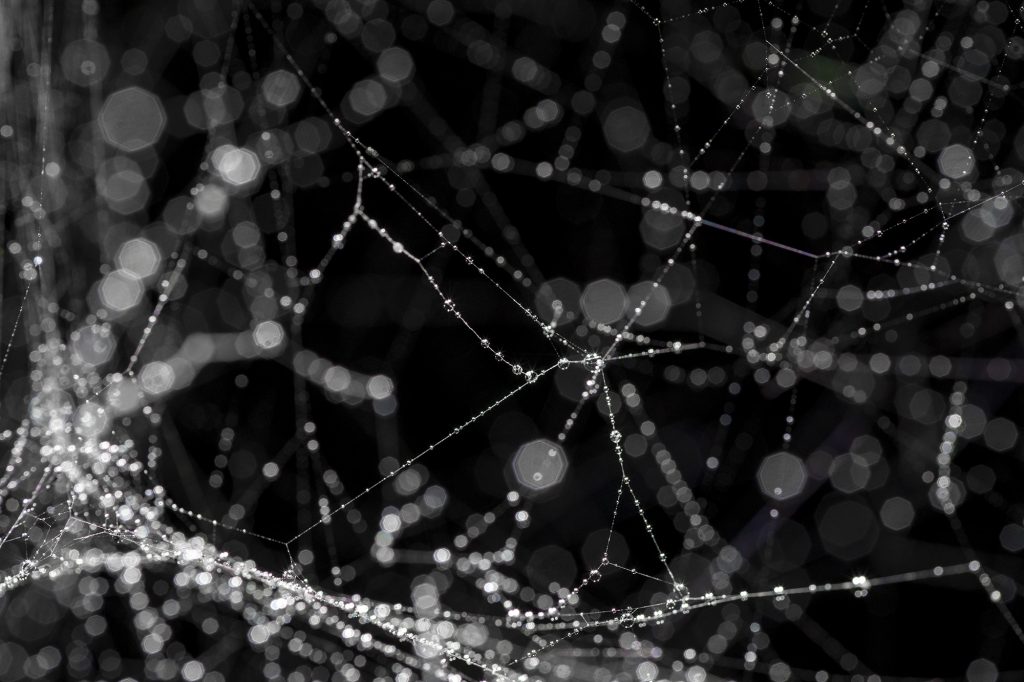
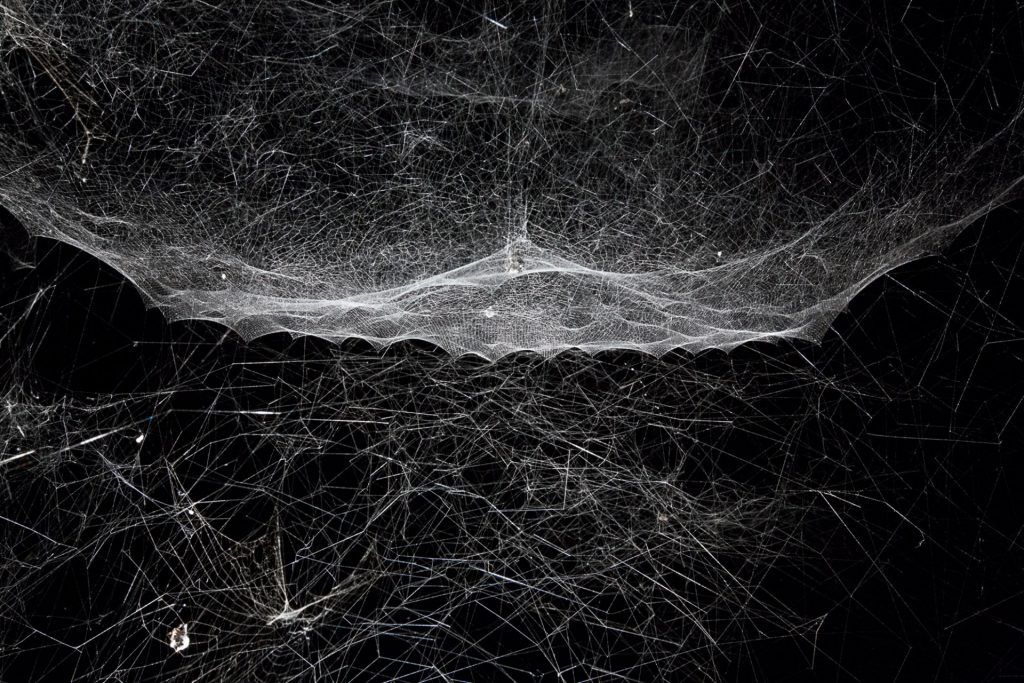
Visitors adapt to the changing conditions of this sensitively attuned network through improvised movement in consonance with the reverberations and changing tensions produced by others. Once several people enter the structure simultaneously, it is set to motion, altering the tension of the steel cables and distances between the three levels of the interlaced net. The floating space now becomes a vibrating web of relationships, resonances and synchronous communication. Similar to a spider/web, visitors perceive the presence of others through vibrations, echoing Saraceno’s artistic practice and research on hybrid and interspecies forms of communication.
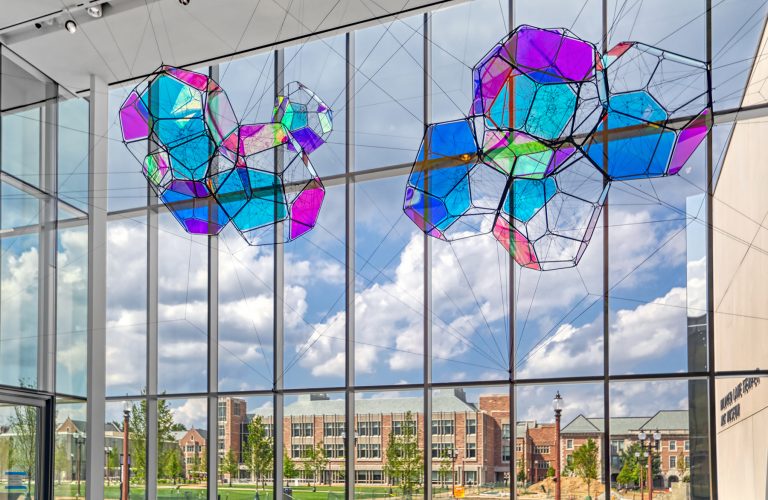
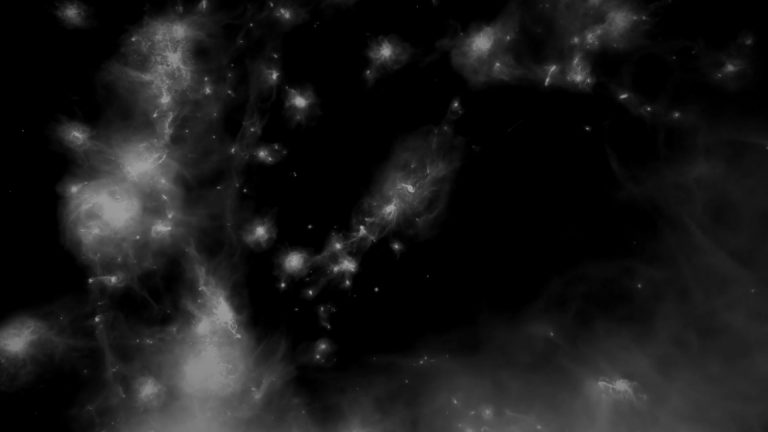
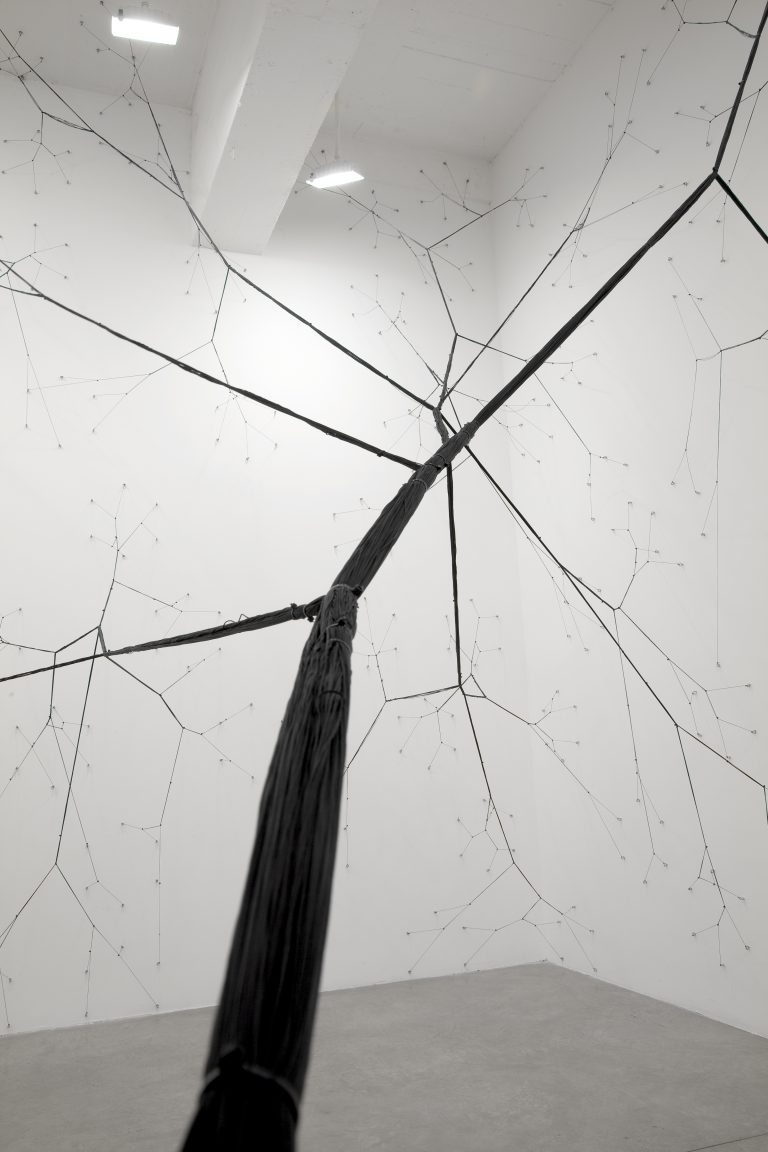
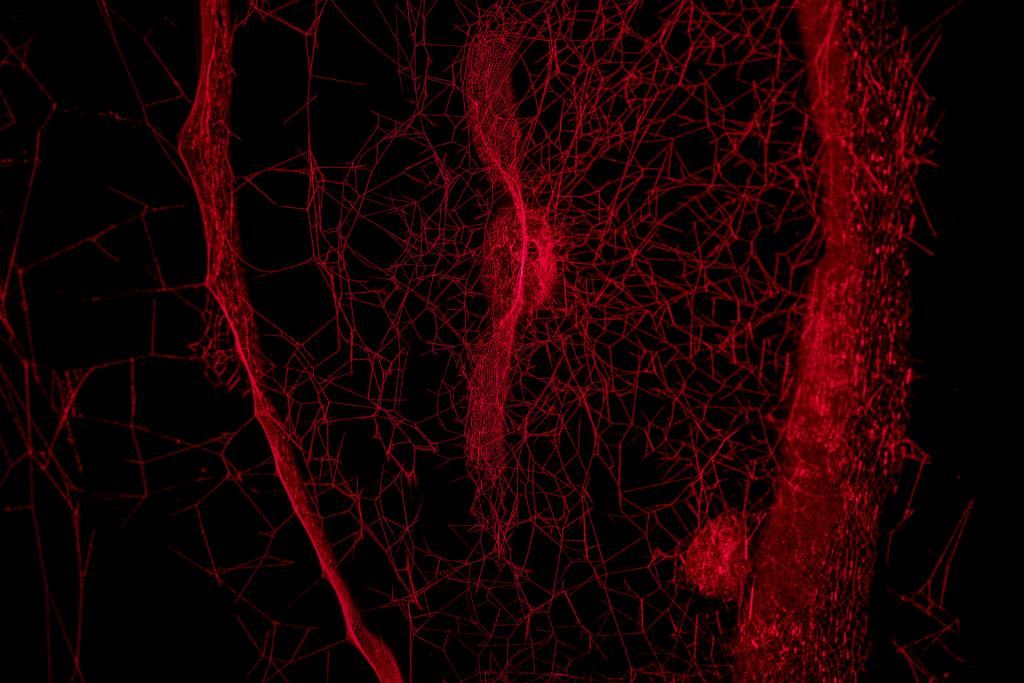
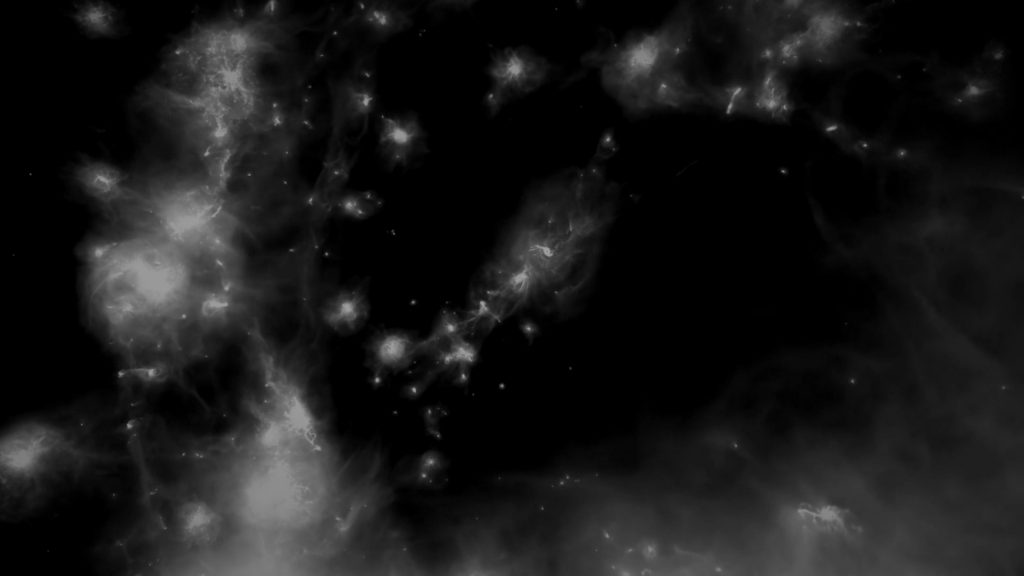
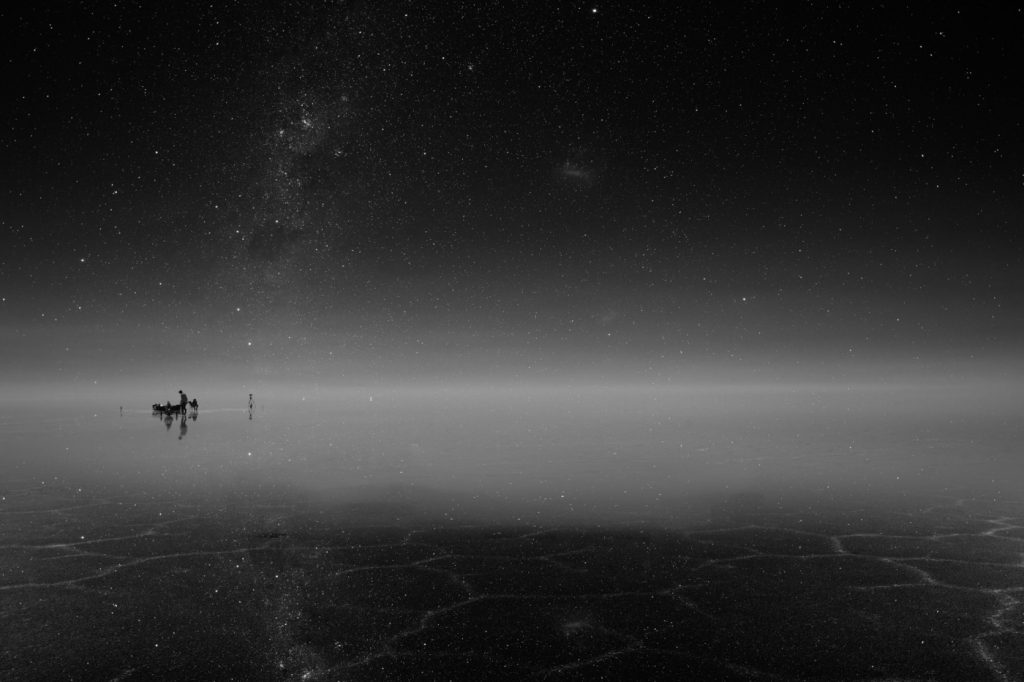
The type of co-existence enacted by In Orbit alludes to the interplanetary, playing with recursive analogies, moving from the microcosmic to macrocosmic in a non-scalar way. Spider/webs provide a model to re-think interconnectivity, and, at the same time, recall the same invisible structure of the universe, envisioned by astrophysicists as the cosmic web: in the vibratory continuum of the installation, bodies move in a manner akin to molecules, planets and black holes.
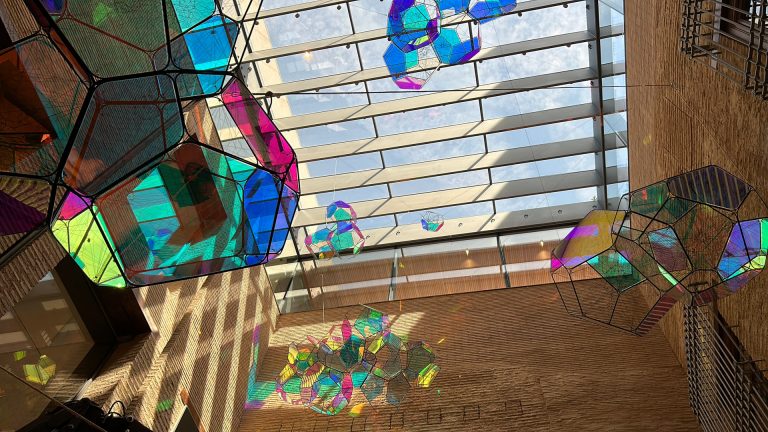
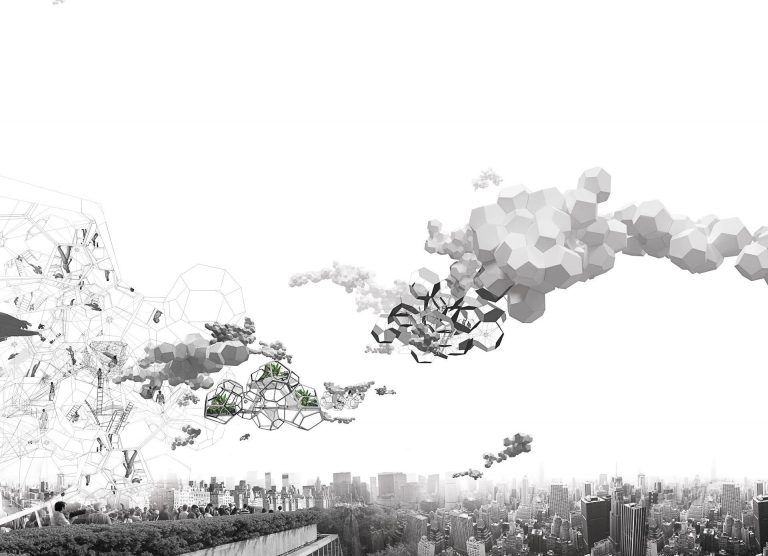
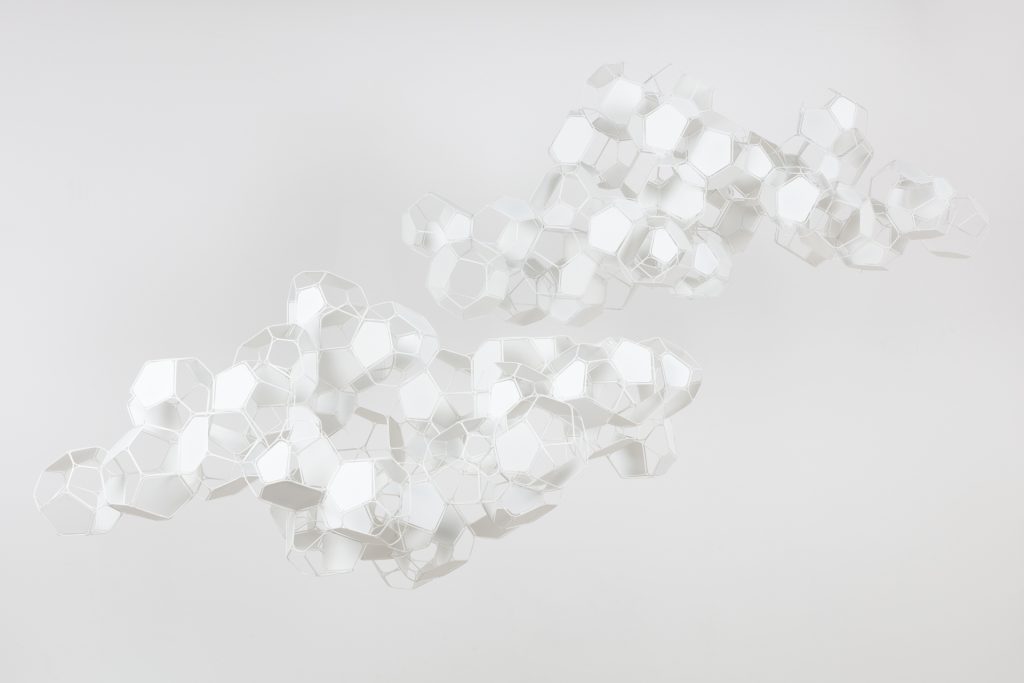
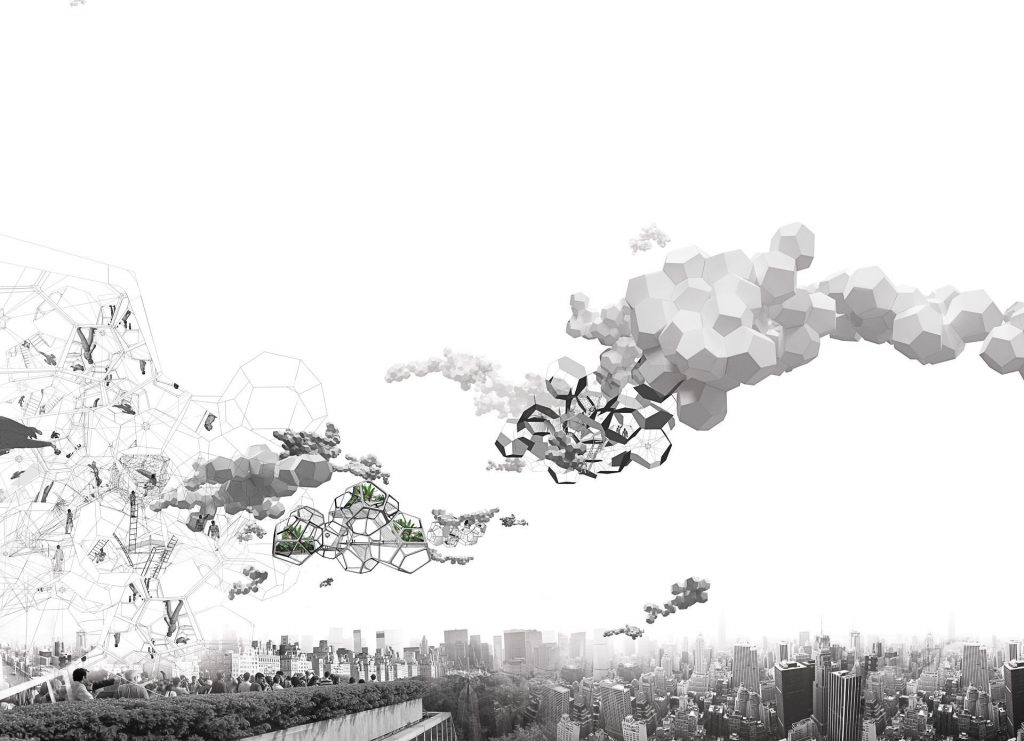
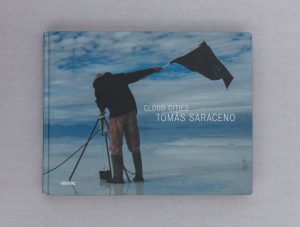
Tomás Saraceno: […] In each discipline, I see another universe—and I keep getting lost every time I try to dive into a new one … struggling with how many I can’t even see or read, invisible to my eyes and so relevant to yours, I need more senses to perceive this, that, and your reality … the Cloud Cities should help to facilitate a dialogue and are therefore real on Earth or in orbit … in the way that stars become more real to someone who uses them for navigation, this model for reality is capable of a perception that becomes tangible as we construct it through dialogue … the medium is the message many times … and I have no preconfigured medium for expressing ideas. For the project at K21 … we could not find a computer program, or institution with the necessary knowledge to help predict the exact behavior of the net, or whether the force applied to the net could damage the existing building. The conclusion we arrived at with the engineers was that a 1:1 real model presents the most cost-effective means to test these real forces … this is interesting from a variety of perspectives … and it is the direction I am interested in pursuing with the construction of Cloud Cities. When you acknowledge that the process is not just a part of the project, but the project itself … then changes, expands, gets smaller again, rebuilds… hibernates, reproduces, and mutates … dynamic systems in feedback loops … the rest is unknown. It turns out that roughly 95 % of the universe is dark energy and dark matter, the rest—everything on Earth, everything ever observed—planets, plants, water, humans, hydrogen, helium … everything that is known adds up to less than 5 % of the universe.
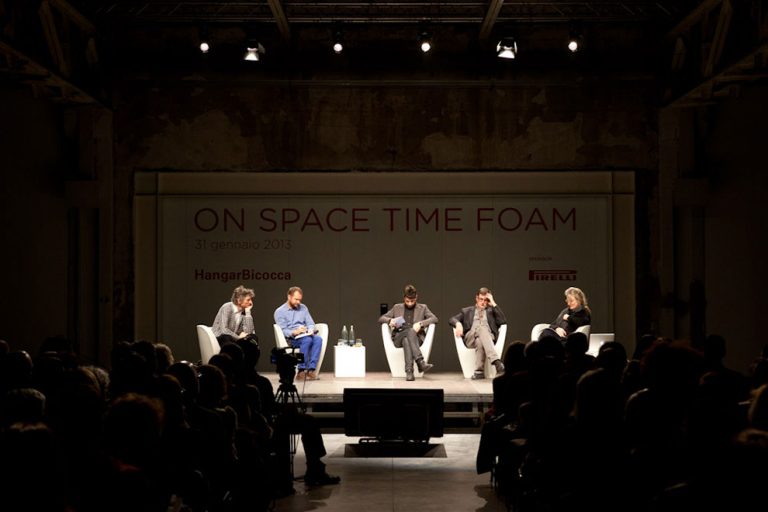
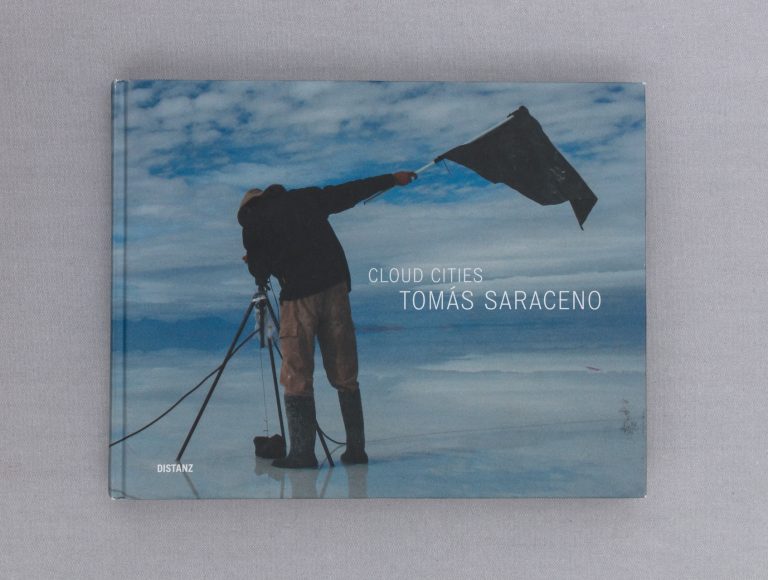
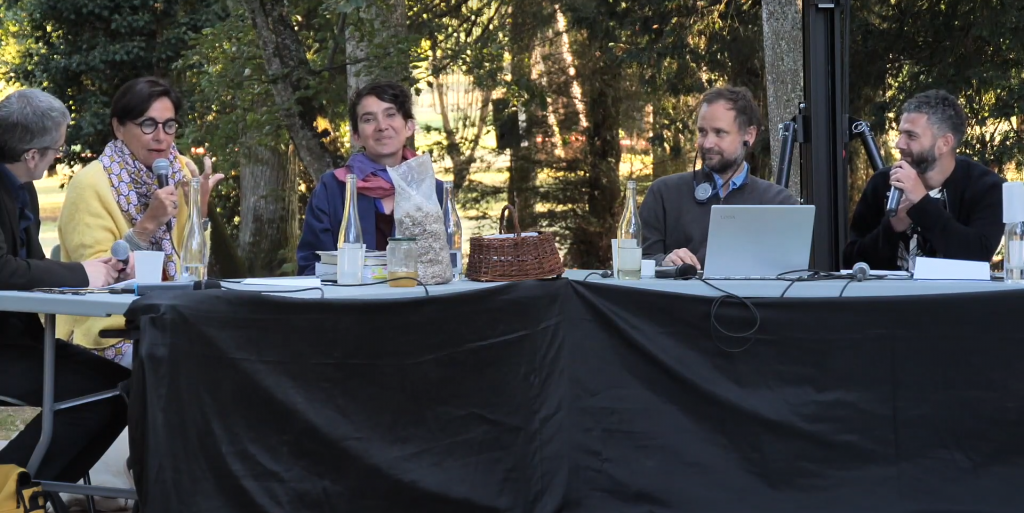
Conversation between Tomás Saraceno, Marion Ackermann, Daniel Birnbaum, Hans Ulrich Obrist, and Udo Kittelmann, Cloud Cities. Distanz, 2011.

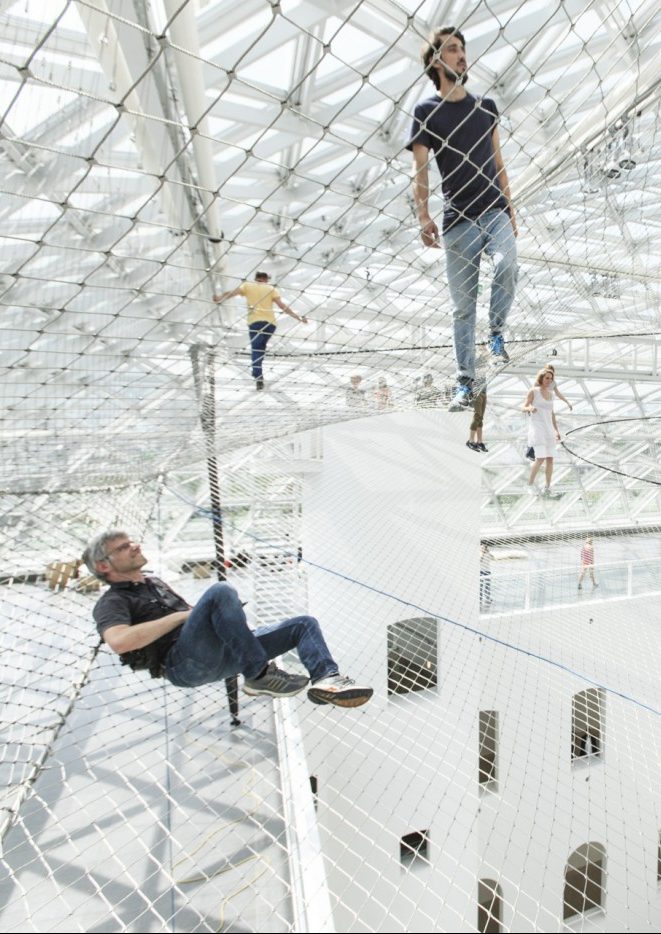
What is this? Where are they? How could it be? Is this real? Displacement, fear… are they real..? If you dare to, you really become scared… afraid… you might hate it, you will feel uncomfortable of something you like to know… your limits. You will fall to an unknown landscape, not perceivable but so much necessary today… a mixture of feelings invades you… then the slight reverberation wakes you up, from this oneiric dream, half dystopia half utopia… you float in this landscape… transcendent and expanded towards a more-than-human sensorial inclusion… the spiders never stop… and you become small… riding on this cosmic web… I am interested only in your shared feelings with others… and you still reverberate… this is the artwork you get after you ‘transited’ through it…
Watch In Orbit, K21 (2013) video
Video production: K21/EKS/Ralph Goertz
...