

























...








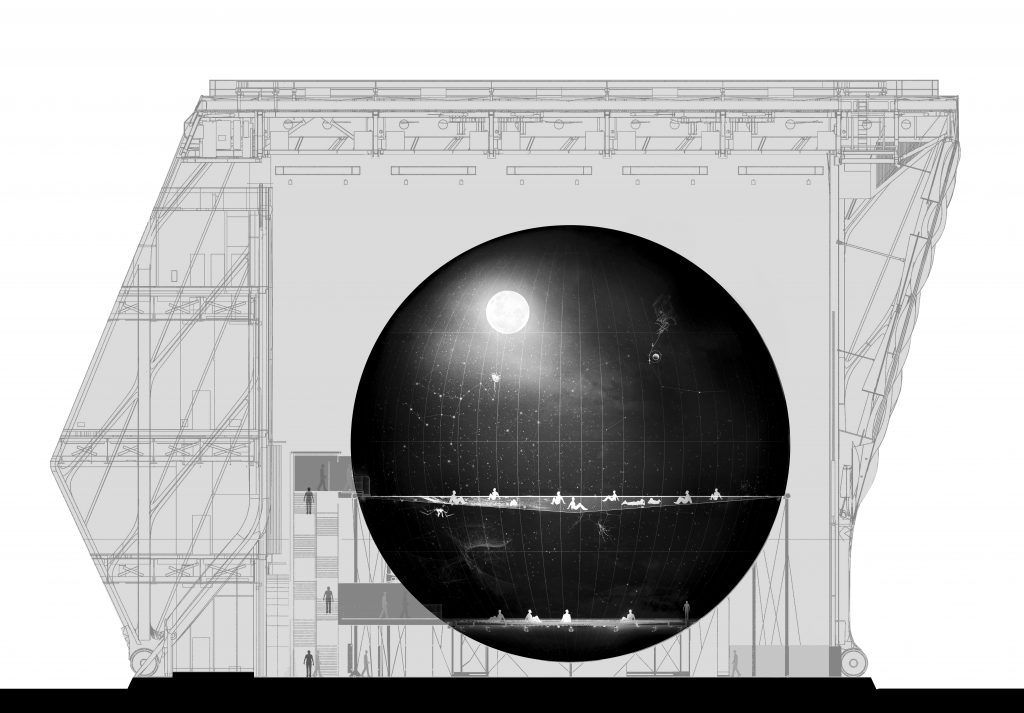
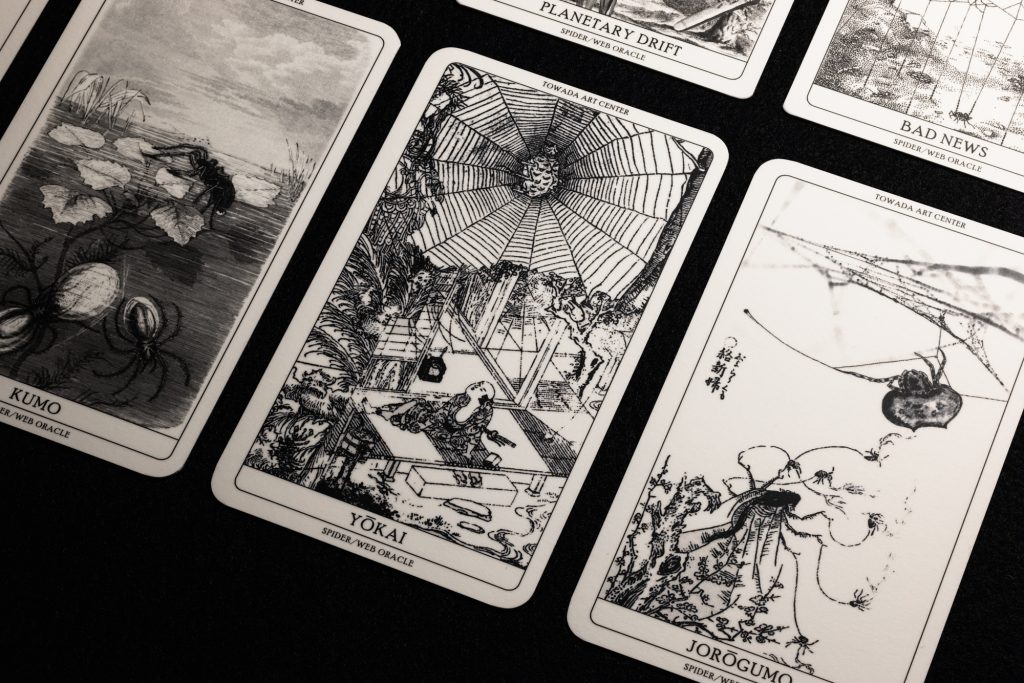

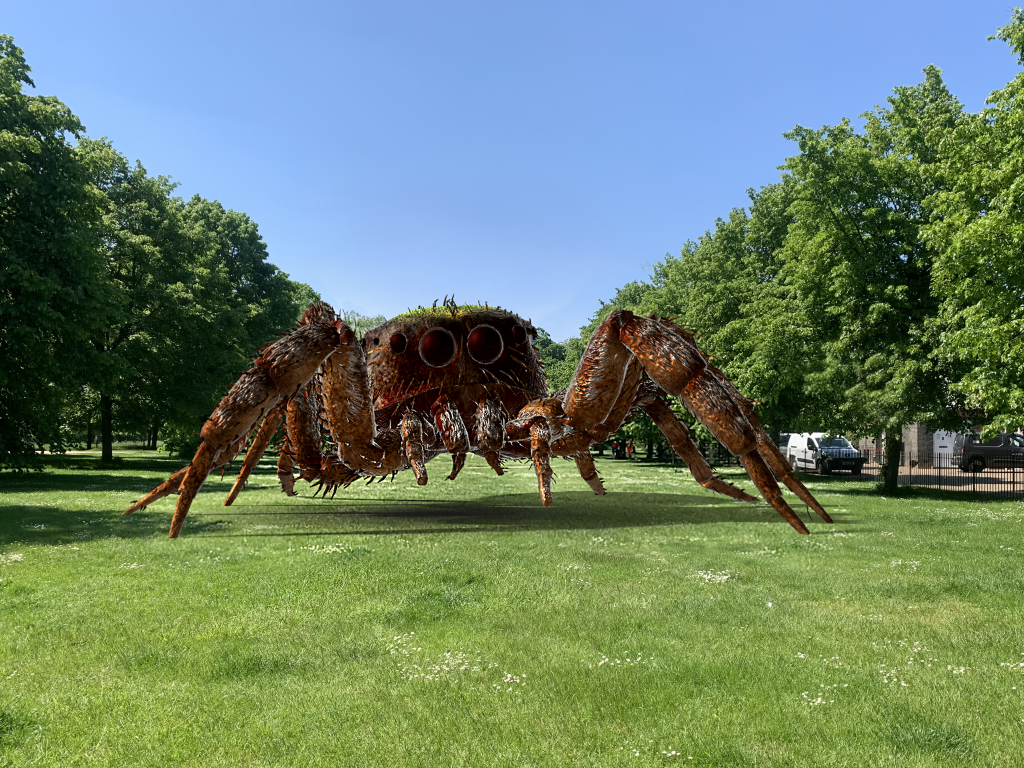
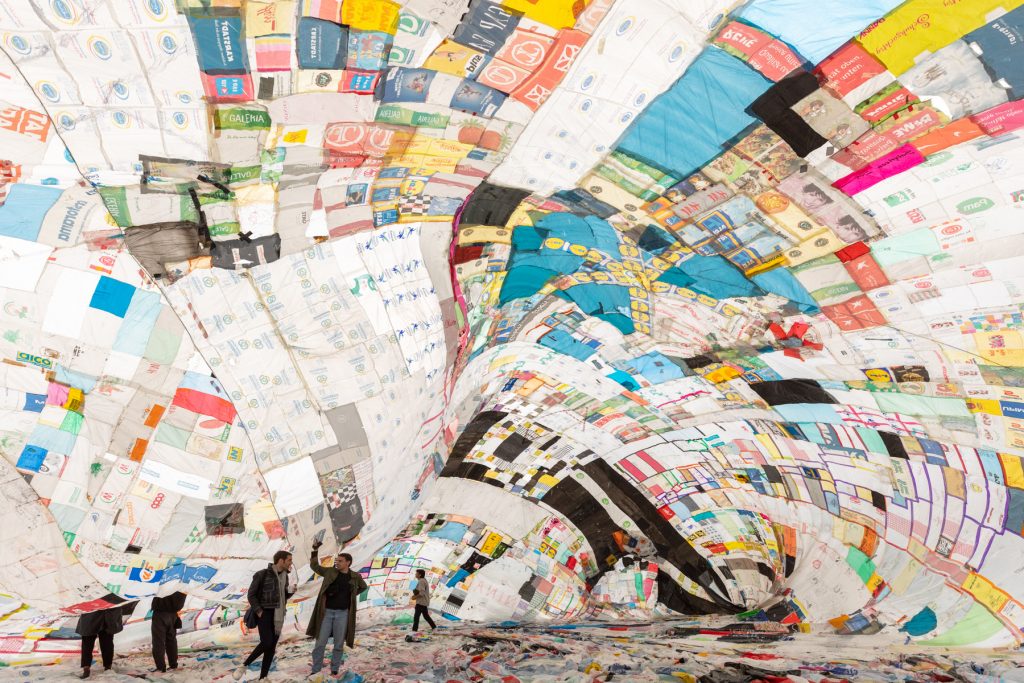













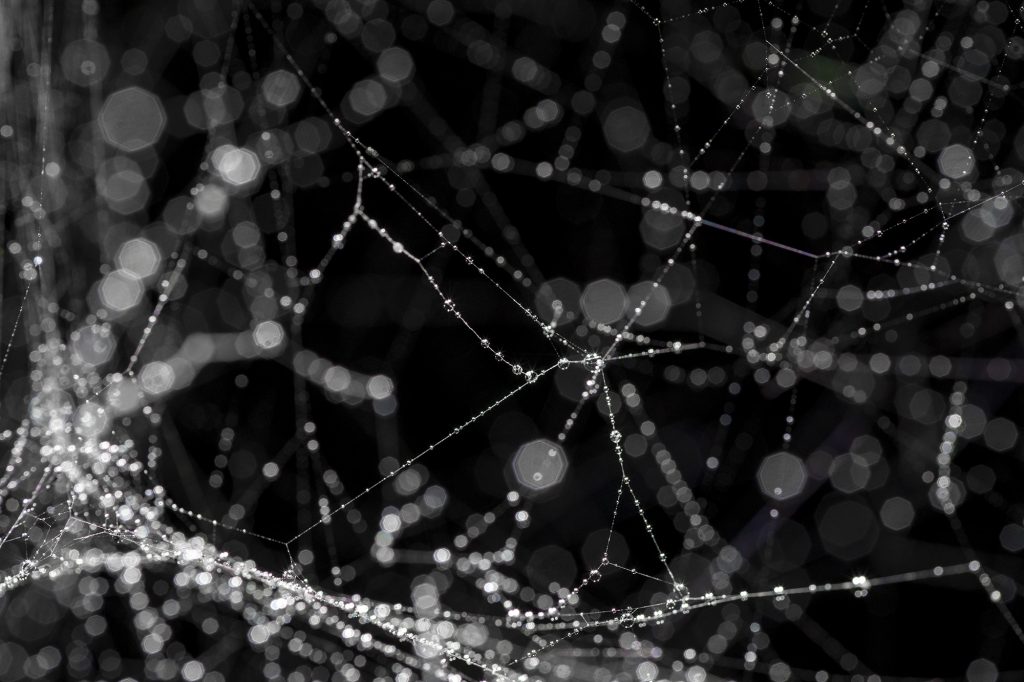





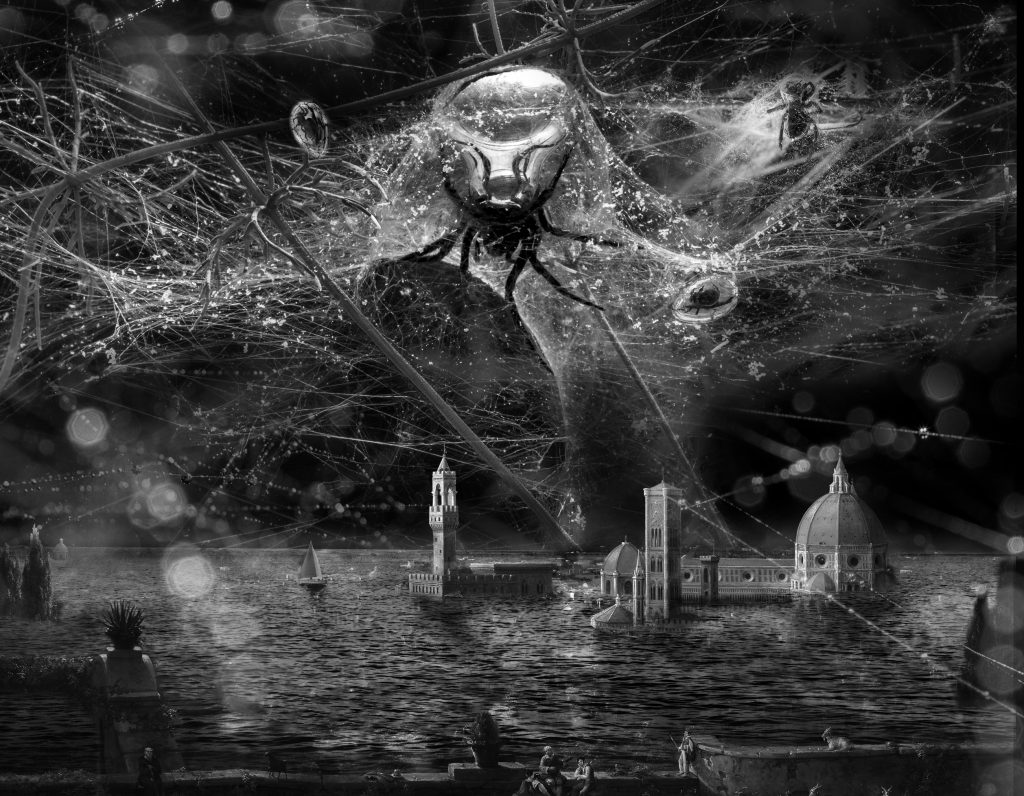
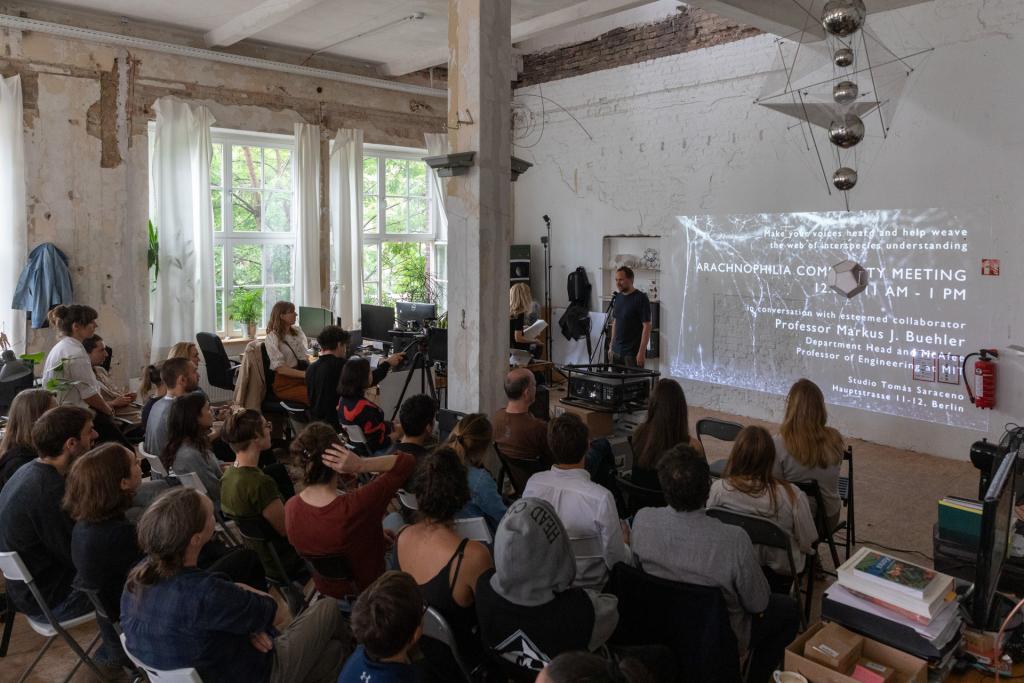
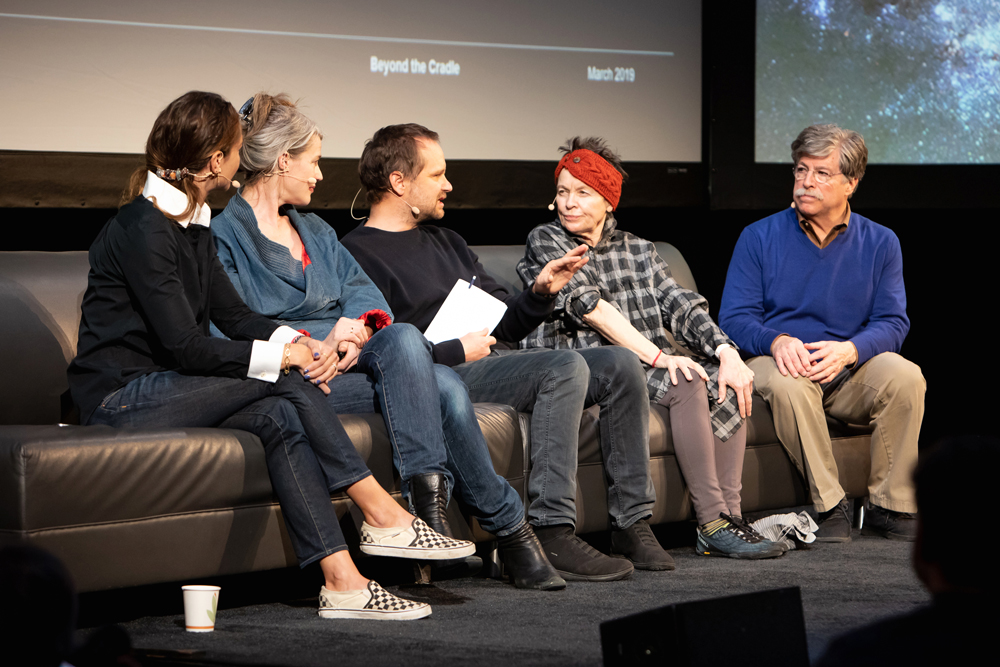
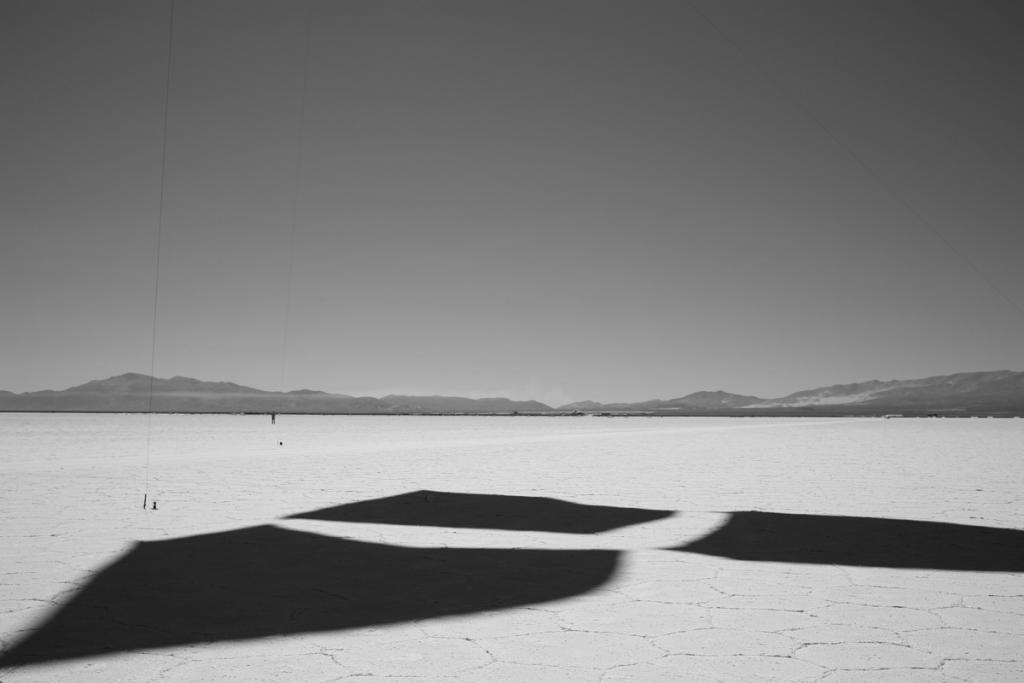




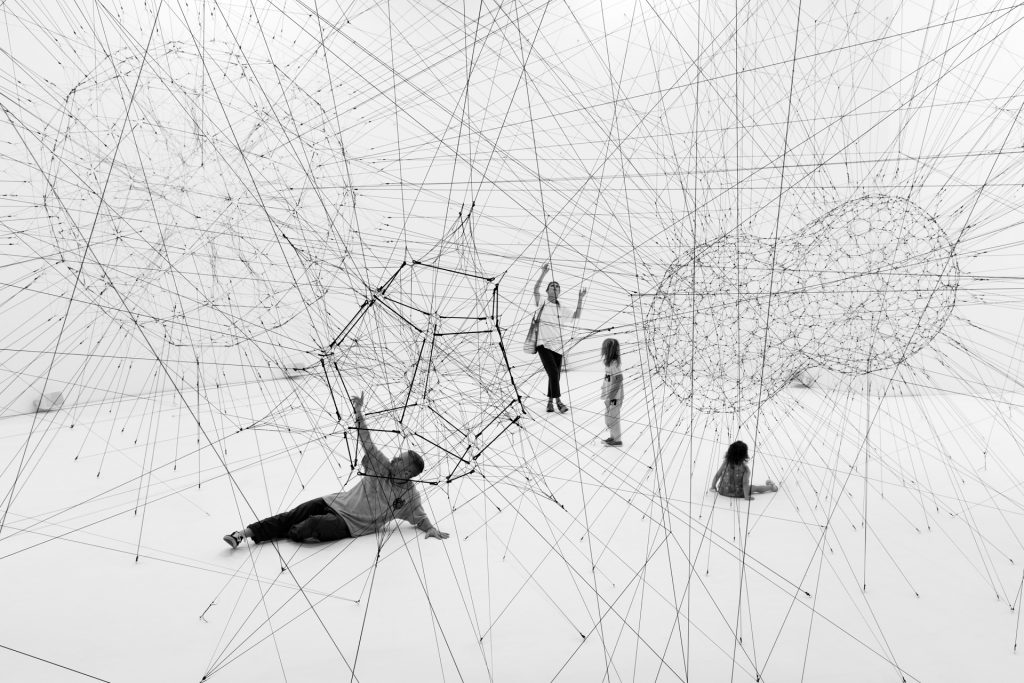

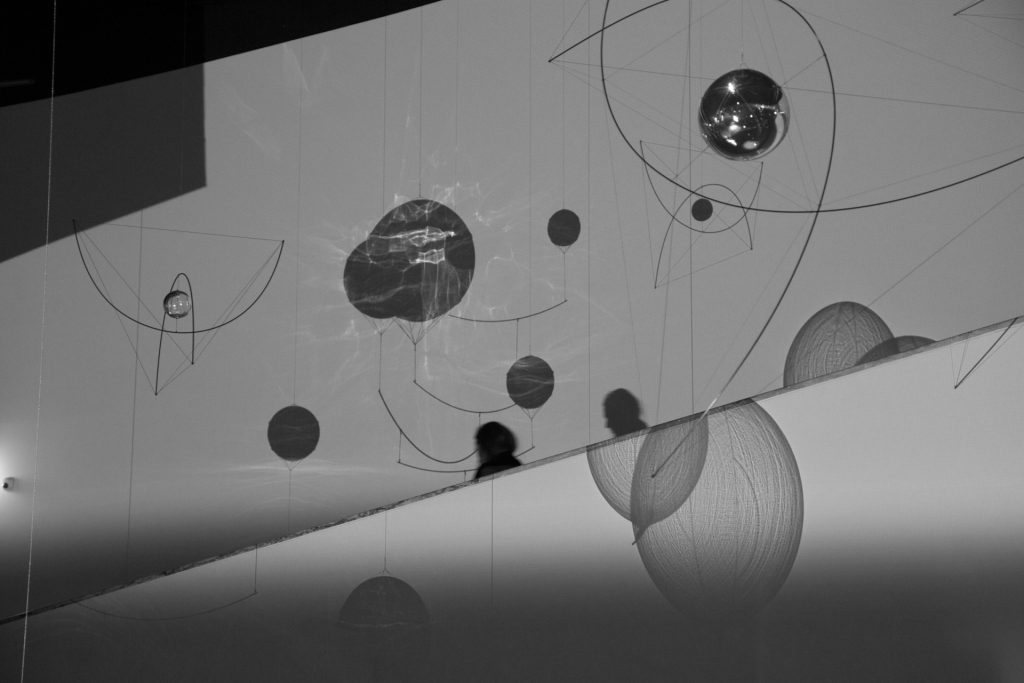
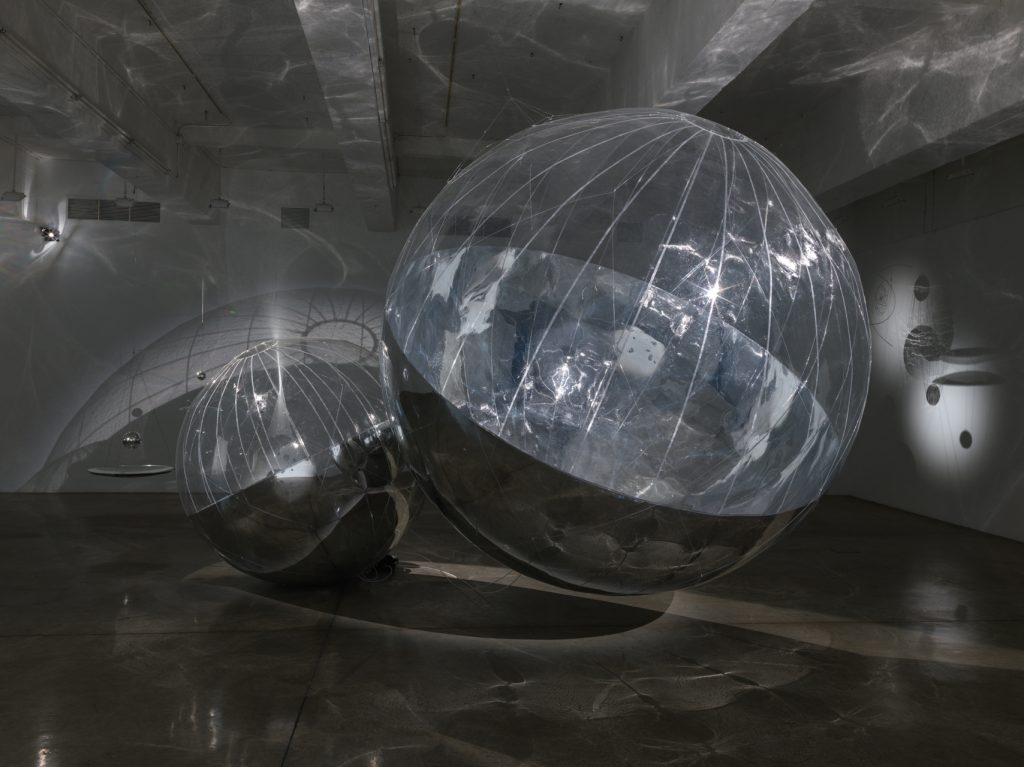

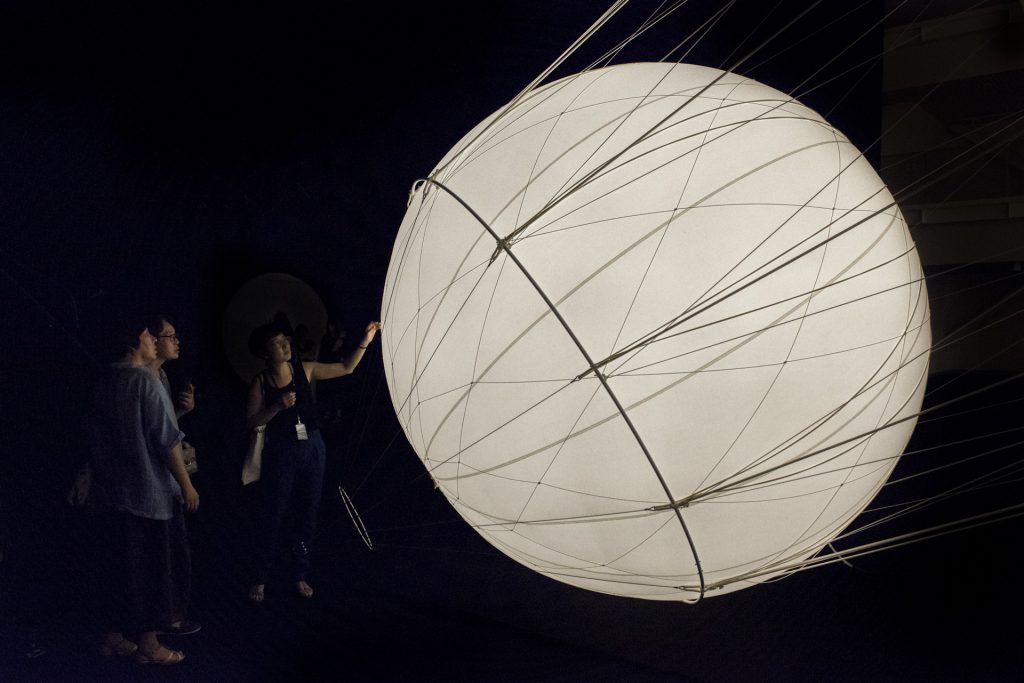
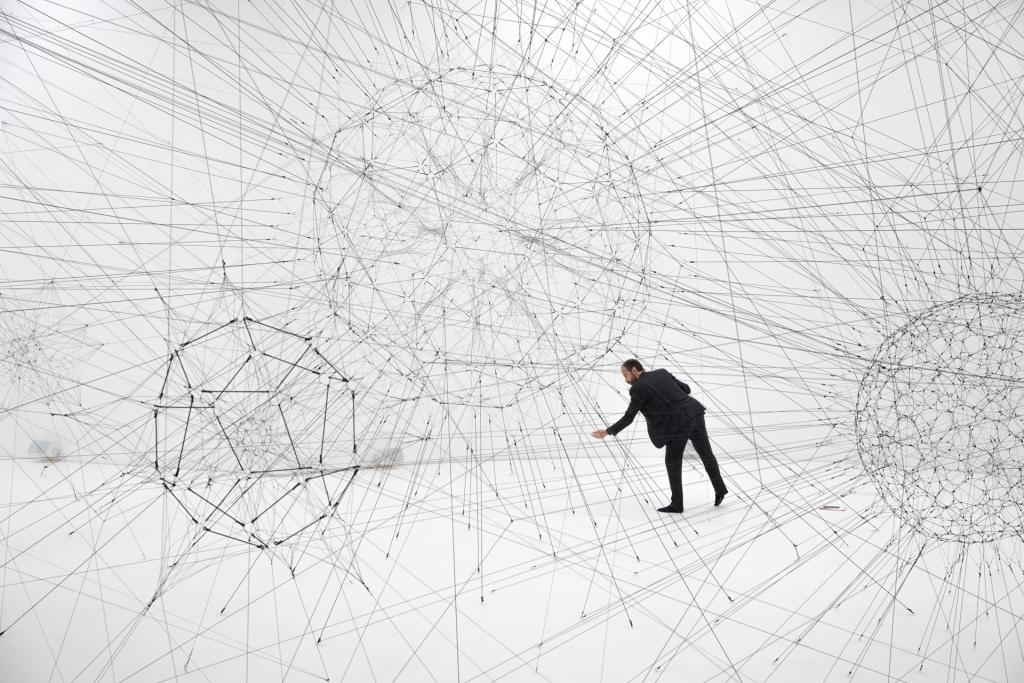







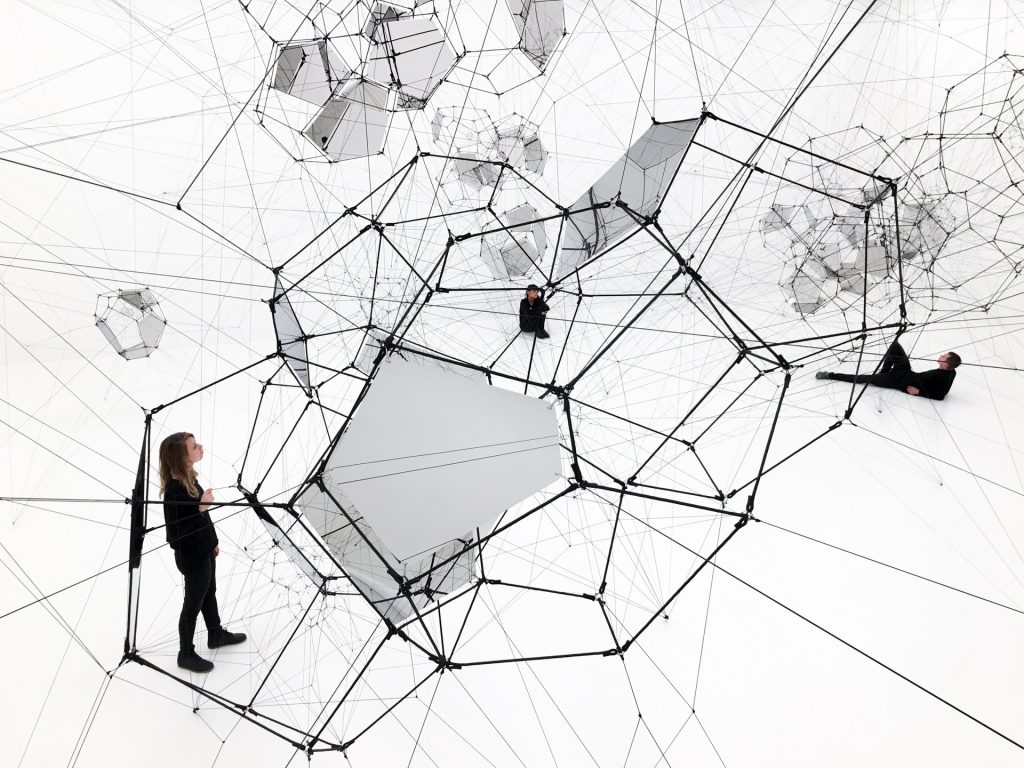

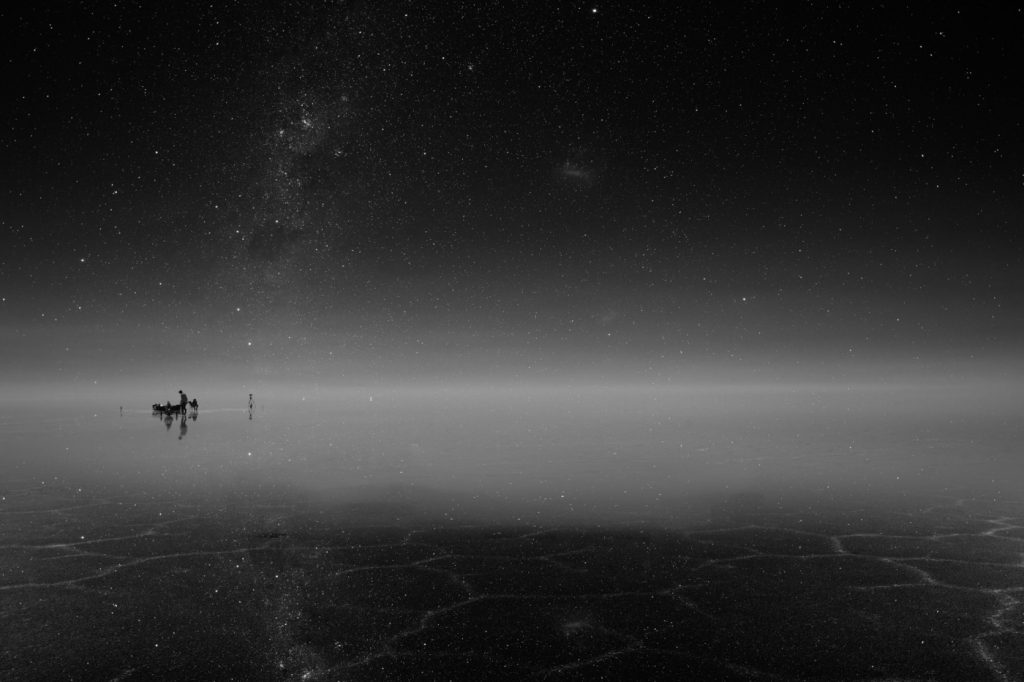


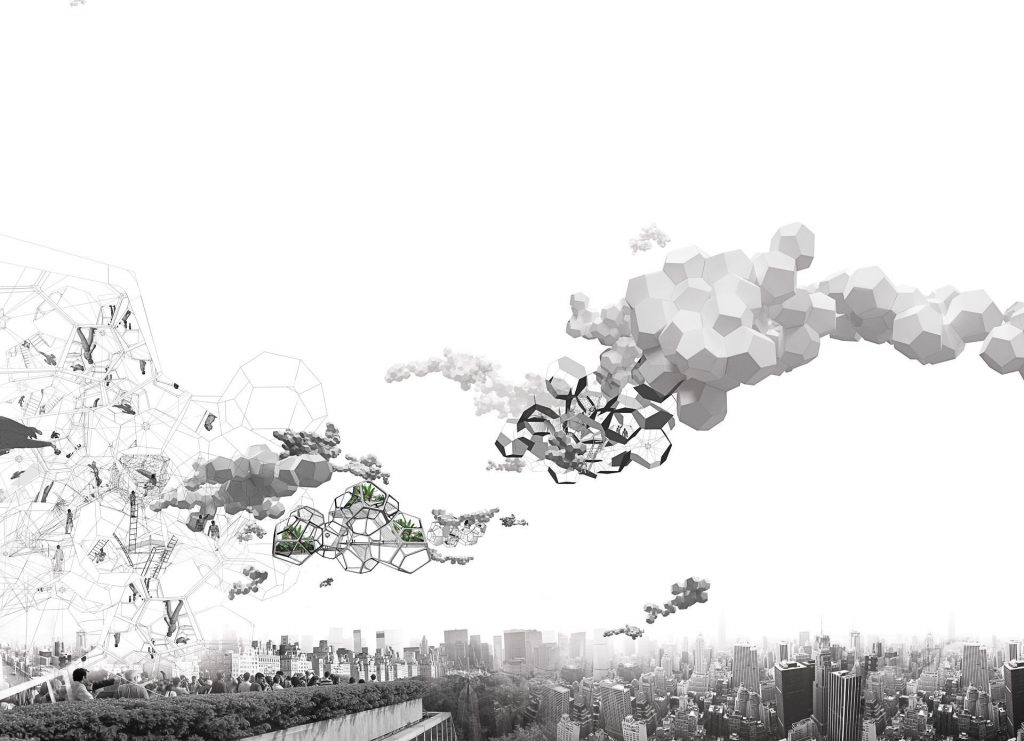










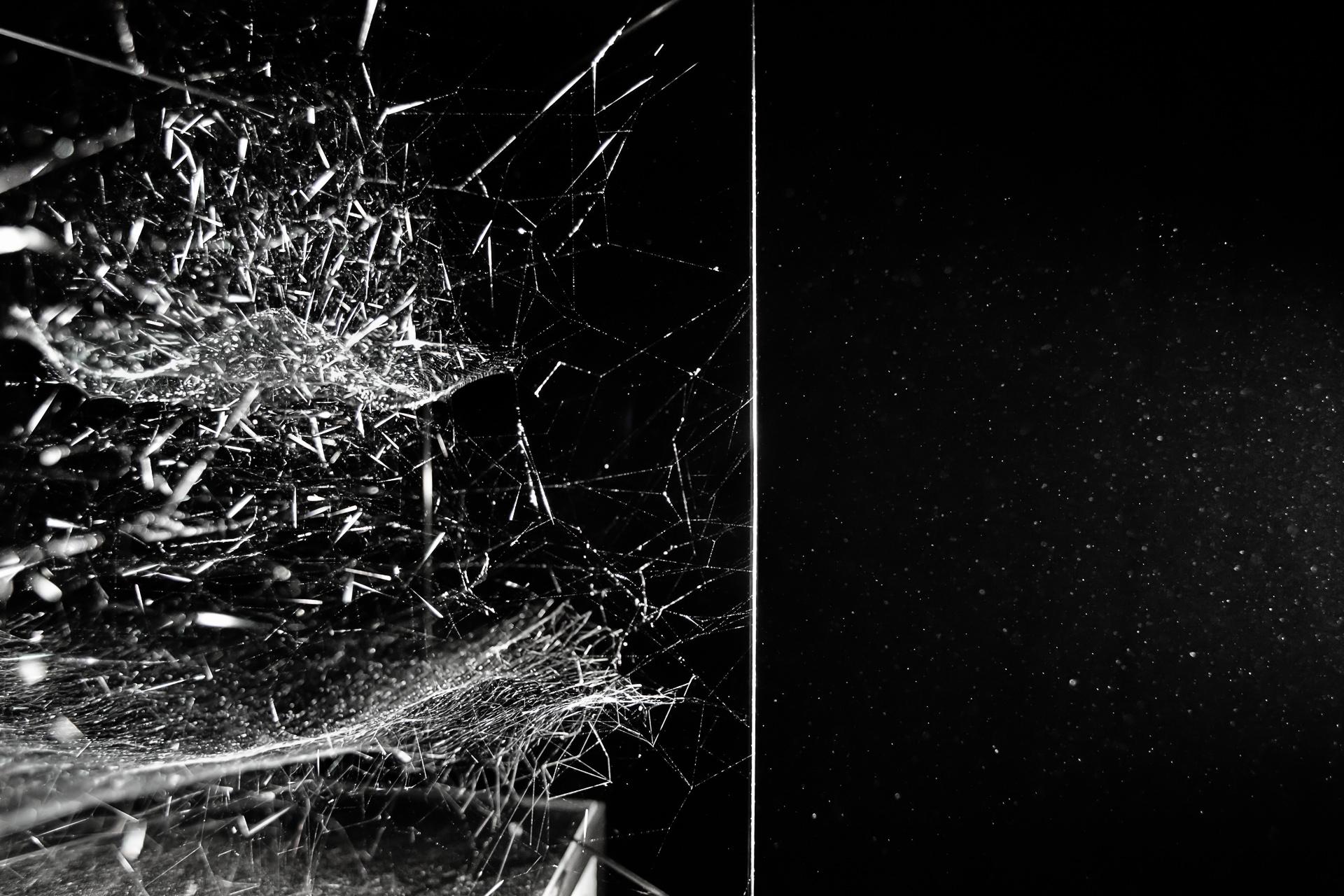


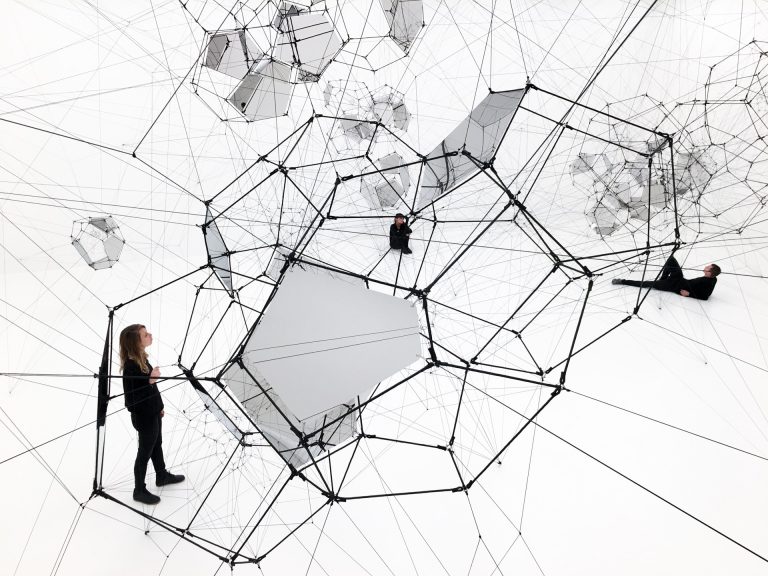
“Actually, space is vibrating. It is full of strings that resonate and react to one another. If somebody pulls a string at some place, the other end of the string is affected too.”
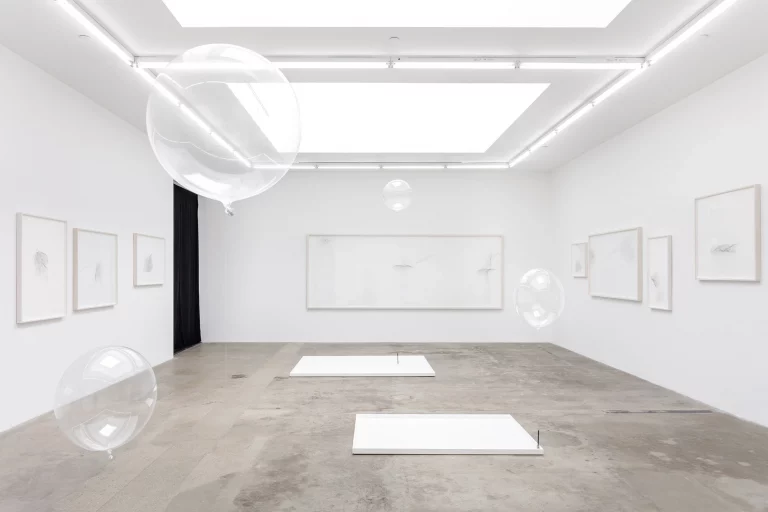
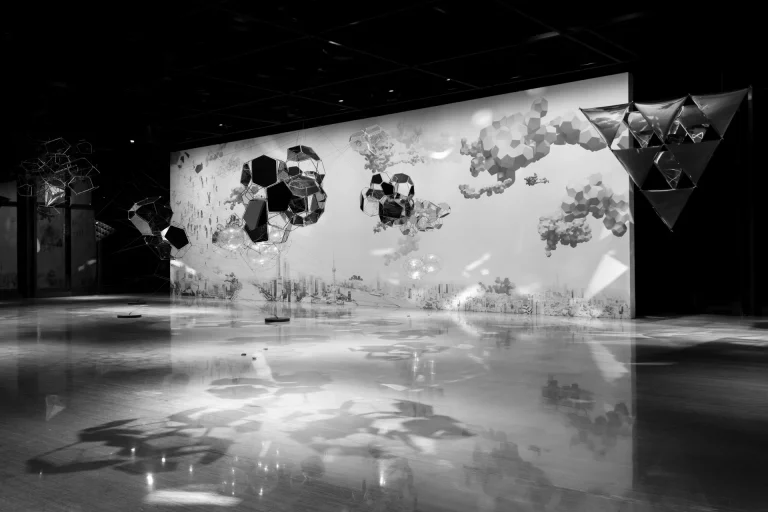
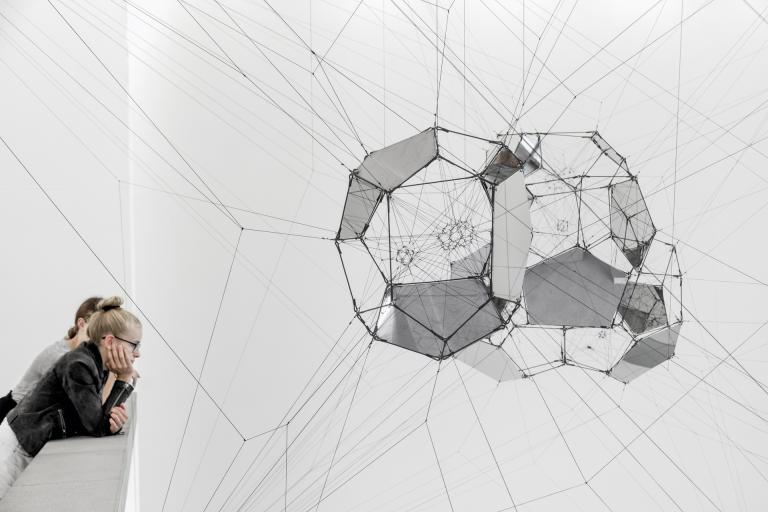
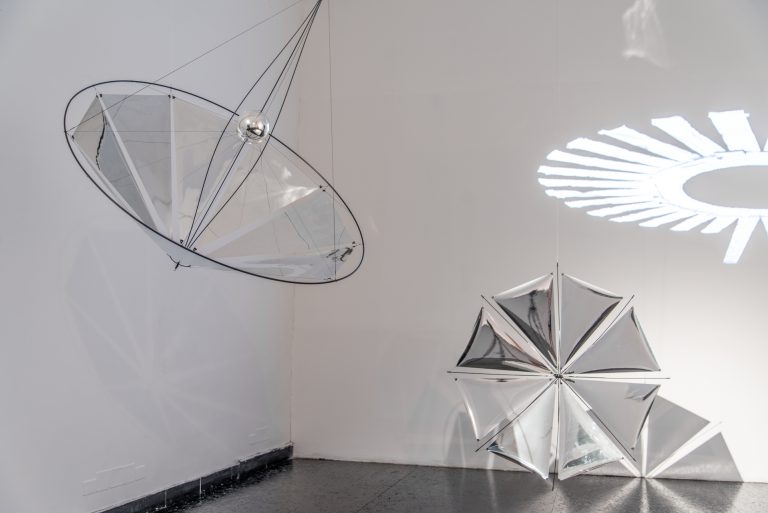
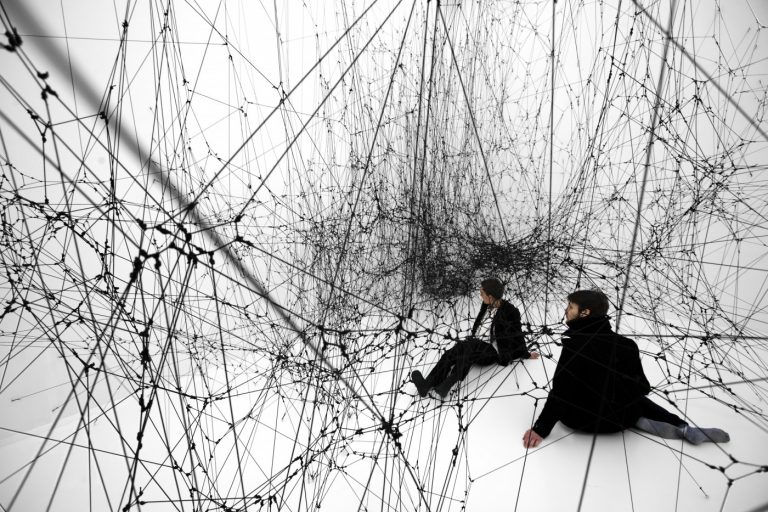
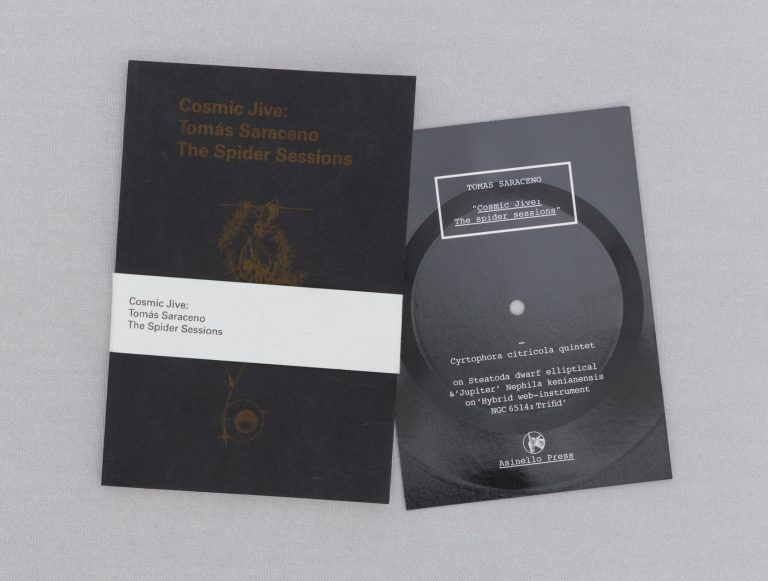
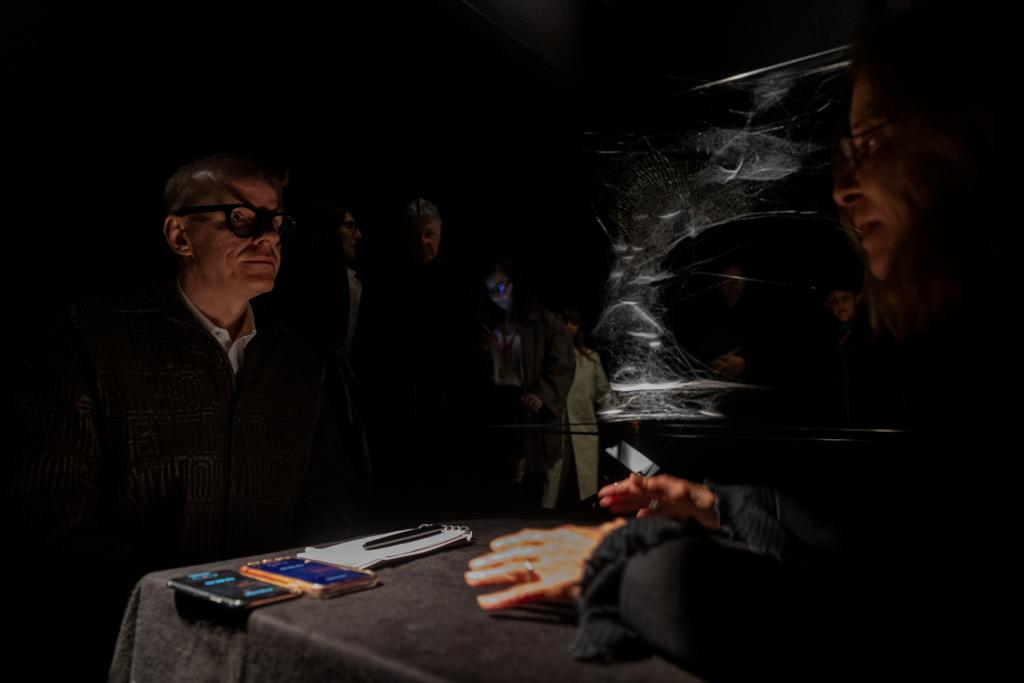
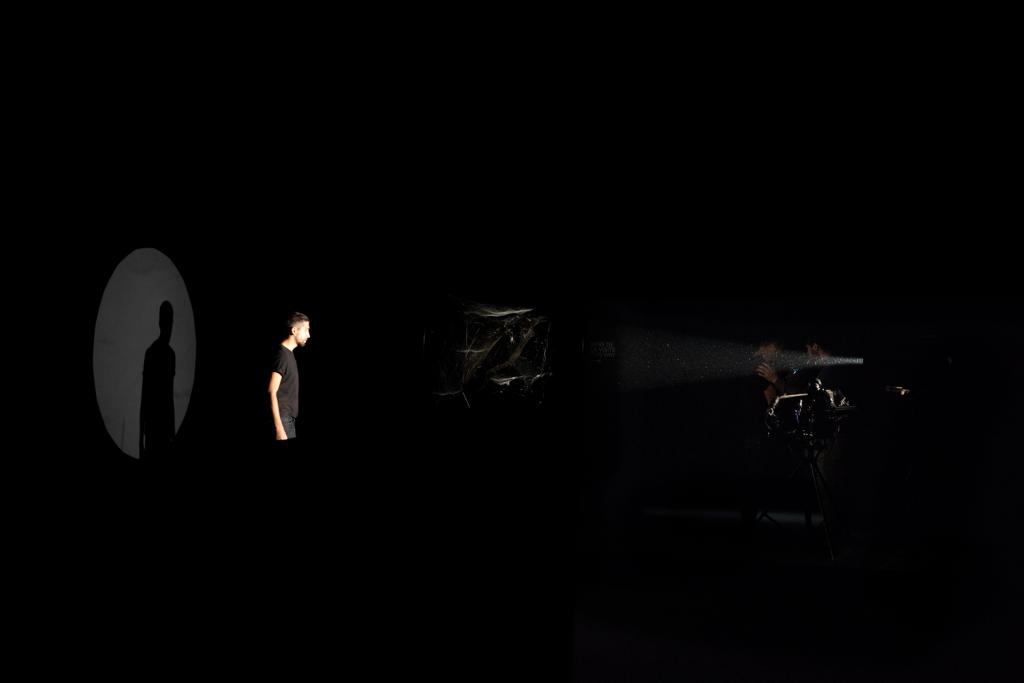
The exhibition Cosmic Jive: the Spider Sessions weaved together the different spaces of Villa Croce, in Genova. The first floor featured an interactive sound installation activated by the visitors’ movement, creating a series of acoustic responses picked up by passive motion sensors installed in the rooms. Depending on their location in the museum, visitors heard different sound compositions. The speakers to the left side of the rooms emitted the sounds of the semi-social spiders playing on pre-existing solitary webs. The right speakers played the solitary spiders on the web that was built by social spiders. Depending on where they were in the room, the public would hear either the right or the left speaker. This sound composition consisted of vibrations emitted by different species of spiders as they weave their cosmic webs, combined with extraterrestrial sounds, that were translated into vibrations, captured by several space agencies. The idea of polarizing, left and right with respective social experiments assumed a speculative political tone and posed the question to its visitors.
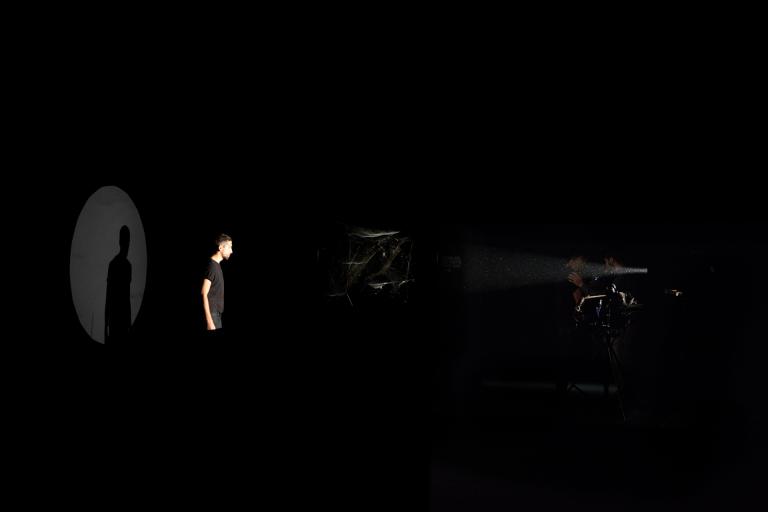
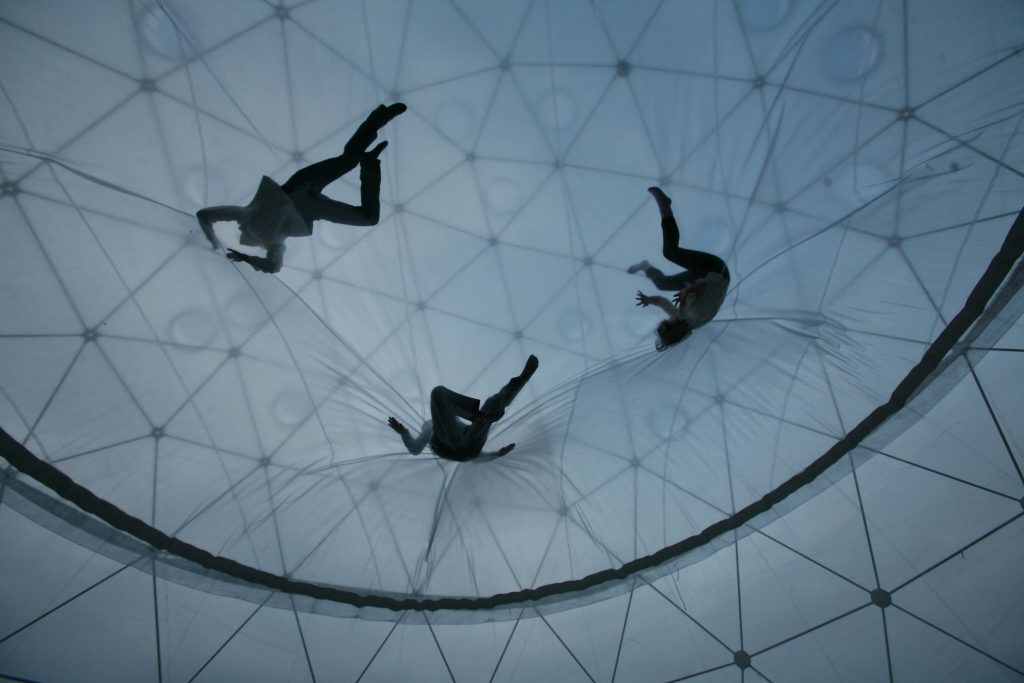
The public thus created an ever-changing and unstable soundscape where the unpredictable relationship between movement and sound created an invisible acoustic spider web interwoven throughout the museum’s rooms. As spiders interpret reality through air pressure and vibration, rather than through sight or images, in the same way, visitors moved through a semi-dark space learning to communicate and orient themselves through the movement of their bodies and their sense of hearing. In this undefined environment, visitors established dependant temporary relationships with other visitors as if they were caught in the invisible spider web.
“…Bodies always exist via their limits and membranes, points of connection with other bodies across scales.”
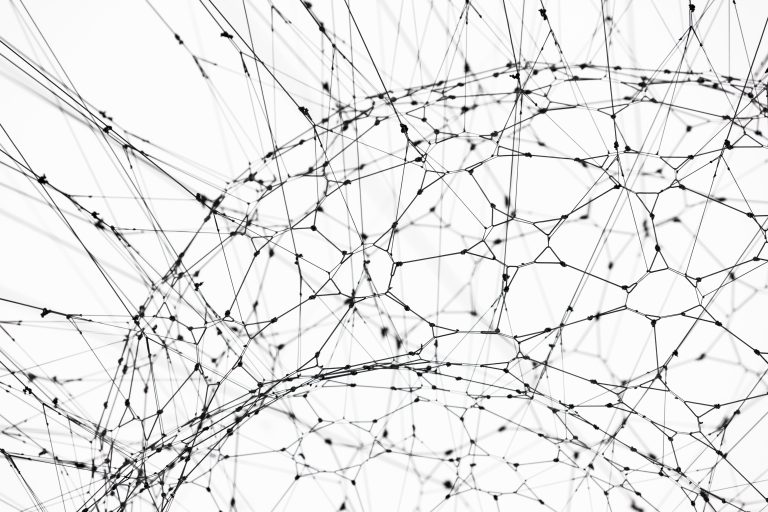
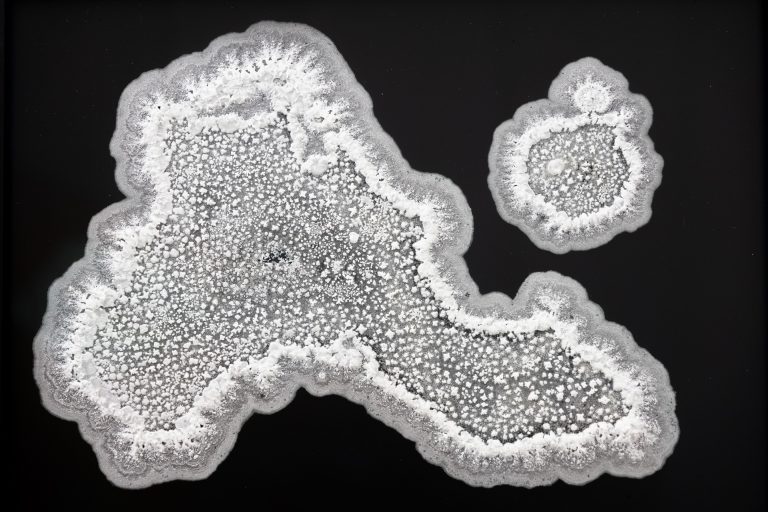
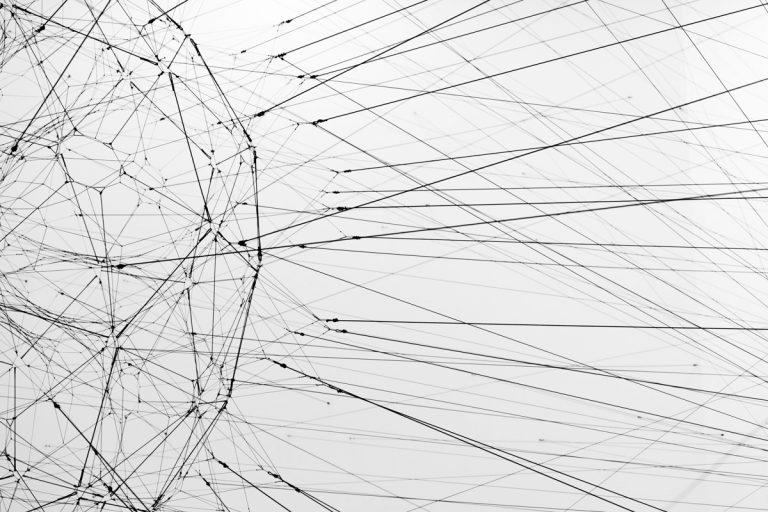
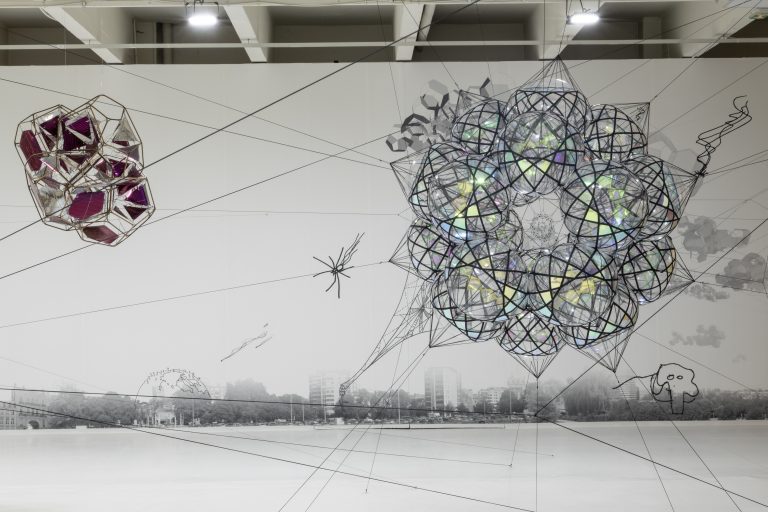
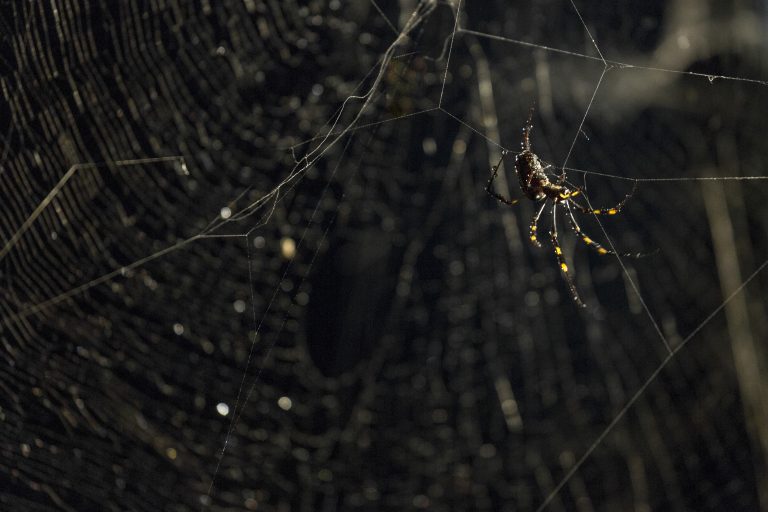
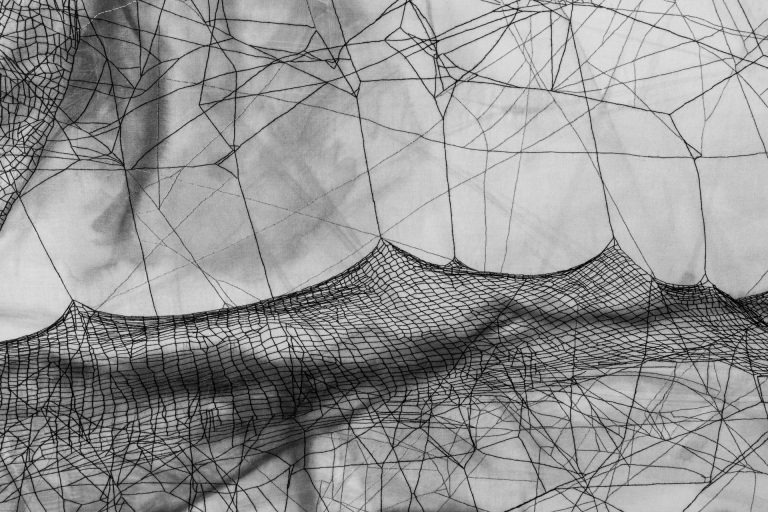
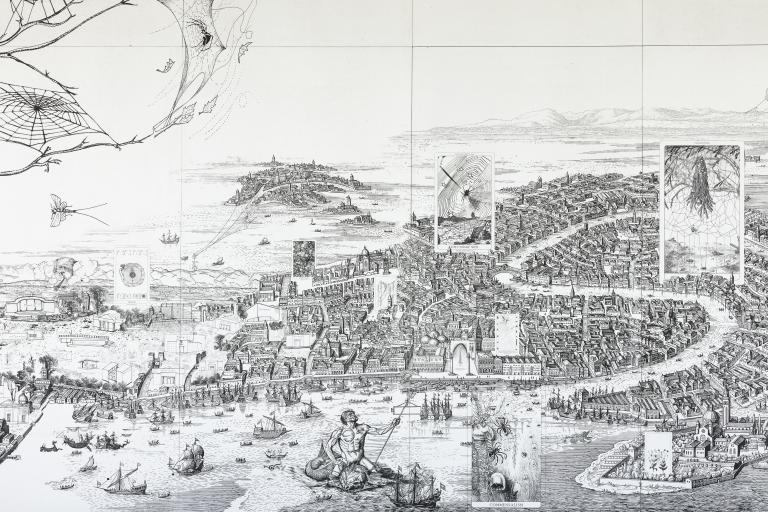
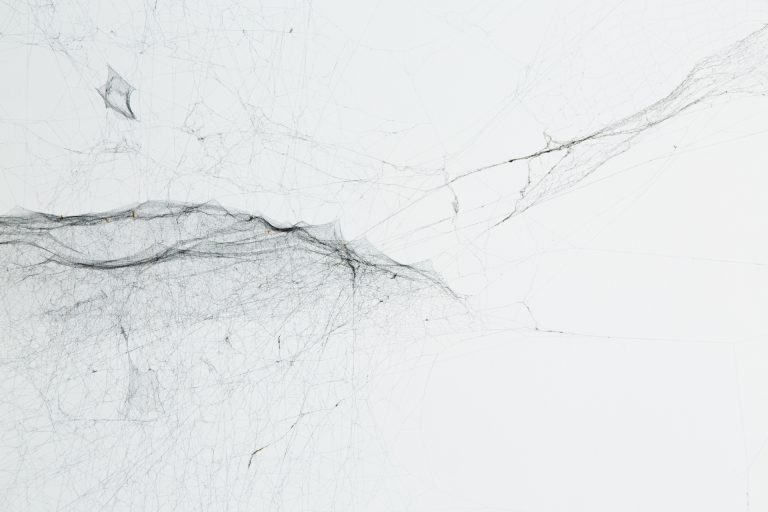
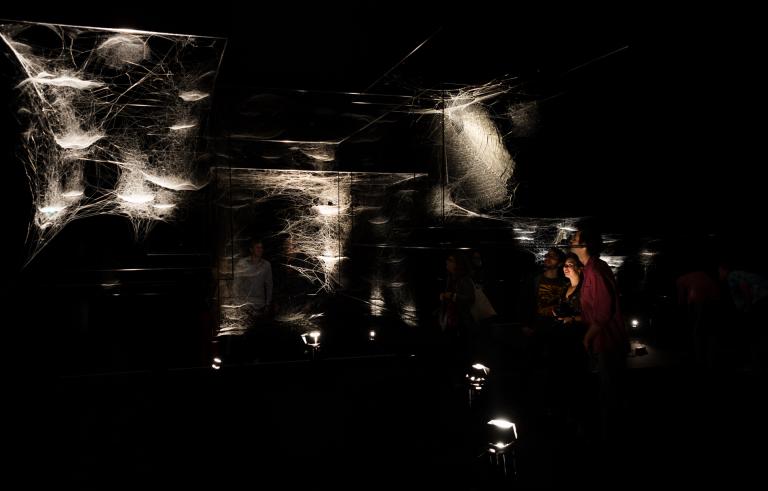
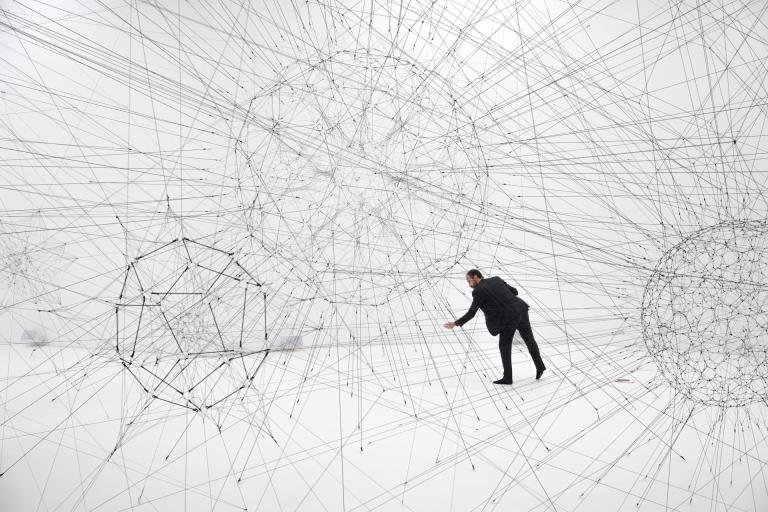
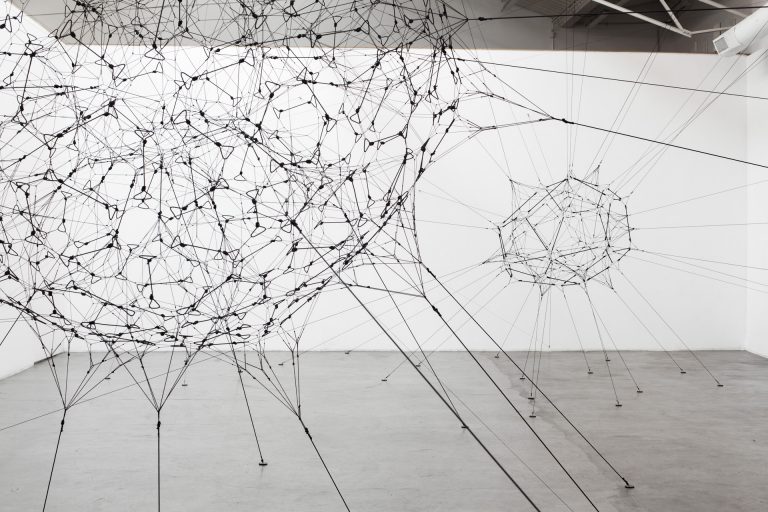
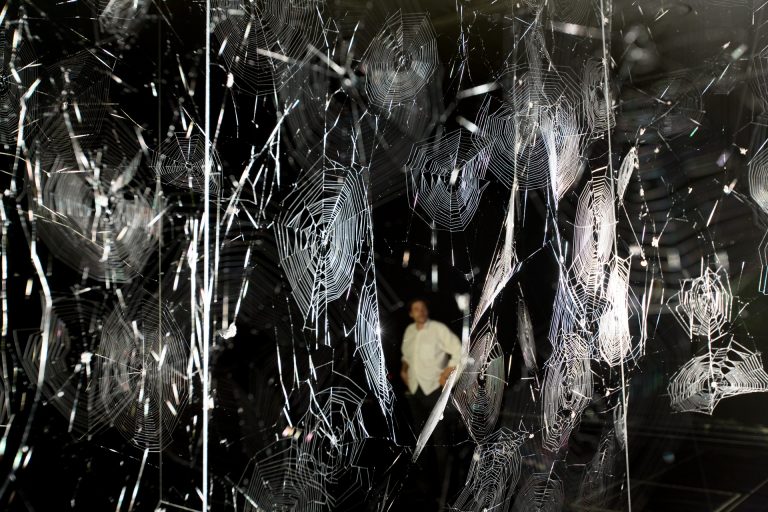
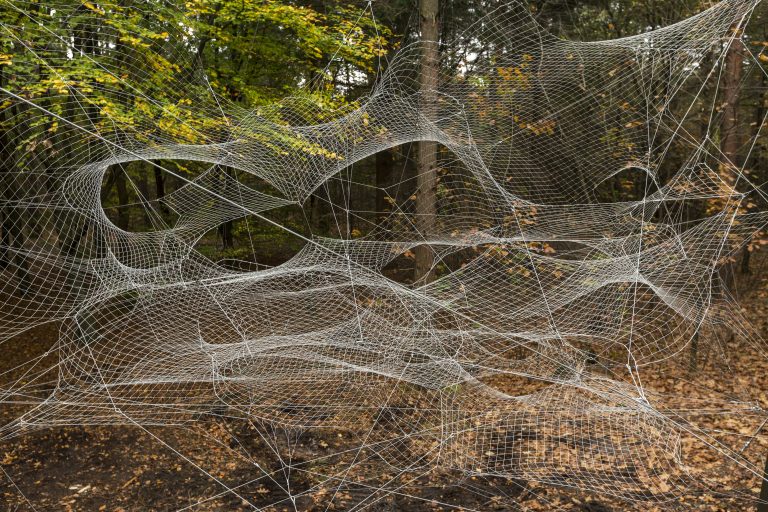
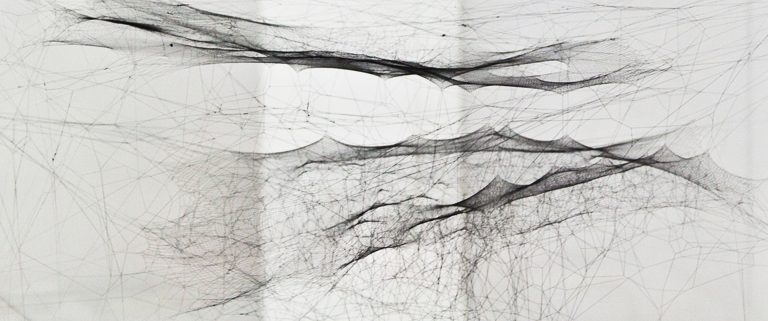
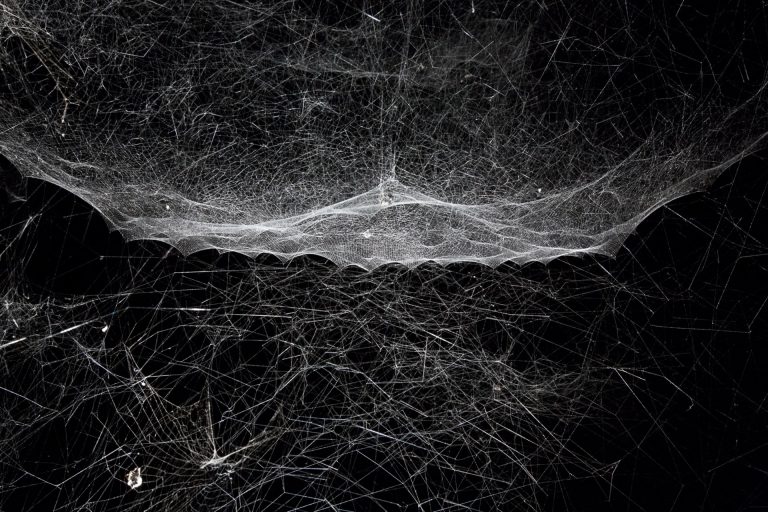
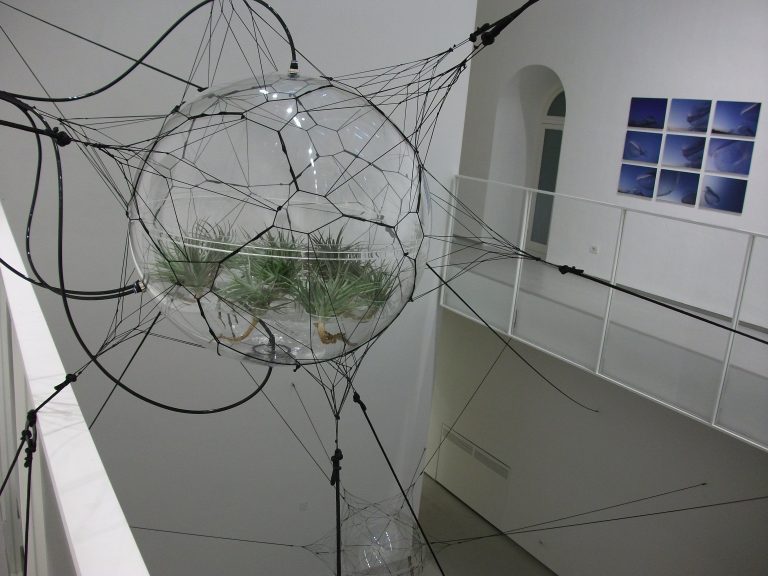
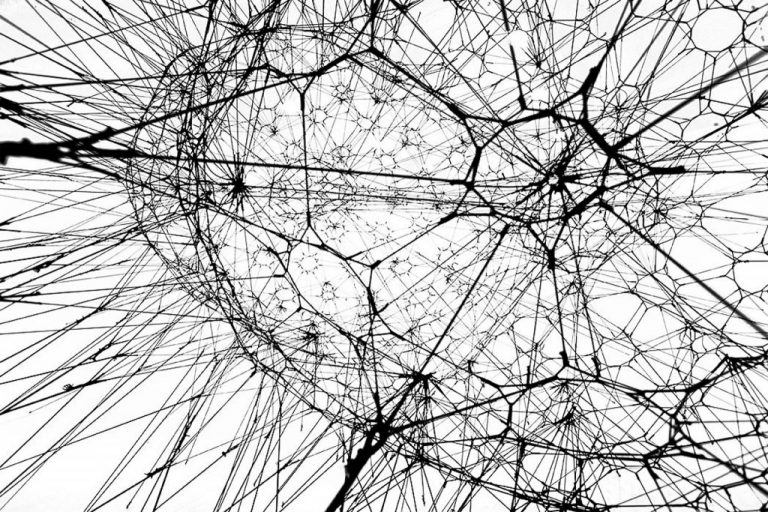
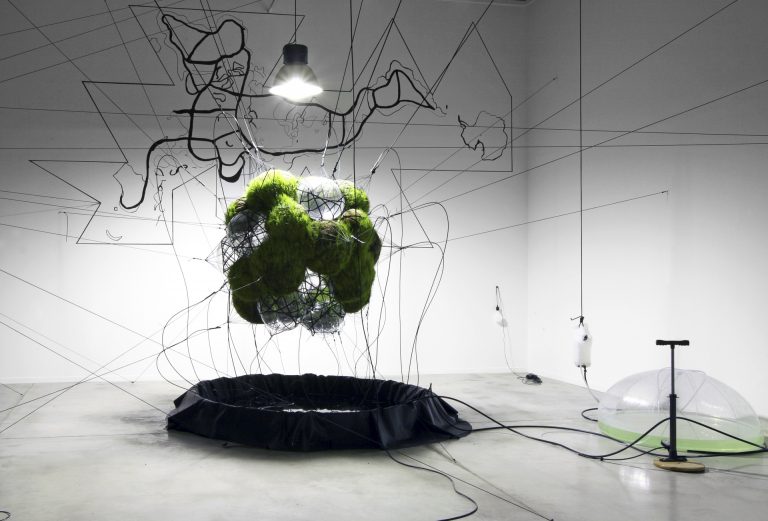
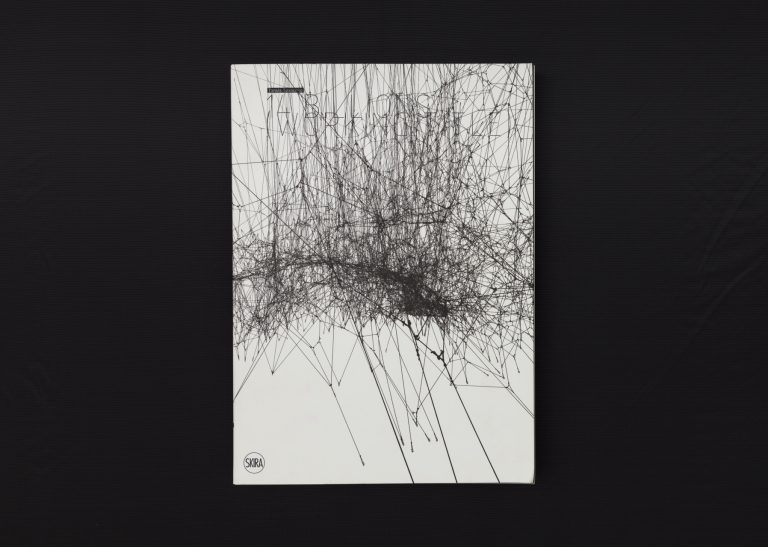
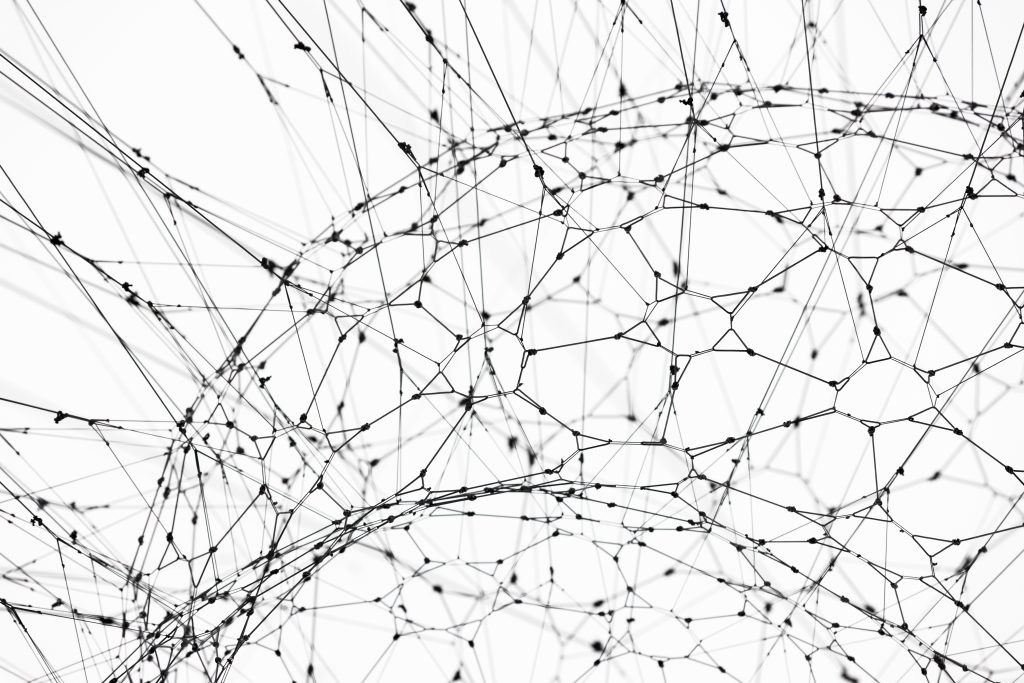
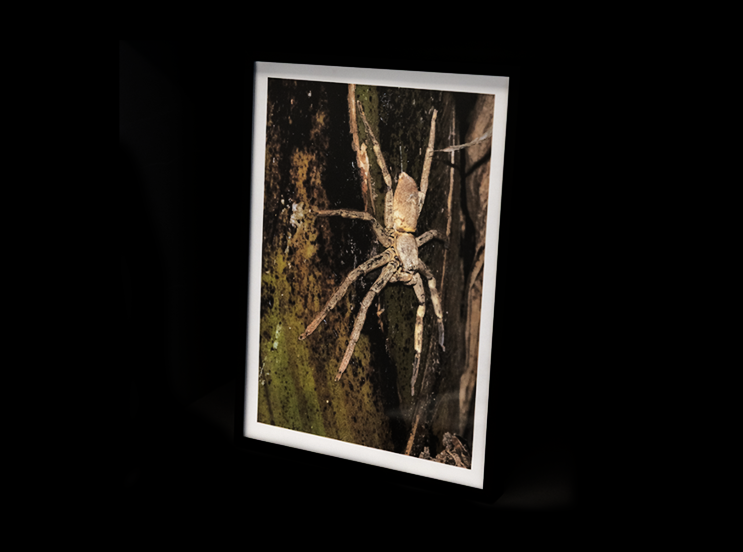
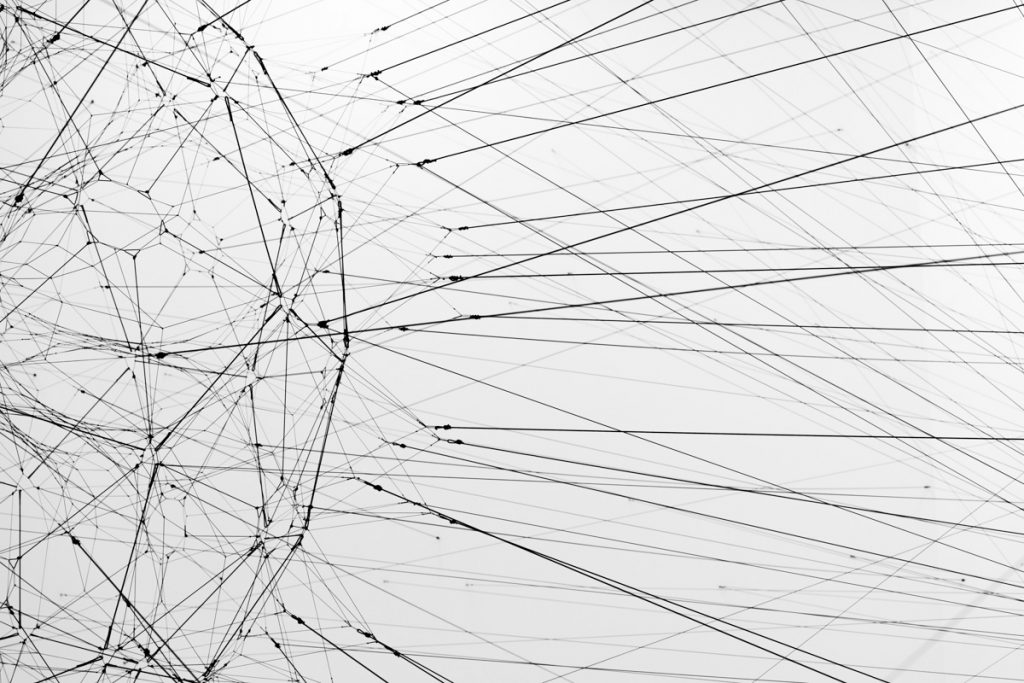
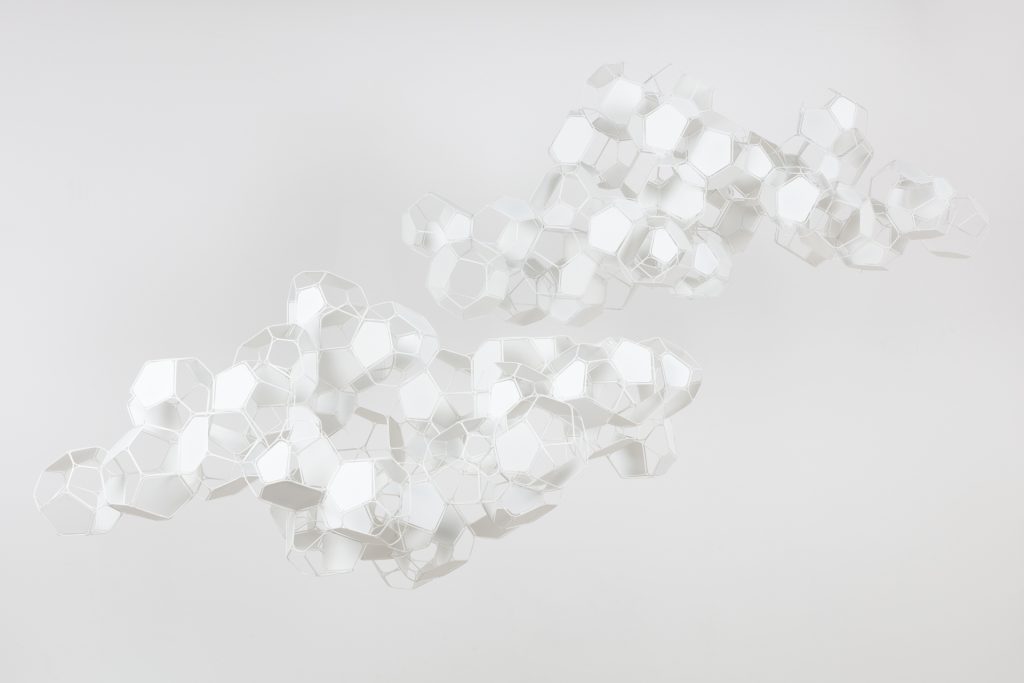
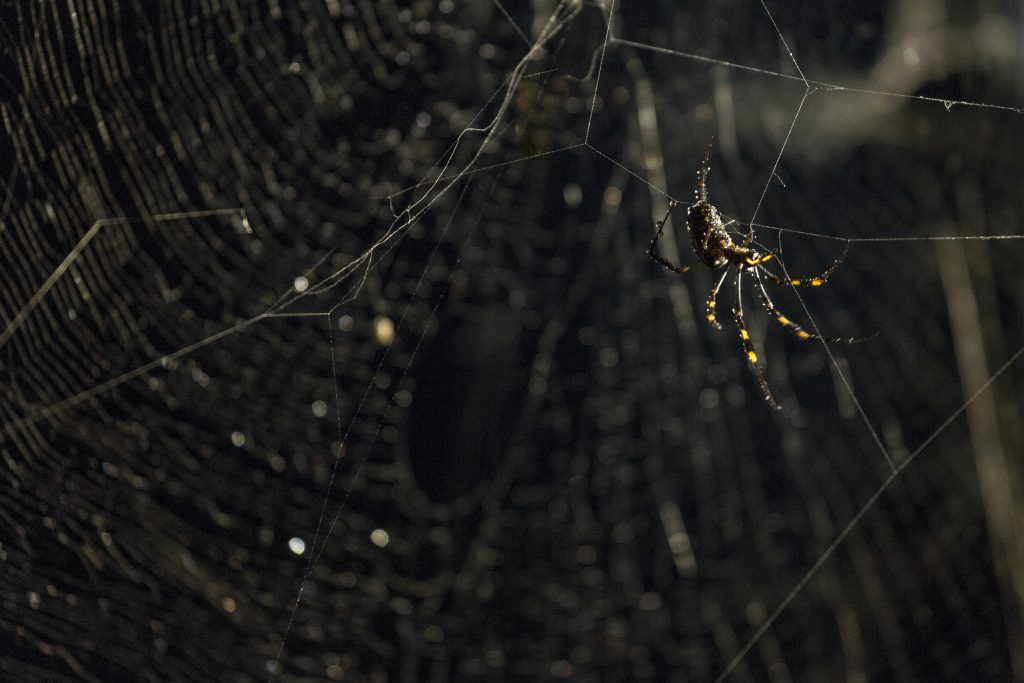
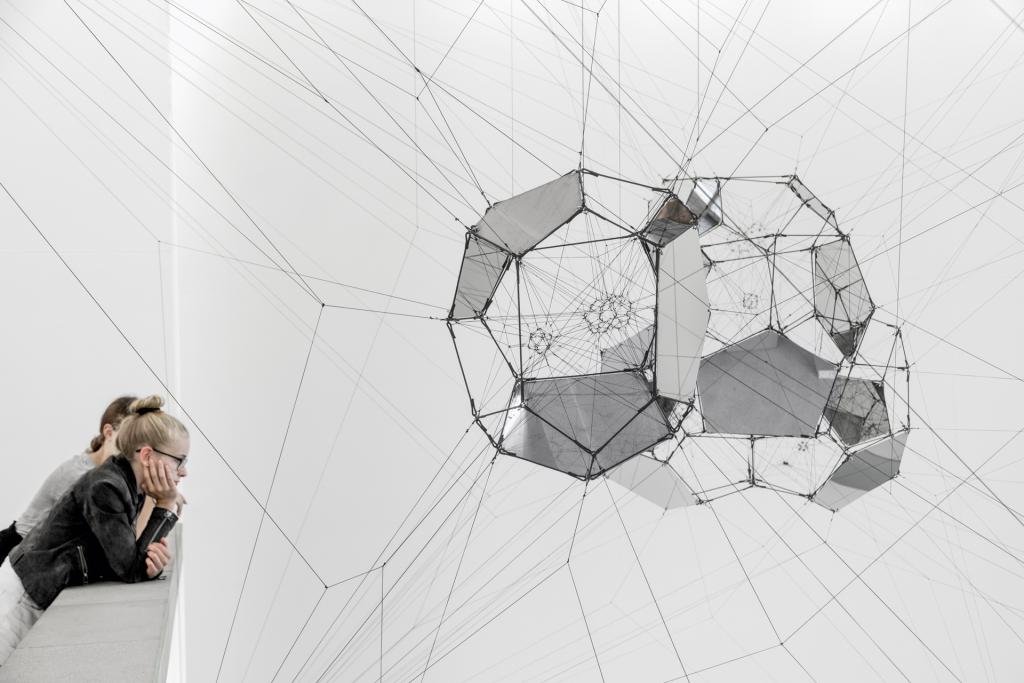
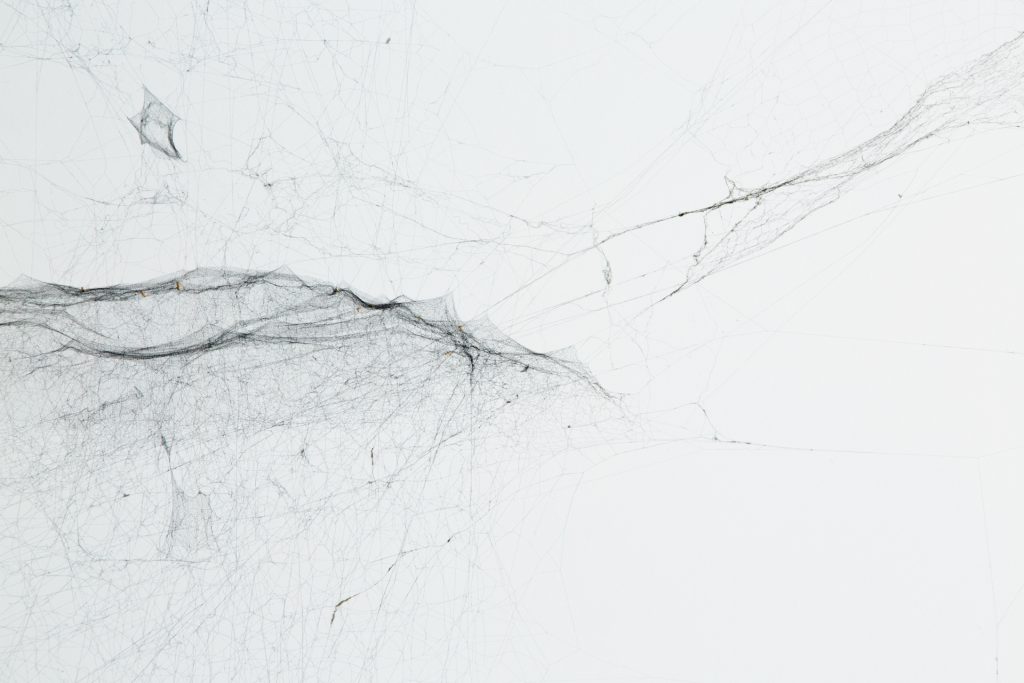
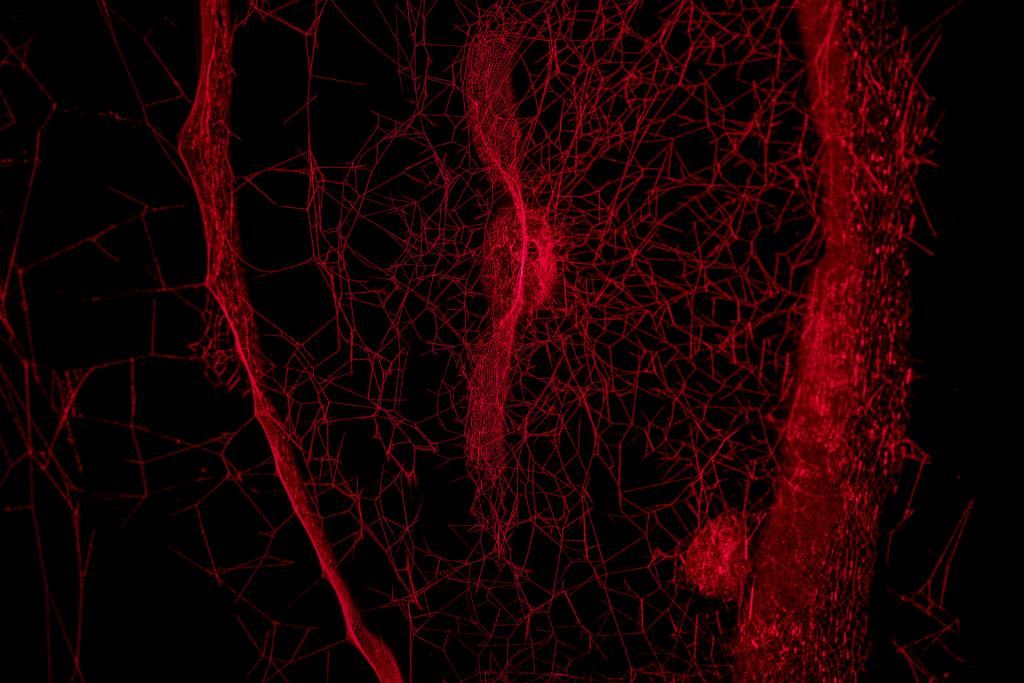
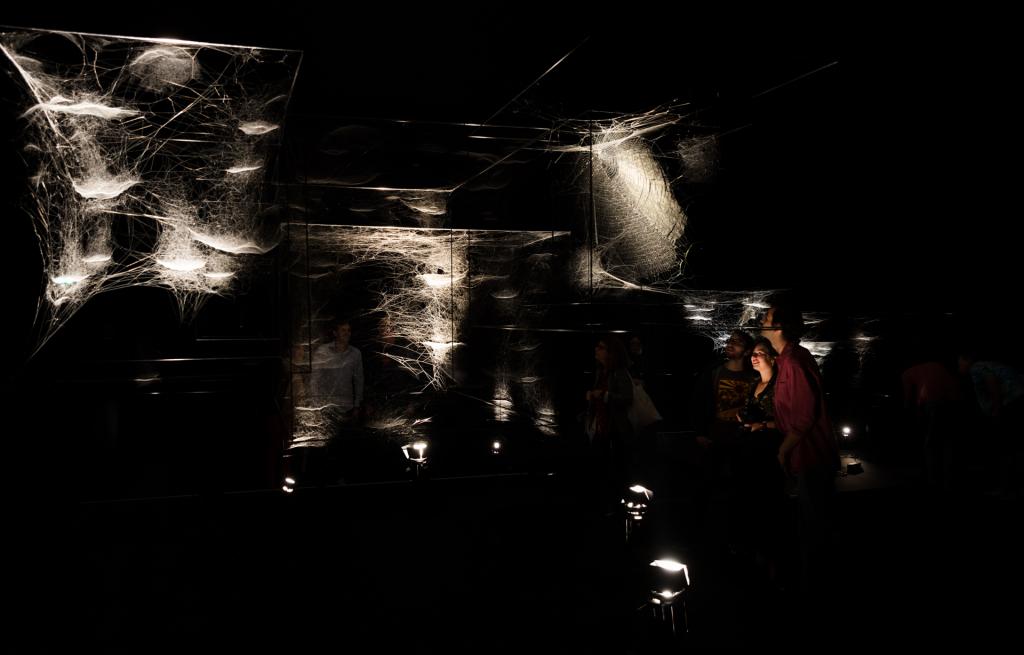
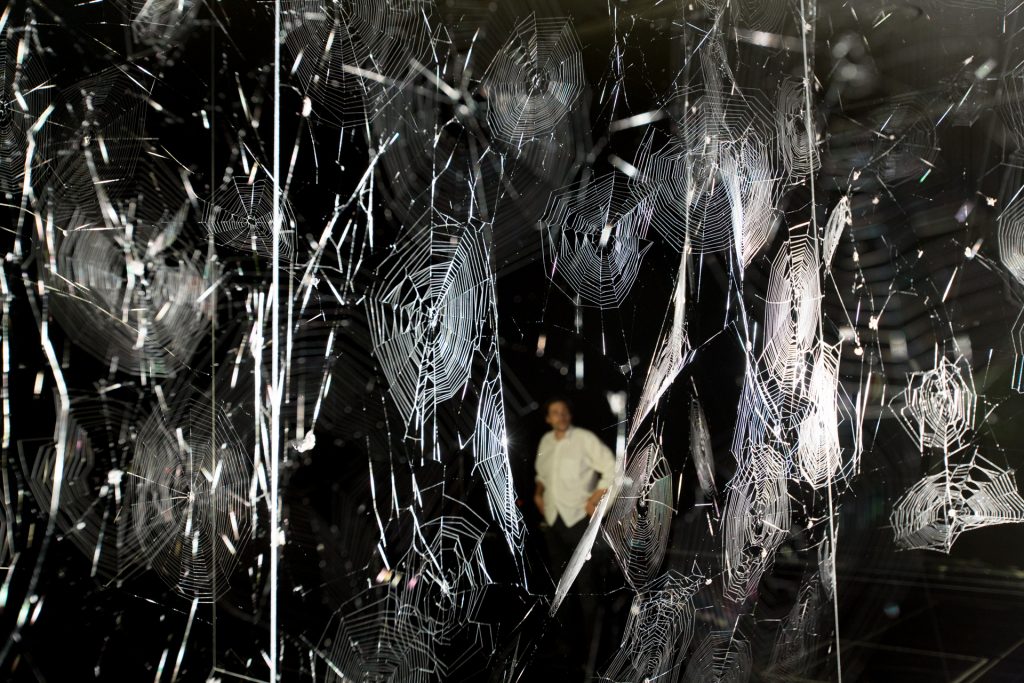
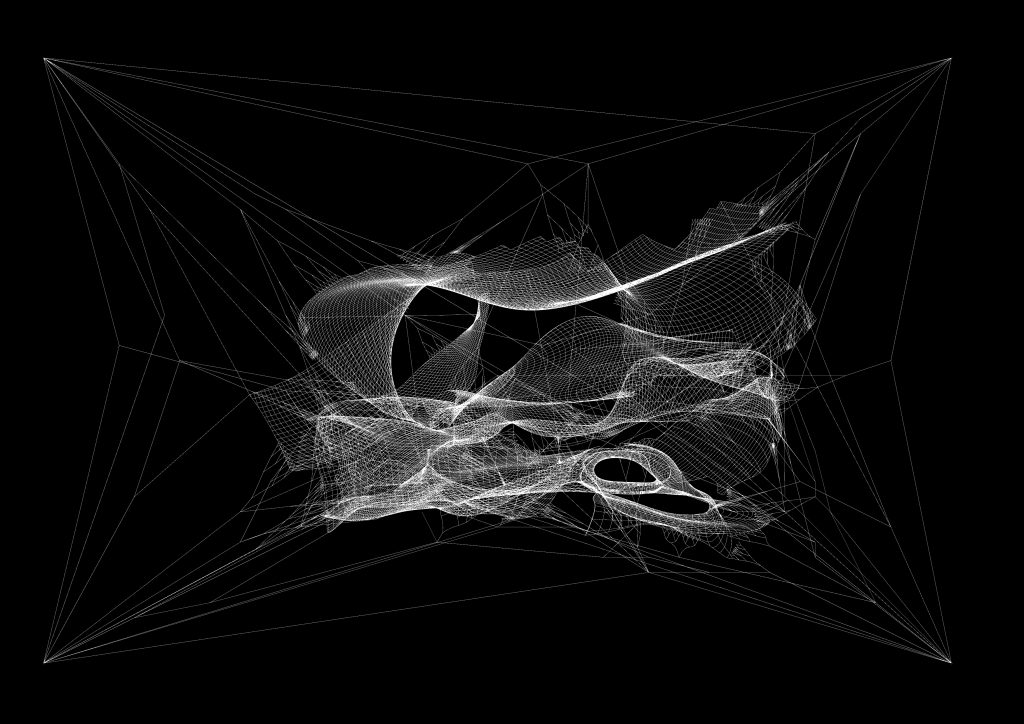
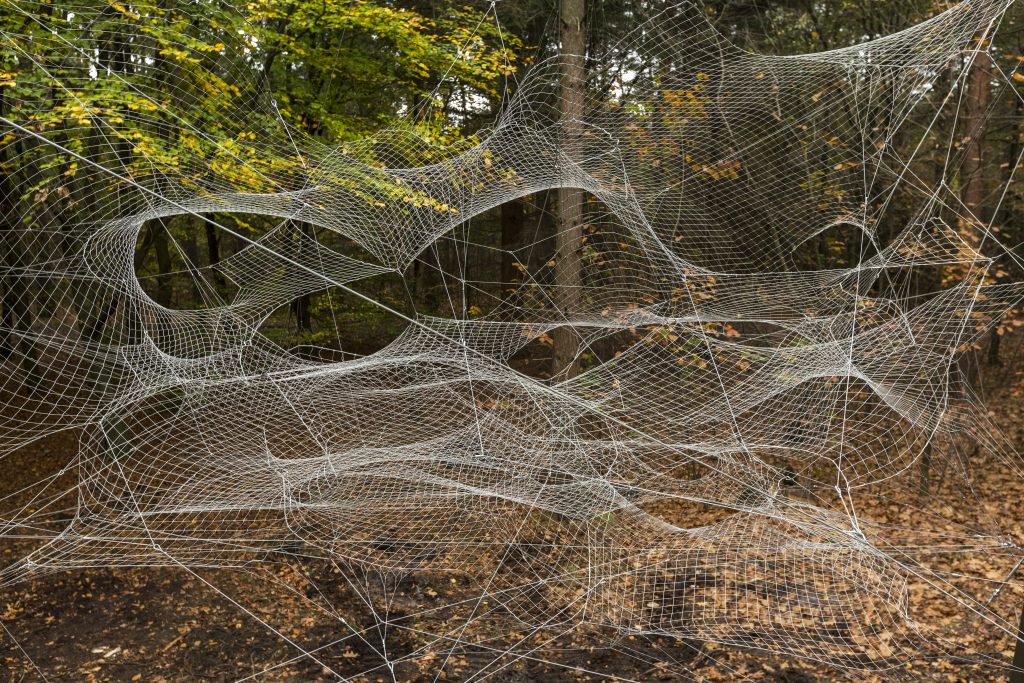
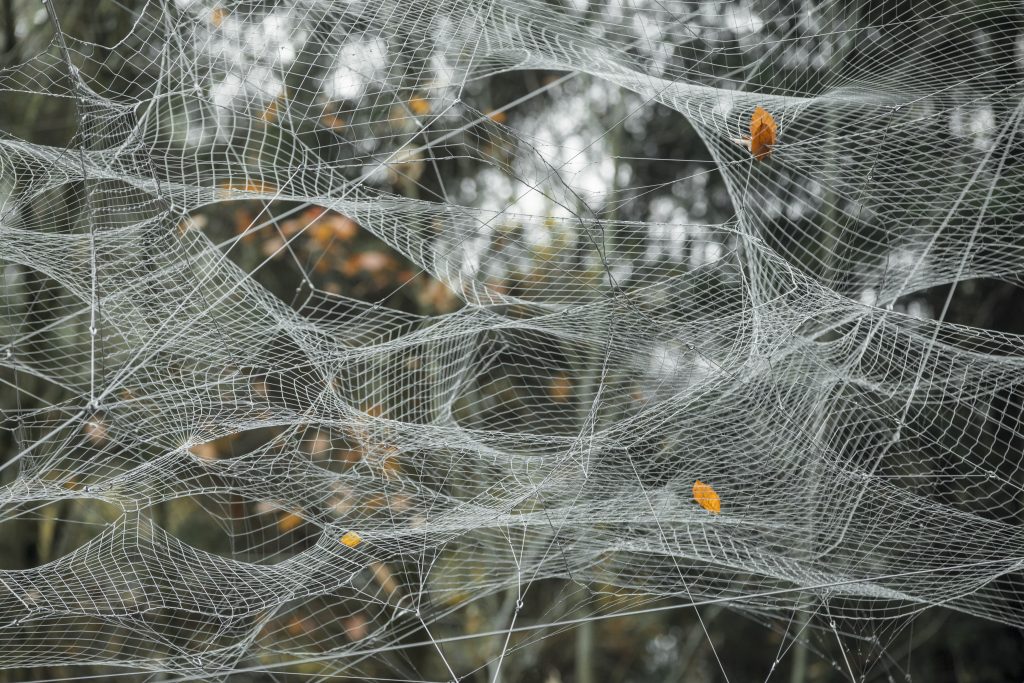
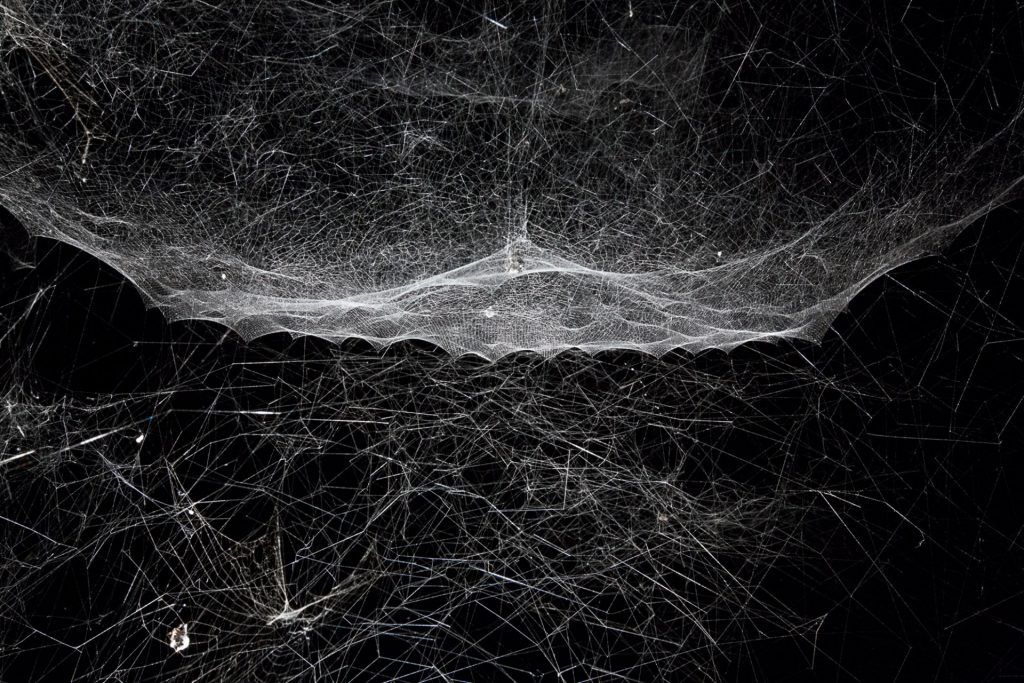
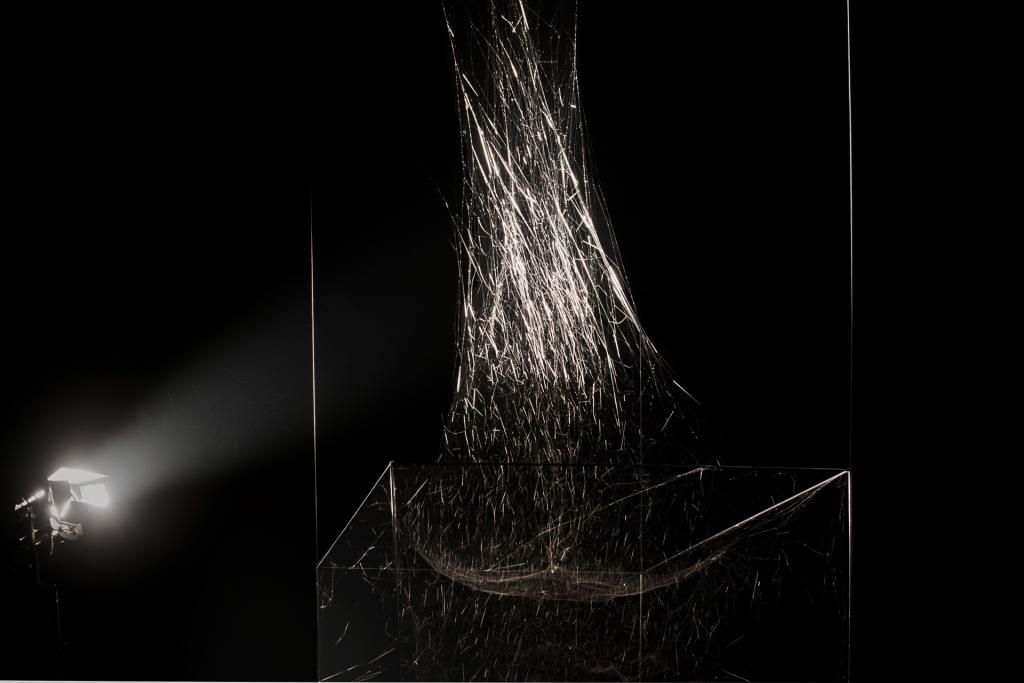
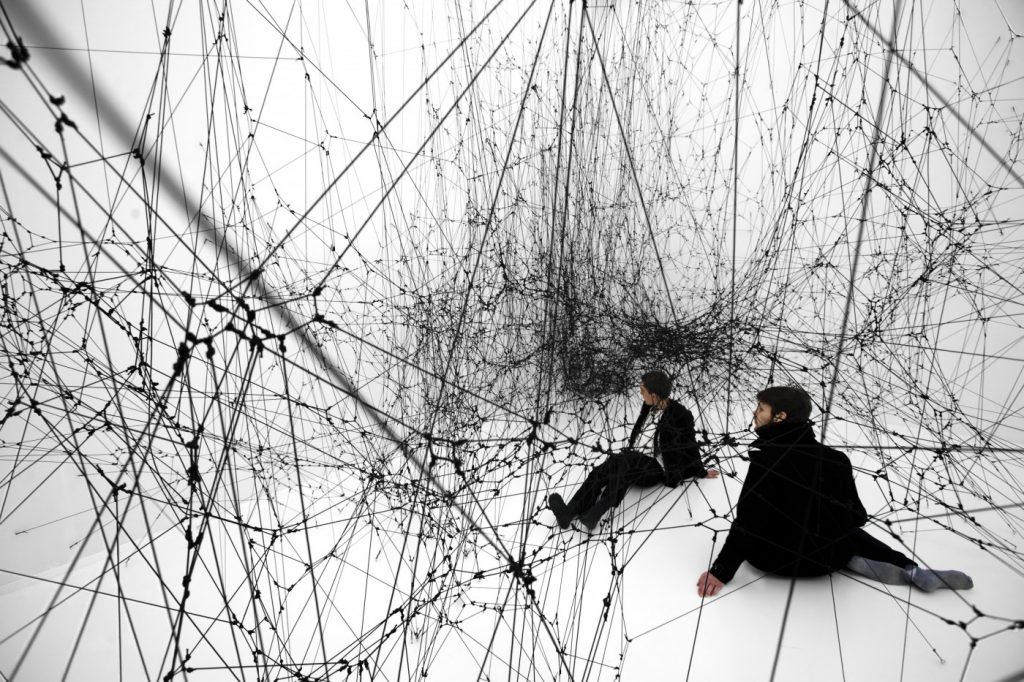
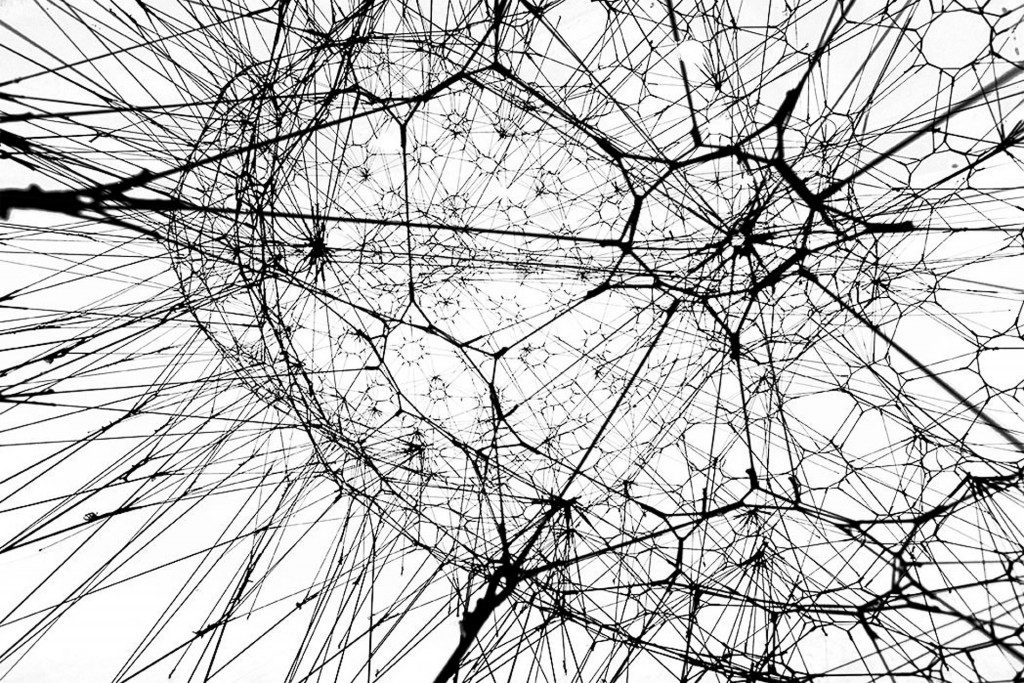
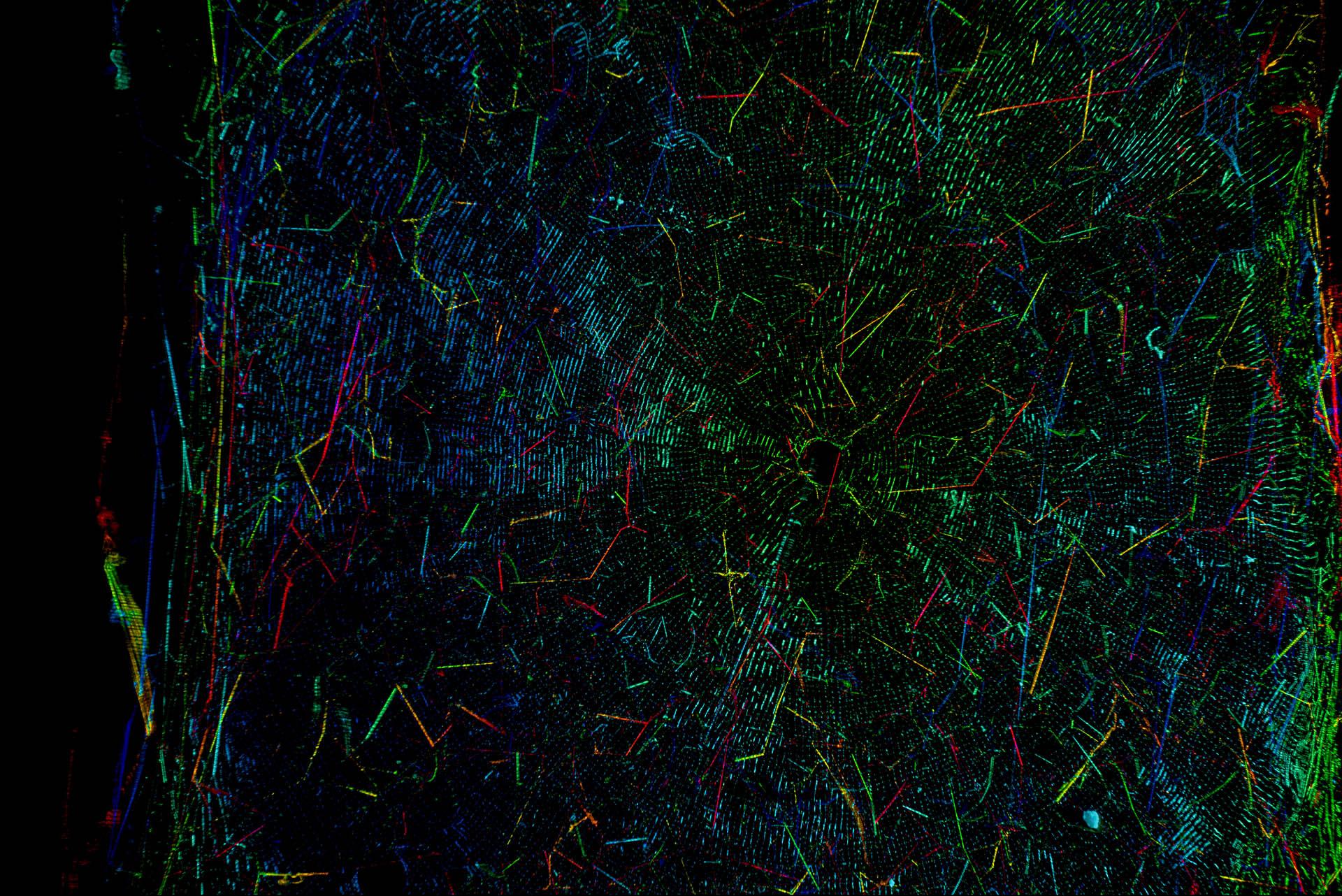
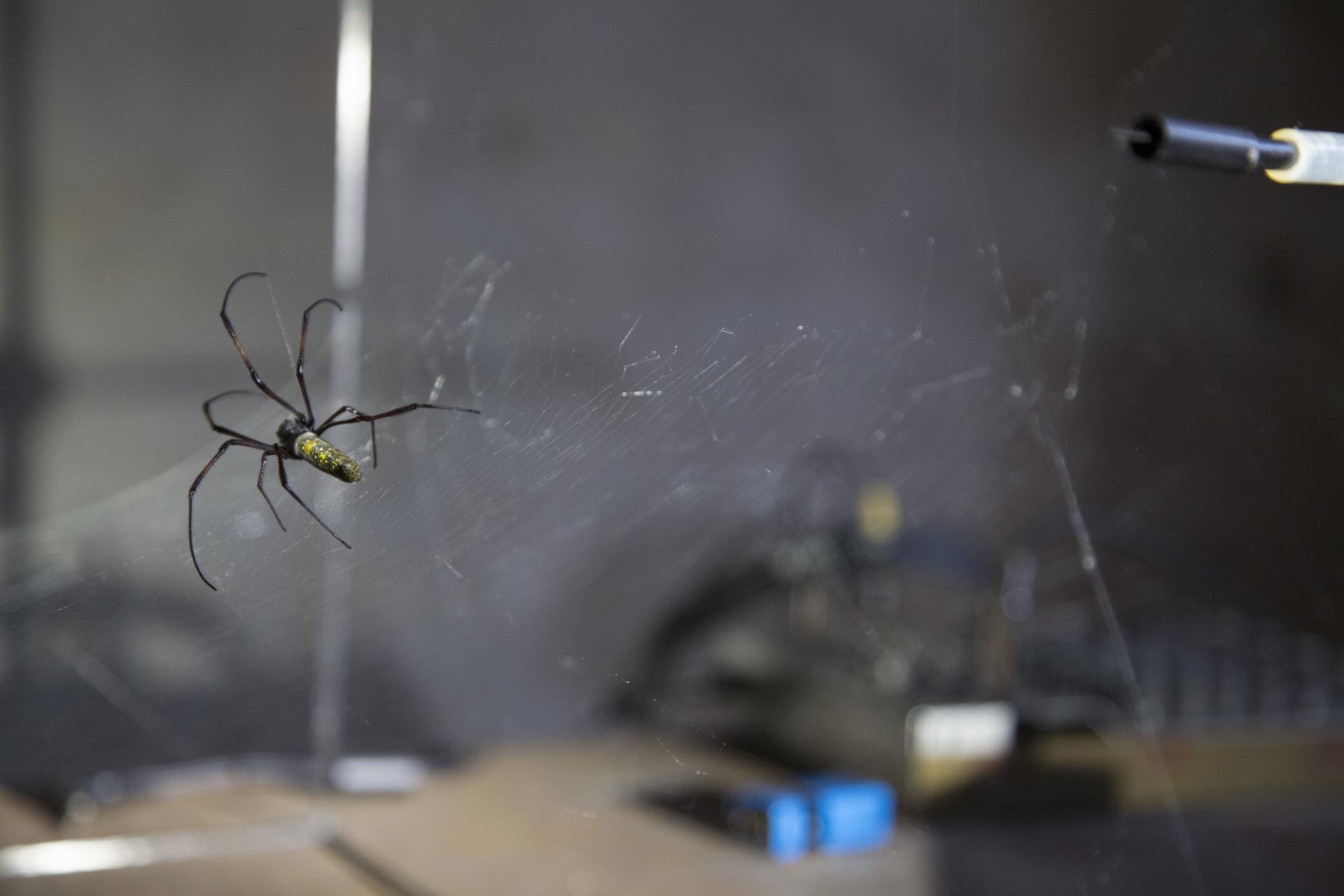
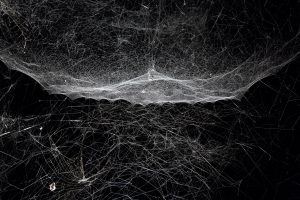
The first floor room, also featured two hybrid web-instruments woven by three different species, Cyrtophora citricola, Nephila kenianensis, and Cyrtophora moluccensis. These layered constructions were built collaboratively with each species involved having a different degree of sociability: solitary, social, and semi-social. Each hybrid web is a three-dimensional arachnid collaboration where the webs interlink, morph and shift resulting in webs that do not exist in nature

Photography by Nuvola Ravera, © 2014
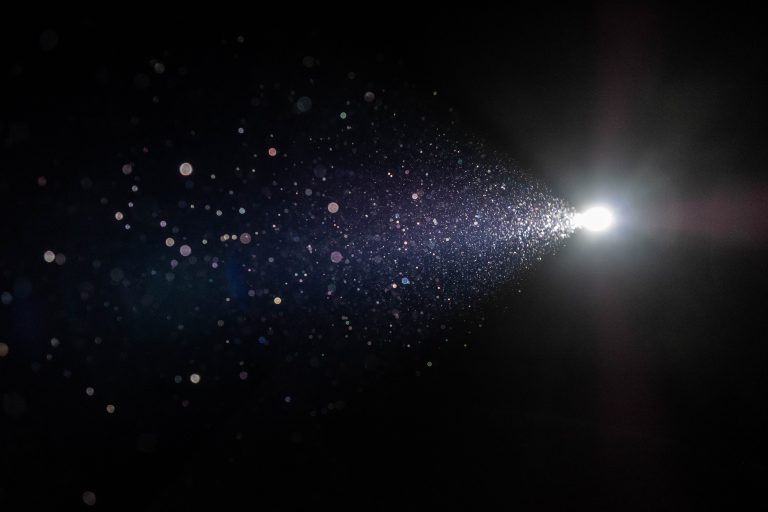
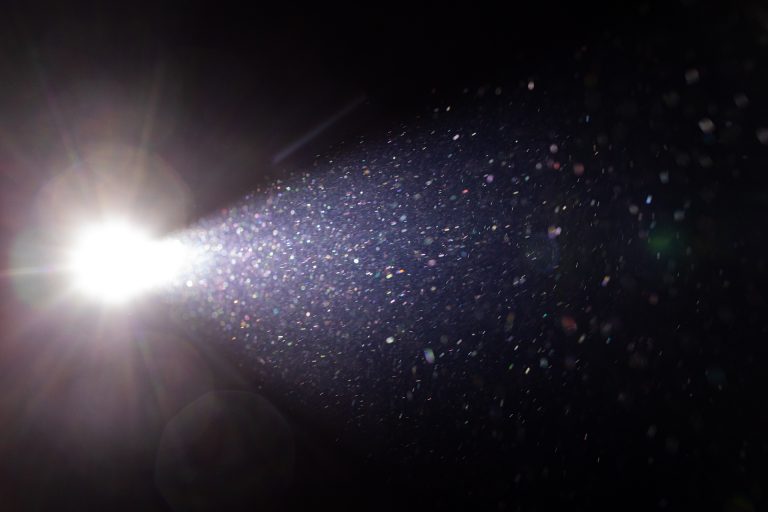
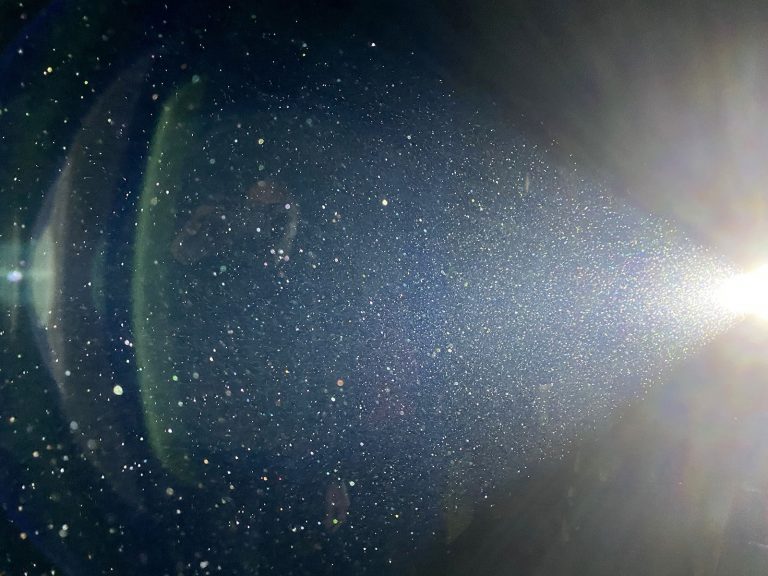
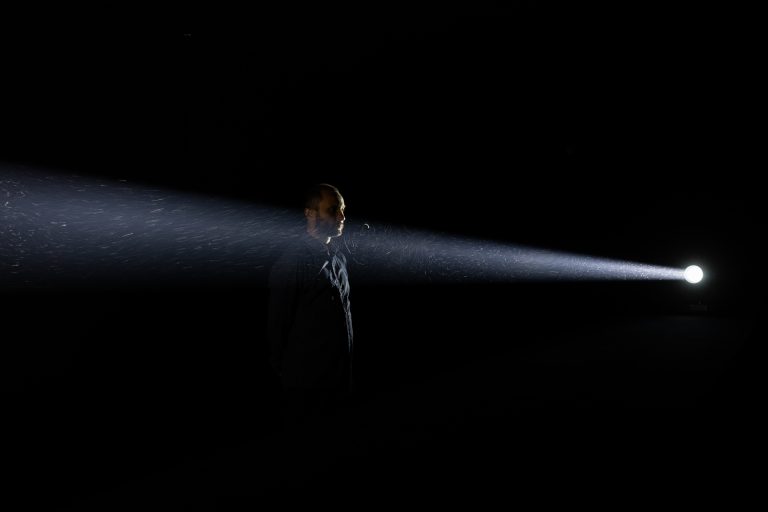
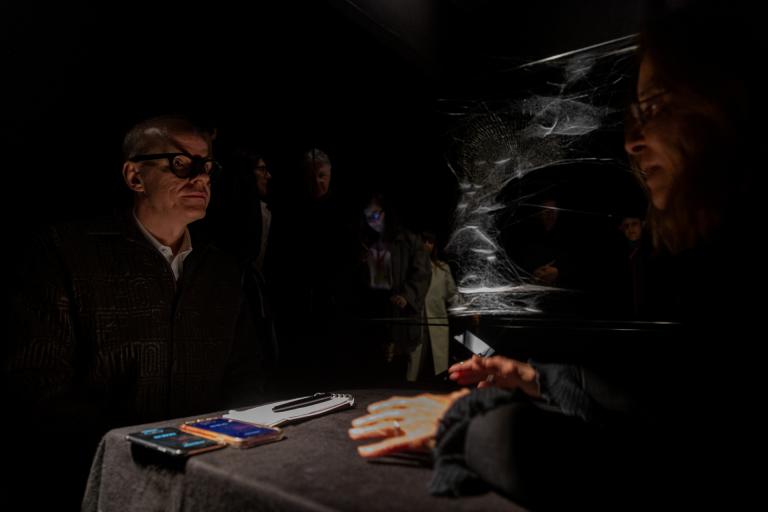
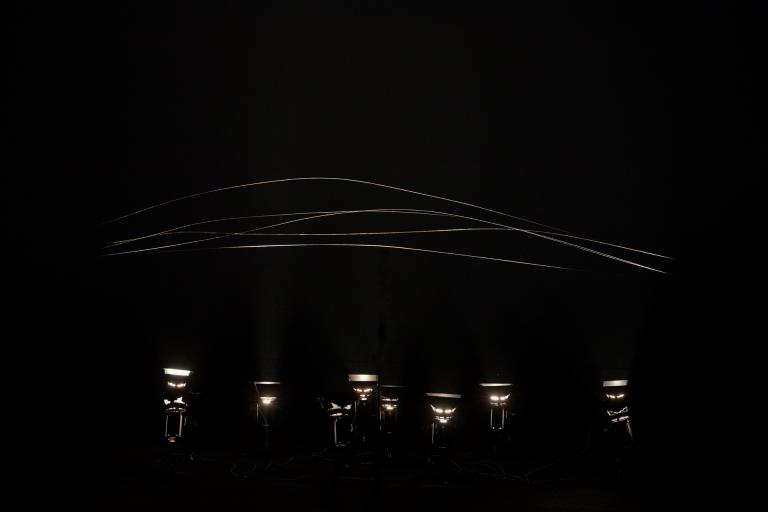
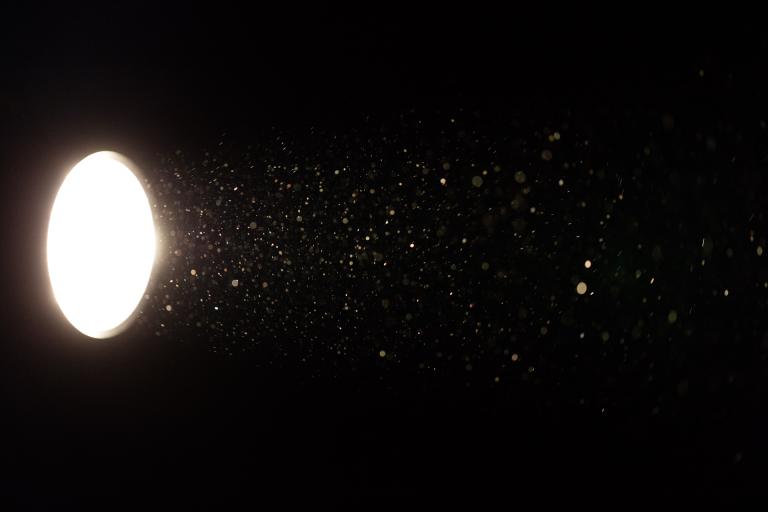
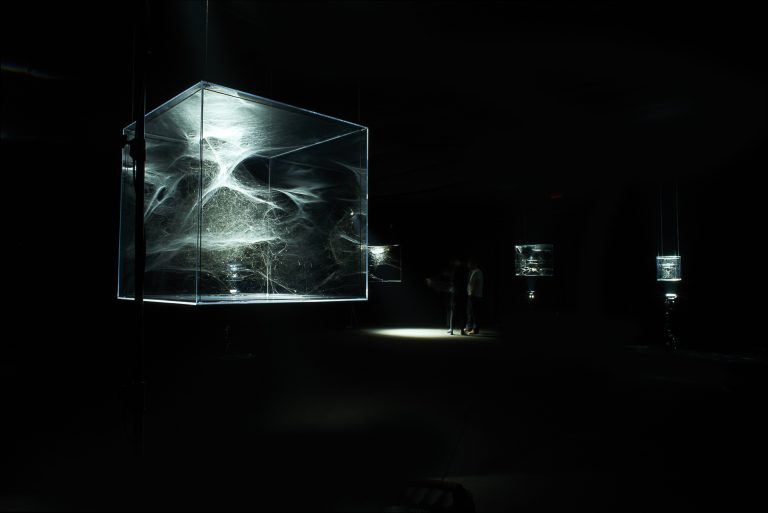
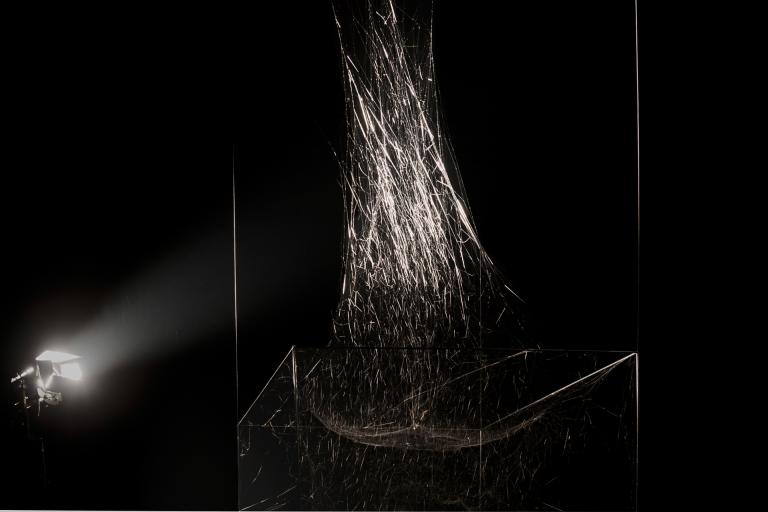
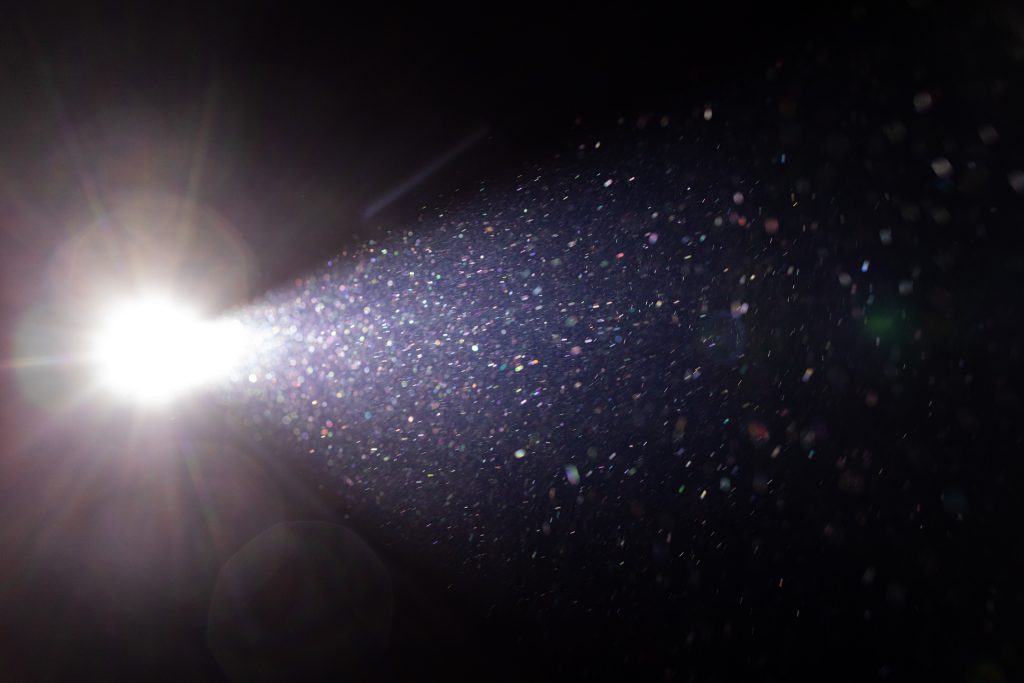
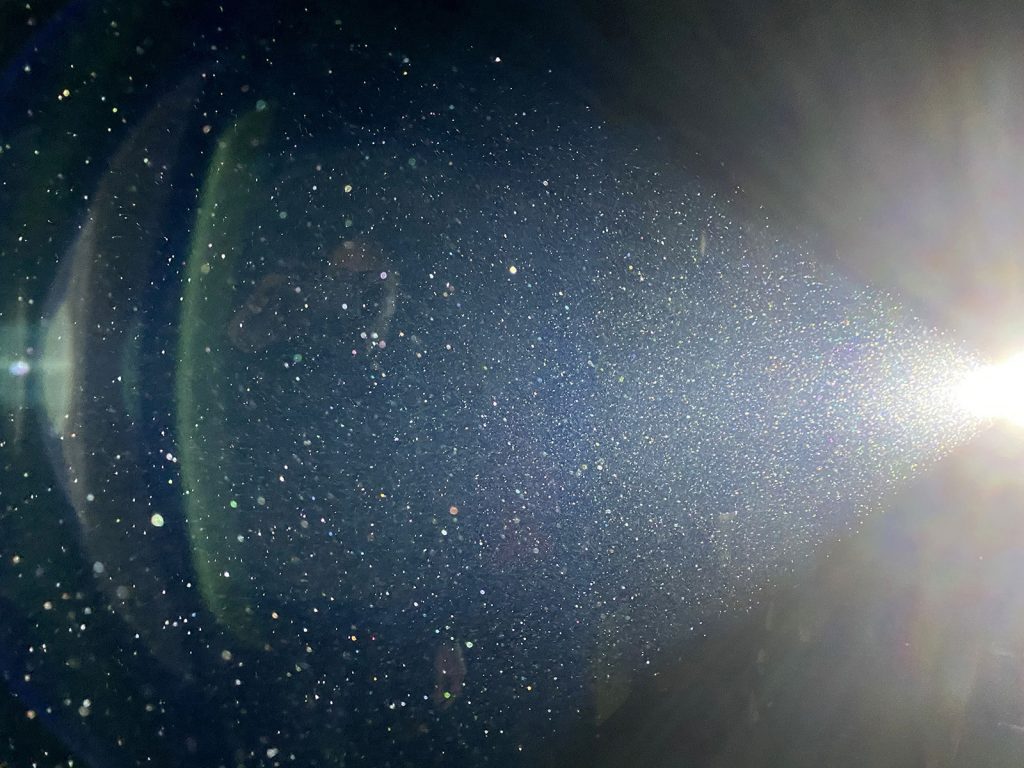
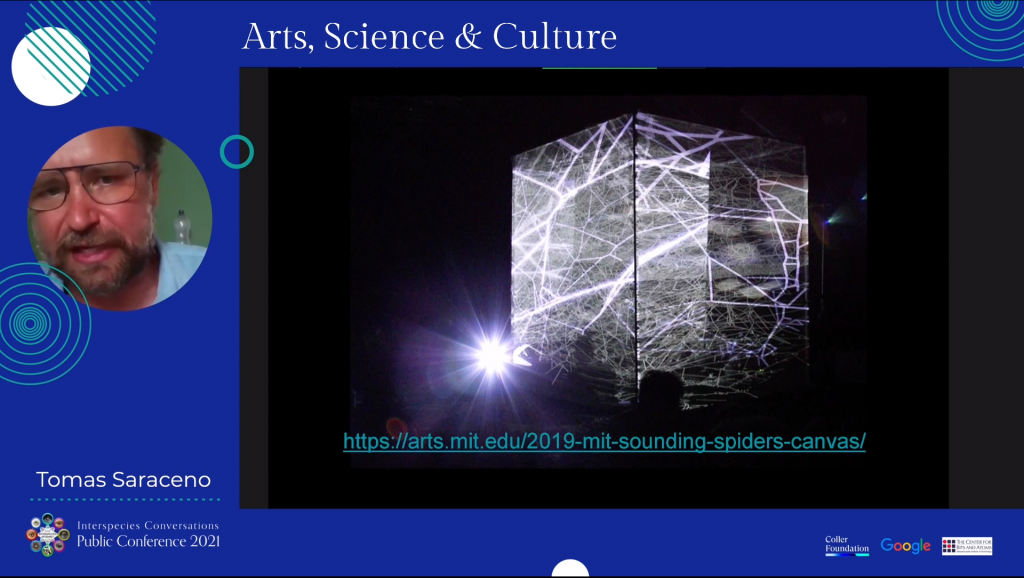
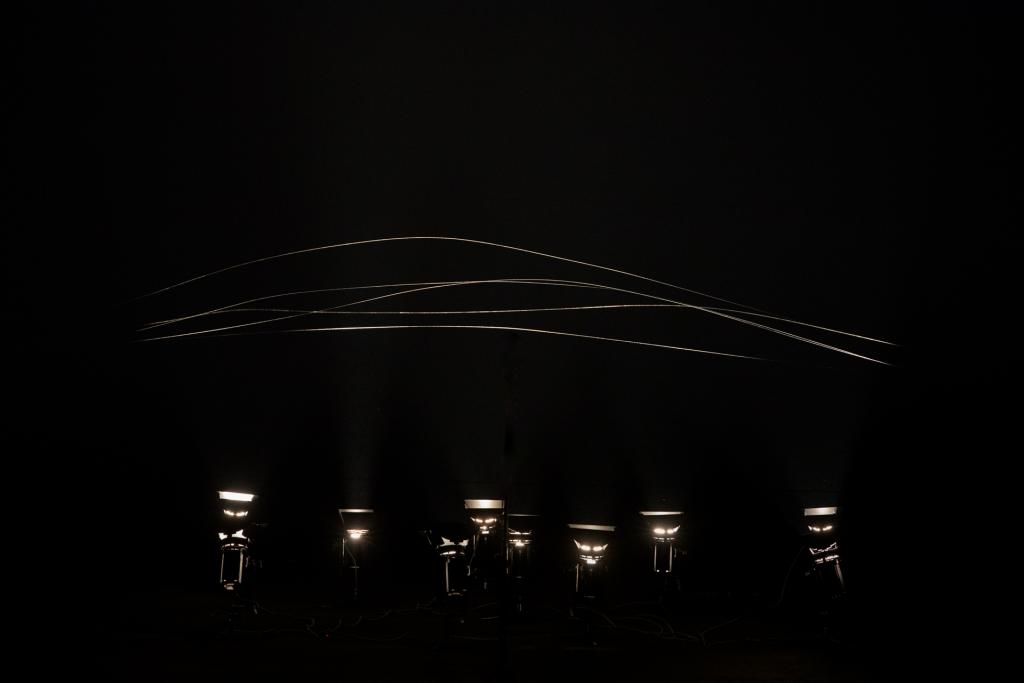
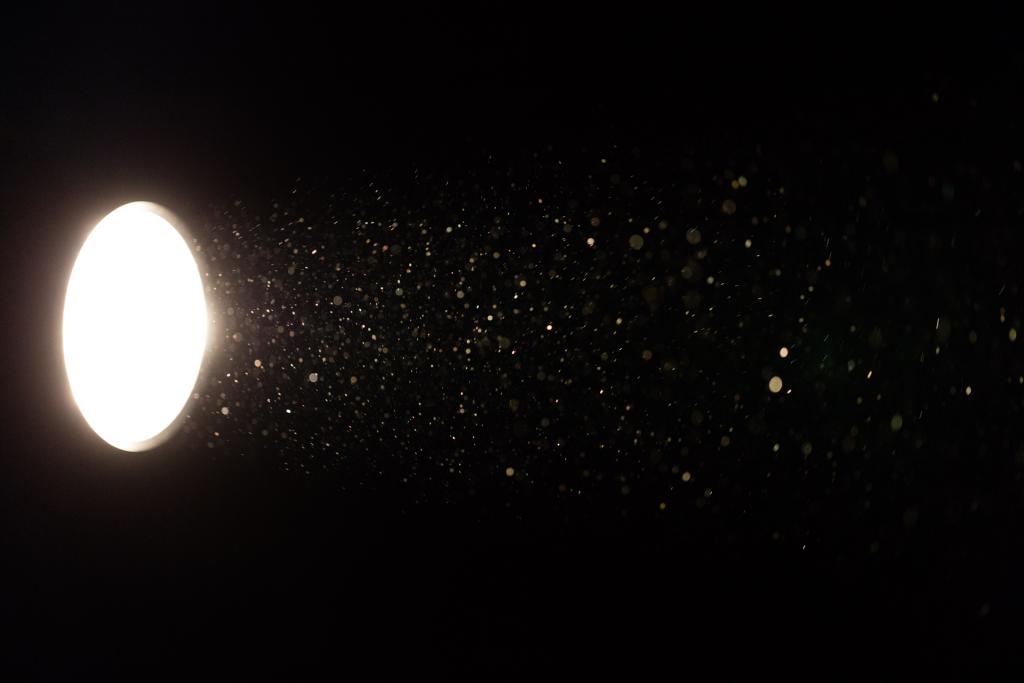
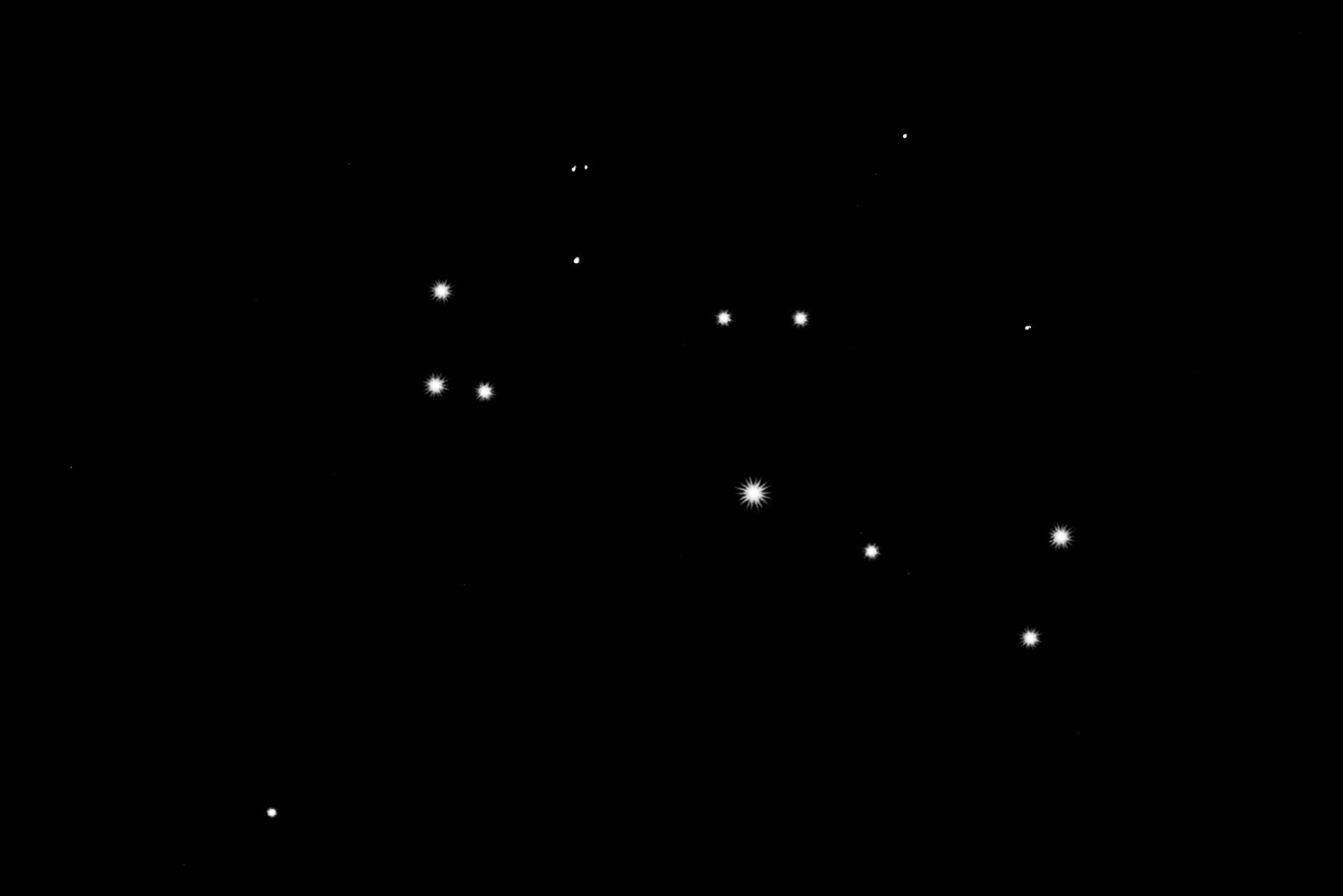
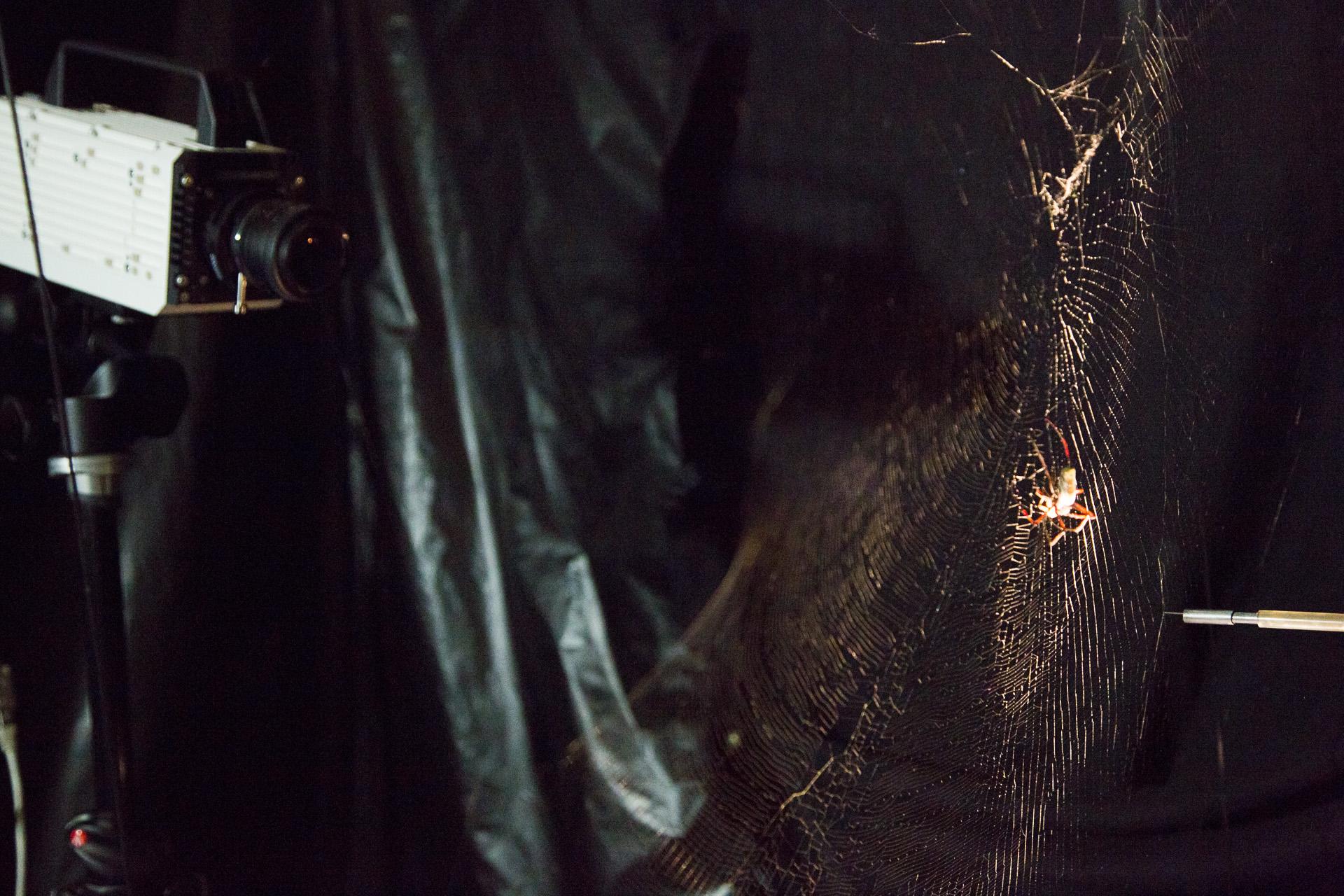
The first artwork “Work in Progress: Hybrid-web Instrument Centaurus A, constructed by the solitary Nephila kenianensis for three weeks, with Live performance by the quintet of semi-social Cyrtophora citricola” is eponymous with the title. It was left open, suspended in mid-air, illuminated by spotlights revealing the fragility and complexity of the instrument and its players, but also its interaction with the presence of the breathable cosmic dust in the room. Since the Cyrtophoras continued weaving for the duration of the show, this performative web-instrument continually changed and evolved.
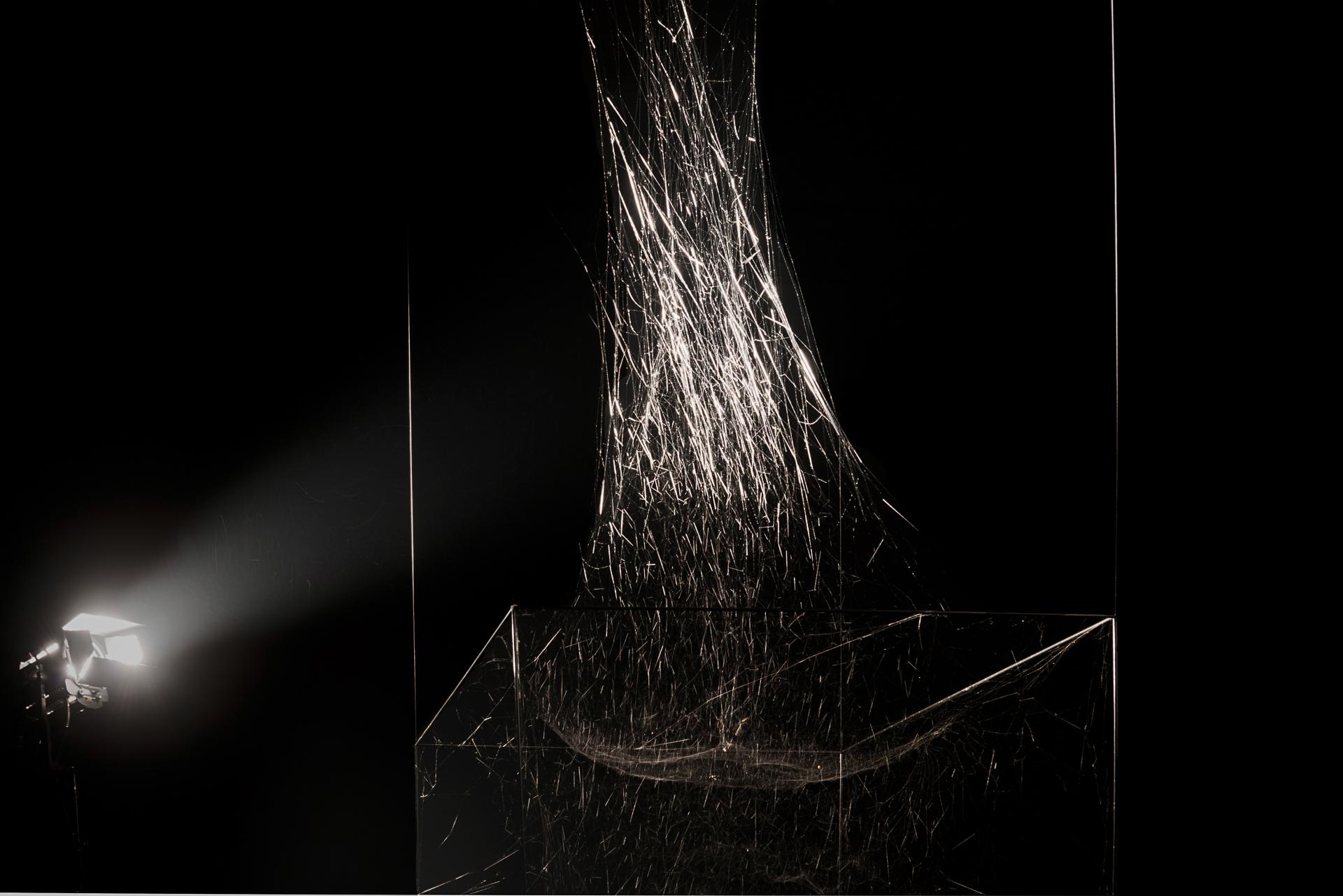
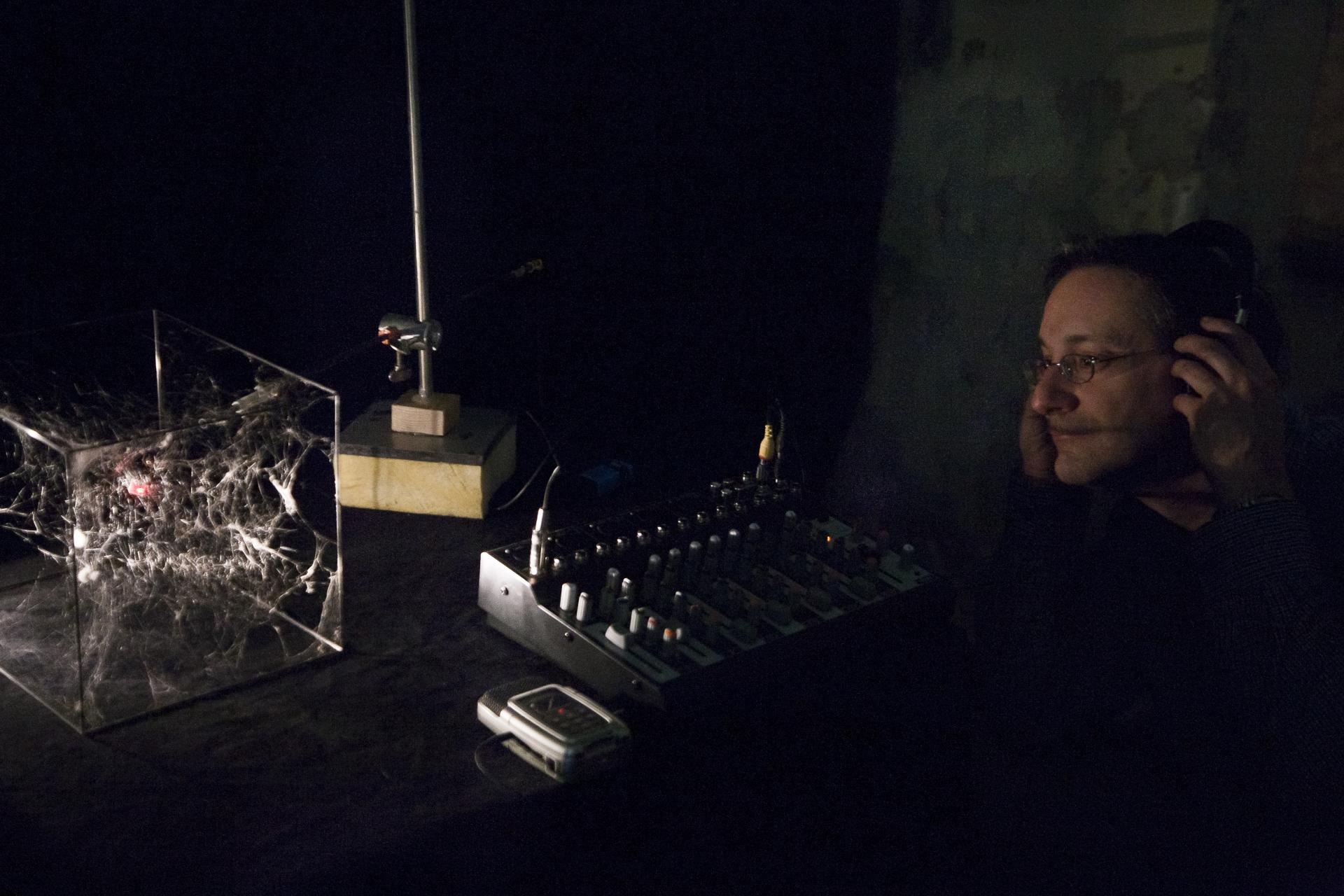
The second hybrid web-instrument, “Hybrid semi-social musical instrument NGC 2976” was exhibited in a glass vitrine. The web was first built by a Cyrtophora citricola for three weeks and afterwards reconstructed by a group of semi-social Cyrtophora moluccensis that wove it for four weeks. The second species of spiders were only added after the entire carbon frame was turned 180 degrees on its Z-axis towards the ISS, thereby reorienting the force of gravity on the web instrument and its players.

Photography by Studio Tomás Saraceno, © 2014
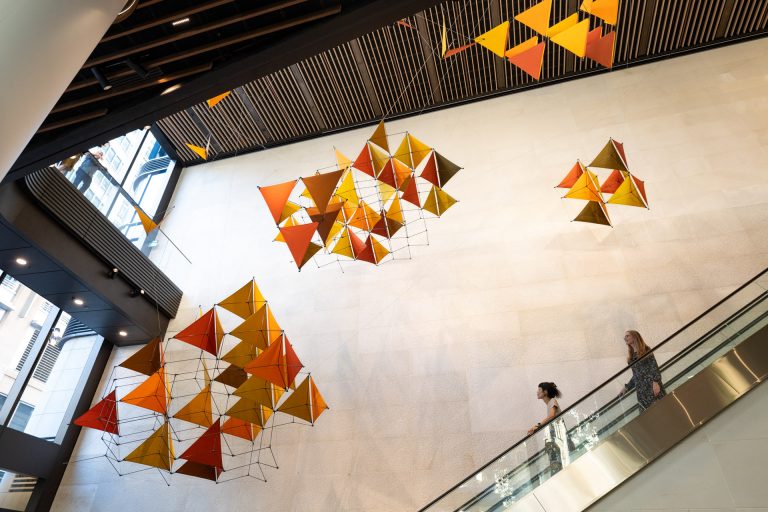
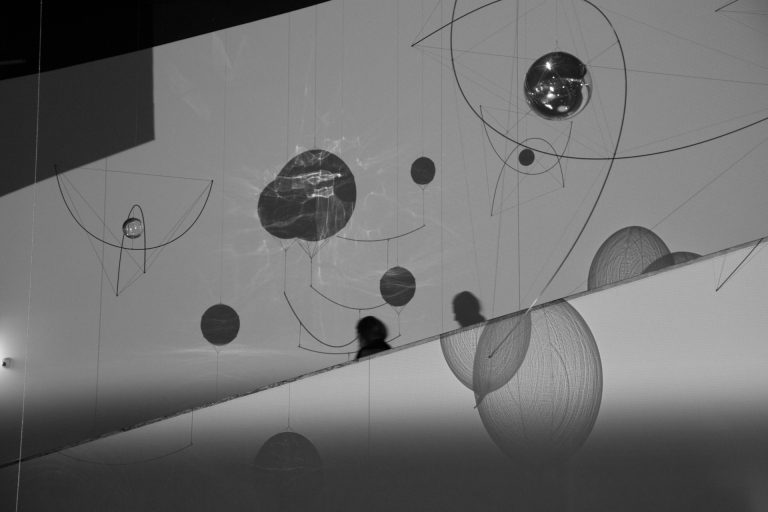
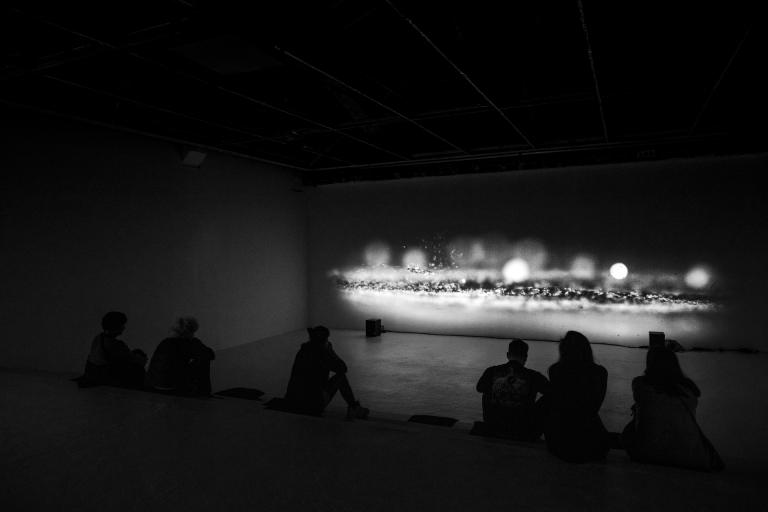
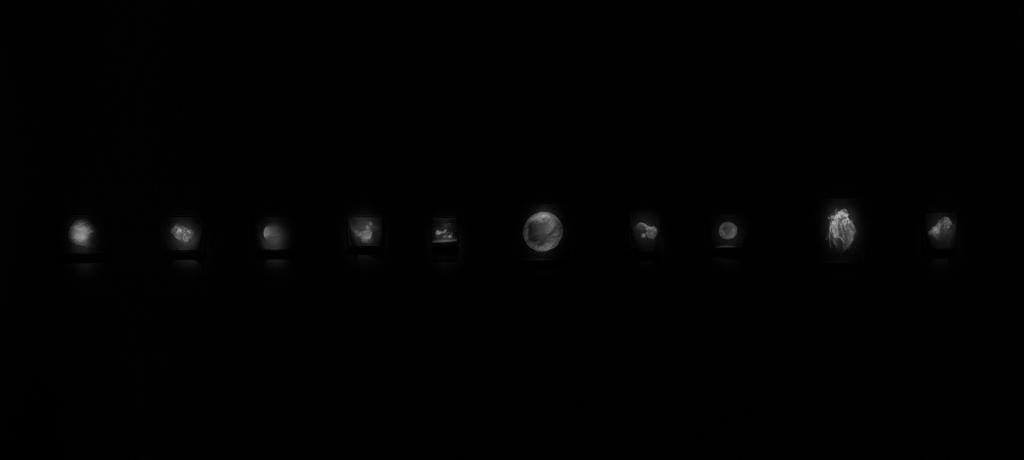
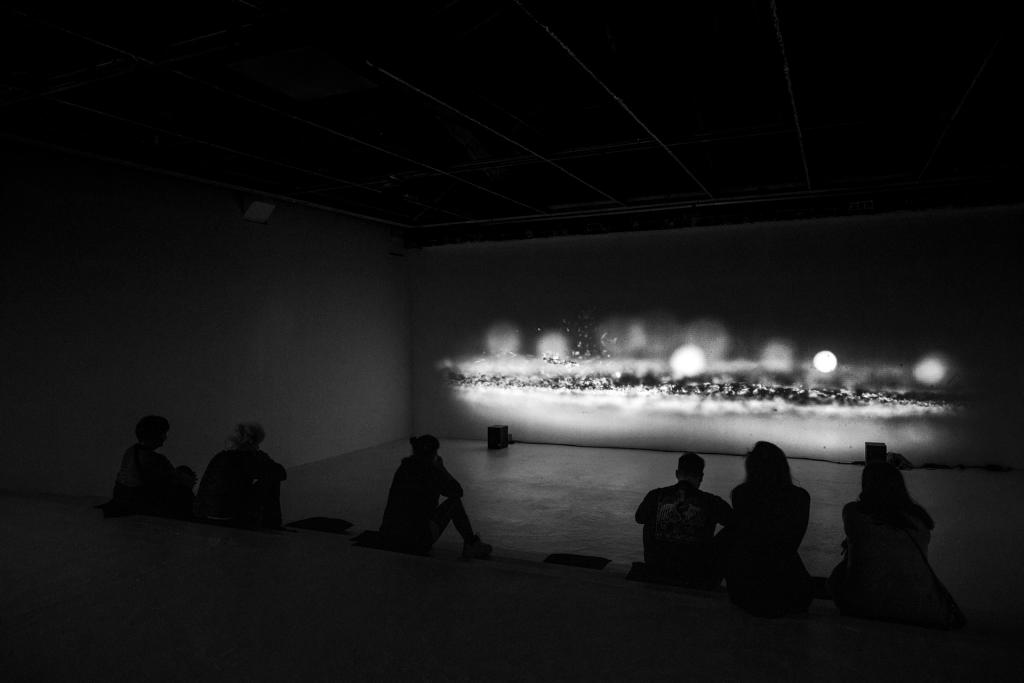
On the grand staircase of the museum, connecting cosmic webs to the earth and adding to the different levels of thought, Jol Thomson created a site-specific installation inspired by extraterrestrial photography, realigning a certain type of gaze from the depths of space, back towards Earth and human life.
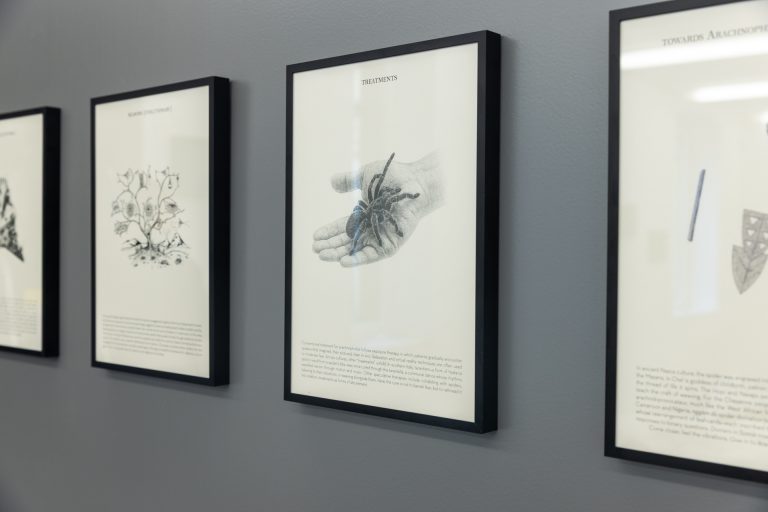
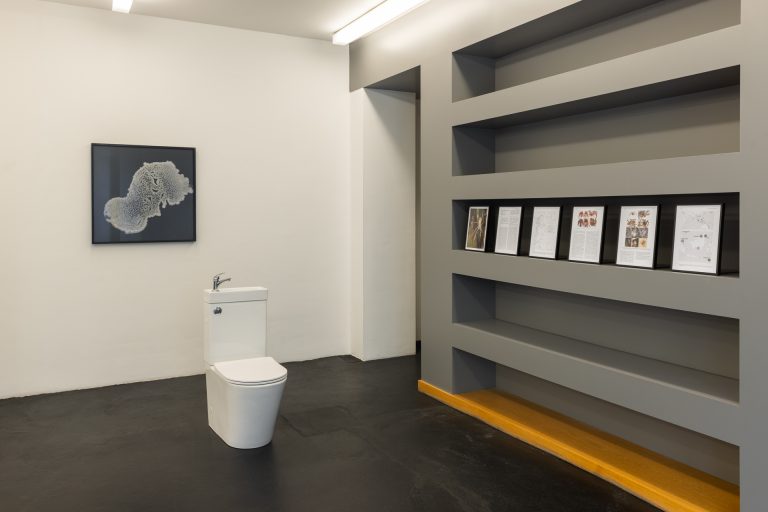
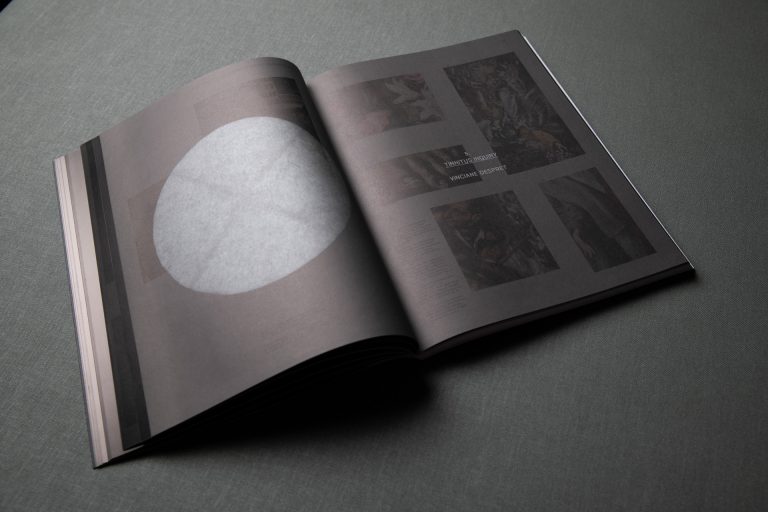
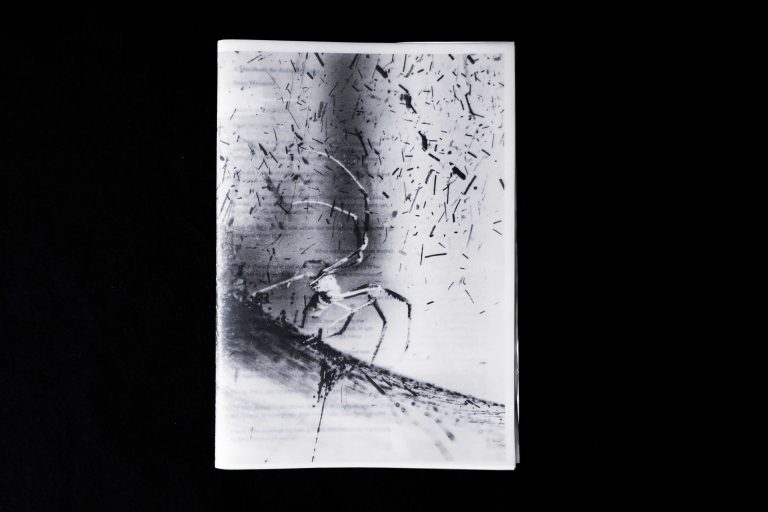
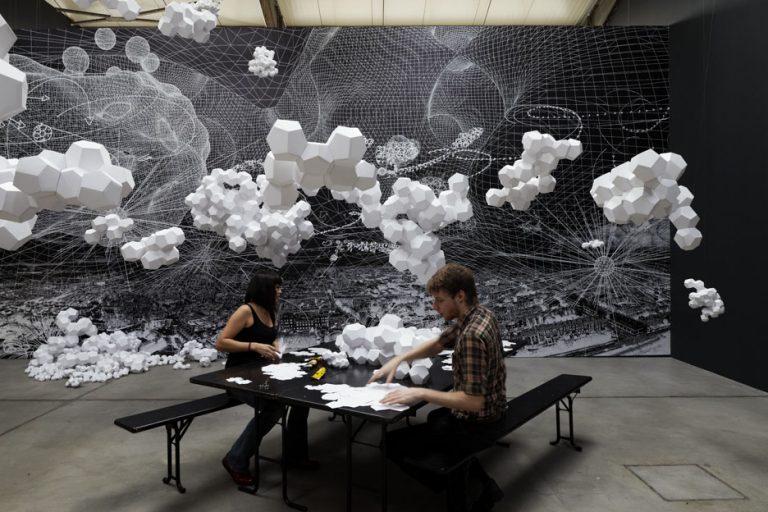
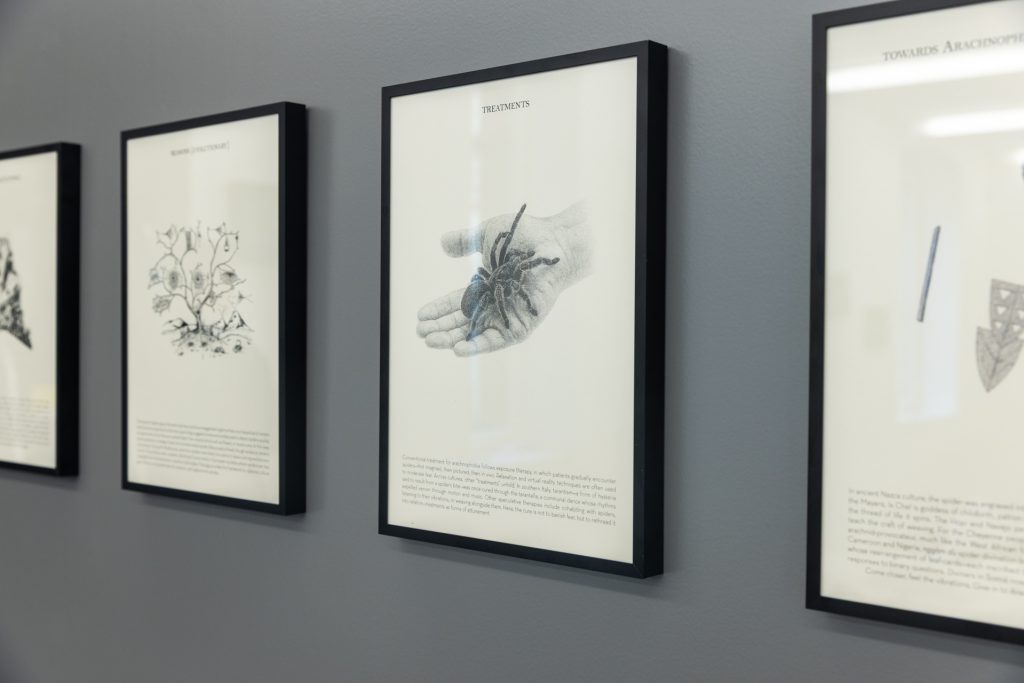
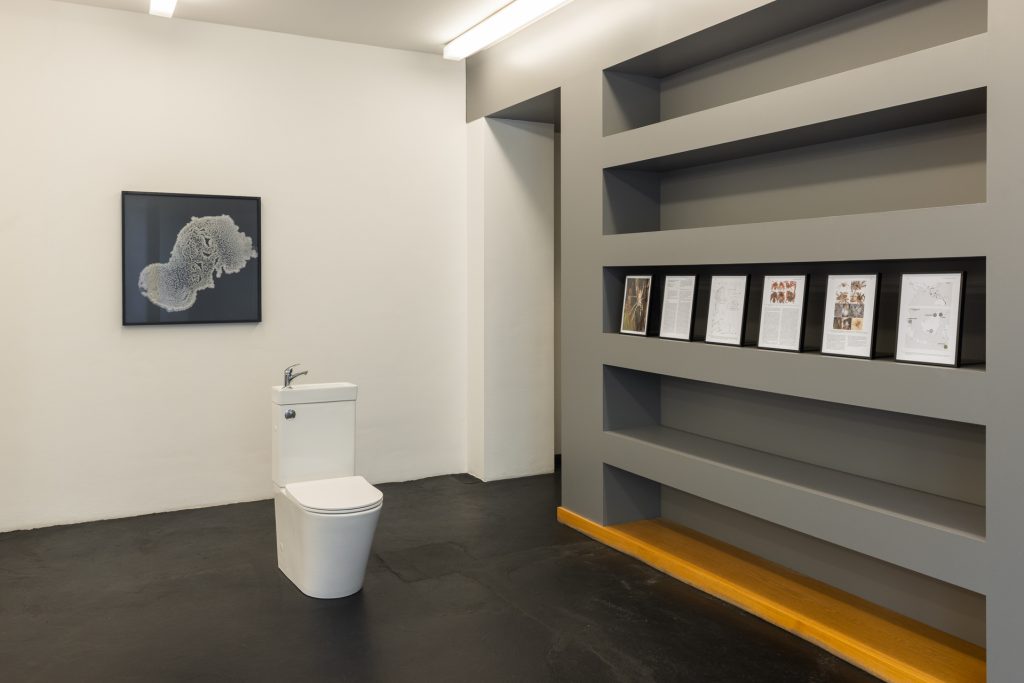
The ground floor, next to the library, featured the Cosmic Jive Reader in an area dedicated to the ongoing research and open wiki book, with specialised texts made available to visitors who were welcome to read them, to photocopy them and to create their own Cosmic Jive Readers, depending on their personal interest.

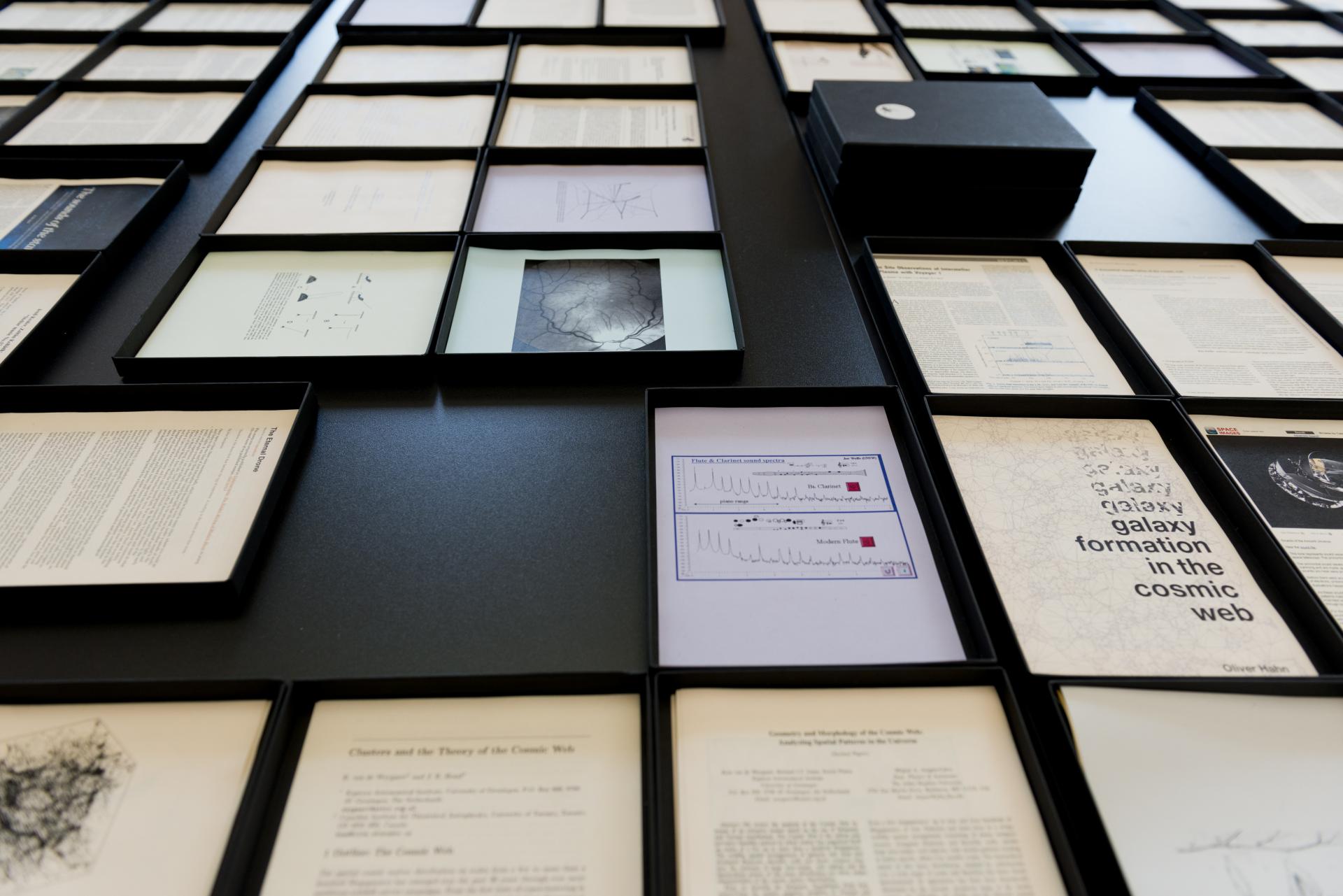
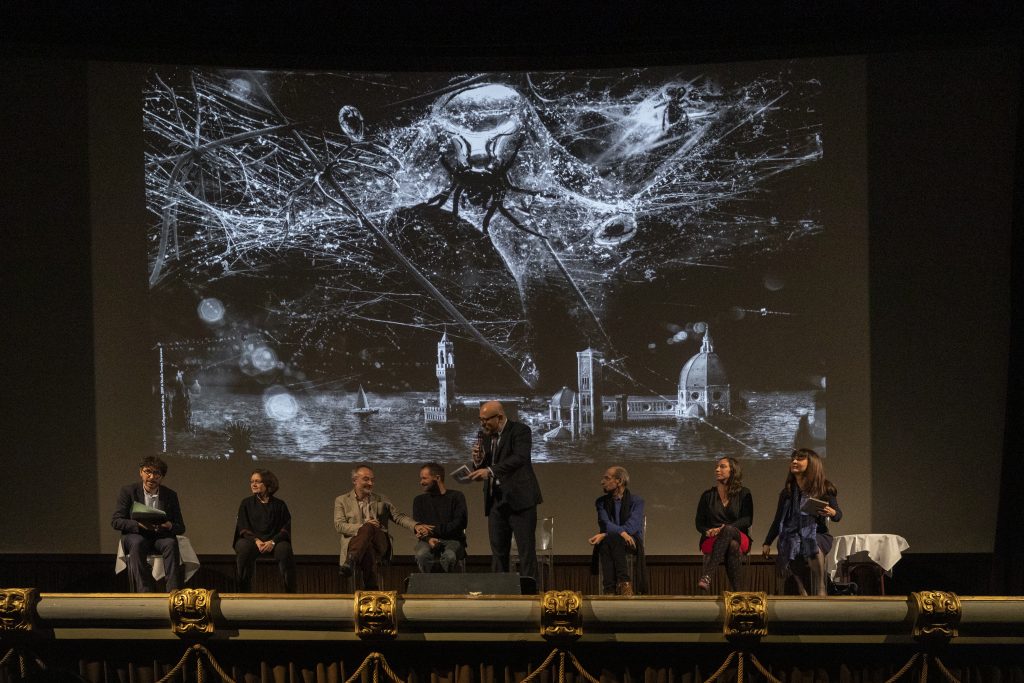
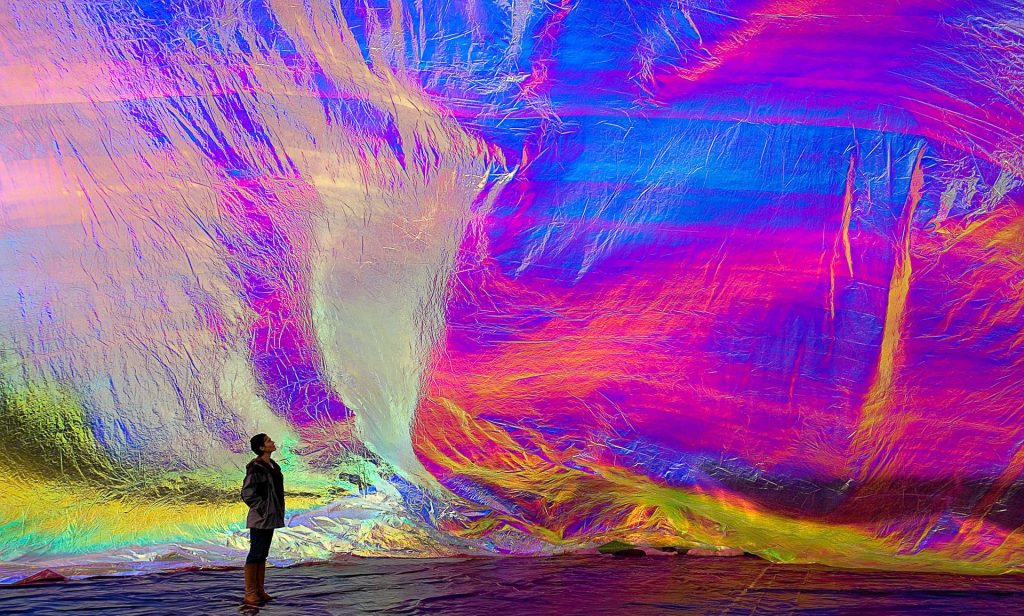
“In the 1960s, Pierro Manzoni’s works were capable of questioning the limits of painting and the concept of representation by means of “universal” concepts that the artist represented in his artworks. Analogously, Tomás Saraceno’s works and installations germinate from visionary intuitions about the world and create experiences that reveal the capacity of contemporary art to address knowledge in its complexity.”

Photography by Nuvola Ravera, © 2014

...