






























...











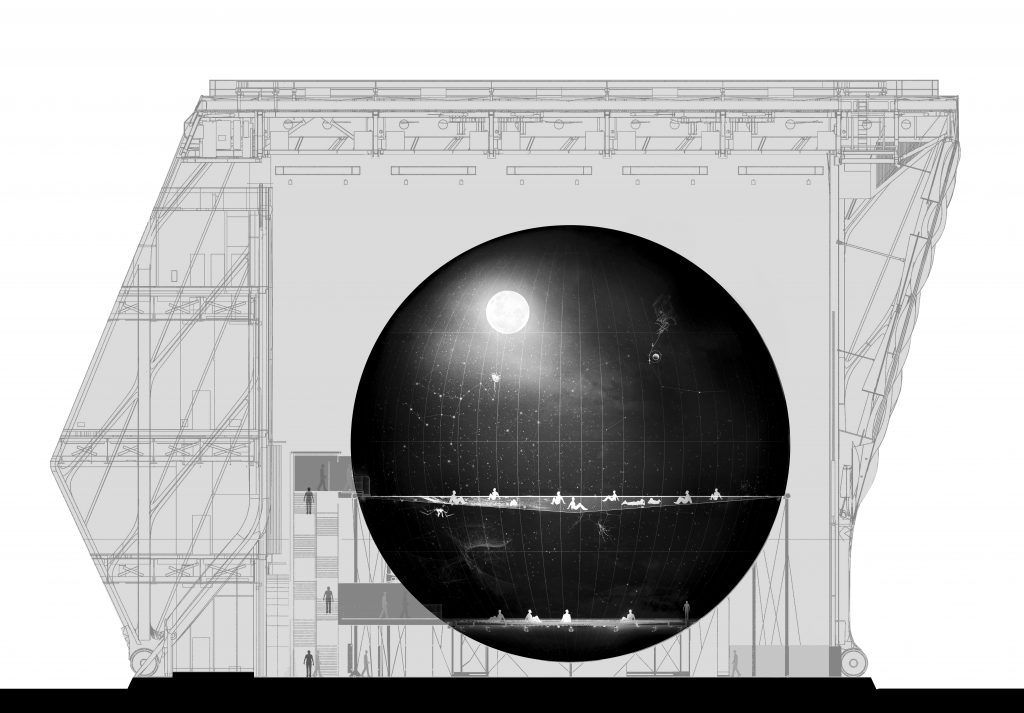
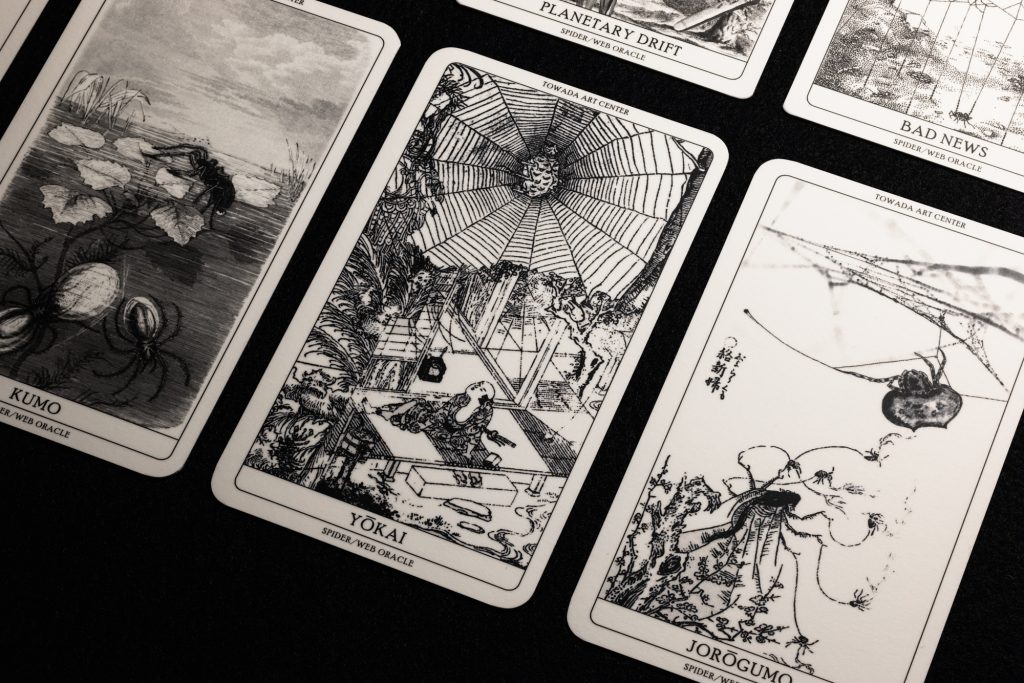


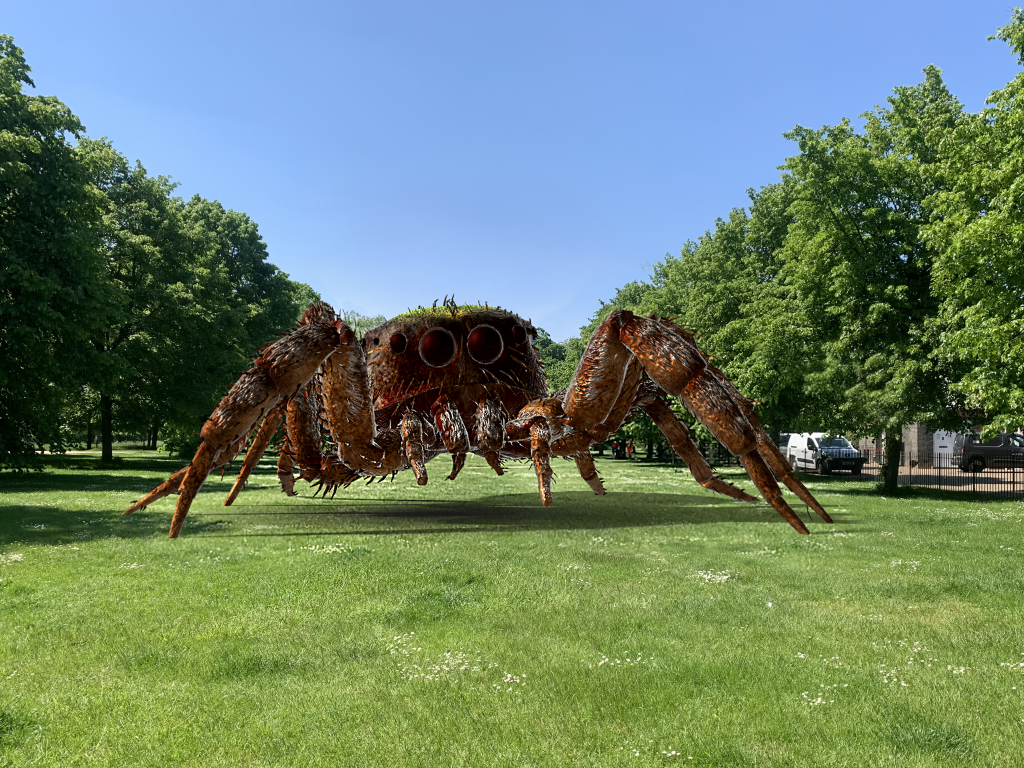















































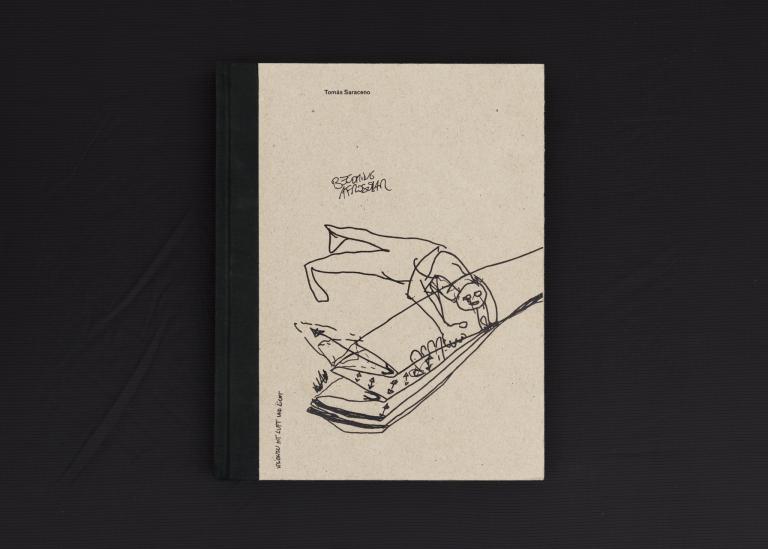
Becoming Aerosolar
21.06 – 30.08.2025
21er Haus, Vienna, Austria
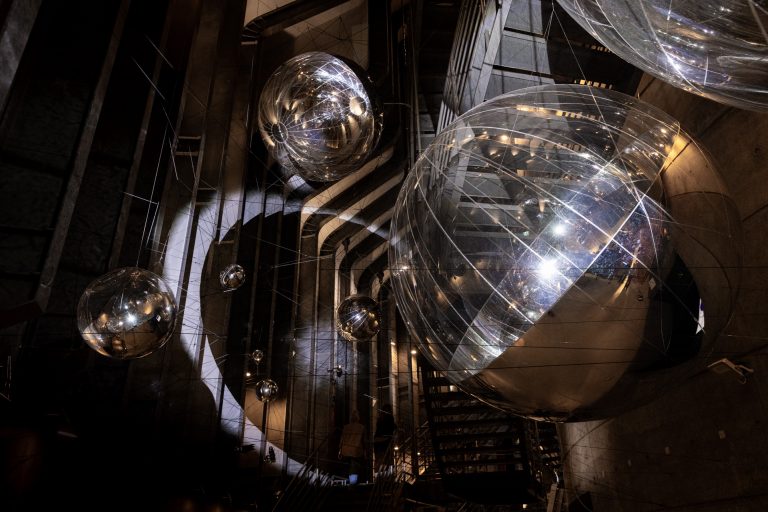
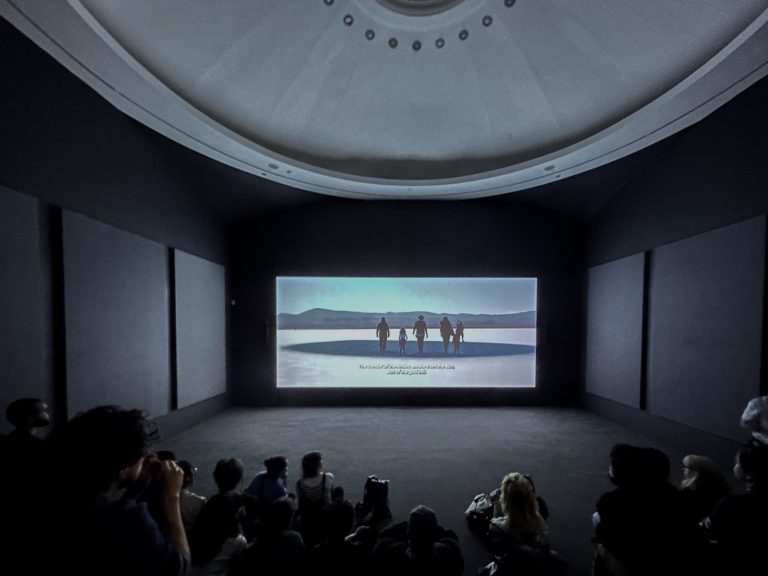
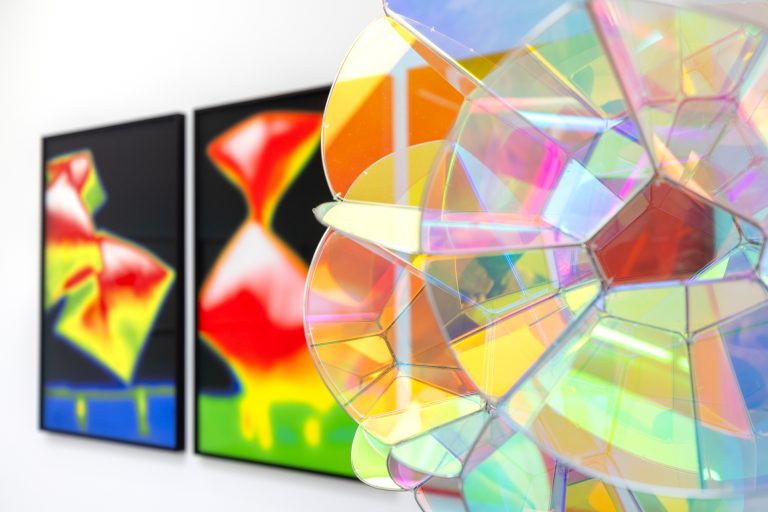
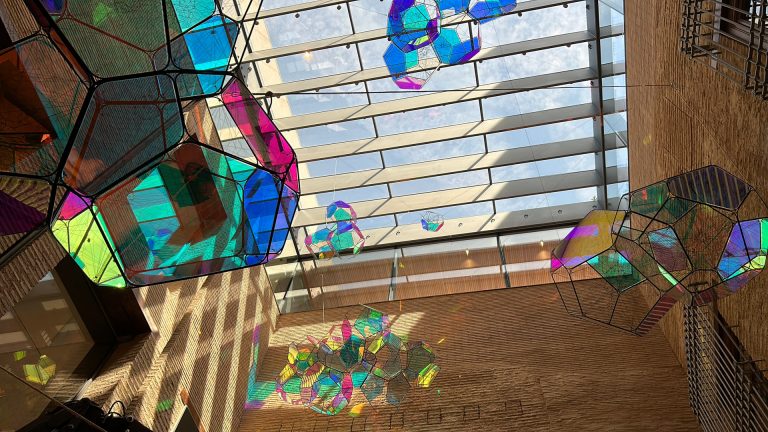
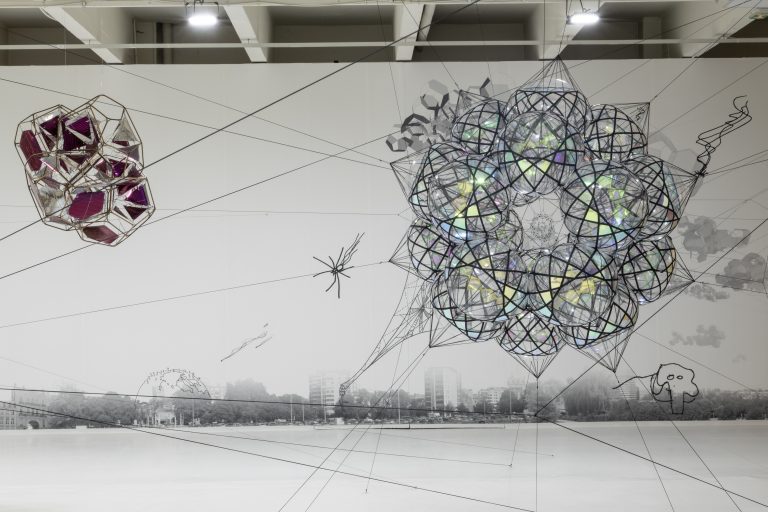
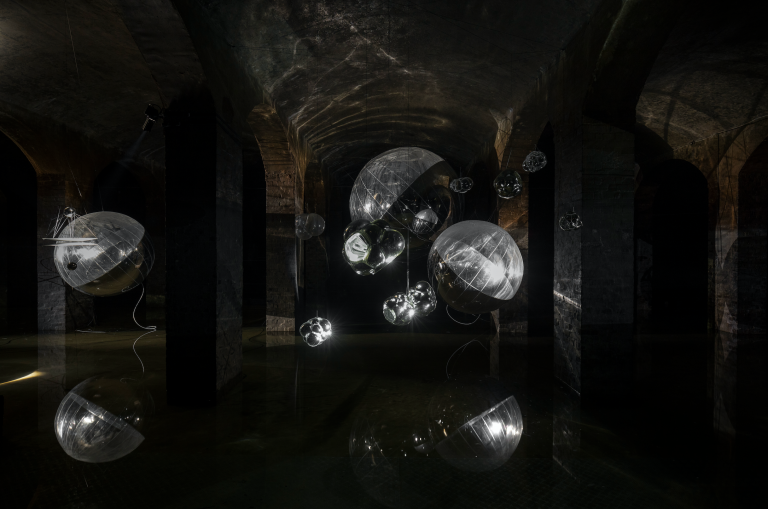
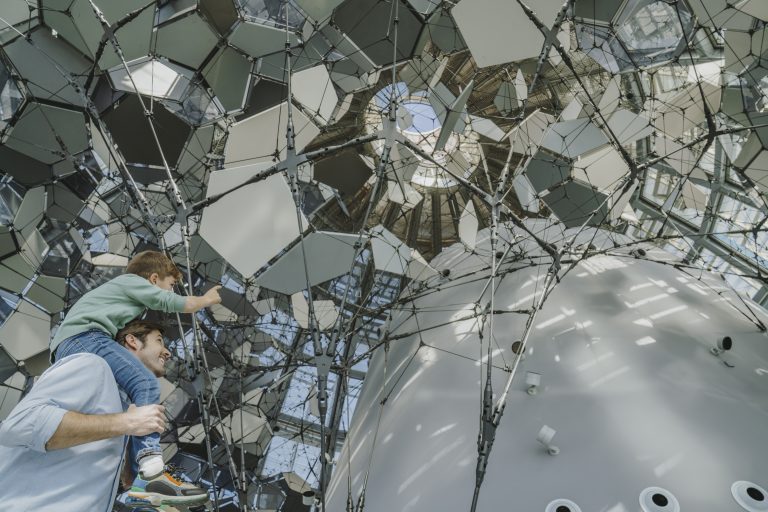
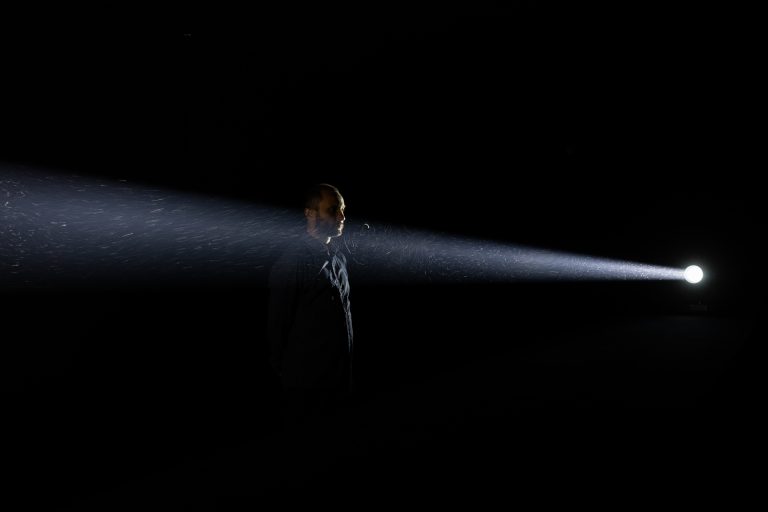
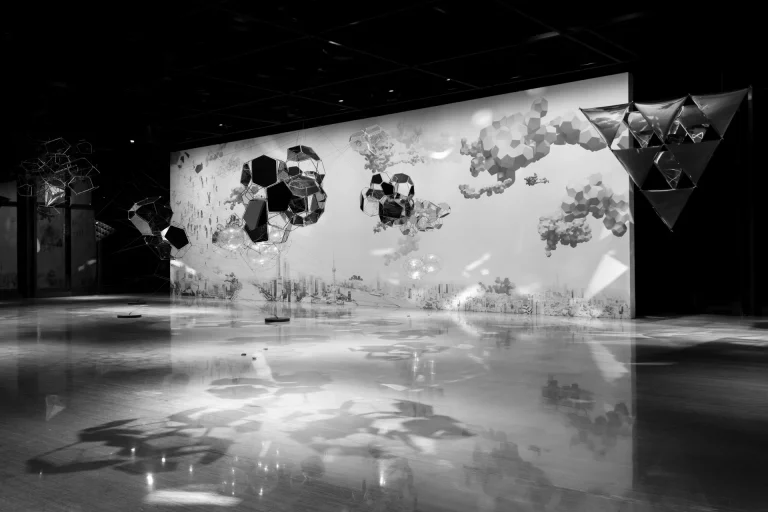
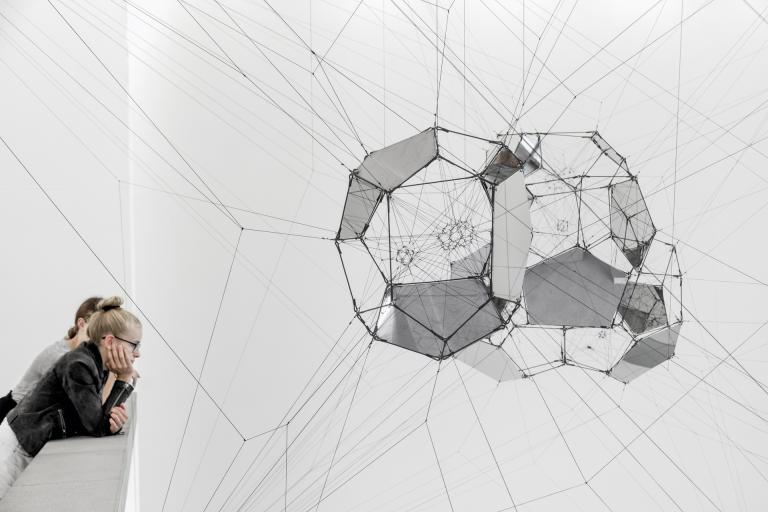
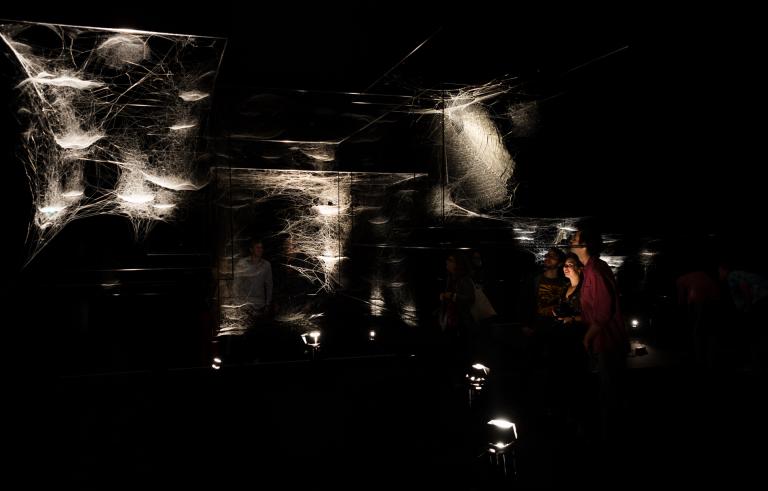
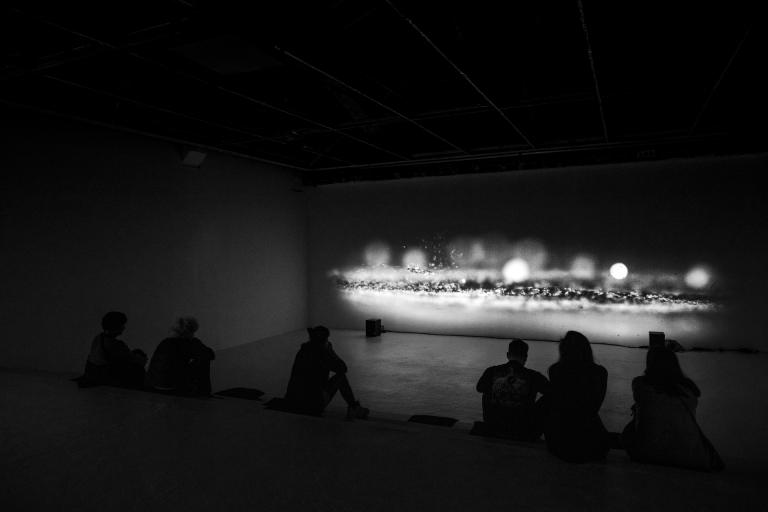
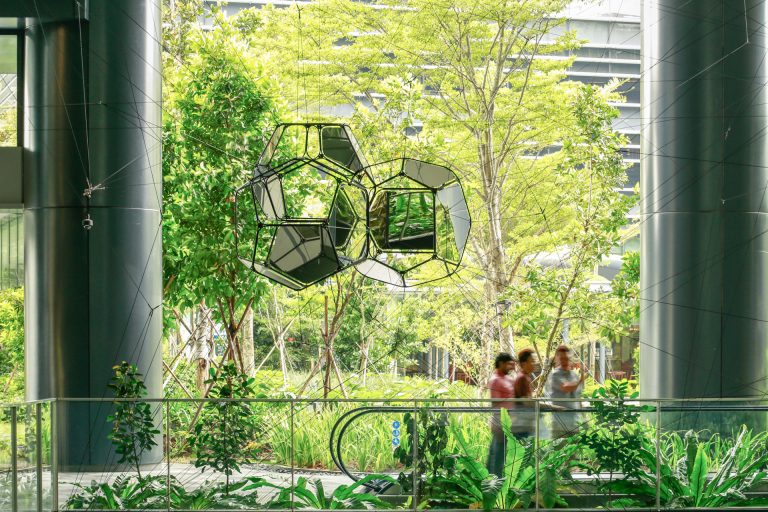
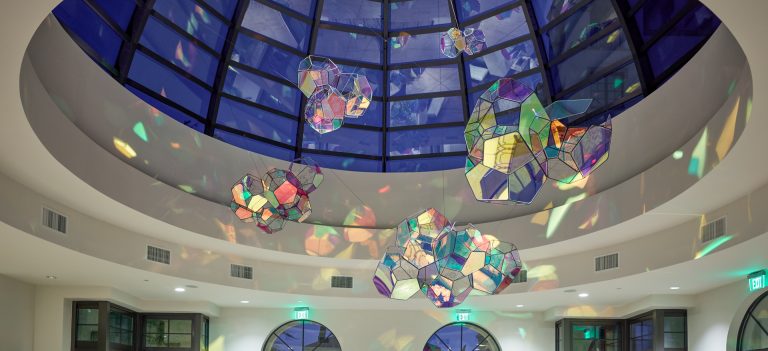
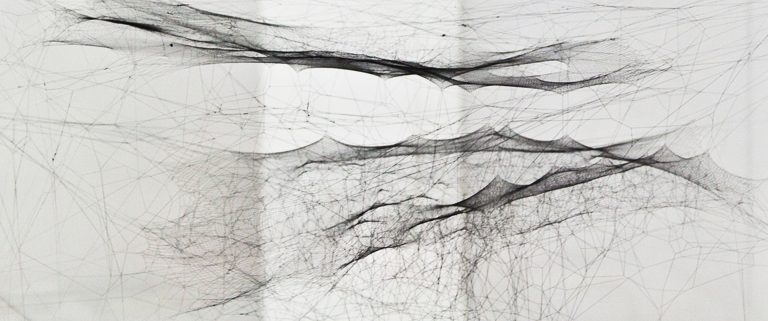
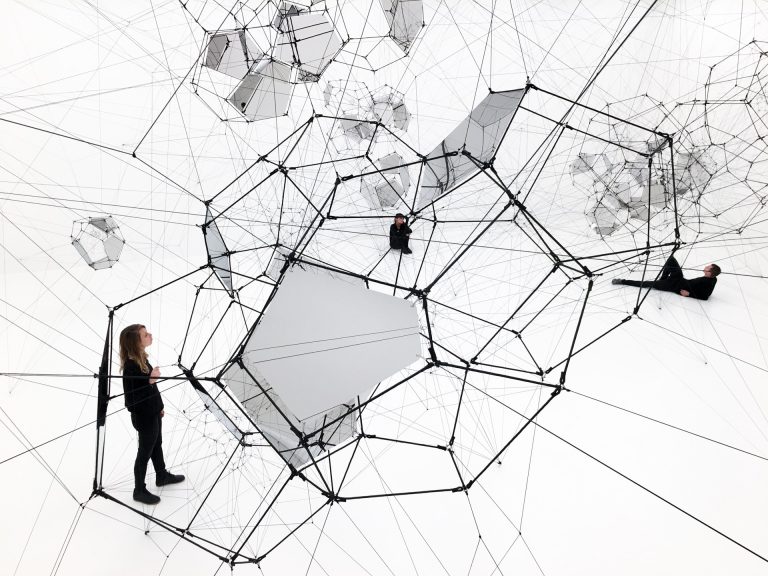
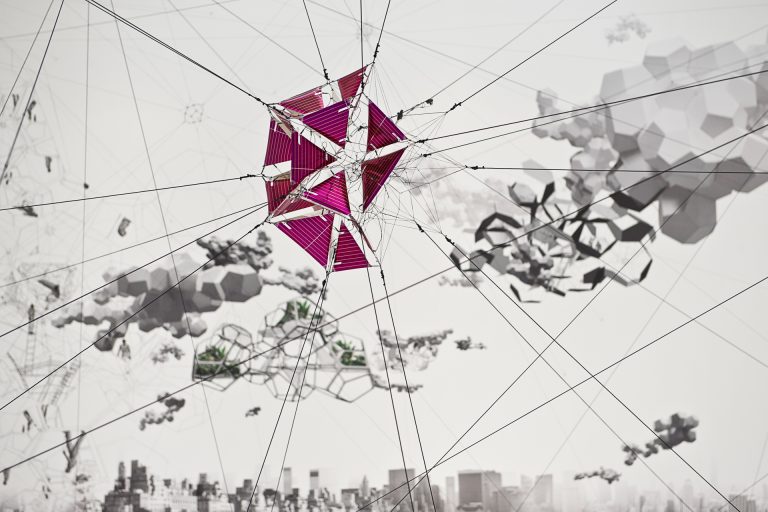
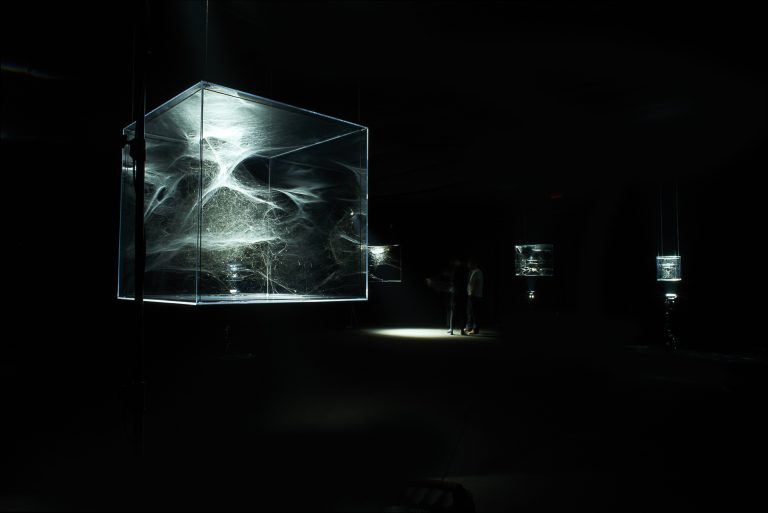
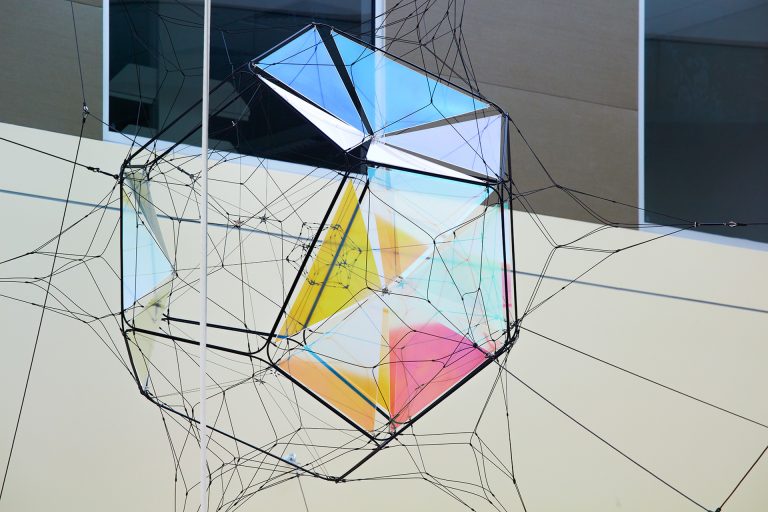
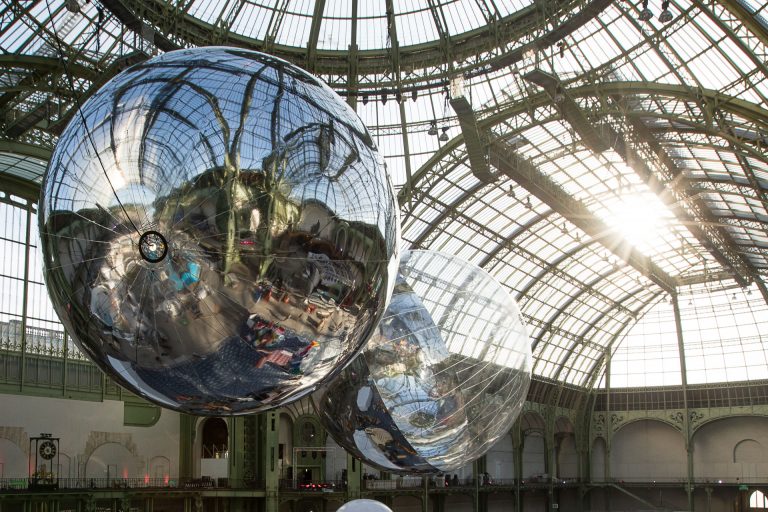
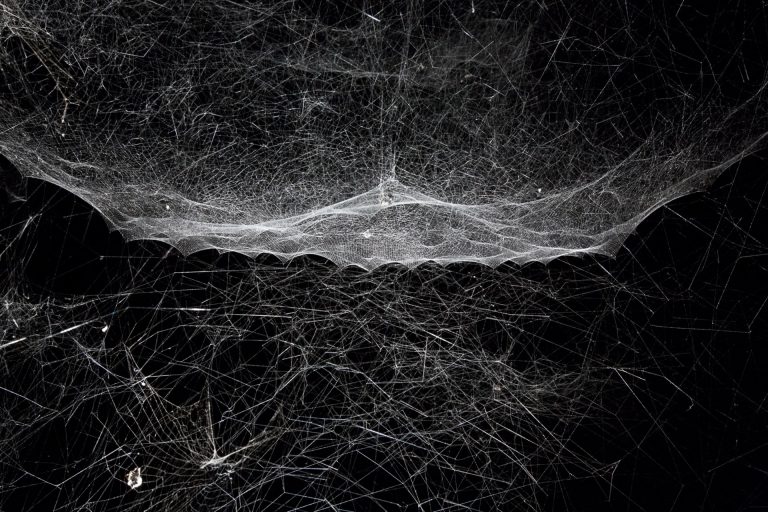
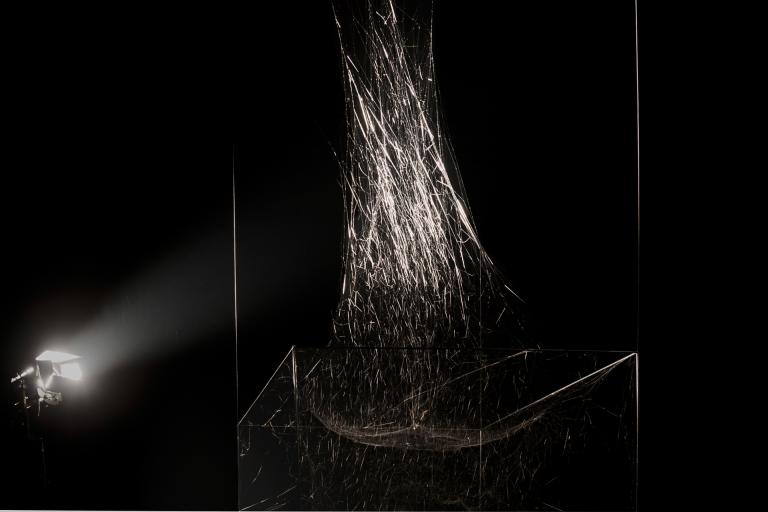
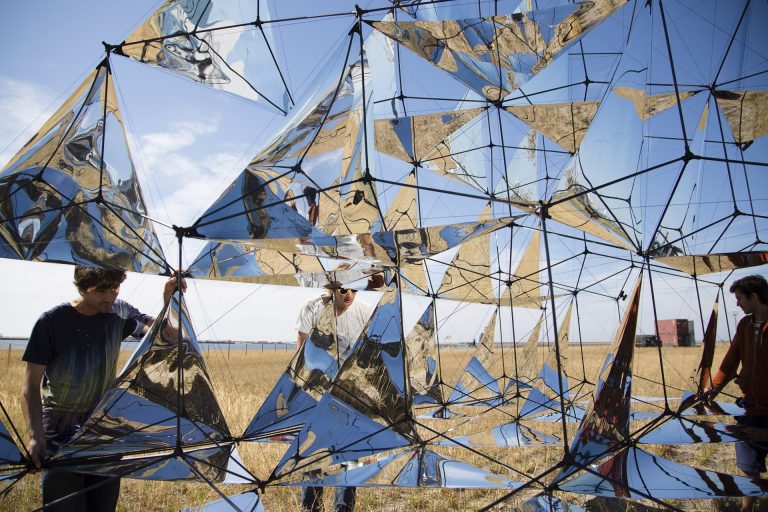
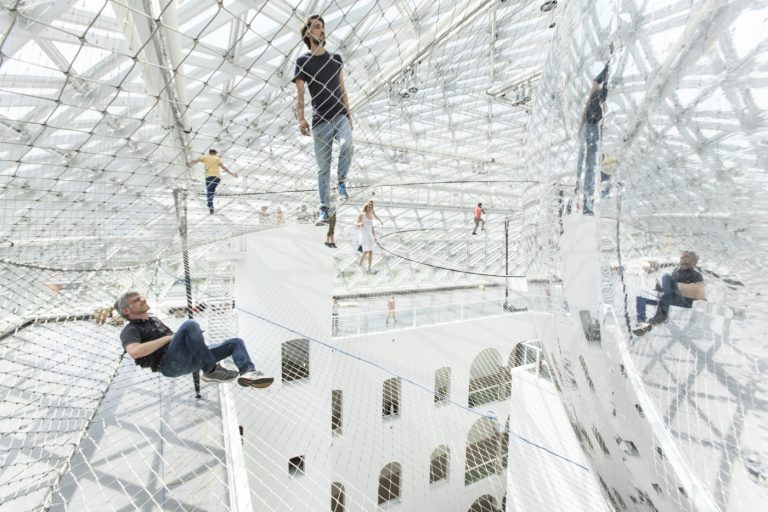
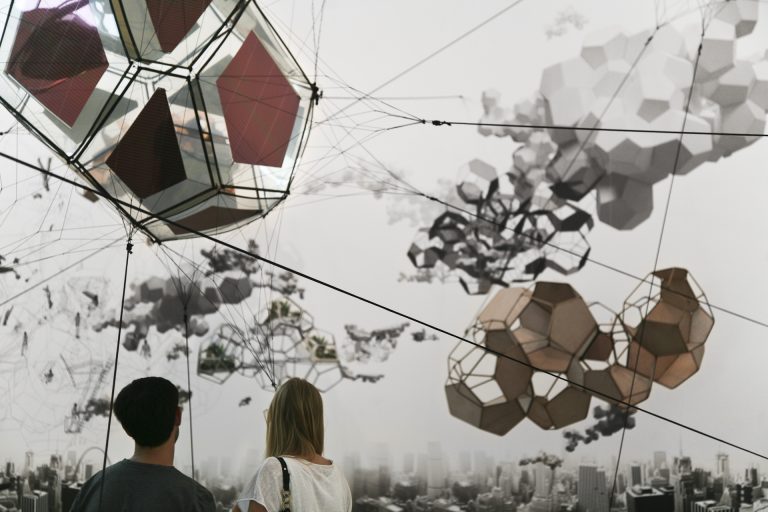
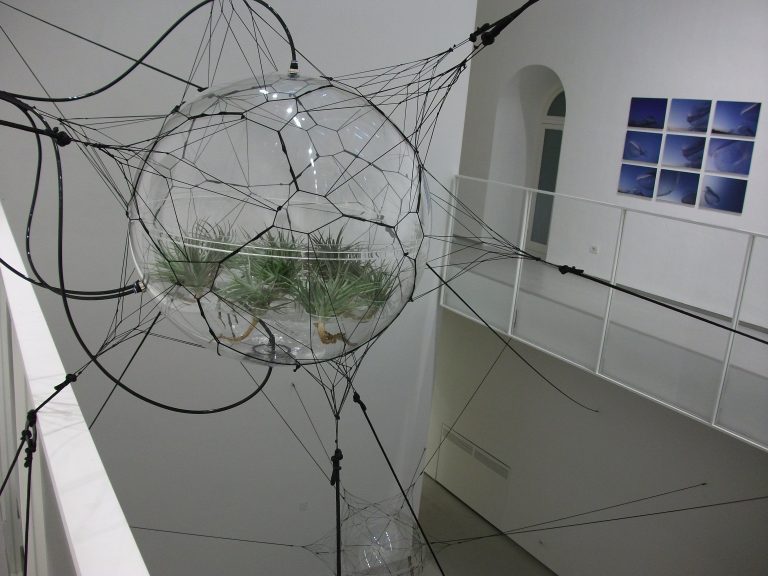
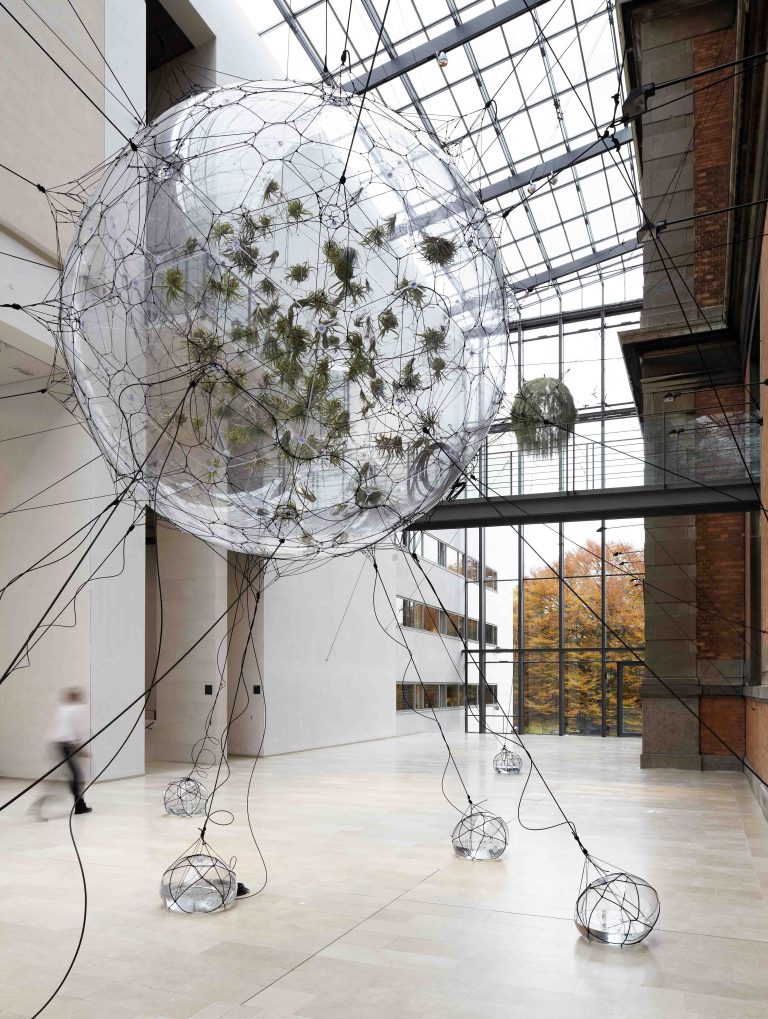
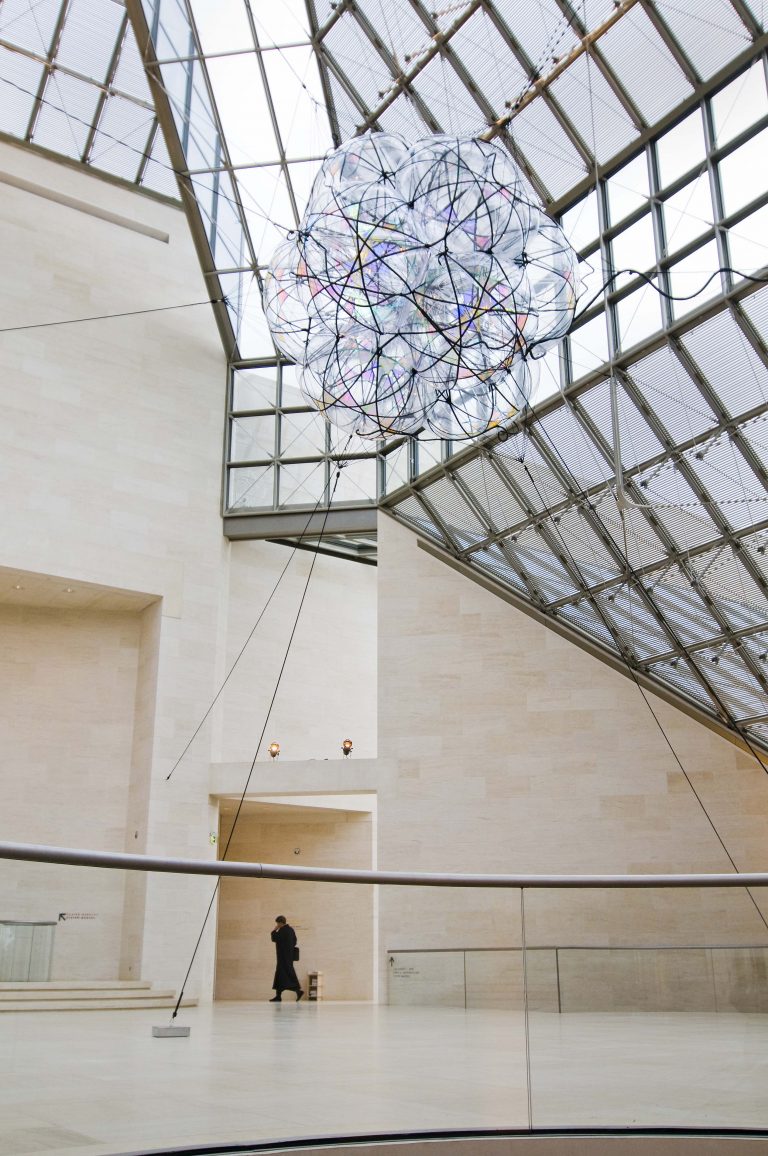
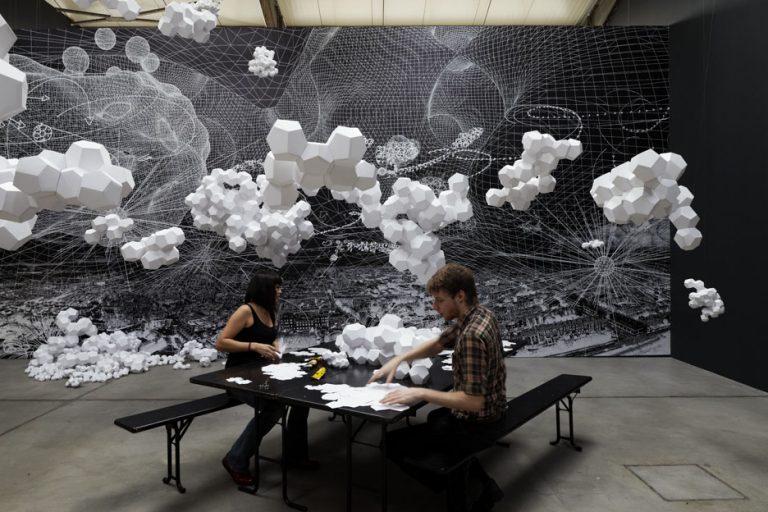
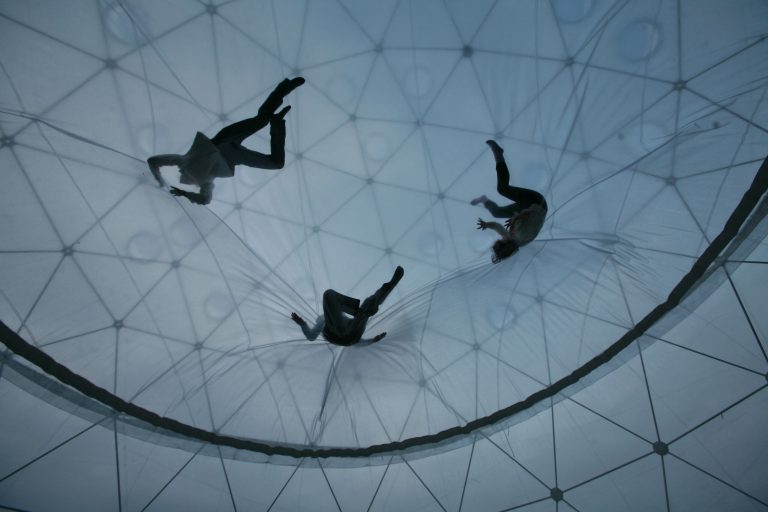
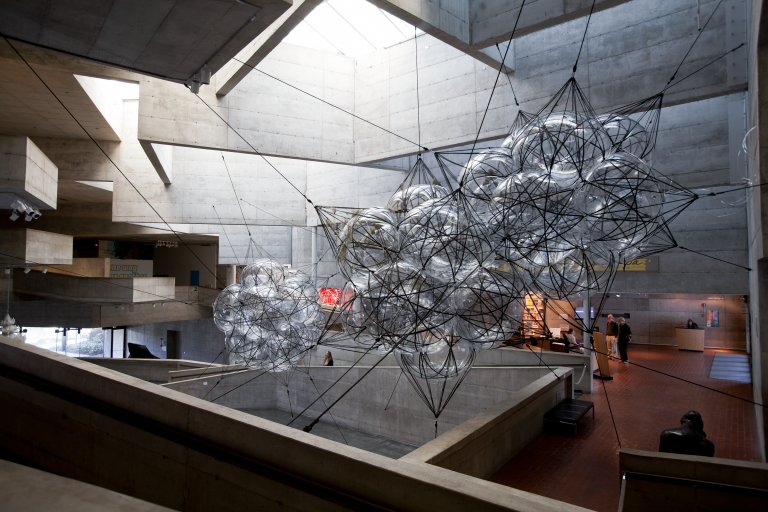
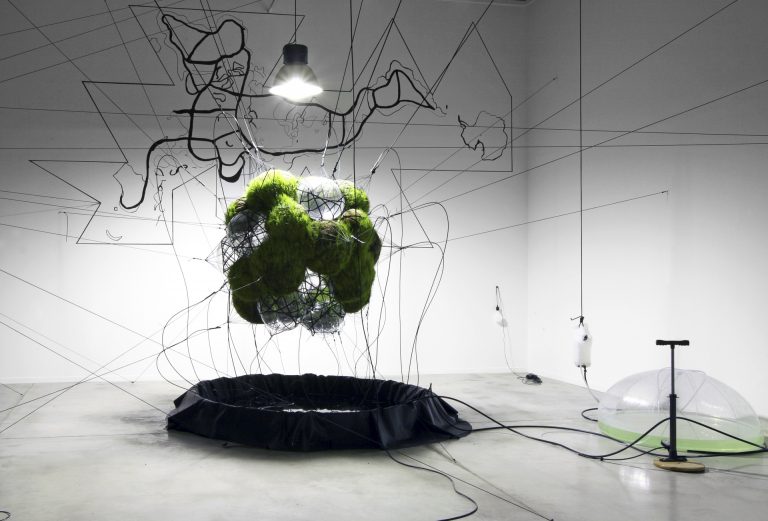
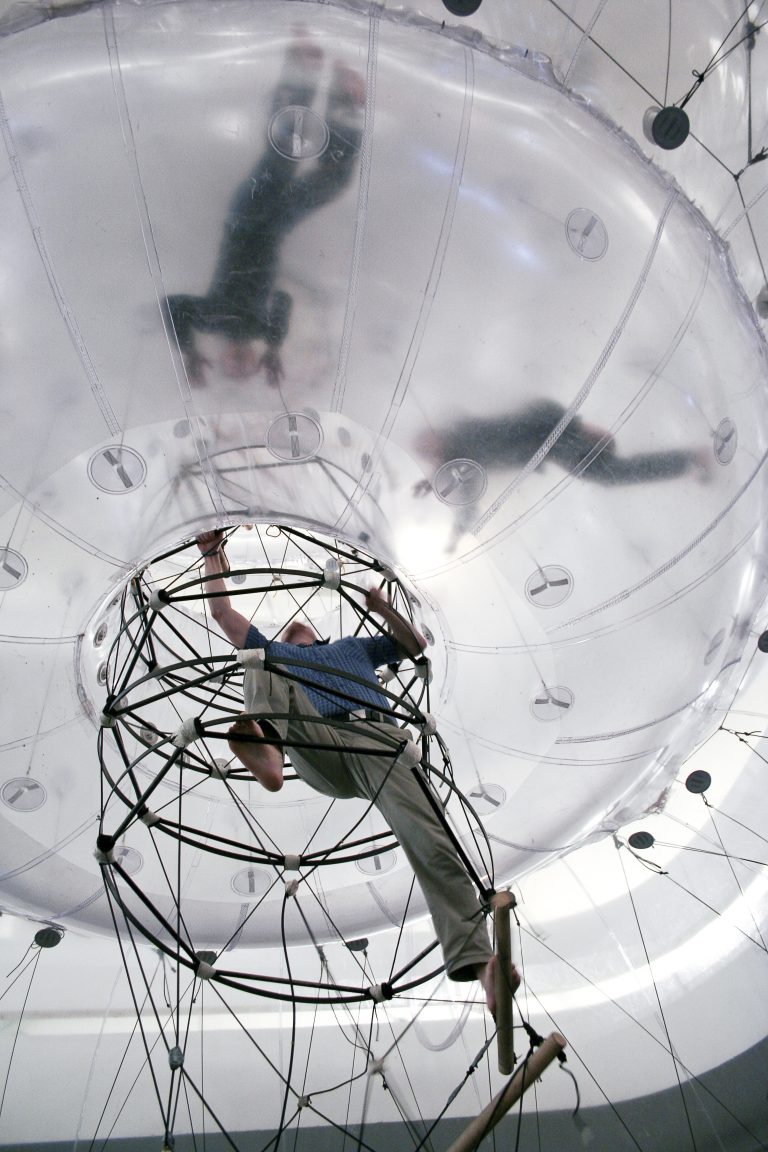
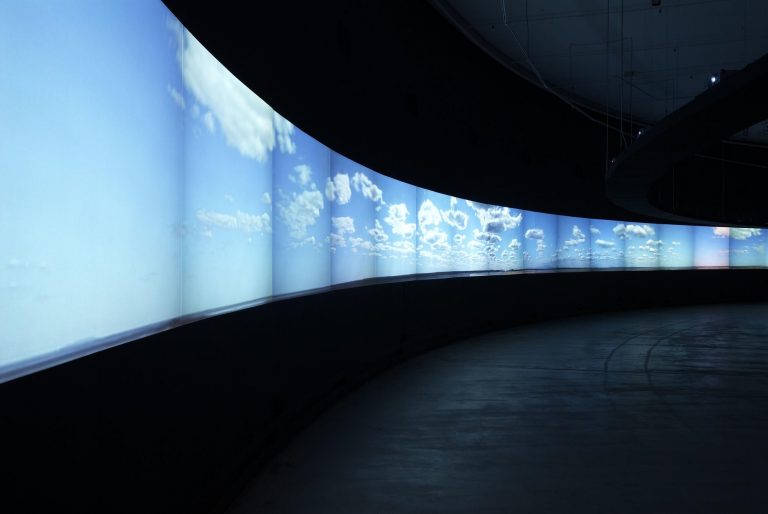
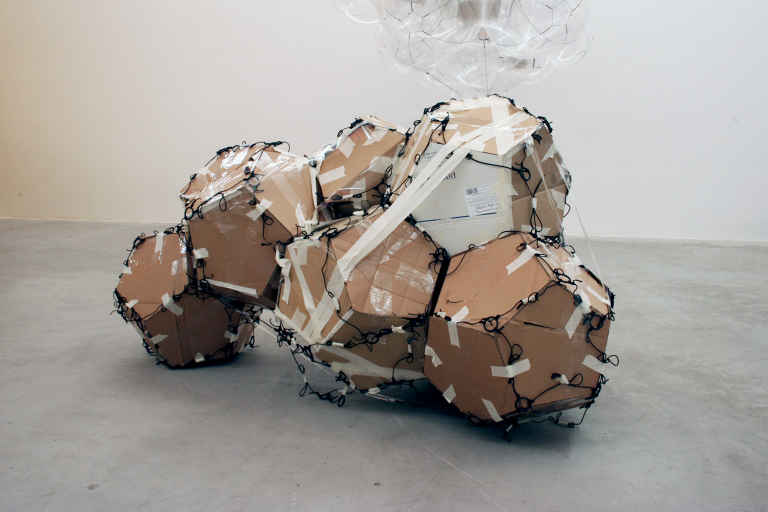
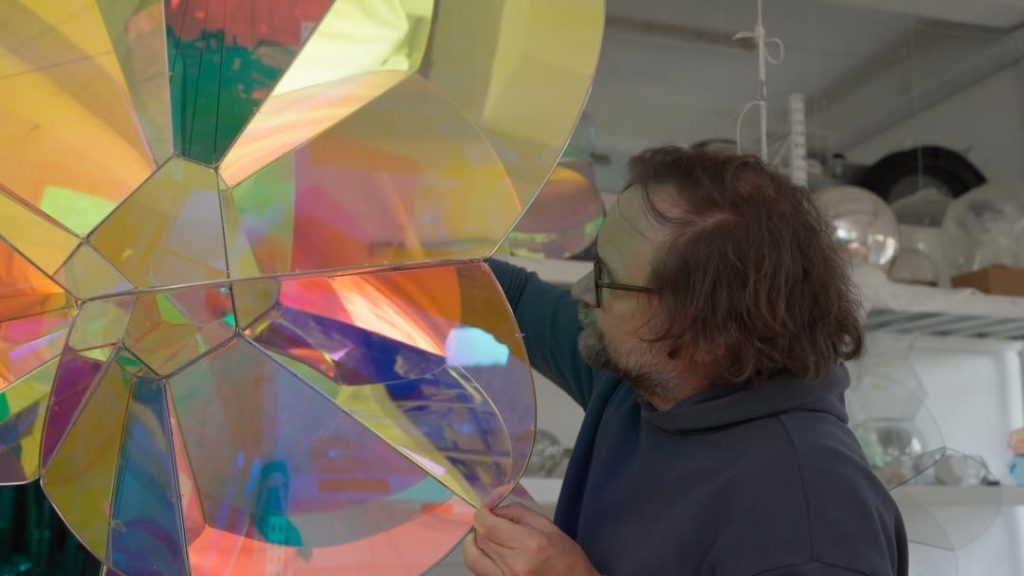
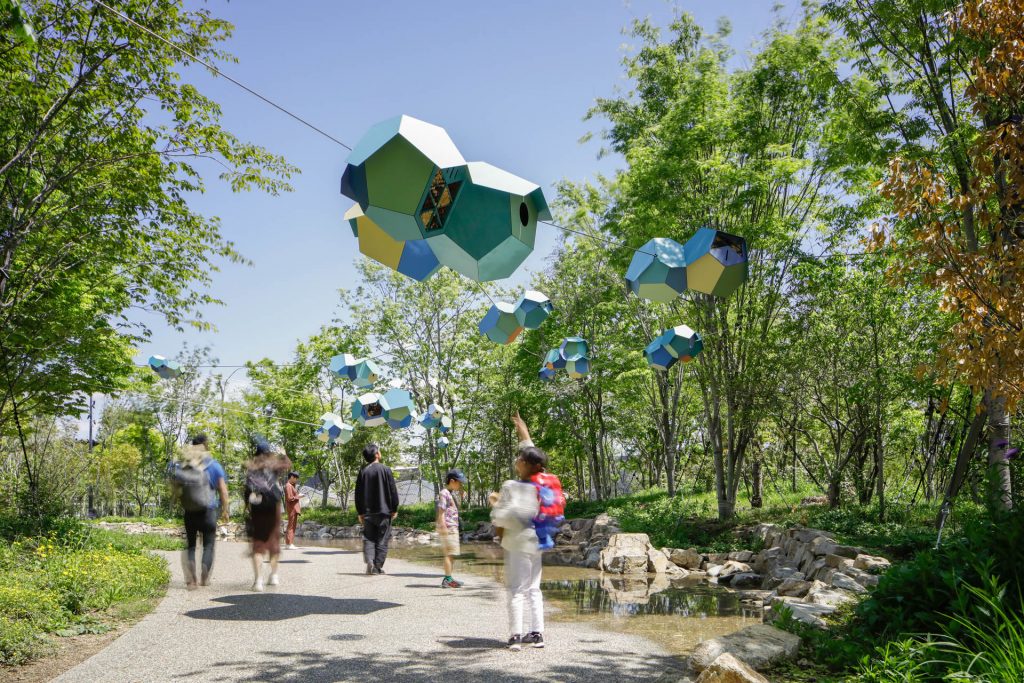
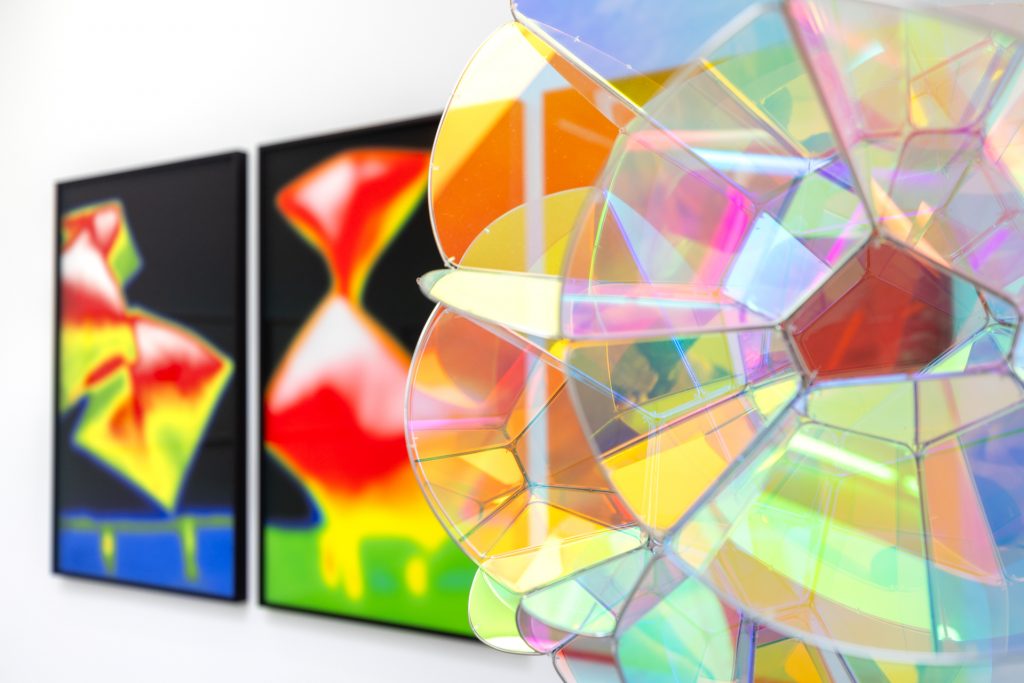
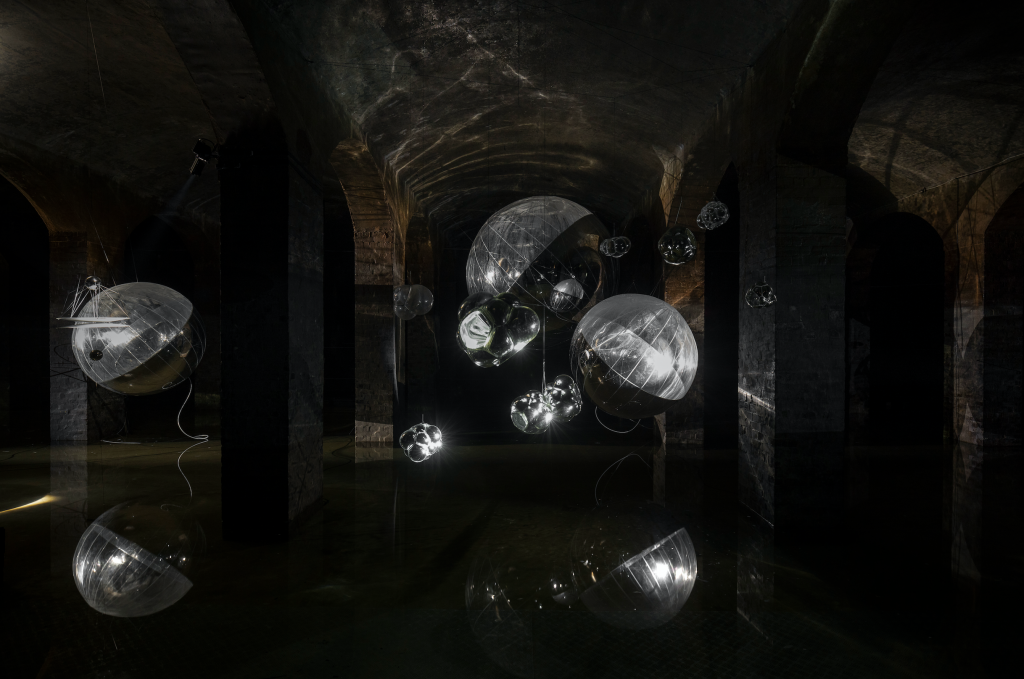
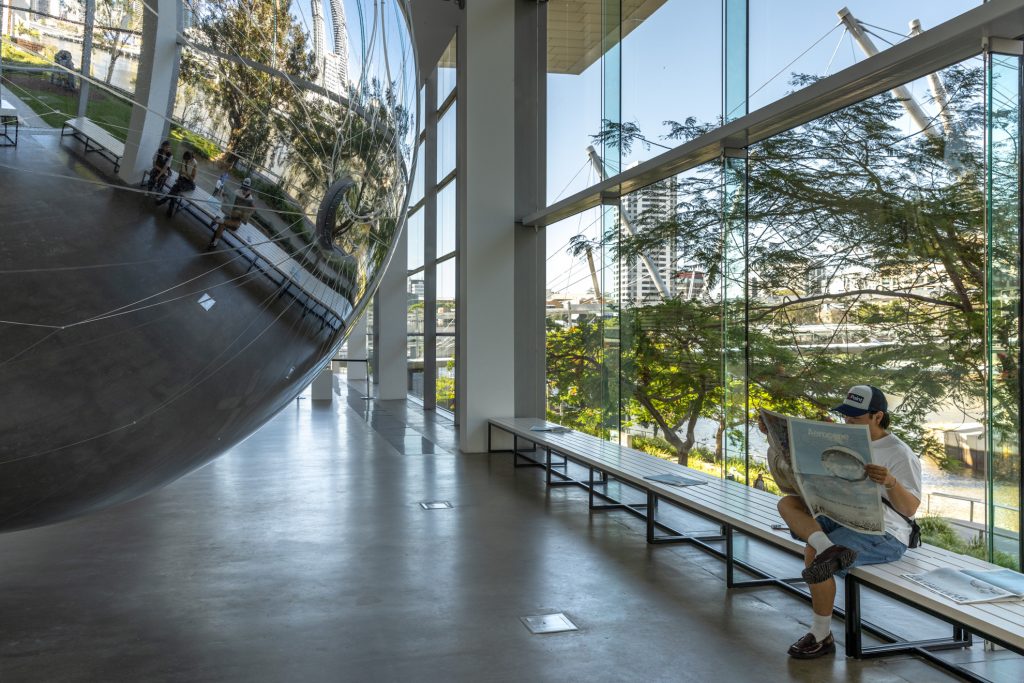
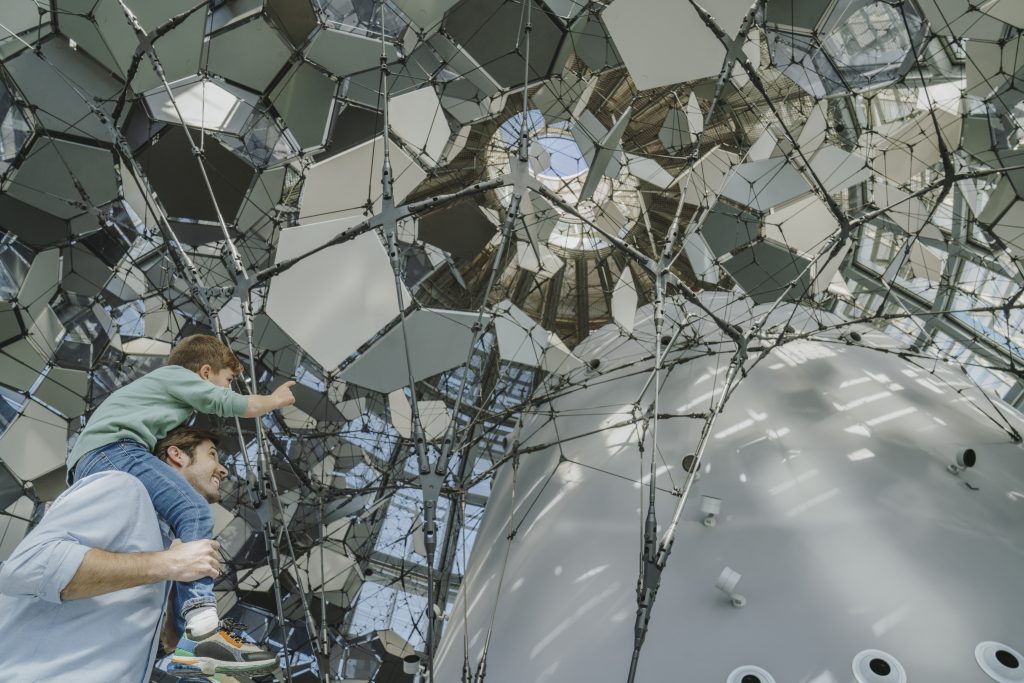
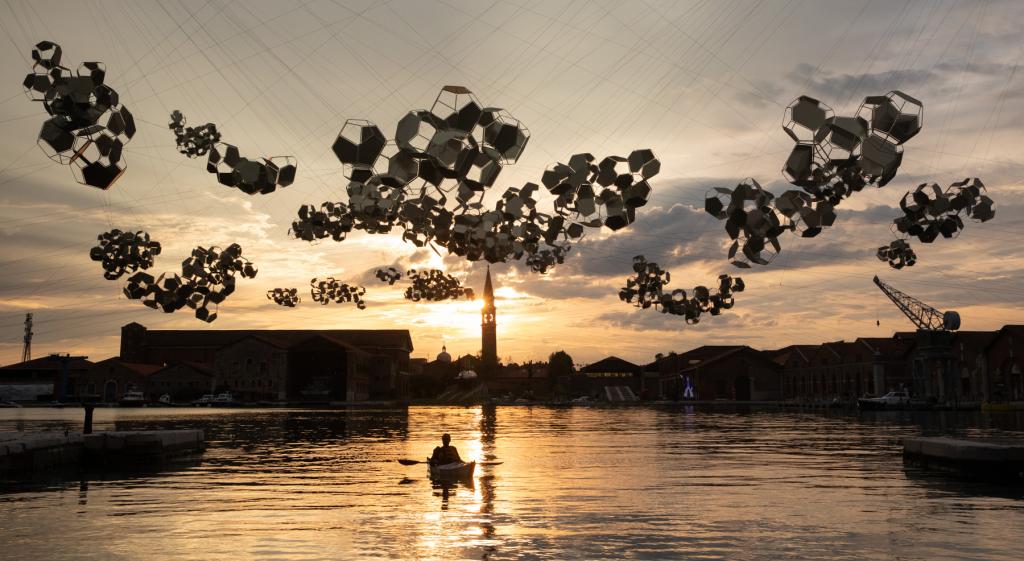
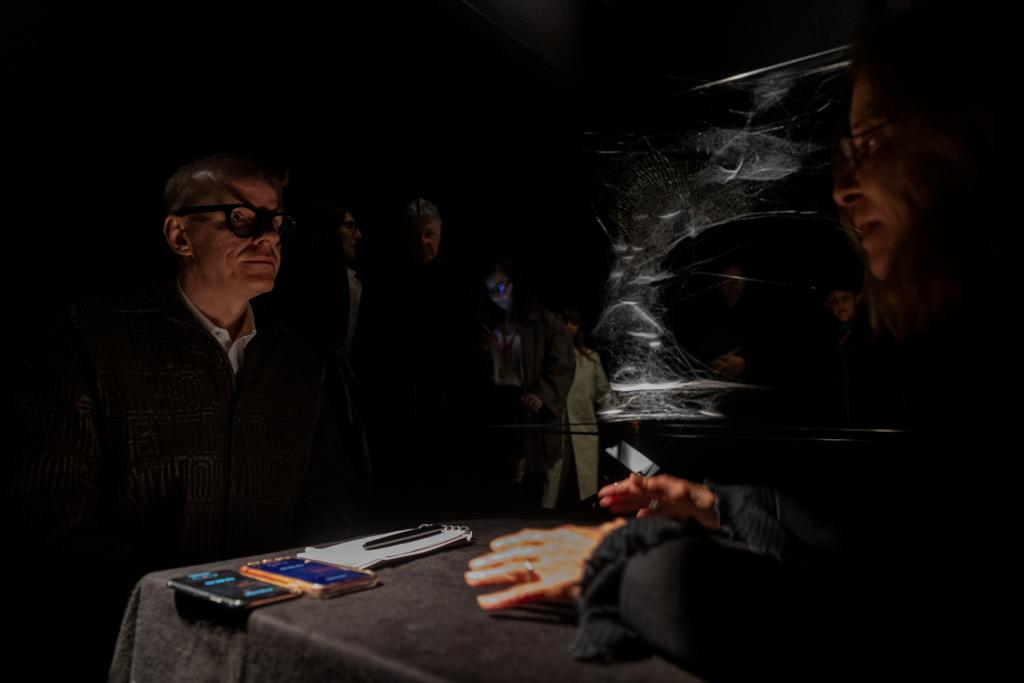
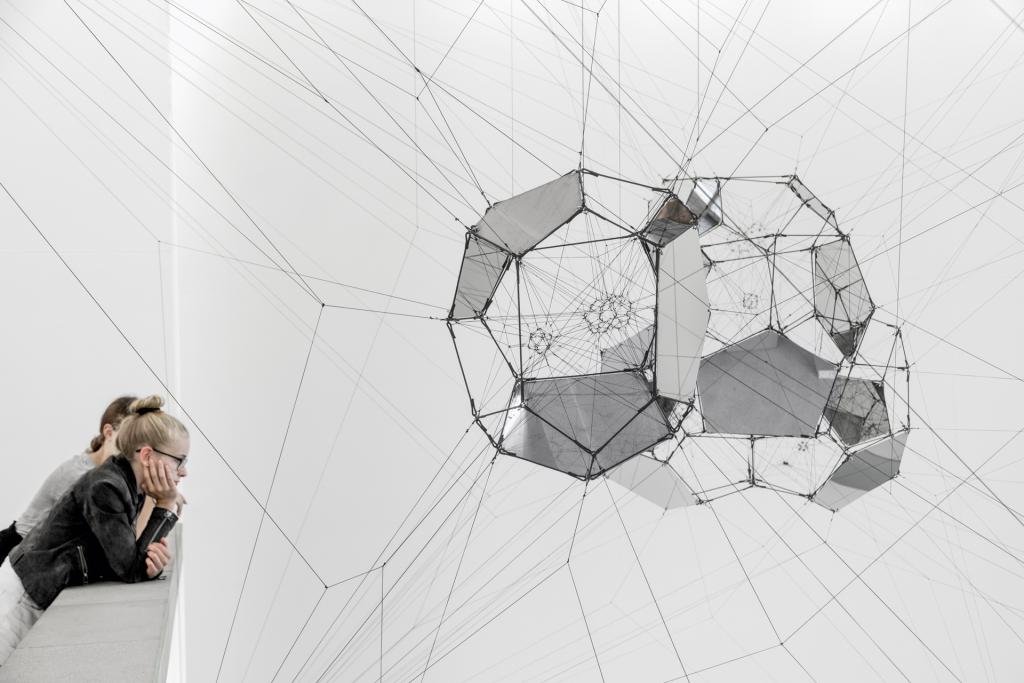
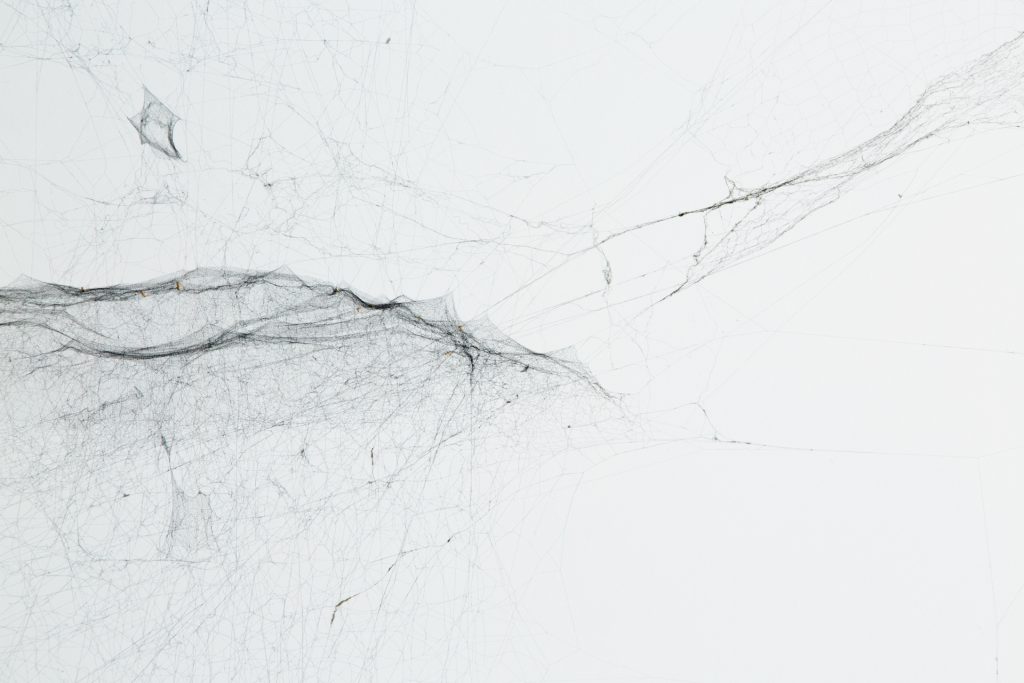
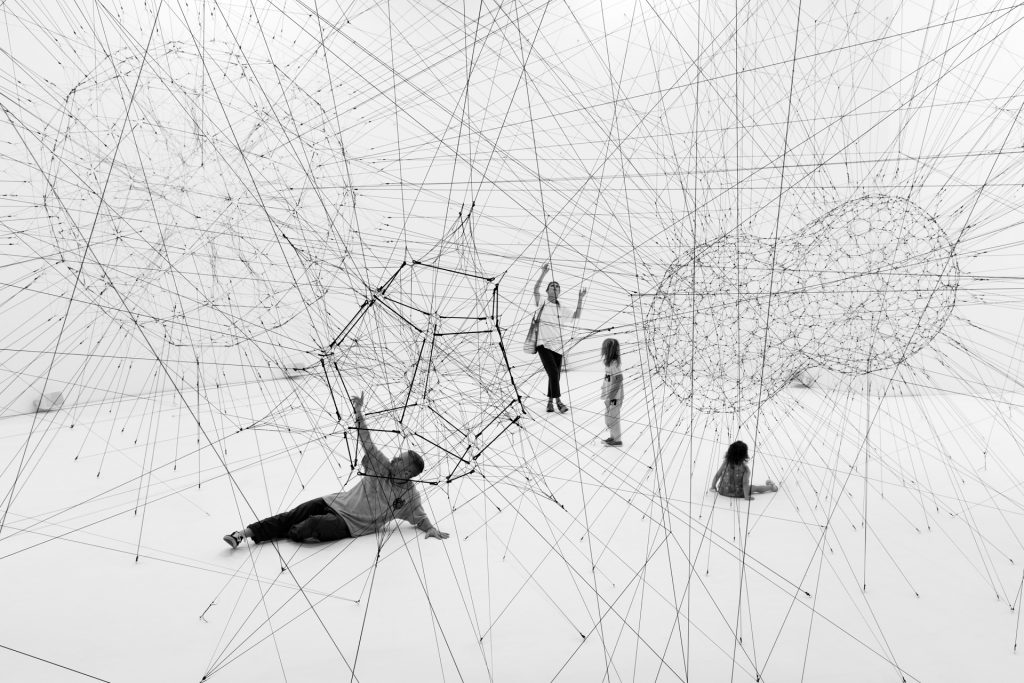
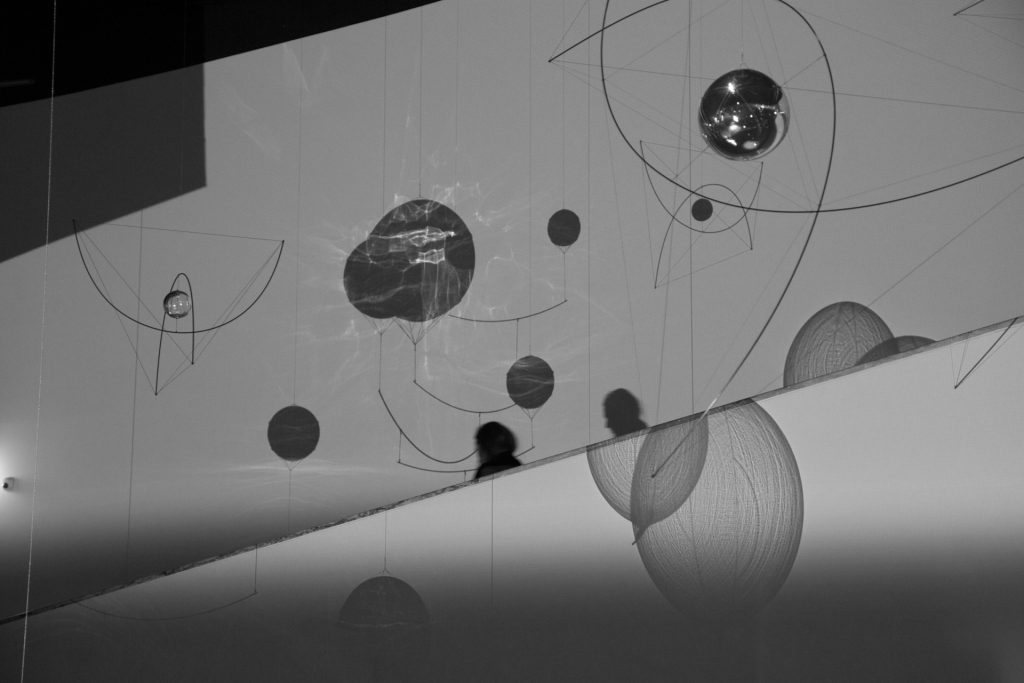
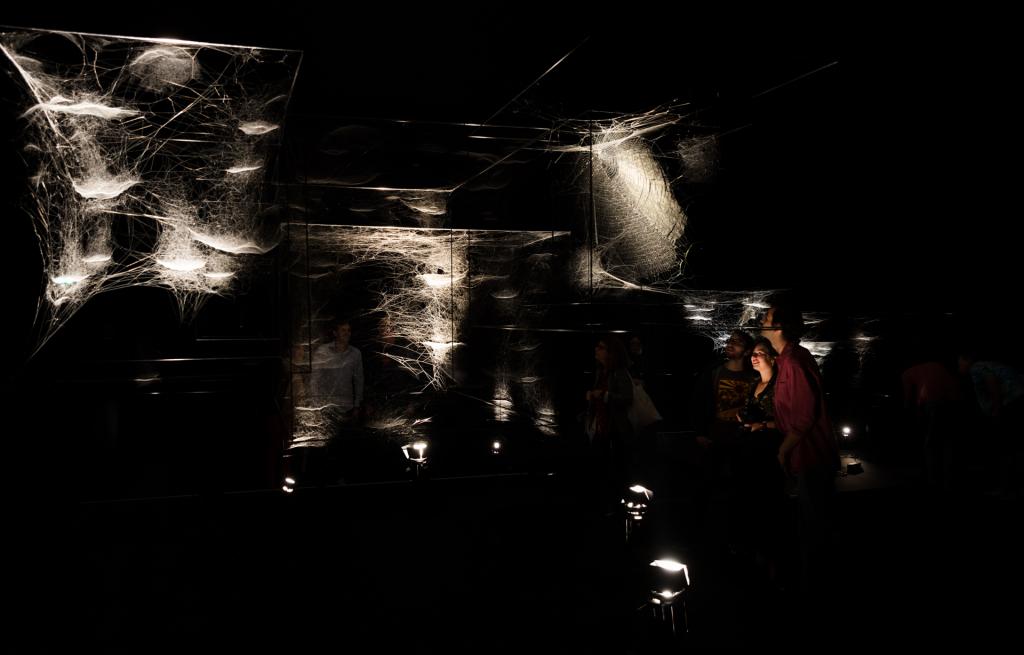
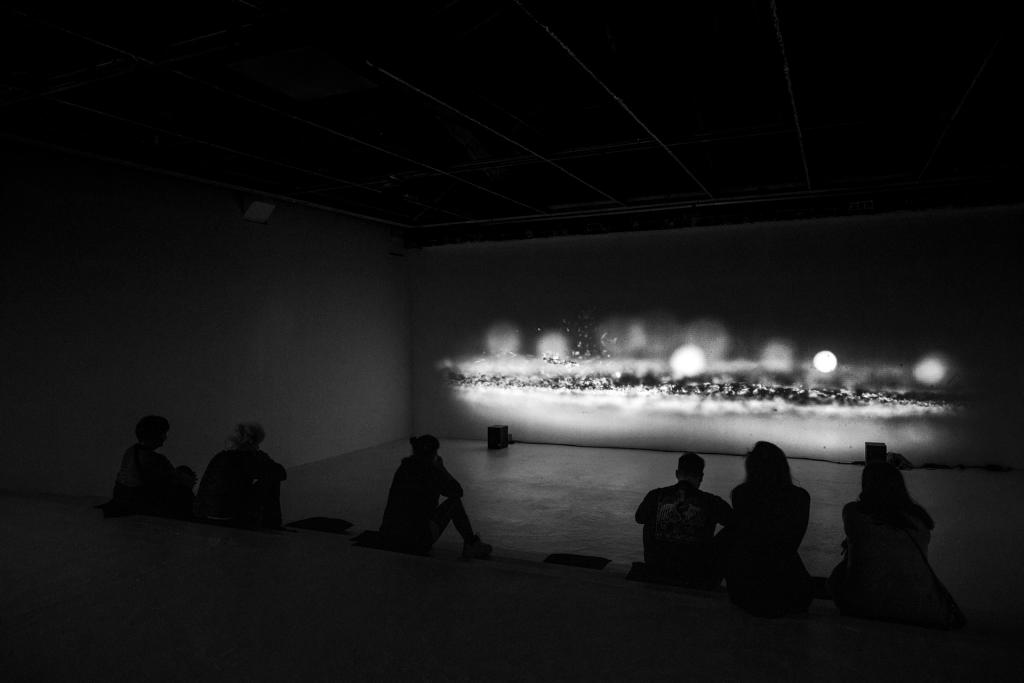
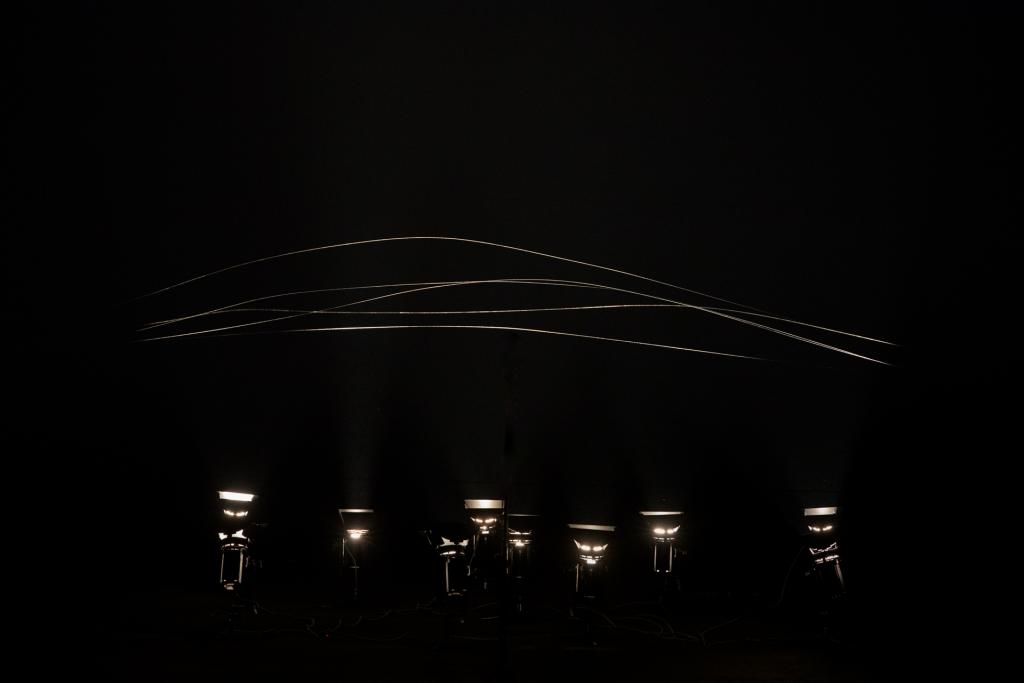
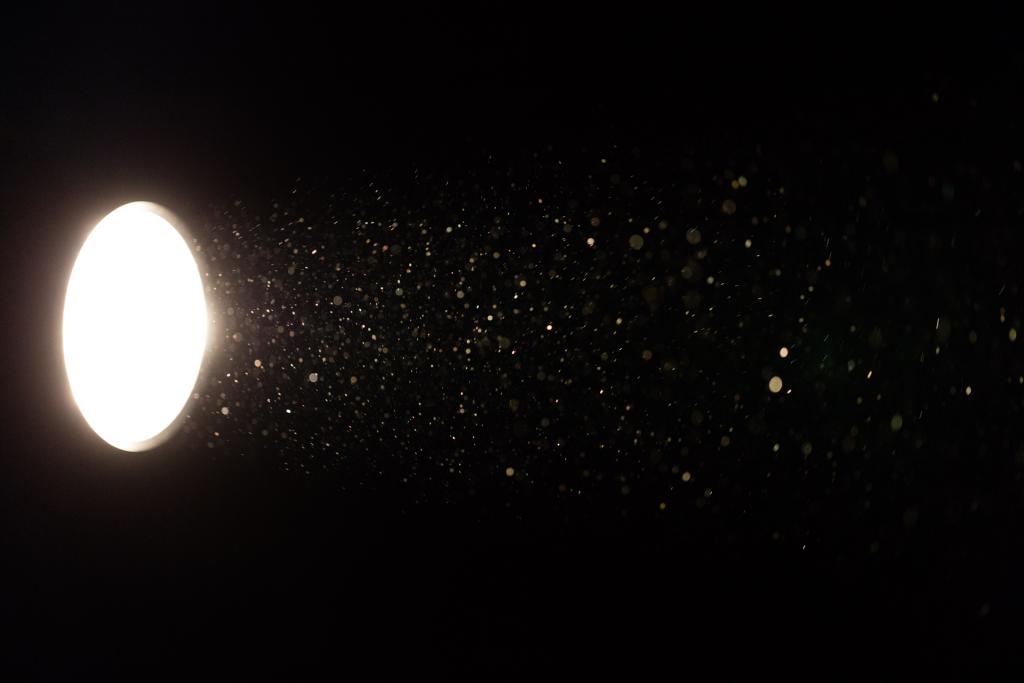
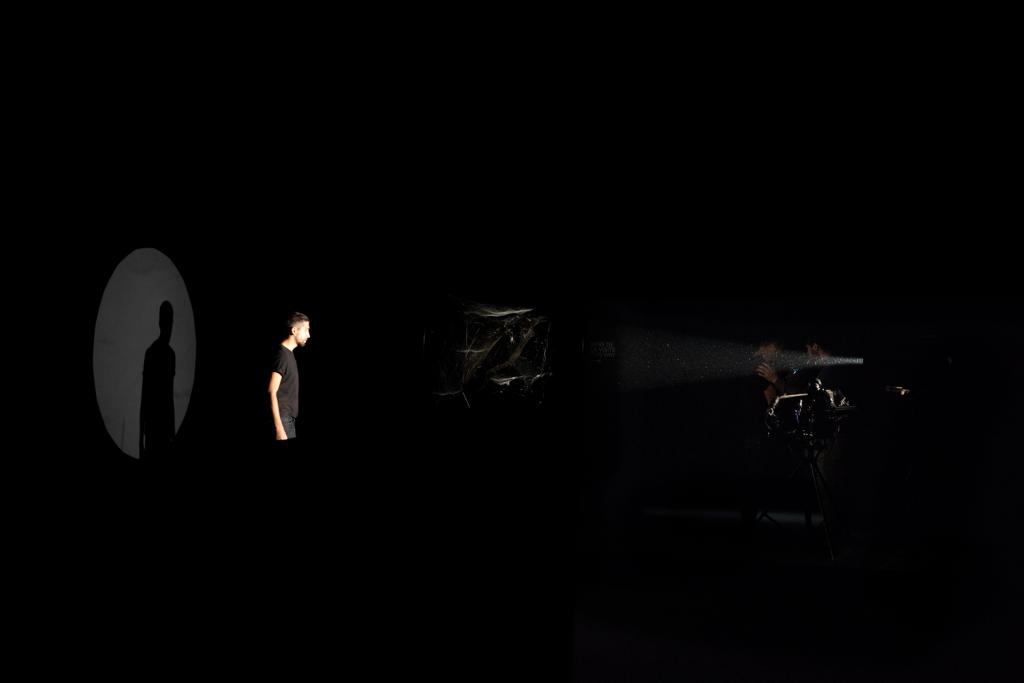
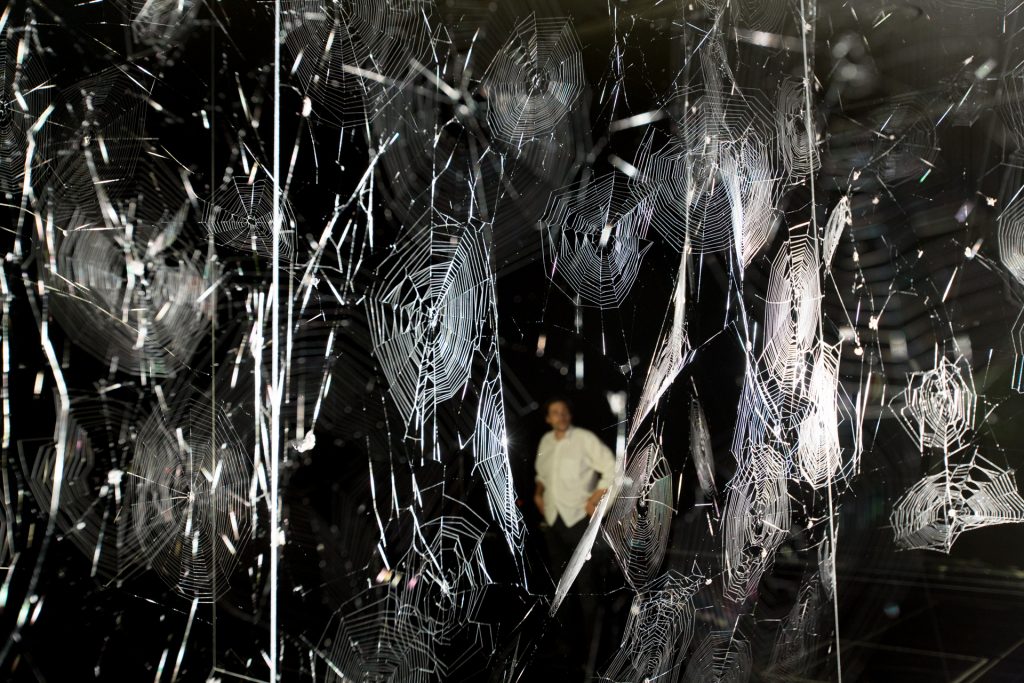
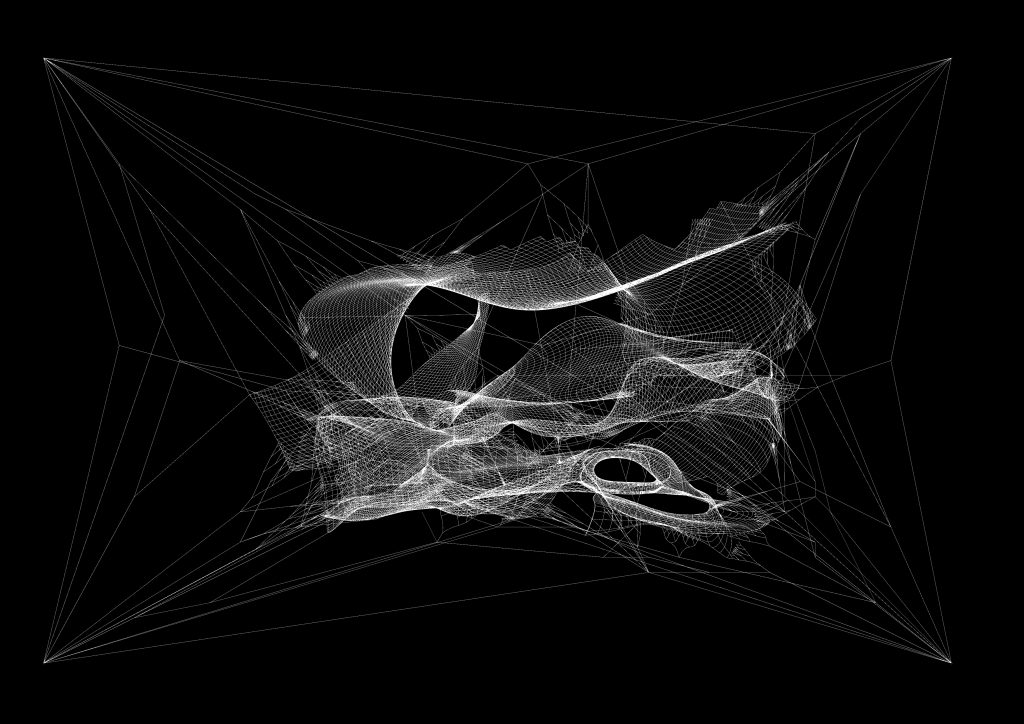
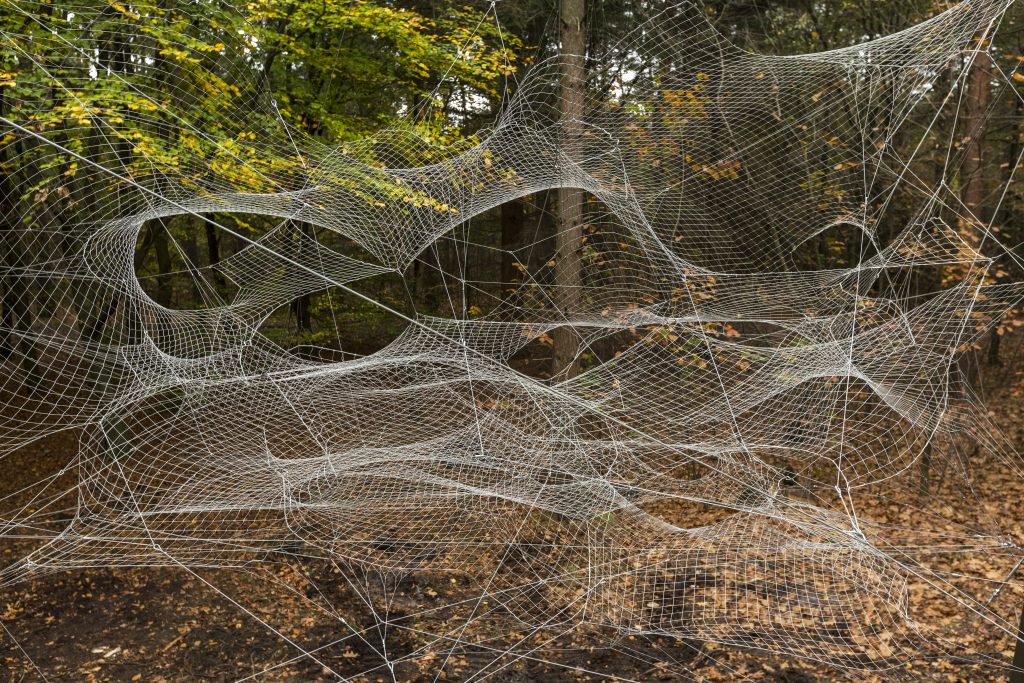
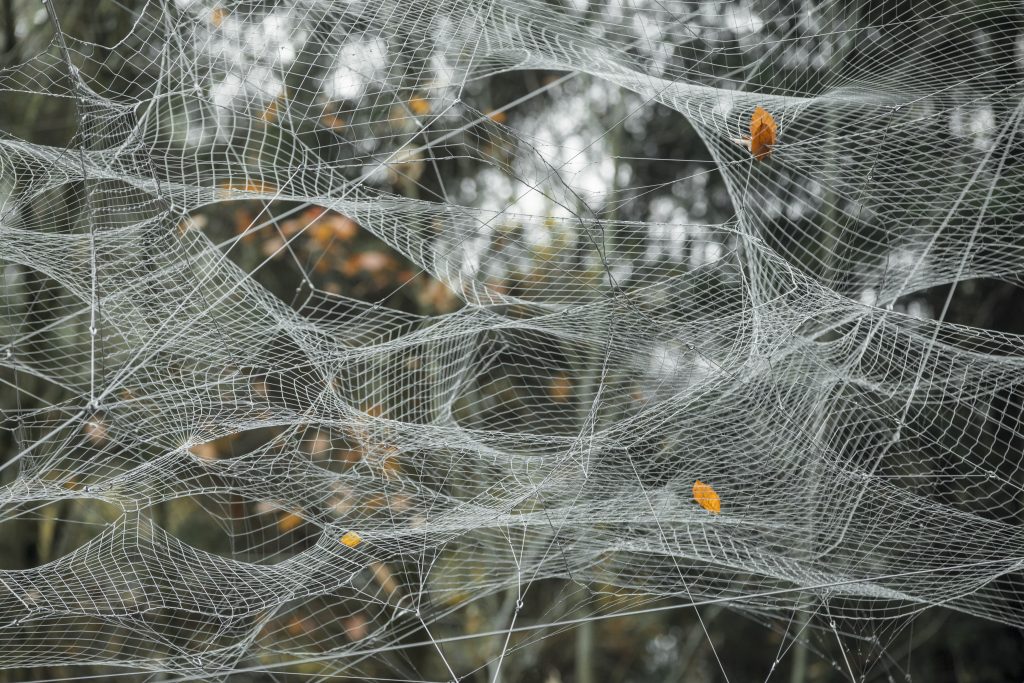
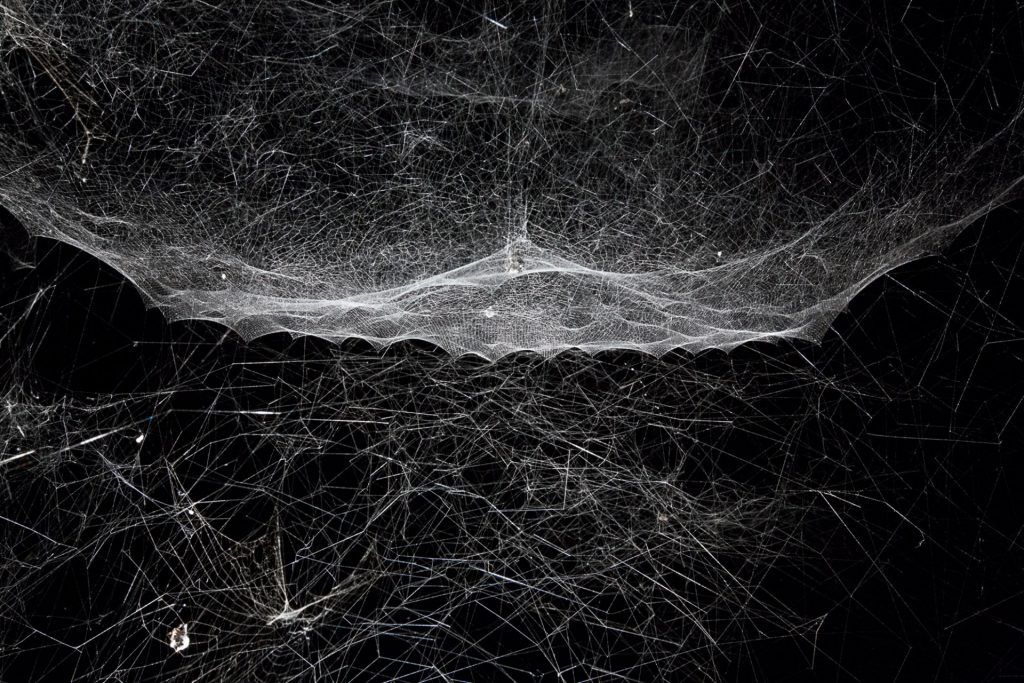
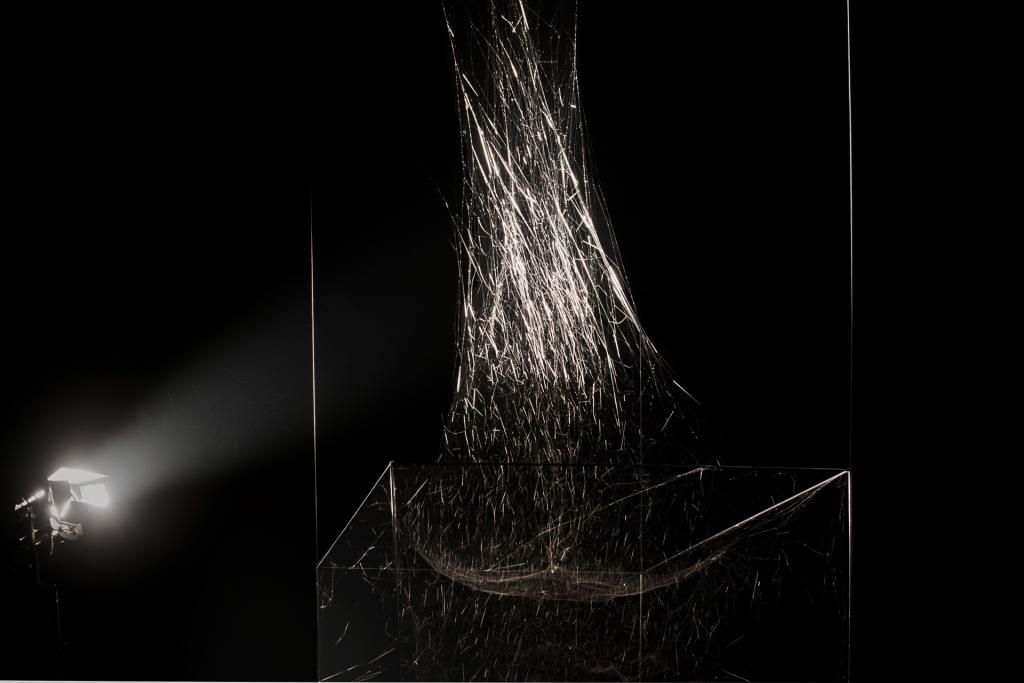
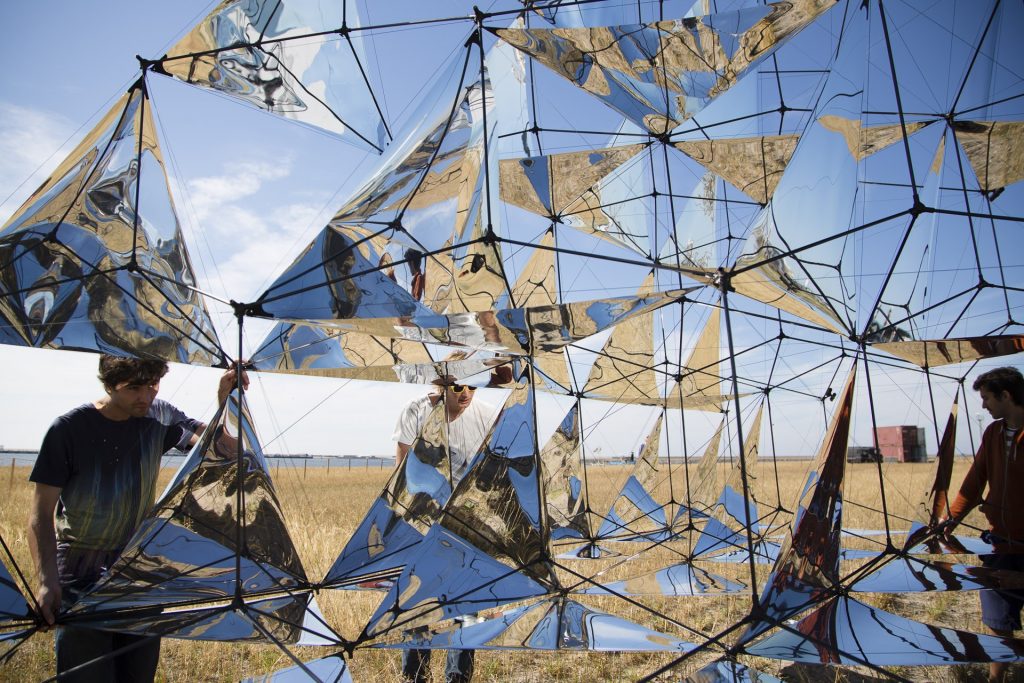
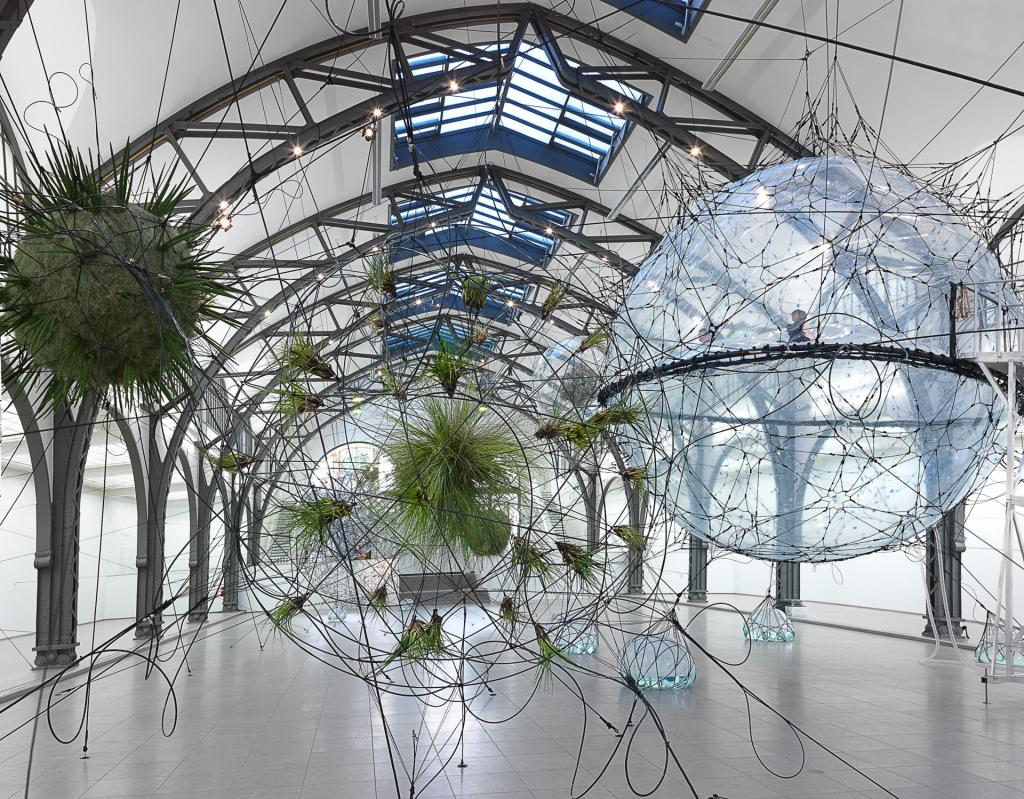
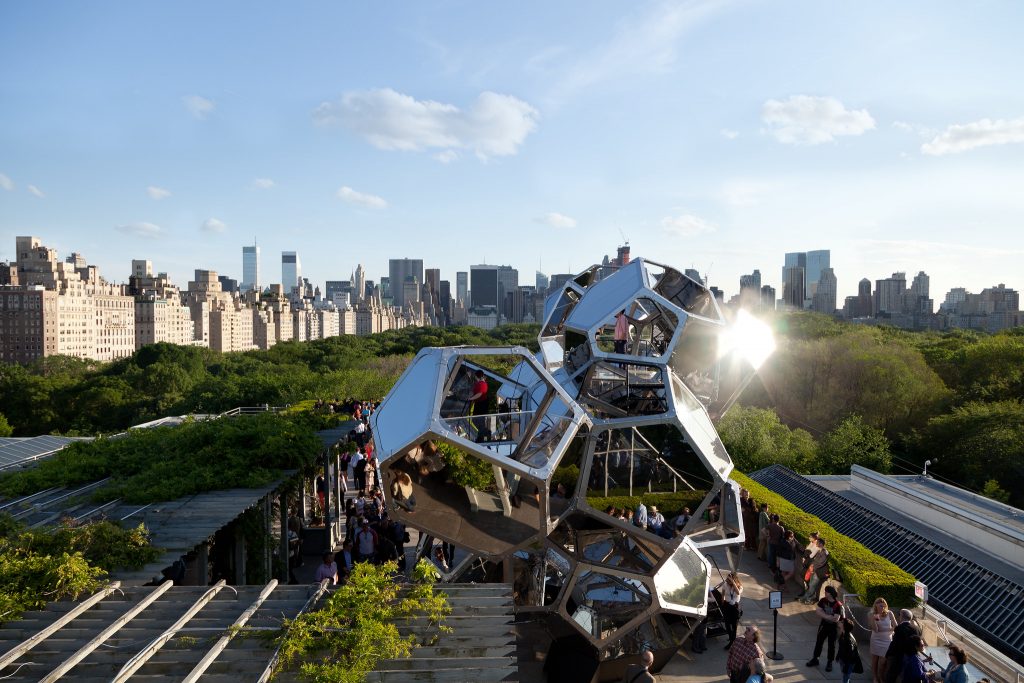
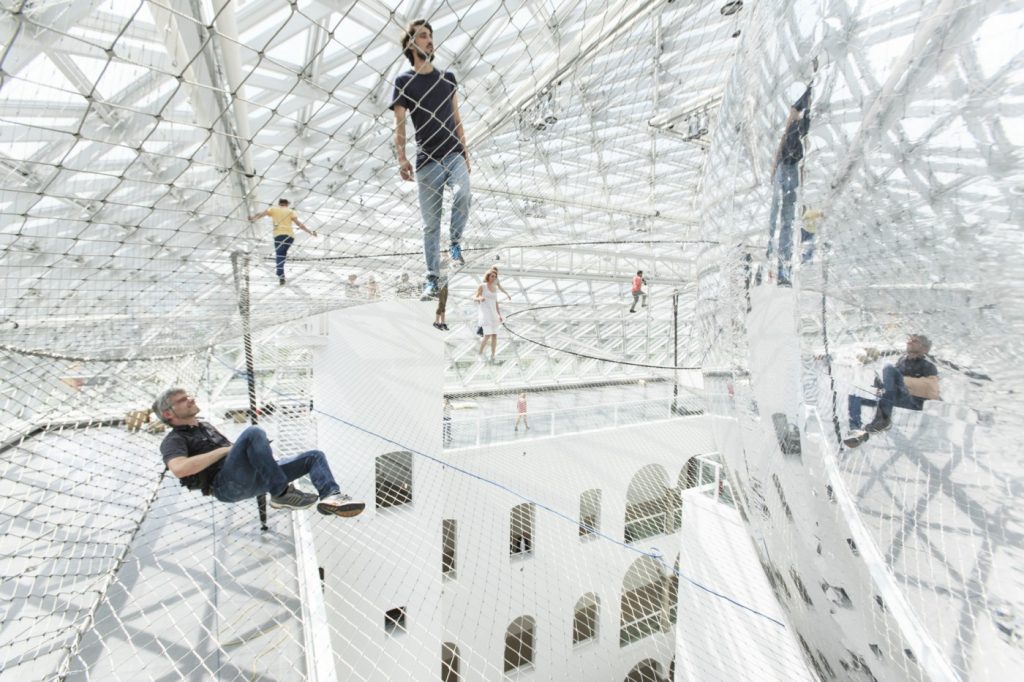
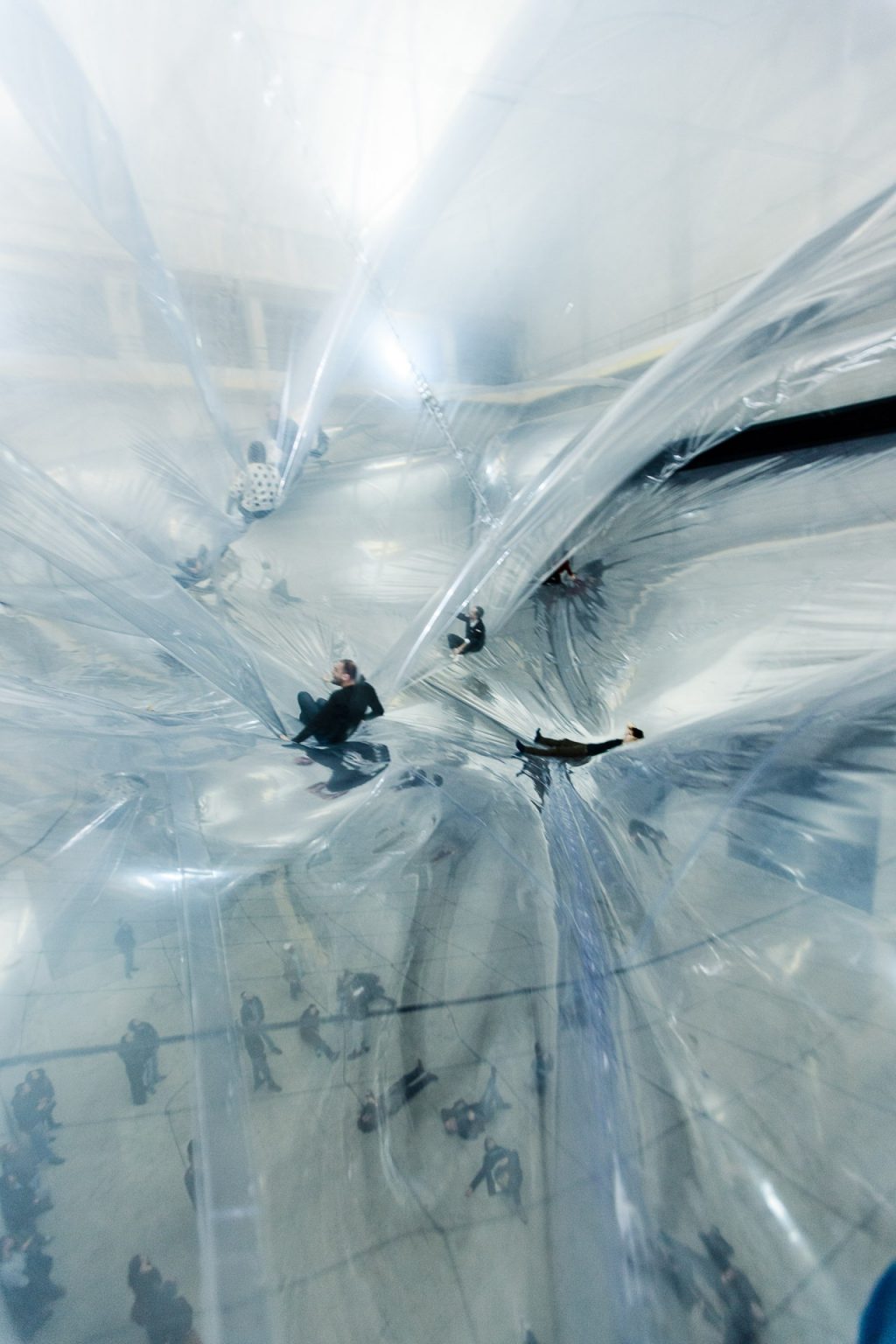
Tomás Saraceno’s first exhibition in Austria engages with the climatic and social crises that have come to the fore in the 21st Century’s Capitalocene era. Becoming Aerosolar encompasses a set of collaborations and proposals that experiment with the Sun and the air and relies on an open-source, knowledge-sharing ecology articulated with diverse people and institutions worldwide. It invites us to think of new ways to grasp the circulation of energy and resources, and promotes a thermodynamic imaginary, actively reframing the material ethics and politics of our contemporary modes of moving, dwelling, and being together, here on Earth.
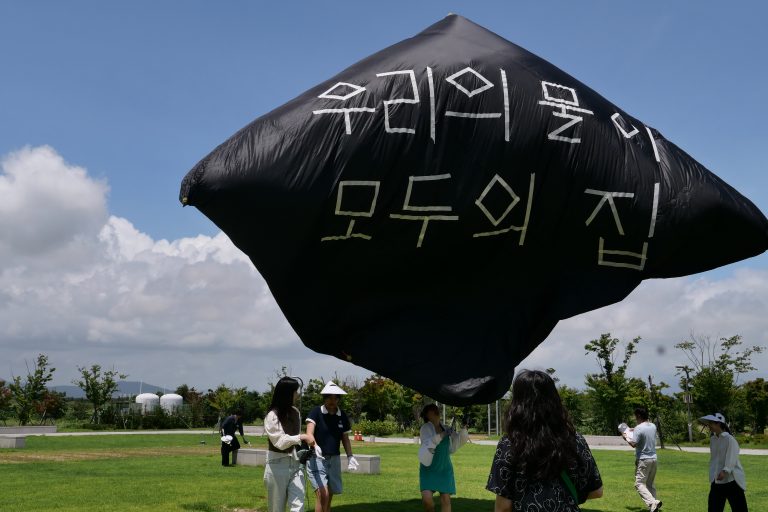
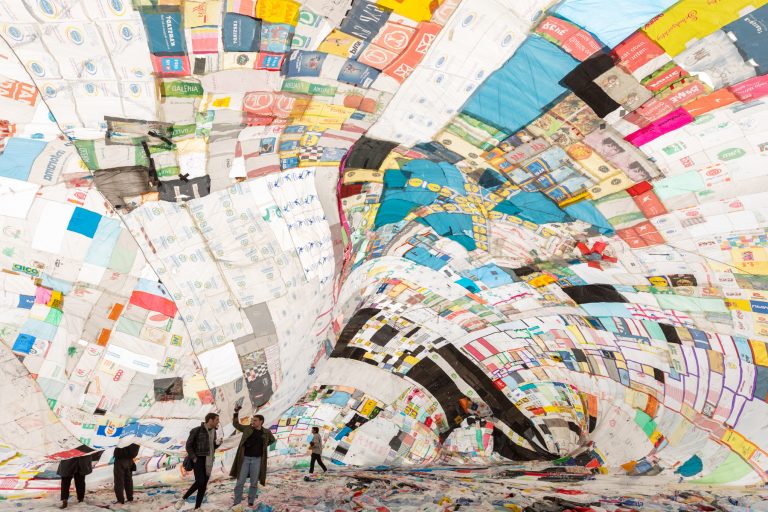
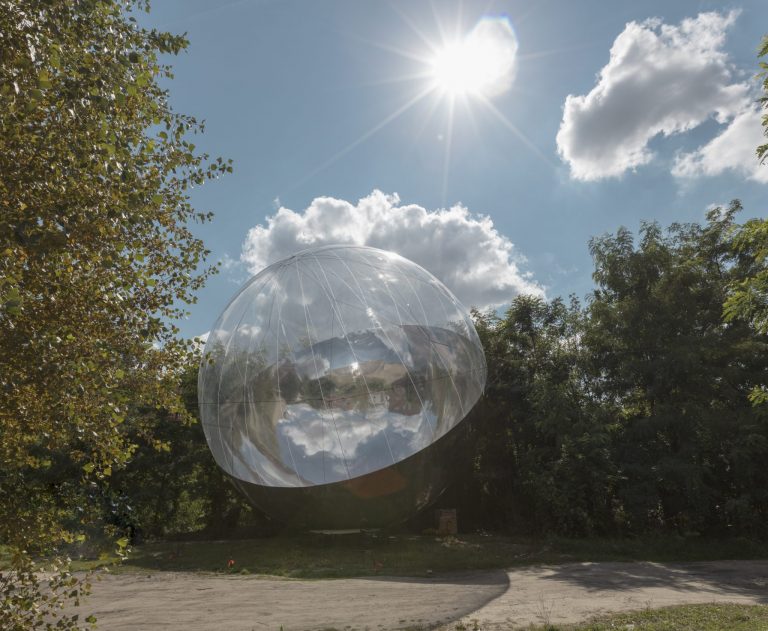
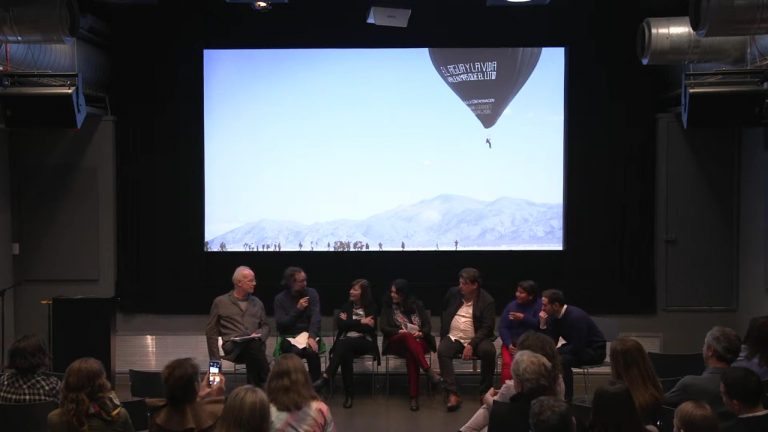
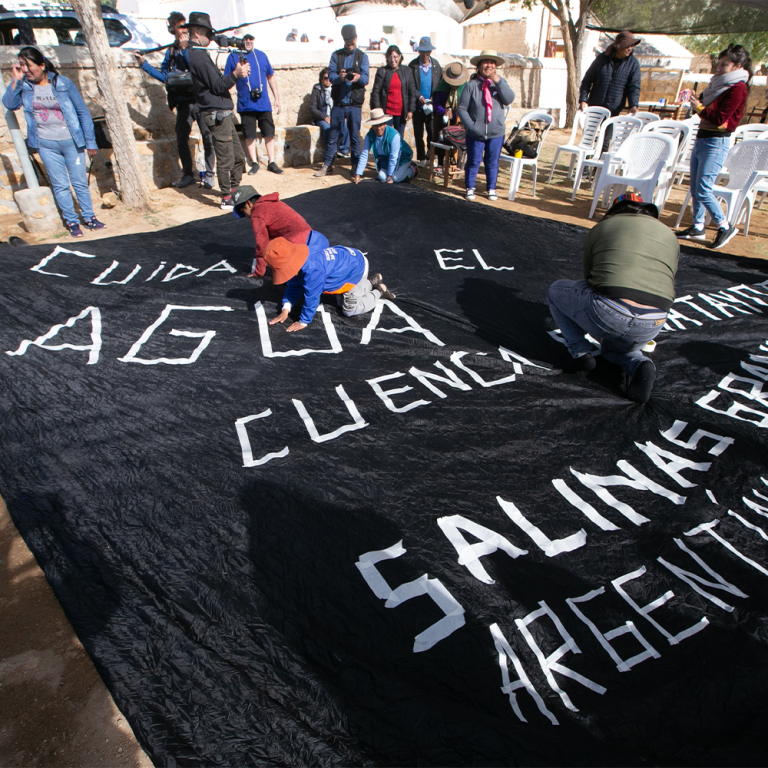
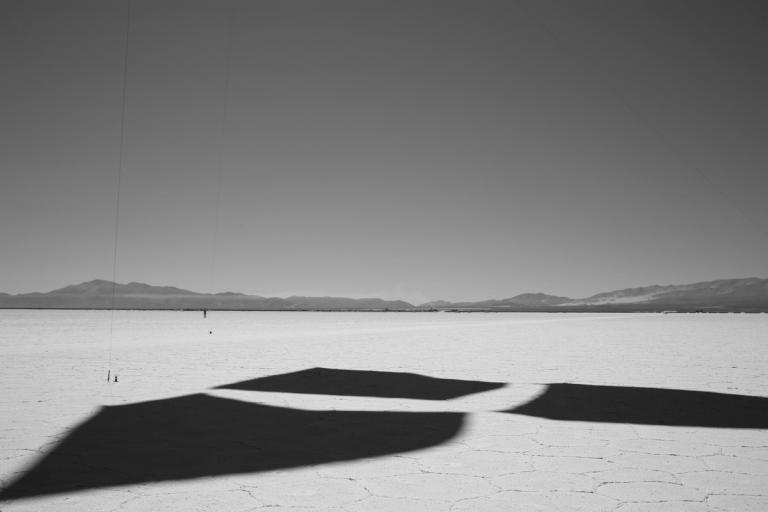
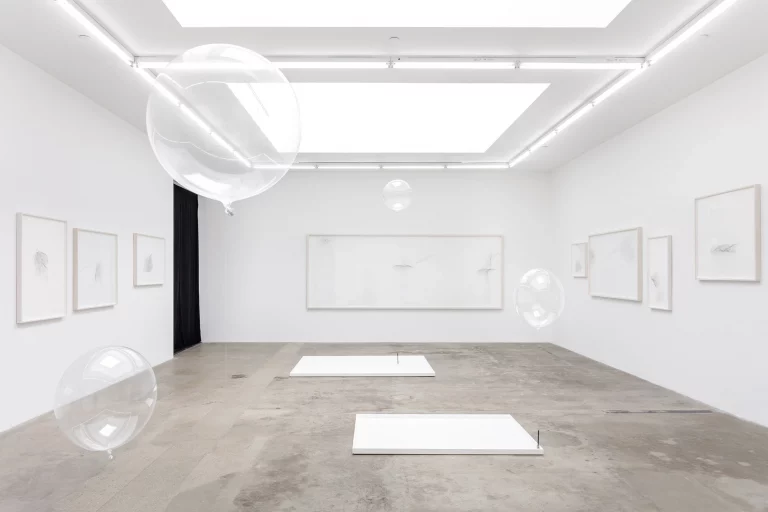
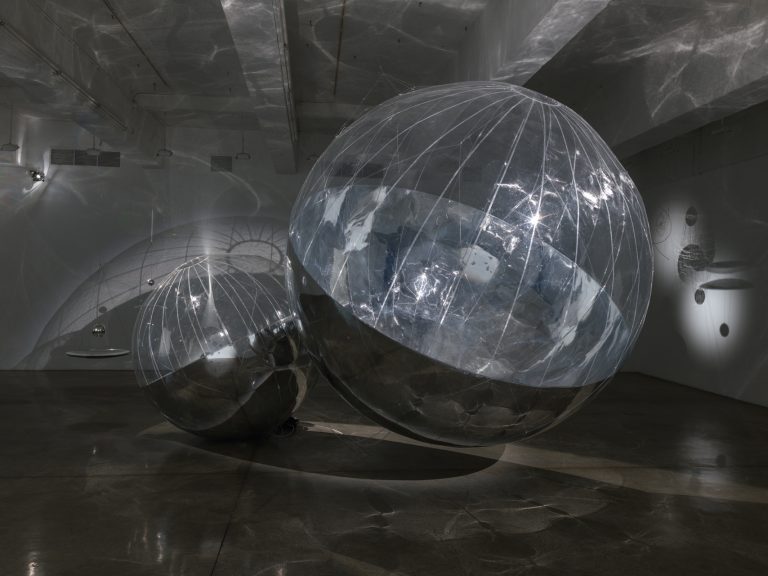
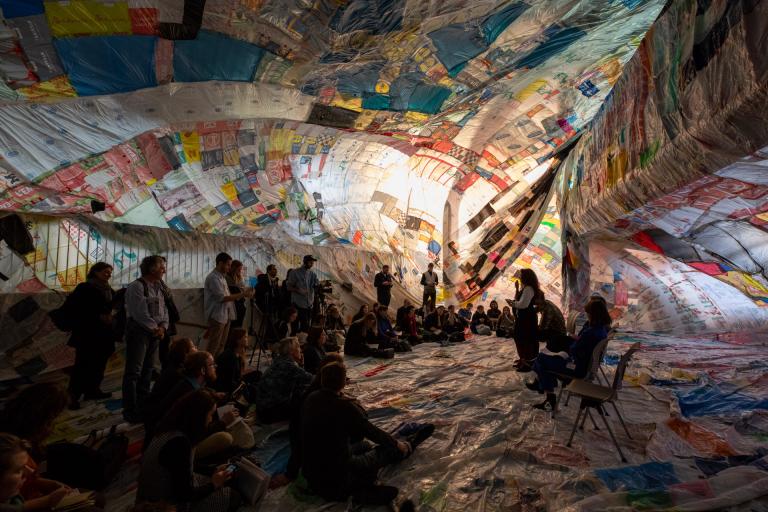
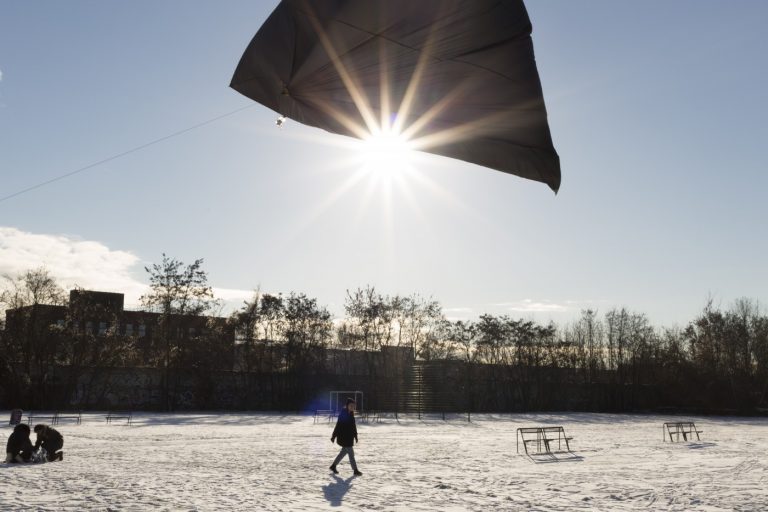
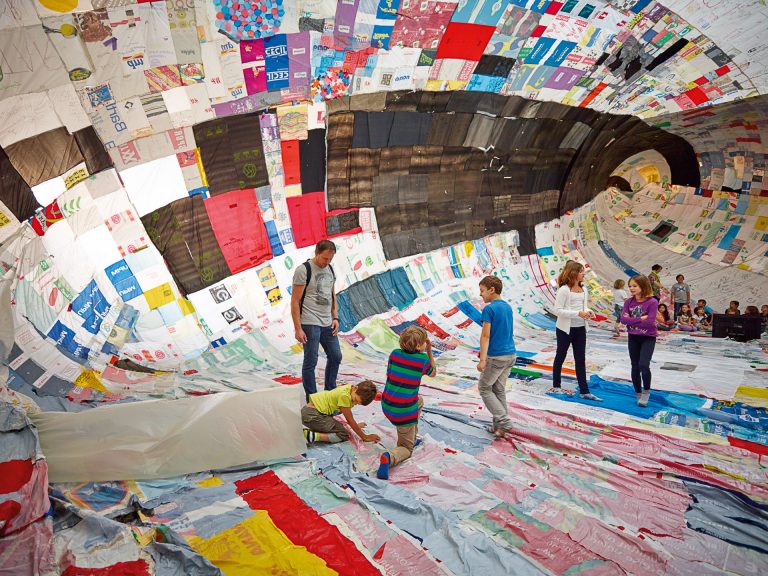
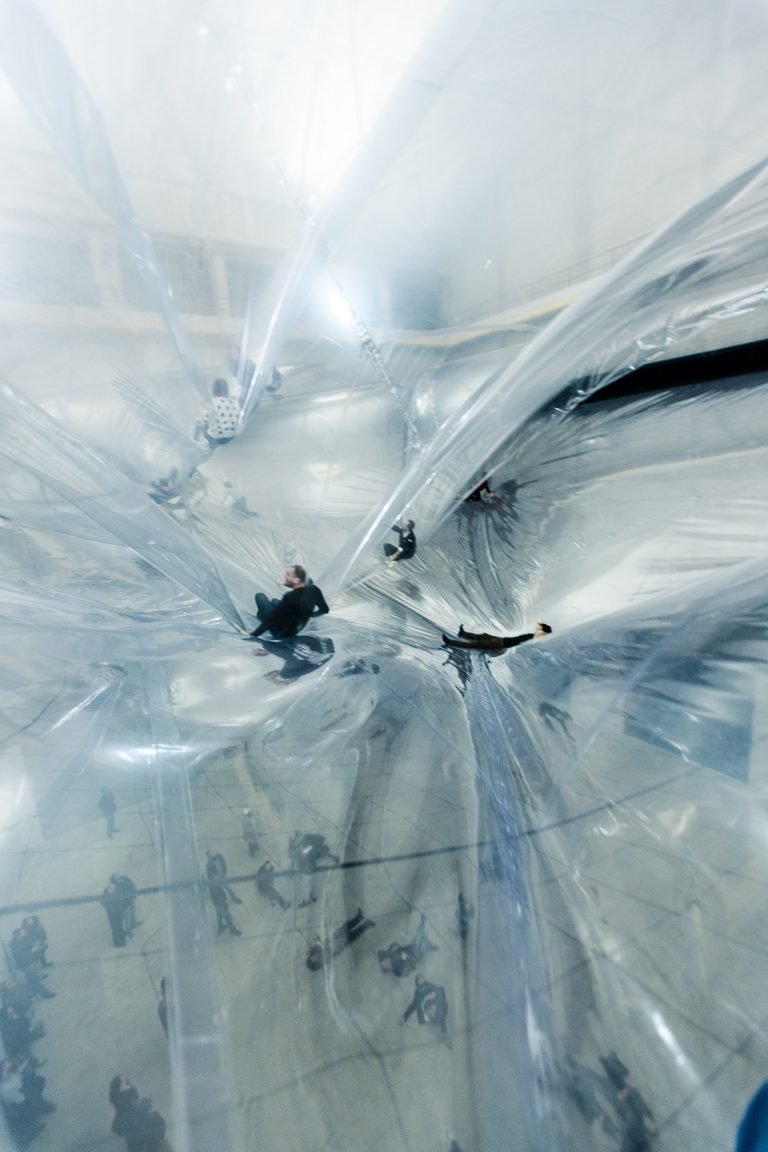
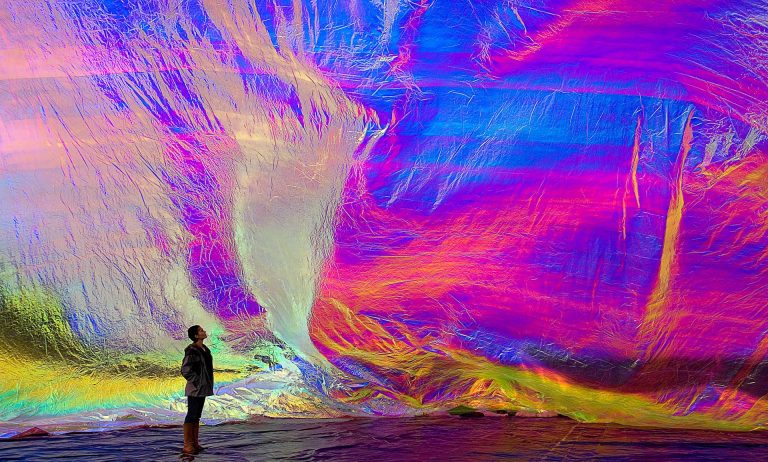
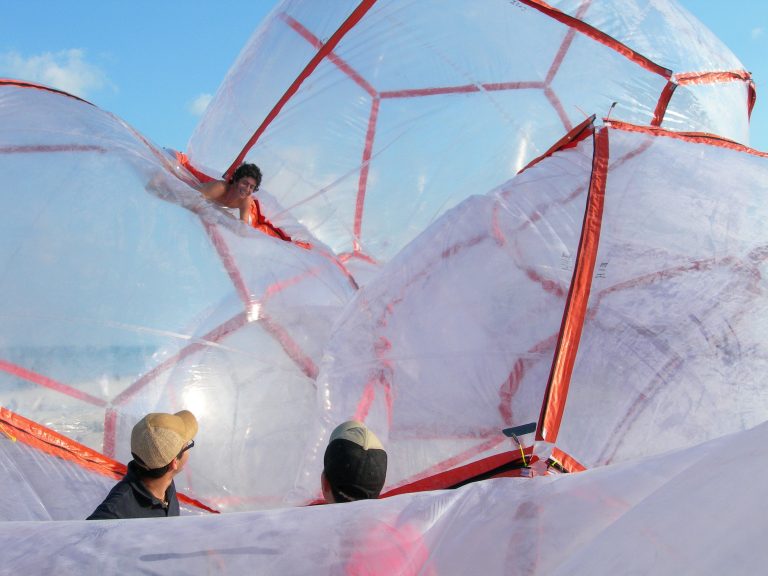
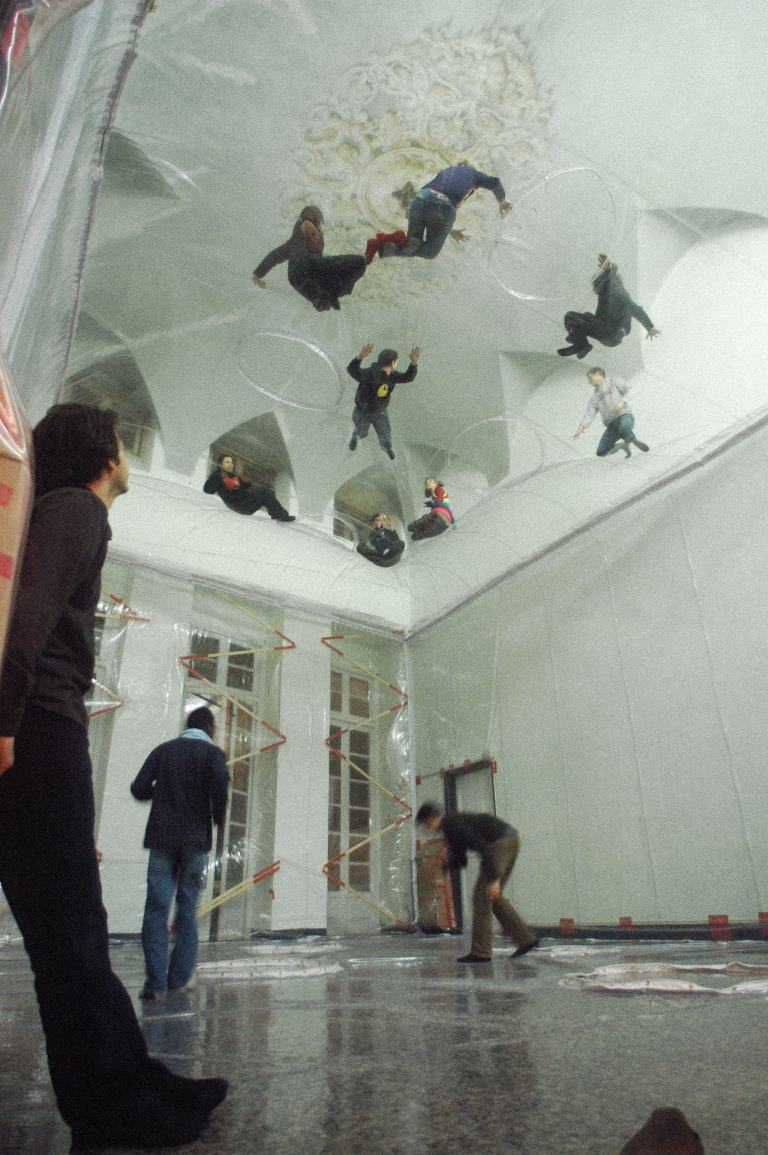
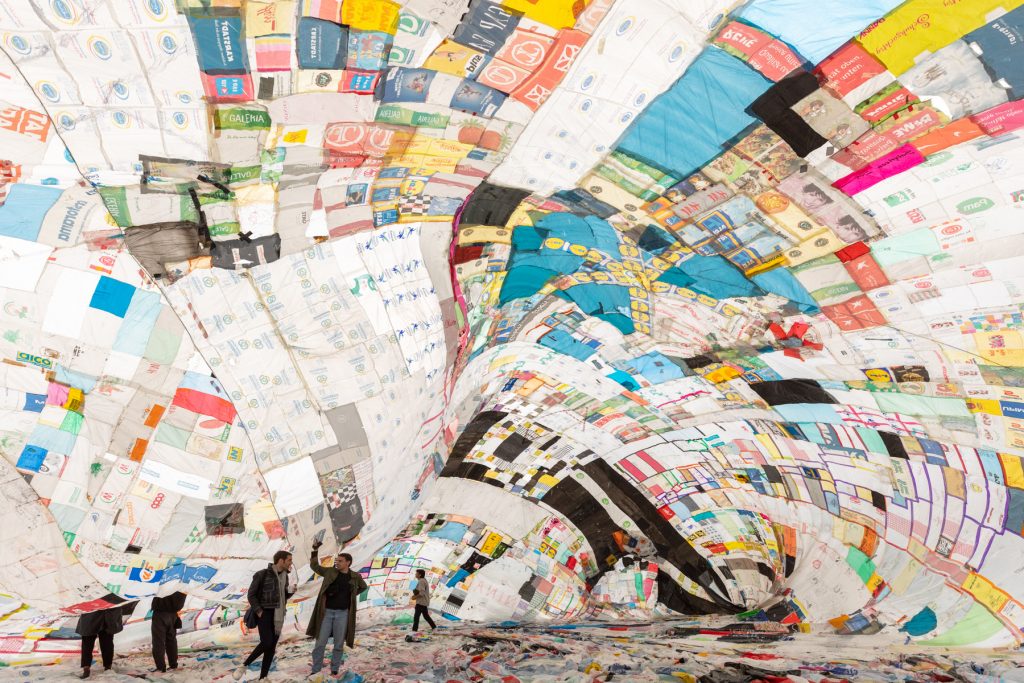
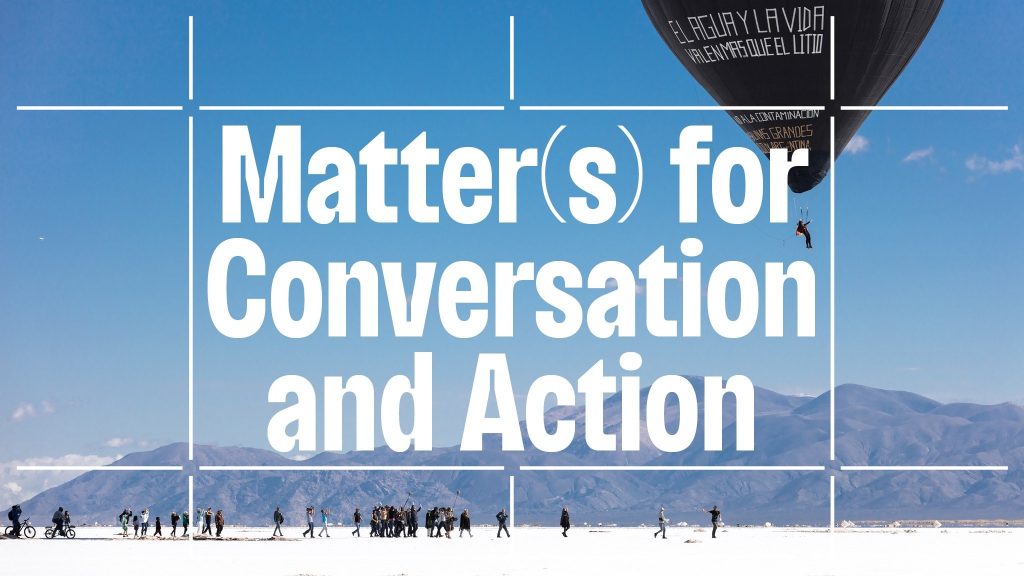
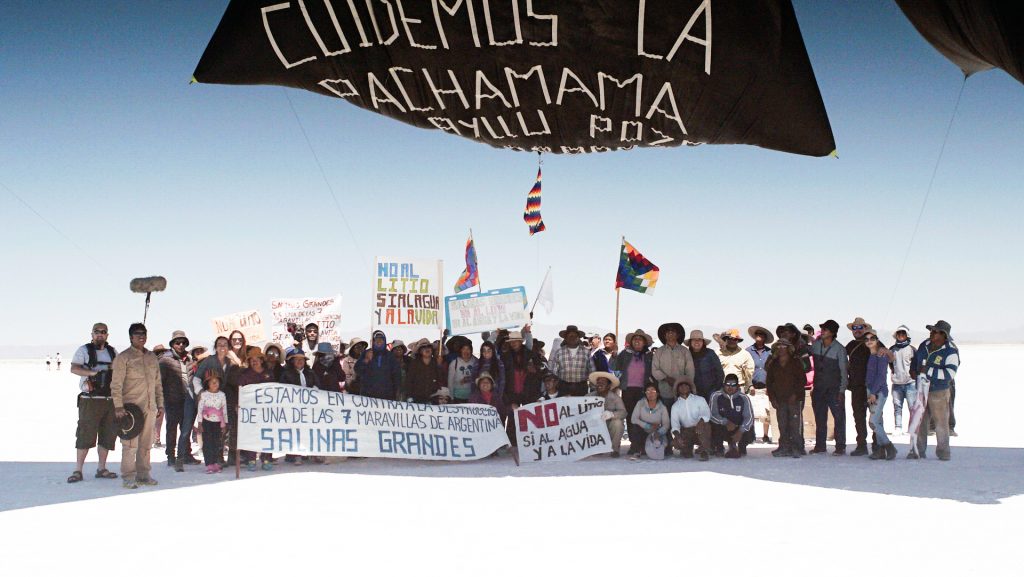
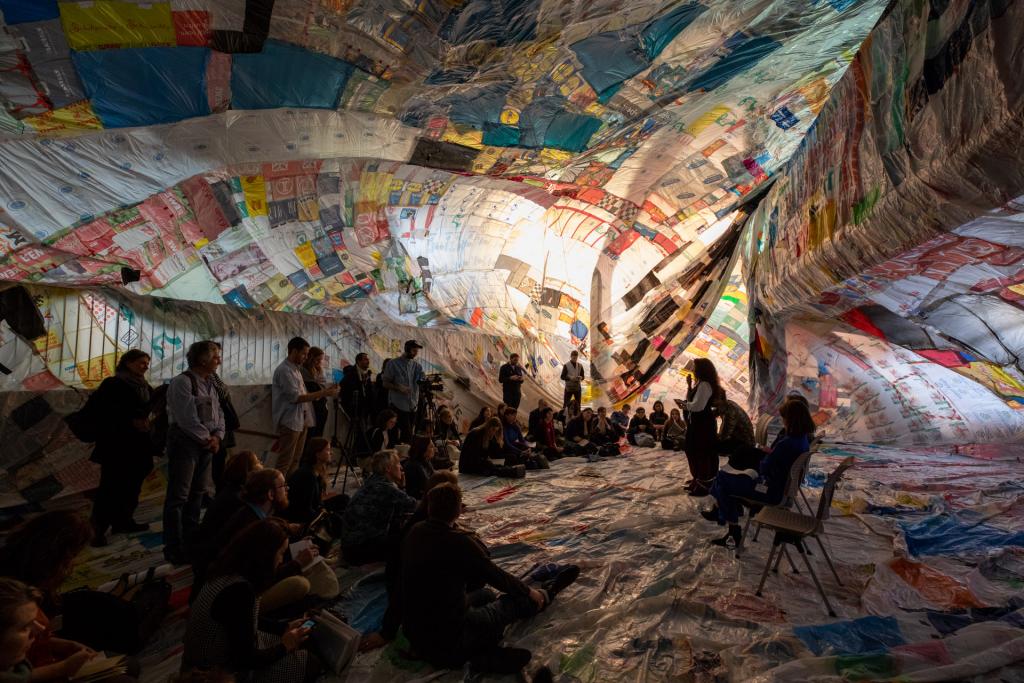
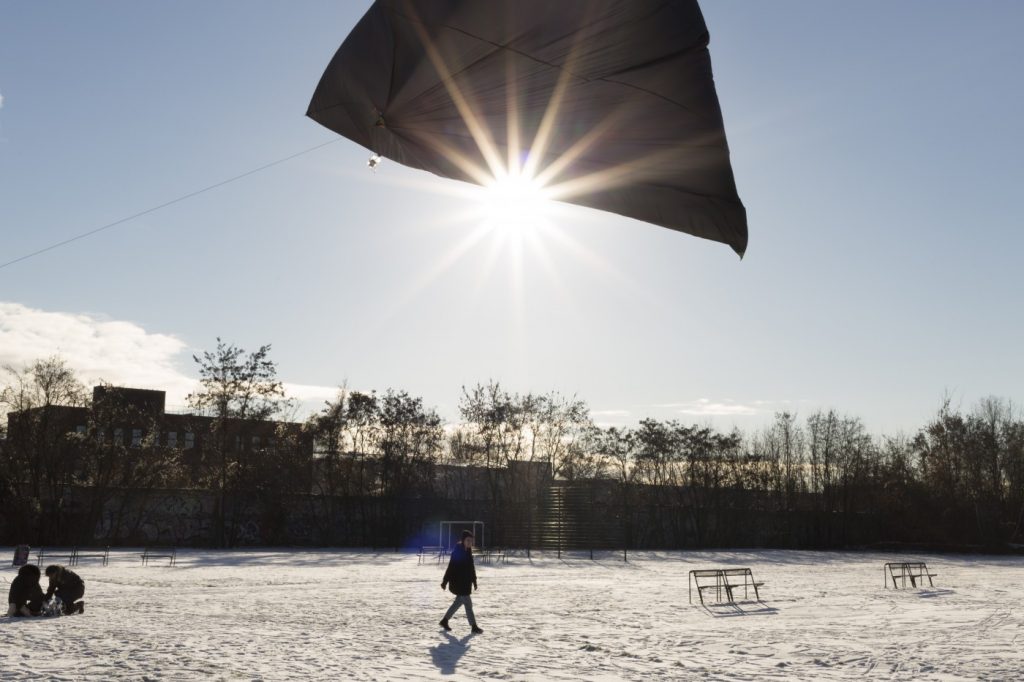
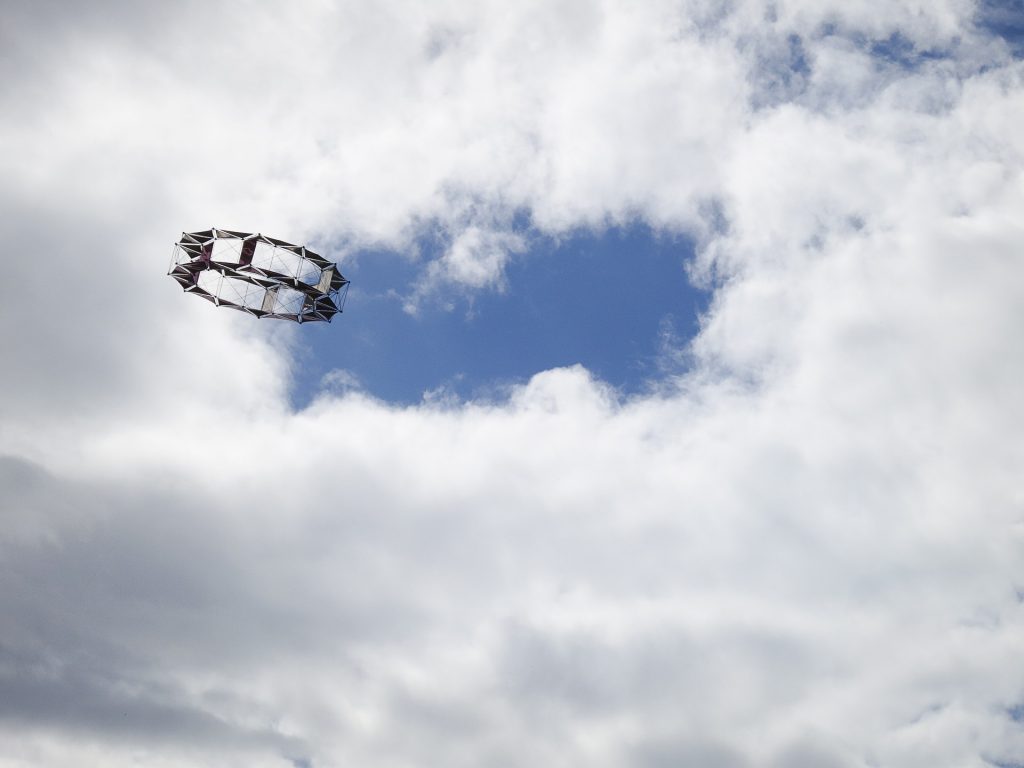
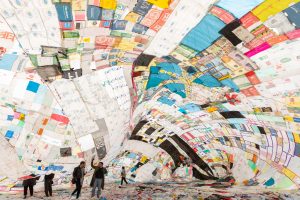
In preparation of this exhibition Museo Aero Solar has invited people people were invited to engage and build a floating aerosolar sculpture from reused plastic bags. The exhibition wants to foster the collaborative spirit by motivating visitors to build their own lighter-than-air sculptures or to take aerosolar photographs. These simple means ensure the issues concerns of Becoming Aerosolar are more widely spread and raises a basic awareness of the human’s impact on Earth and the atmosphere in the Anthropocene Era.
To become aerosolar is to imagine a metabolic and thermodynamic transformation of human societies’ relation with both the Earth and the Sun.1 It is an invitation to think of new ways to move and sense the circulation of energy. And, it is a scalable process to re-pattern atmospheric dwelling and politics through an open-source ecology of practices, models, data—and a sensitivity to the more-than-human world.
Nikolai Kardashev predicted that as societies advanced, they would become more adept at harnessing the energy of their nearest star. Studies of past transitions in society’s energetic relation with the sun suggest two possibilities for sustaining large populations: “solar societies” that monopolize land area, capturing sunlight through agriculture and domesticated animals, and increasingly through biofuels and solar panels; or “fossil-fuel societies” that break the dependency on land surface by mining ancient hydrocarbons. Becoming aerosolar would realize a third, alternative future in which civilization is truly solar-powered, but also liberated from Earth’s surface to become airborne. This is the promise of a future solar-cene.
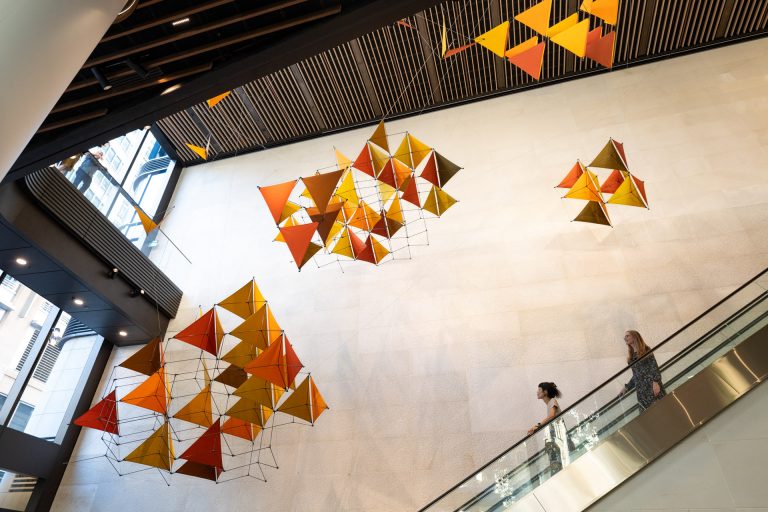
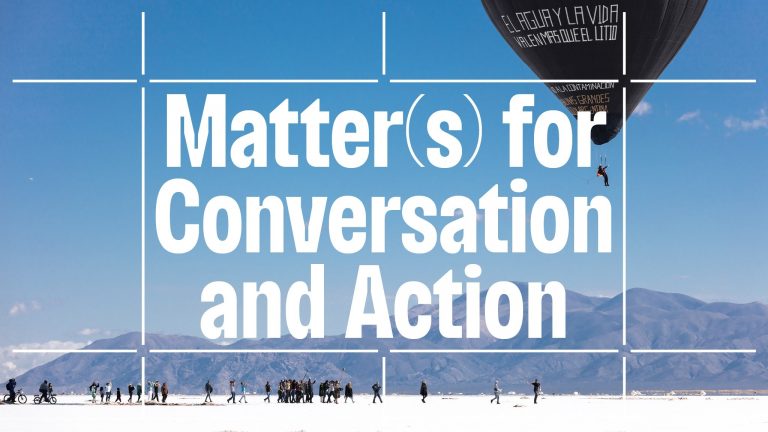
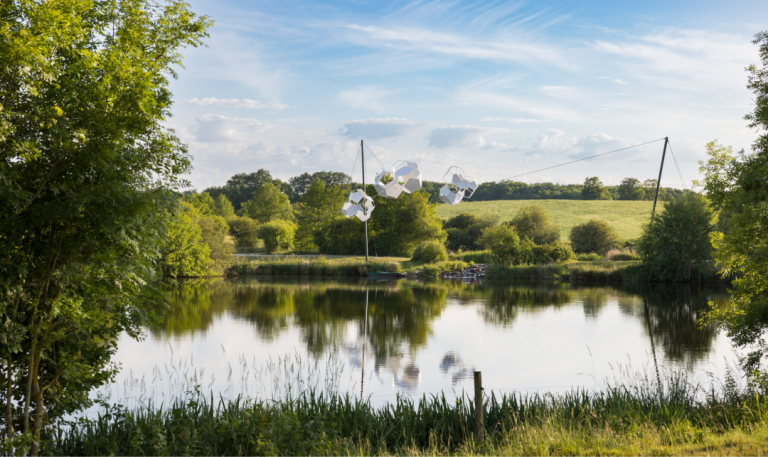
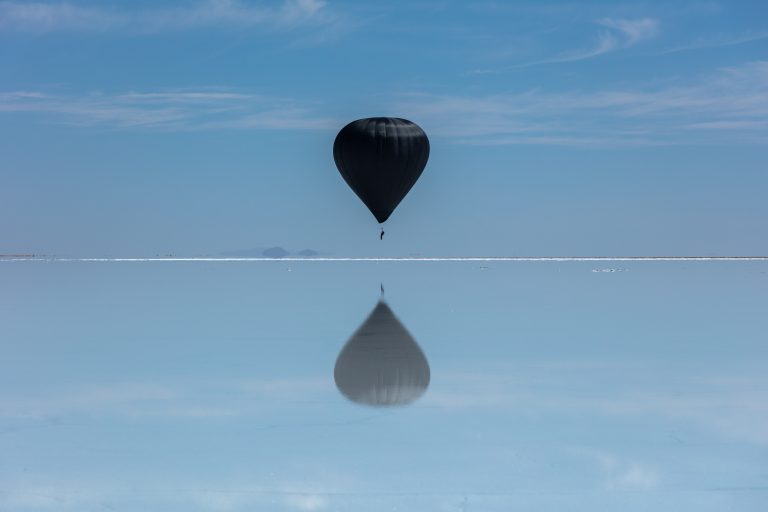
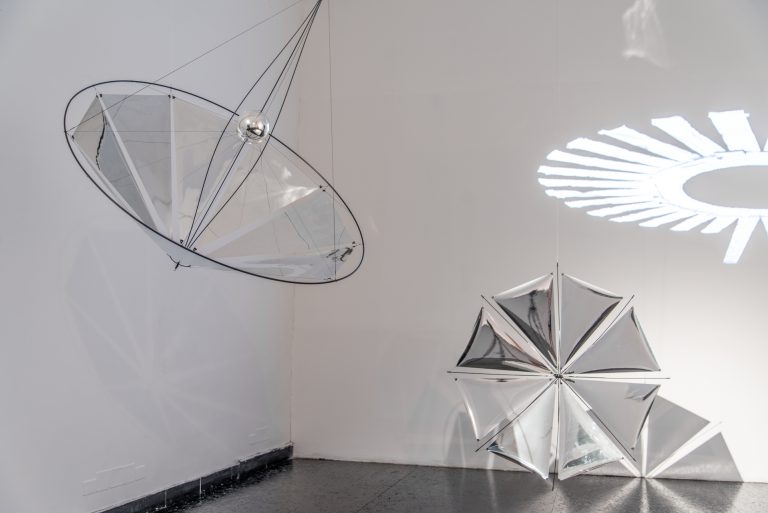
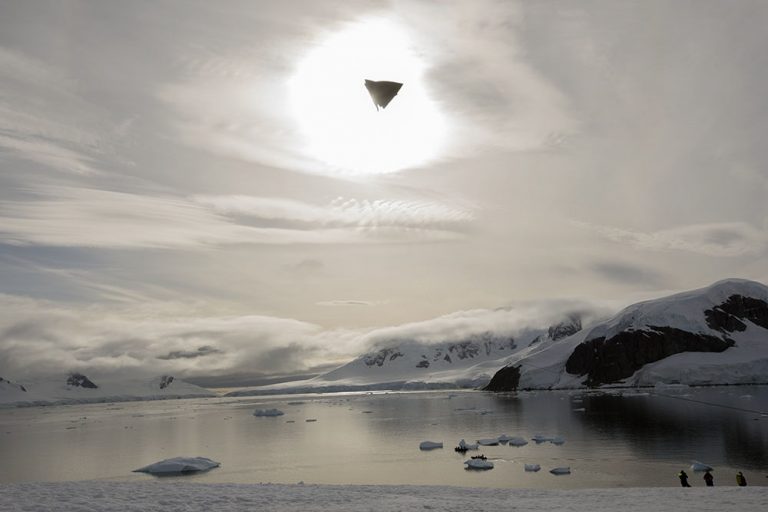
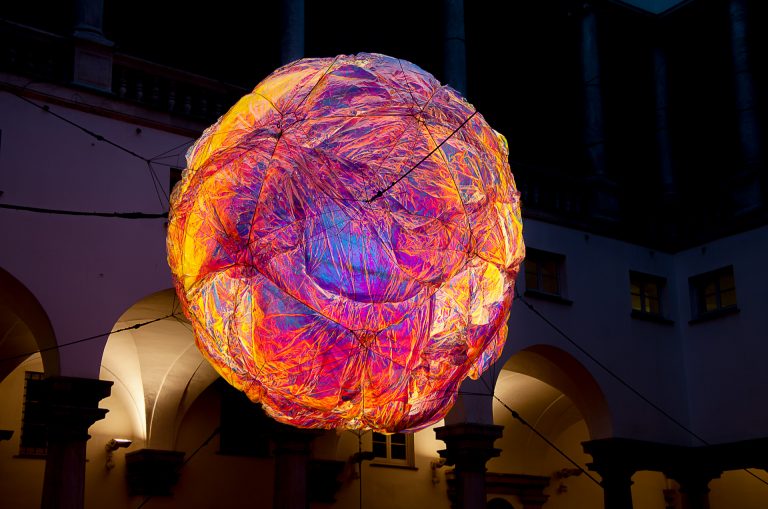
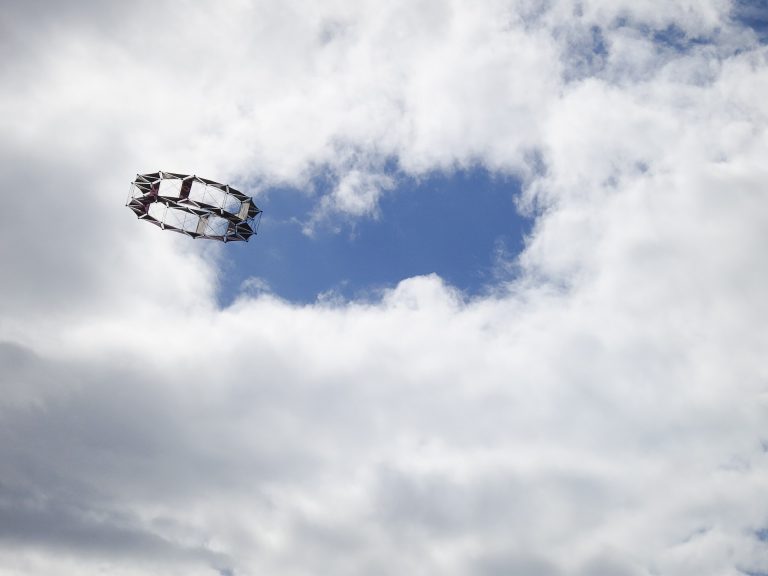
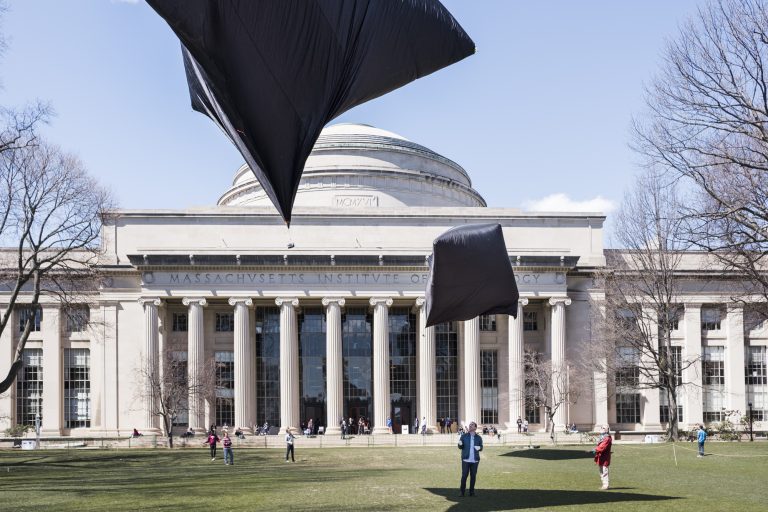
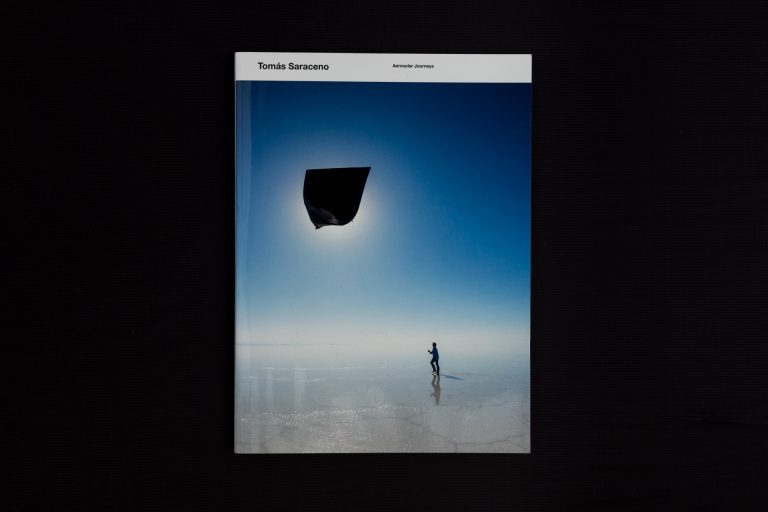
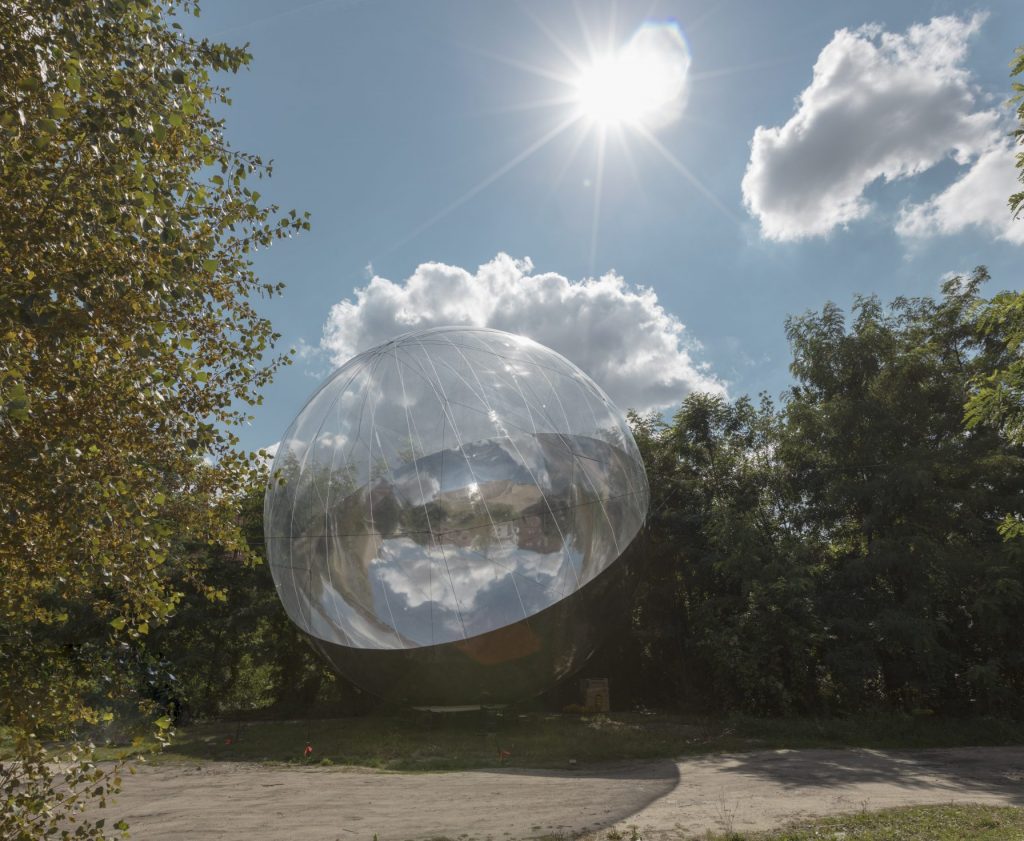
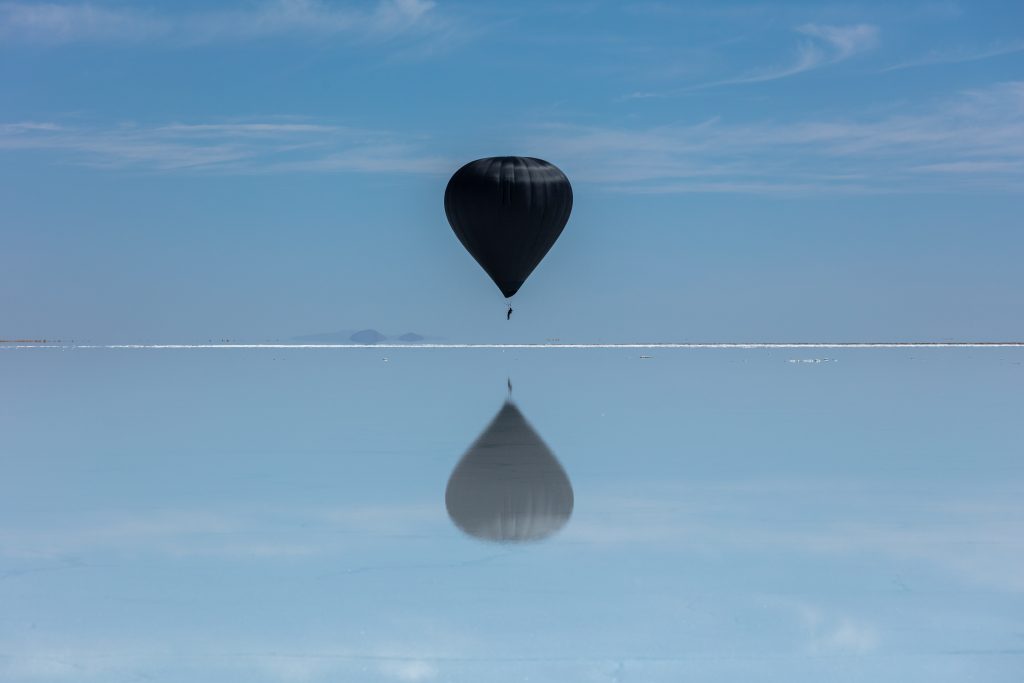
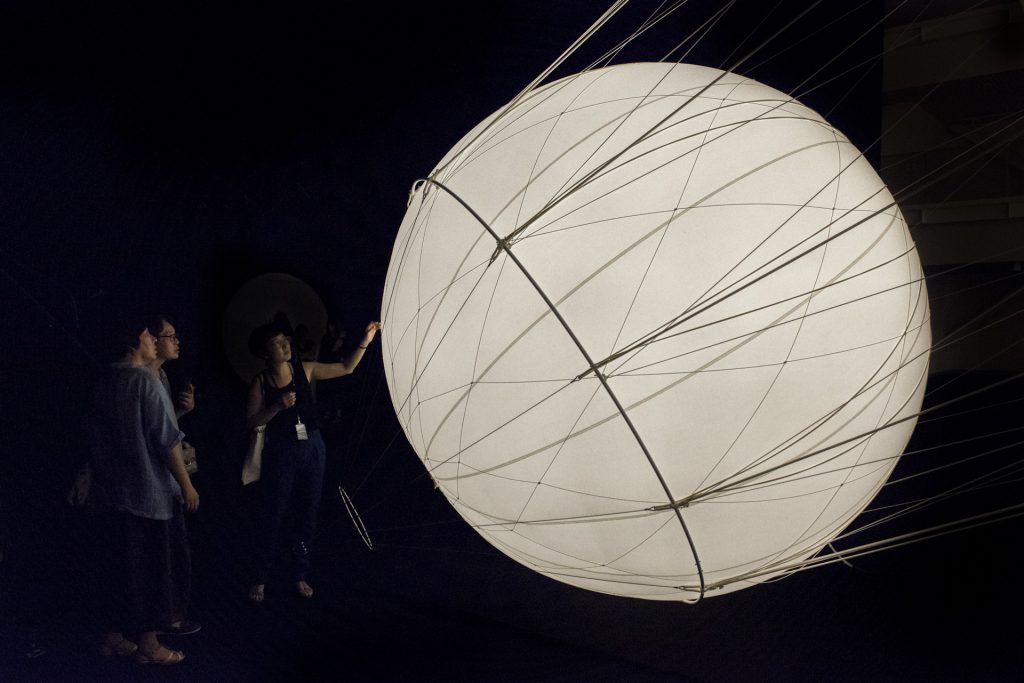
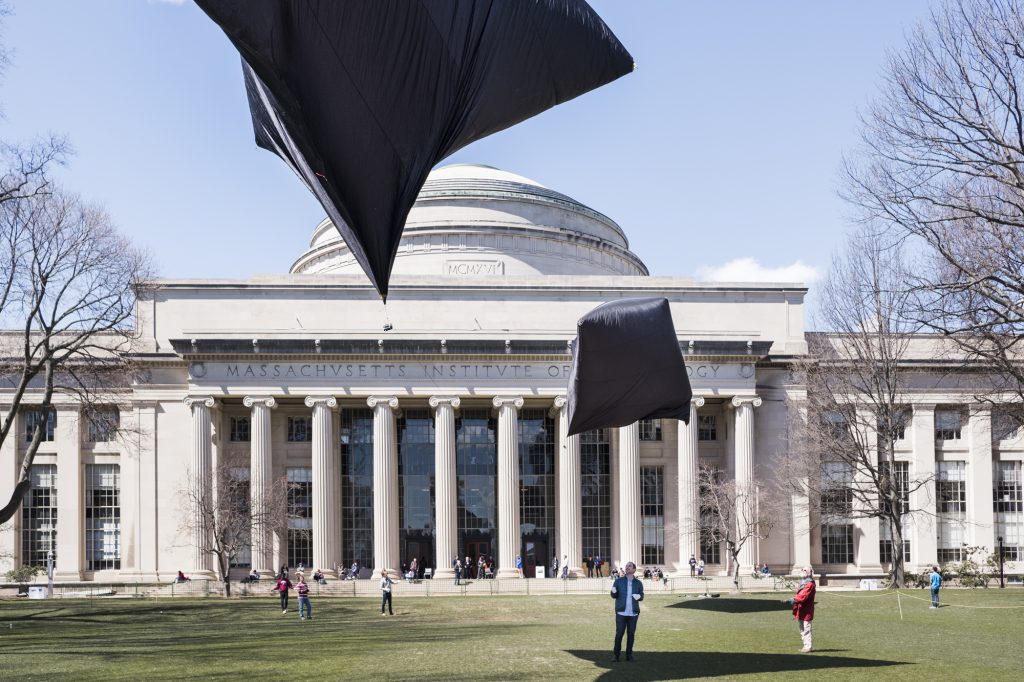
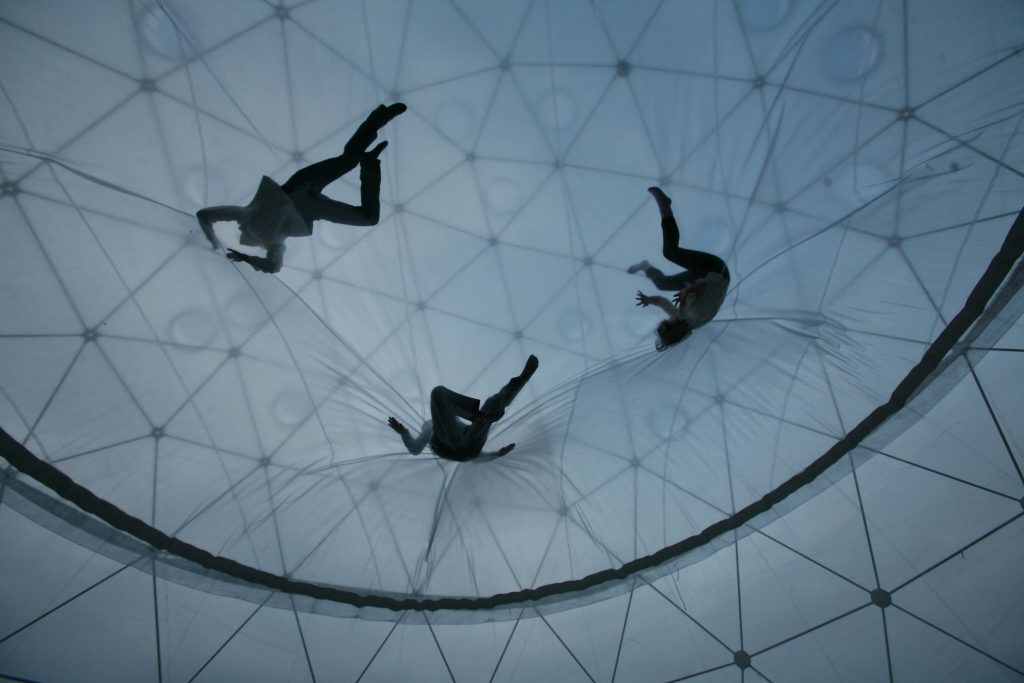
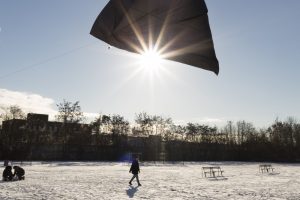
To become aerosolar is to gain buoyancy when air inside an envelope is heated, expands, and generates lift. Large aerosolar structures can become buoyant through the temperature differential created by the metabolism of living bodies in their interiors; smaller ones achieve buoyancy by capturing the short waves of sunlight during the day and infrared radiation from the Earth at night. They do not use helium, hydrogen, solar panels, or batteries; there is no burner, except for the sun or living beings inside.
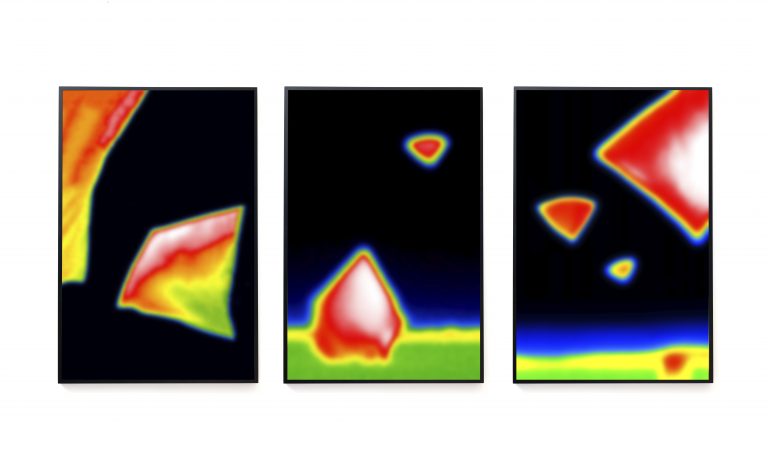
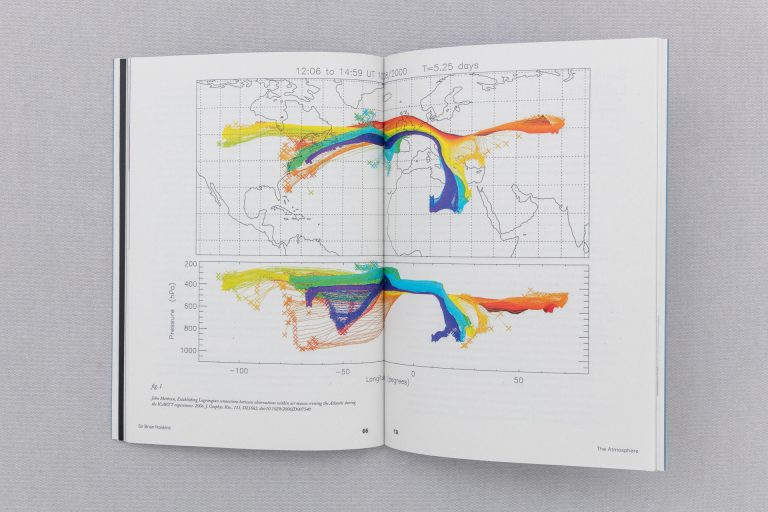
Some flying solar sculptures can provide platforms for artistic practice and citizen science, redistributing access to the air above us. Such sculptures can reveal the internal shape of the atmosphere through their movement; circle the globe on jet streams; monitor atmospheric chemistry, convection, and fluid dynamics; and expand the critical zones of our sensing of the Earth System. In the spirit of groups like OpenStreetMap and Grassroots Mapping, solar lighter-than-air vehicles can also take high-definition images of Earth’s surface and combine this aerial cartography with continuous sensing of the dynamics of the Earth’s atmosphere. In this way, they link aerography and alternative cartographies, advancing beyond traditional techniques of mapping the “shape” of the Earth, while promoting free and democratic access to aero-stratigraphic data.
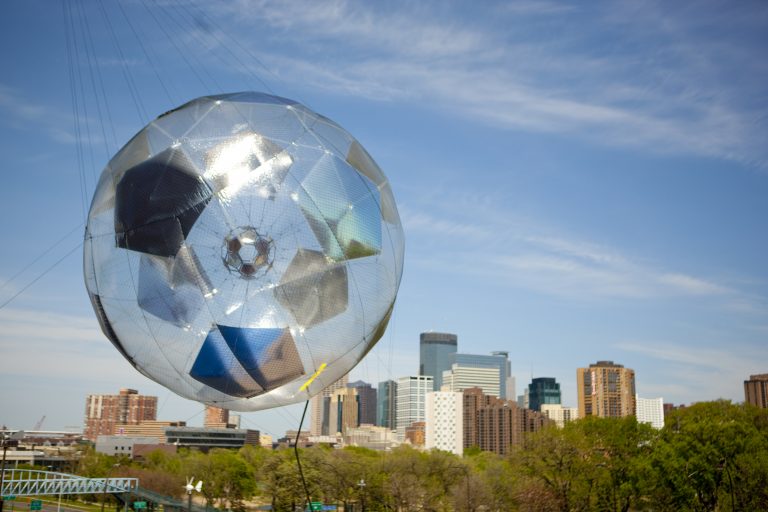
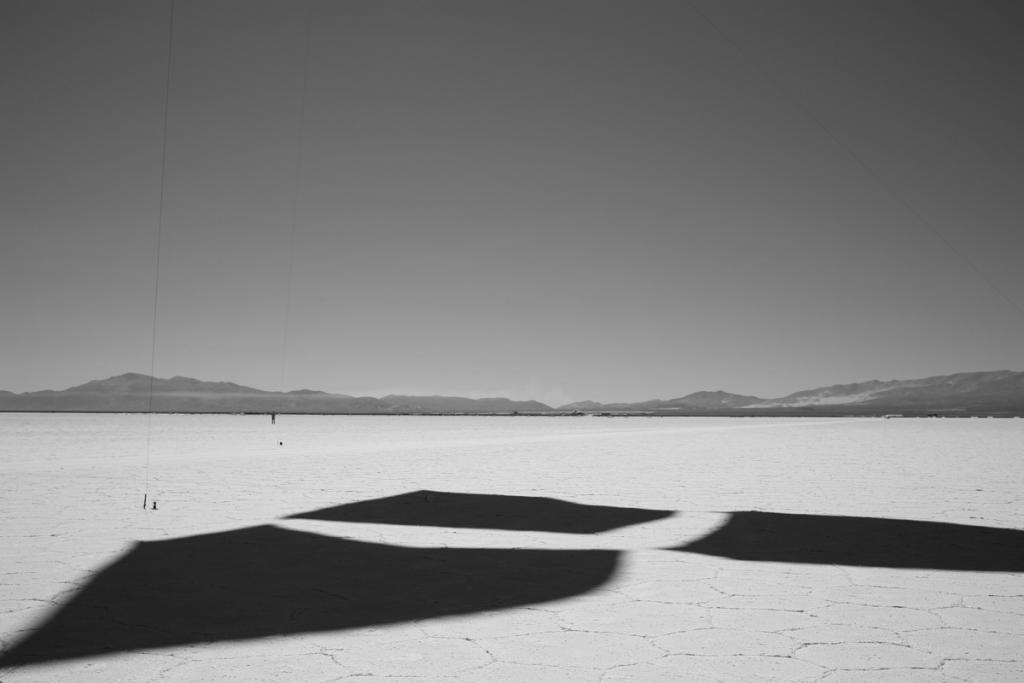
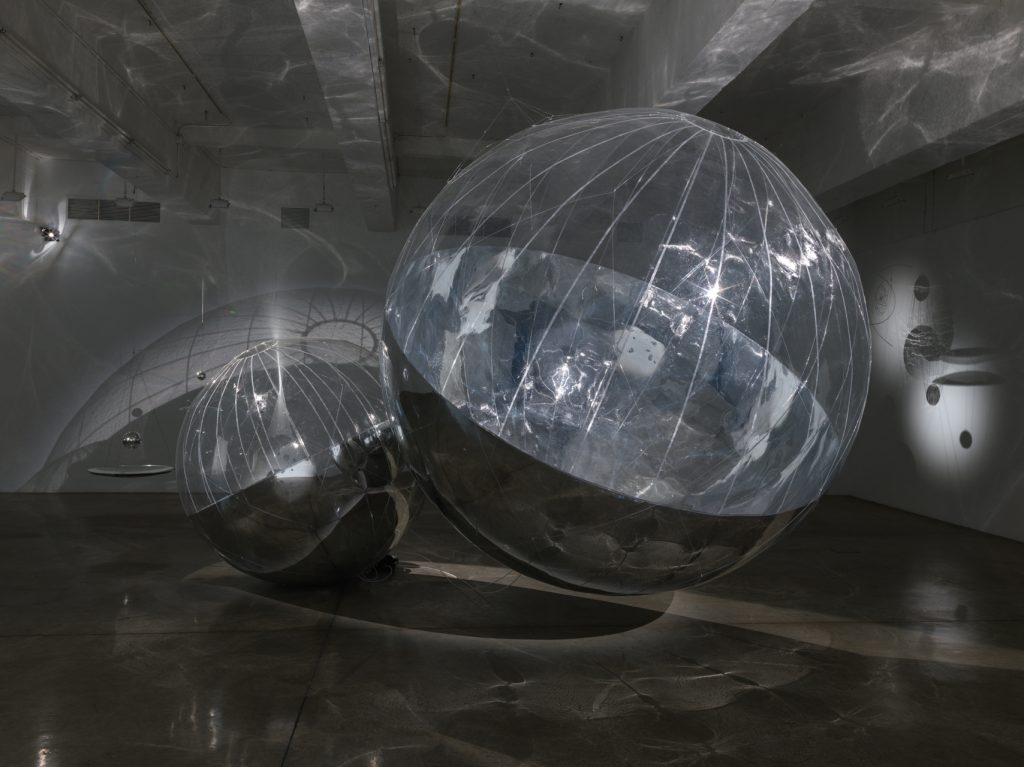
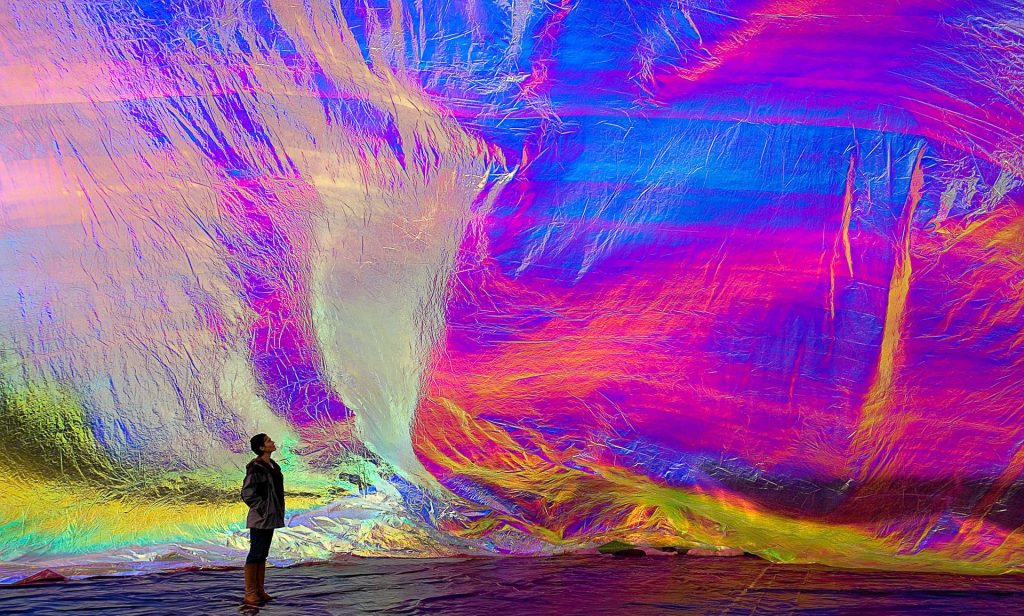
One of these solar, lighter-than-air sculptures is Museo Aero Solar, which is both a solar museum and a “monument” to the Anthropocene.2 Working together, people melt the edges of reused plastic bags in an act that embodies an ethos of care and generosity, transforming waste plastic from the iconic material of the “bad” Anthropocene into a shared aerial canvas for a possible “good” Anthropocene. The Museo is launched at dawn: as the sun warms the membrane, energy is pulled to the air inside. As the pressure differential increases, the Museo inflates and rises, flying to a new place where it will be recovered and launched again.
Launching a solar sculpture like Museo Aero Solar requires a sensitivity to the elements, especially as they are influenced by the sun. To watch the object inflate is to sense molecules vibrating against the inner membrane. It is to understand that during the daytime, the lower atmosphere is unstable, causing vertical masses of air to rise. Bodies of air alter the refractivity of the atmosphere, bending radio and GPS signals.
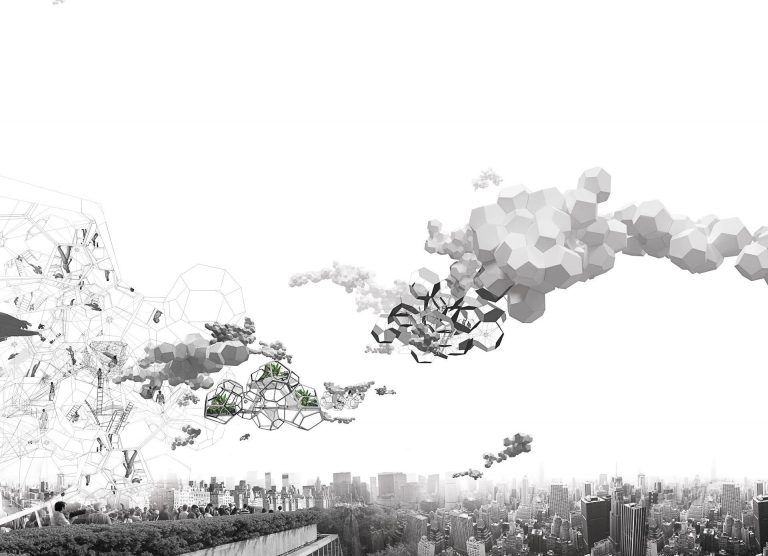
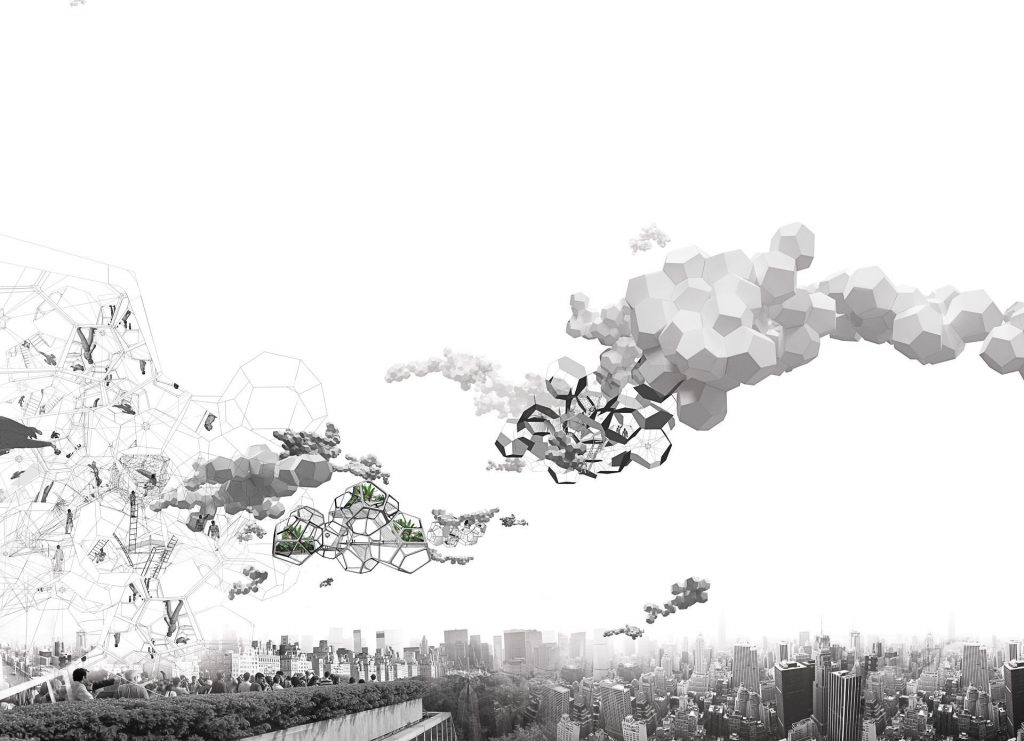
But the Museo also heralds a new way of life, suggesting that we as living beings could inhabit and move through the volume of the atmosphere. It makes us realize that our bodies are just like the Museo: membranes and passages permeated by air. And if we, too, lift from the surface, we move with the airy masses, sensing stillness in motion. Solar, lighter-than-air sculptures could provide new nomadic ways of dwelling on the Earth, as macroscopic forms of aeroplankton set themselves adrift on the winds, containing diverse and hybrid forms of life. New, shifting assemblies would appear in the air—cumulo-cities, cirrus-cities, stratocumulo-cities—as aerosolar structures cohere one day and dissipate another, according to the interacting dynamics of atmospherics, economics, politics, and culture.
However, activating the potential of an aerosolar society would require us not only to cultivate a new, thermodynamic imagination, but also to challenge the existing, politically demarcated volumes partitioning the atmosphere. The current “rules of the air” favour a fossil-fuel-based economy of heavier-than-air transport. We are petitioning international bodies to change these rules: just as steamboats give way to sail boats on international waters, so should planes give way to lighter-than-air solar vehicles.
In the words of the great aerial voyager Alberto Santos-Dumont: “We were off, going at the speed of the air current in which we now lived and moved. Indeed for us, there was no more wind […] infinitely gentle is this unfelt movement forward and upward.”3
Becoming Aerosolar: From Solar Sculptures to Cloud Cities
Tomás Saraceno, Sasha Engelmann, and Bronislaw Szerszynski
1. This article is an experiment in thinking and writing together. Tomás Saraceno is an artist who has been working for the last fifteen years on the ideas of Cloud Cities/Air Port Cities and started Museo Aero Solar in conversation with Isola Art Center. Bronislaw Szerszynski’s research draws on the social sciences, humanities, arts, and natural sciences in order to locate contemporary changes in the relationship between humans, environment, and technology in the longer perspective of human and planetary history. Sasha Engelmann’s research concerns the political and aesthetic dimensions of air and atmosphere. We would like to thank Derek McCormack, Etienne Turpin and Nigel Clark, who, through many conversations, have helped us deepen these ideas. Becoming Aerosolar is intended as a future entry in Wikipedia: we welcome you to edit, contribute to, and appropriate this text so that it reflects a wider authorship.
2. Museo Aero Solar was presented in the exhibition “Anthropocene Monument,” curated by Bruno Latour, Bronislaw Szerszynski, and Olivier Michelon at Les Abattoirs, Toulouse, 3 October 2014–4 January 2015.
3. Alberto Santos-Dumont, quoted in Paul Hoffman, Wings of Madness: Alberto Santos-Dumont and the Invention of Flight (New York: Theia, 2003), 41.

...